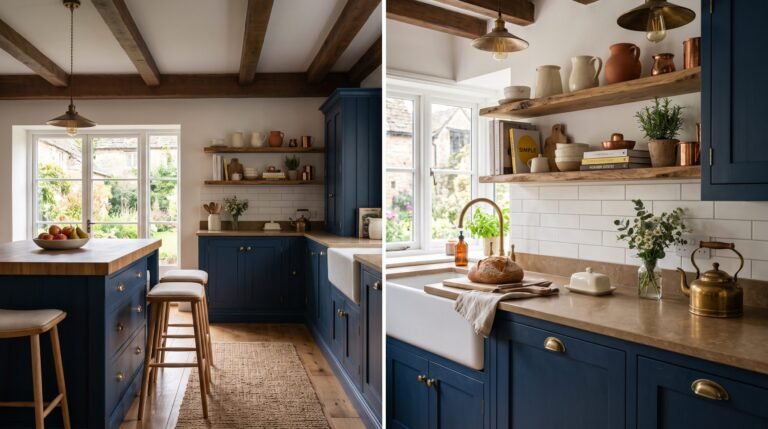
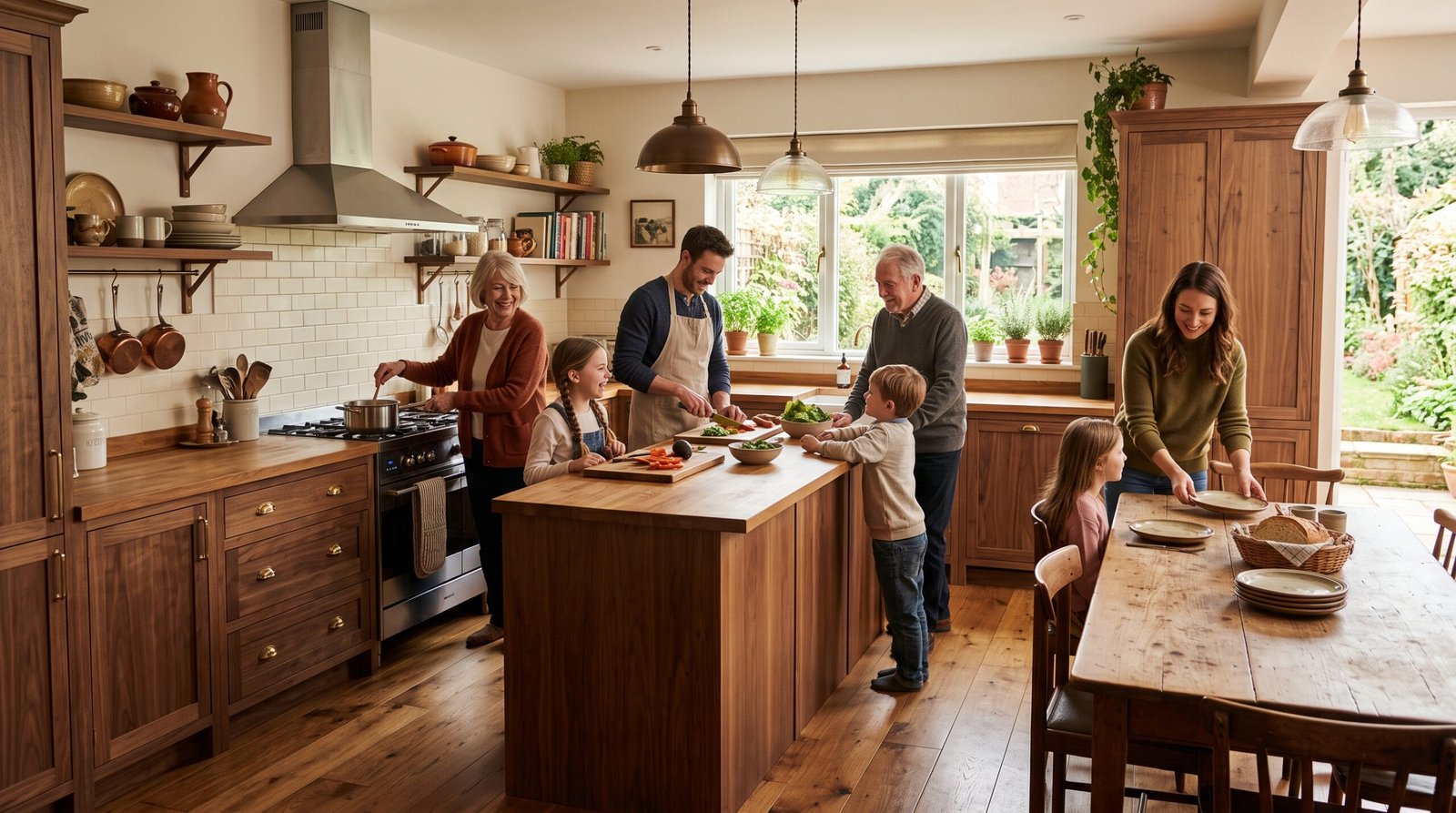
There’s a reason wood floors keep showing up in kitchen after kitchen, regardless of trend cycles — the material brings a warmth and tactile comfort that tile or stone simply can’t replicate underfoot. It works in a rustic farmhouse just as naturally as it does in a sleek modern build, adapting to whatever cabinetry, countertops, and color palette surround it. Below are 40 reasons and styles to consider wood flooring for your own kitchen, from the qualities that make it worth choosing to specific looks and layouts worth exploring.
1. Embracing Natural Warmth
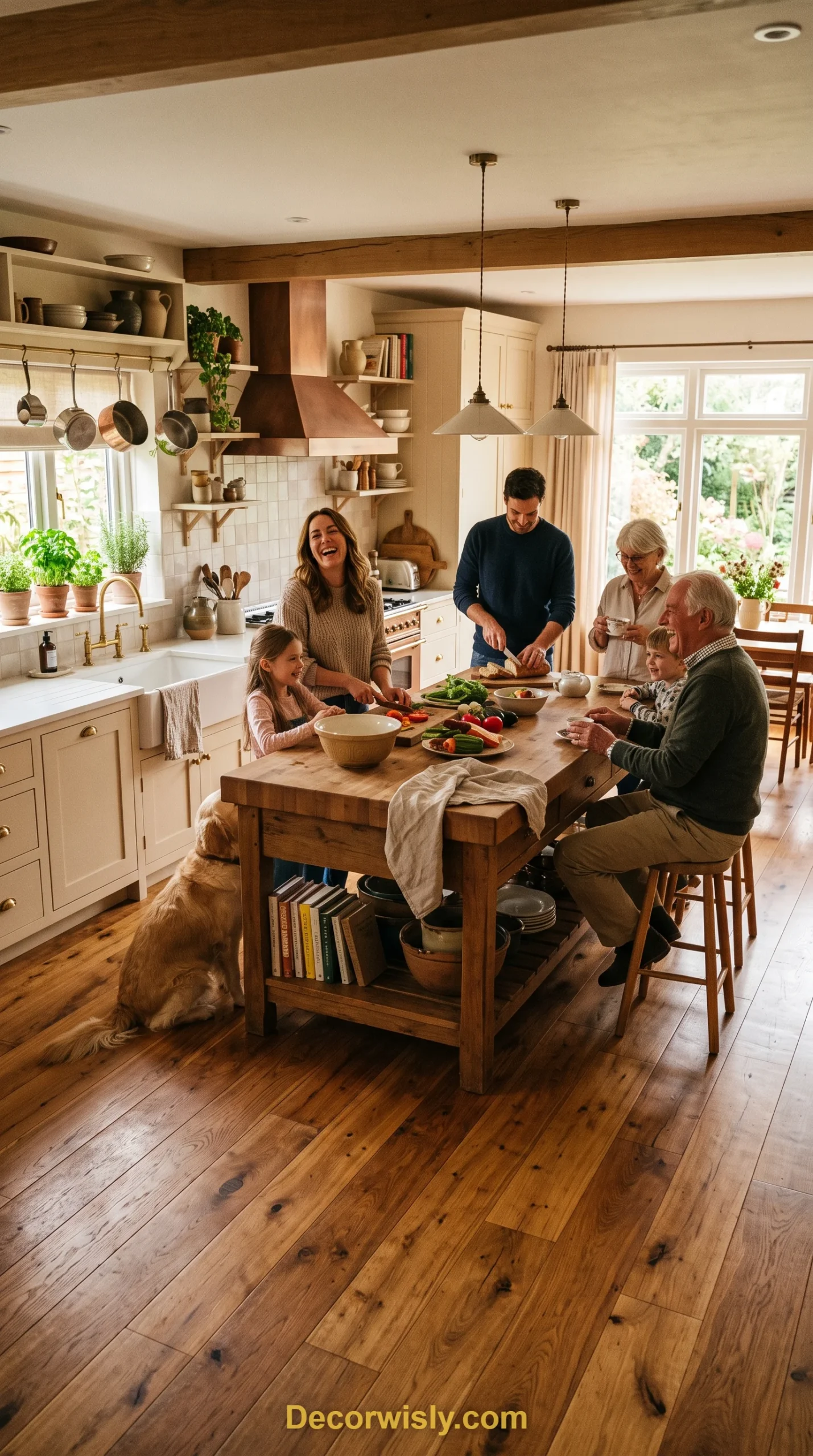
A kitchen with wood floors radiates an immediate coziness, the natural grain and rich hues creating a character that harmonizes with nearly any countertop or cabinetry style. The tactile comfort underfoot makes daily cooking feel a little more grounded and inviting.
2. Showcasing Timeless Elegance
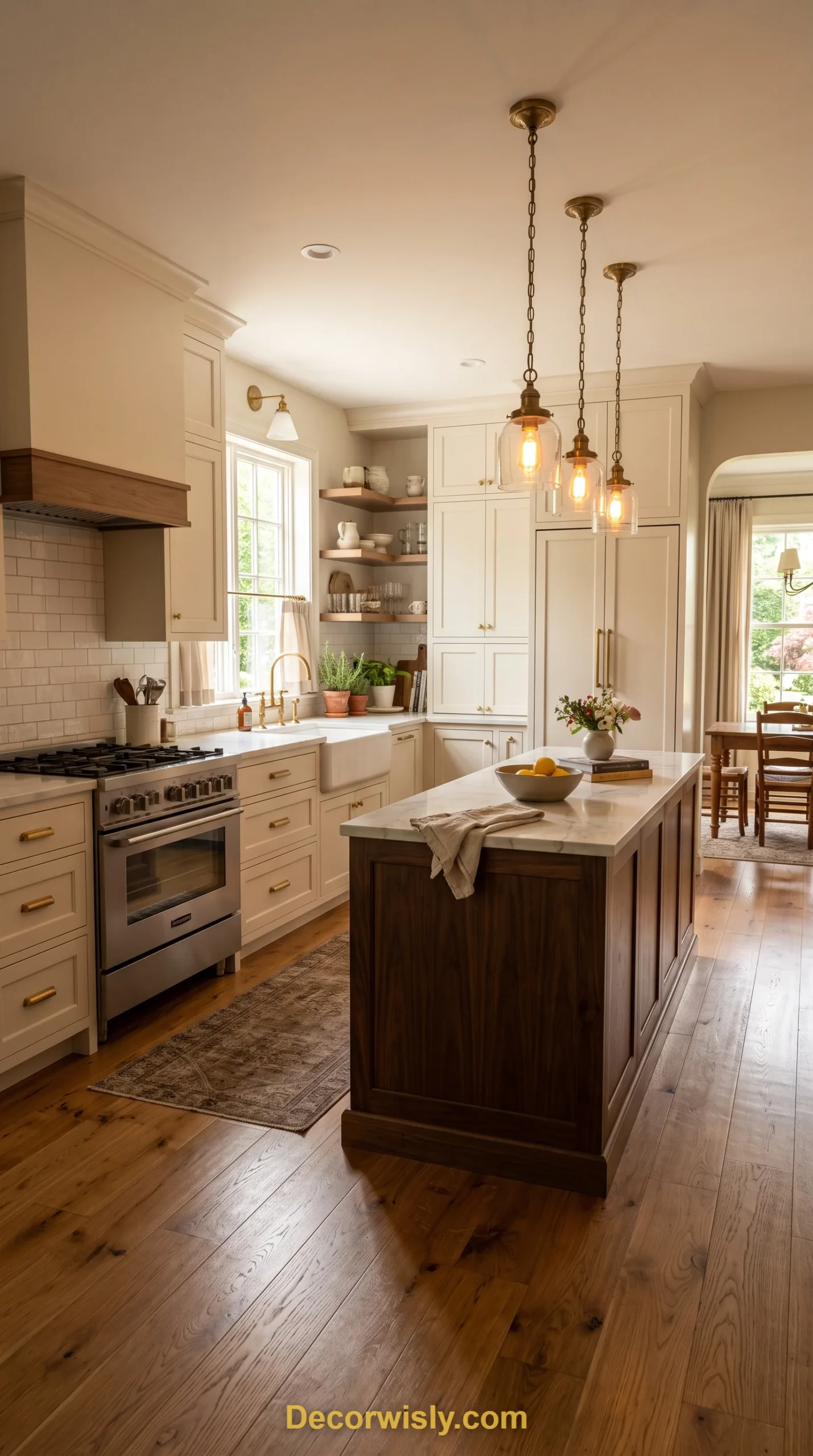
The classic look and subtle sheen of wood flooring lends real sophistication to a kitchen, whether the space leans minimalist or ornate. It’s a material that ages gracefully rather than looking dated, keeping the room feeling like a stylish centerpiece for years.
3. Celebrating Durability and Longevity
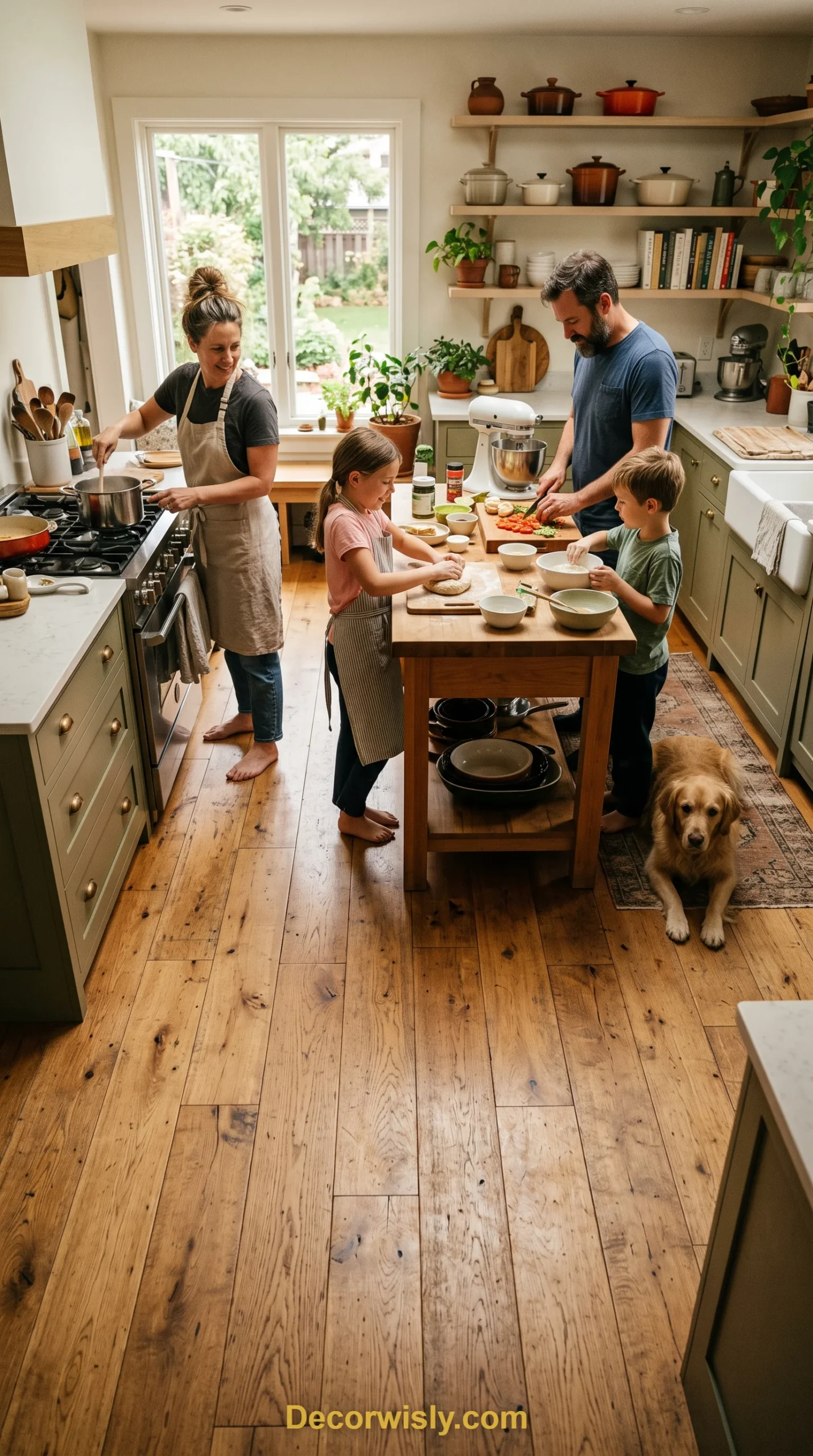
Well-chosen wood species handle busy household activity — spills, foot traffic, dropped pans — while still aging beautifully over time. That resilience means the floor holds up as a functional workhorse without giving up its visual appeal.
4. Prioritizing Easy Maintenance
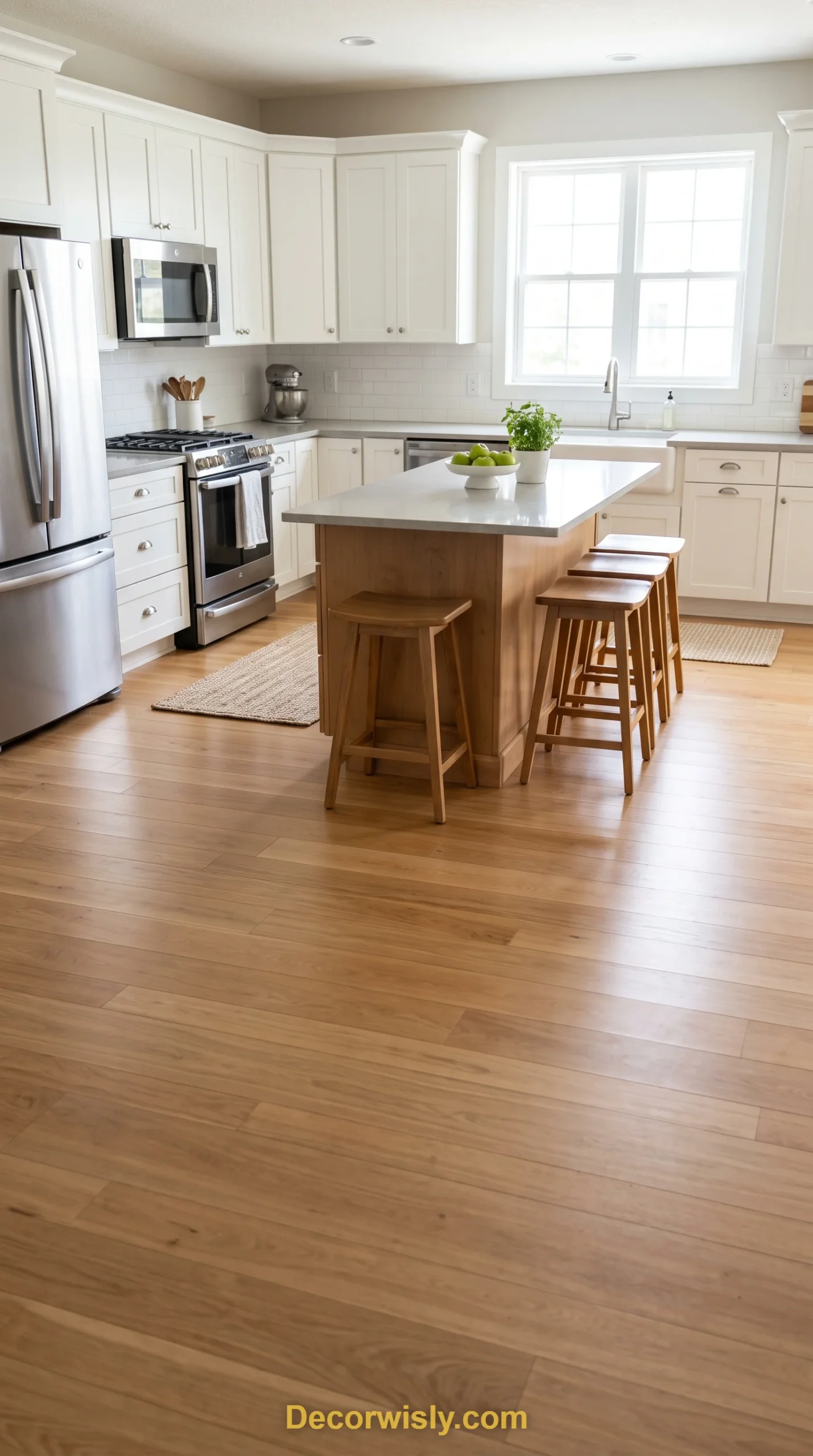
A smooth, well-finished wood surface resists dirt and stains, making daily cleanup a genuinely quick task. That practicality frees up more time for actual cooking rather than floor upkeep.
5. Embracing Environmental Benefits
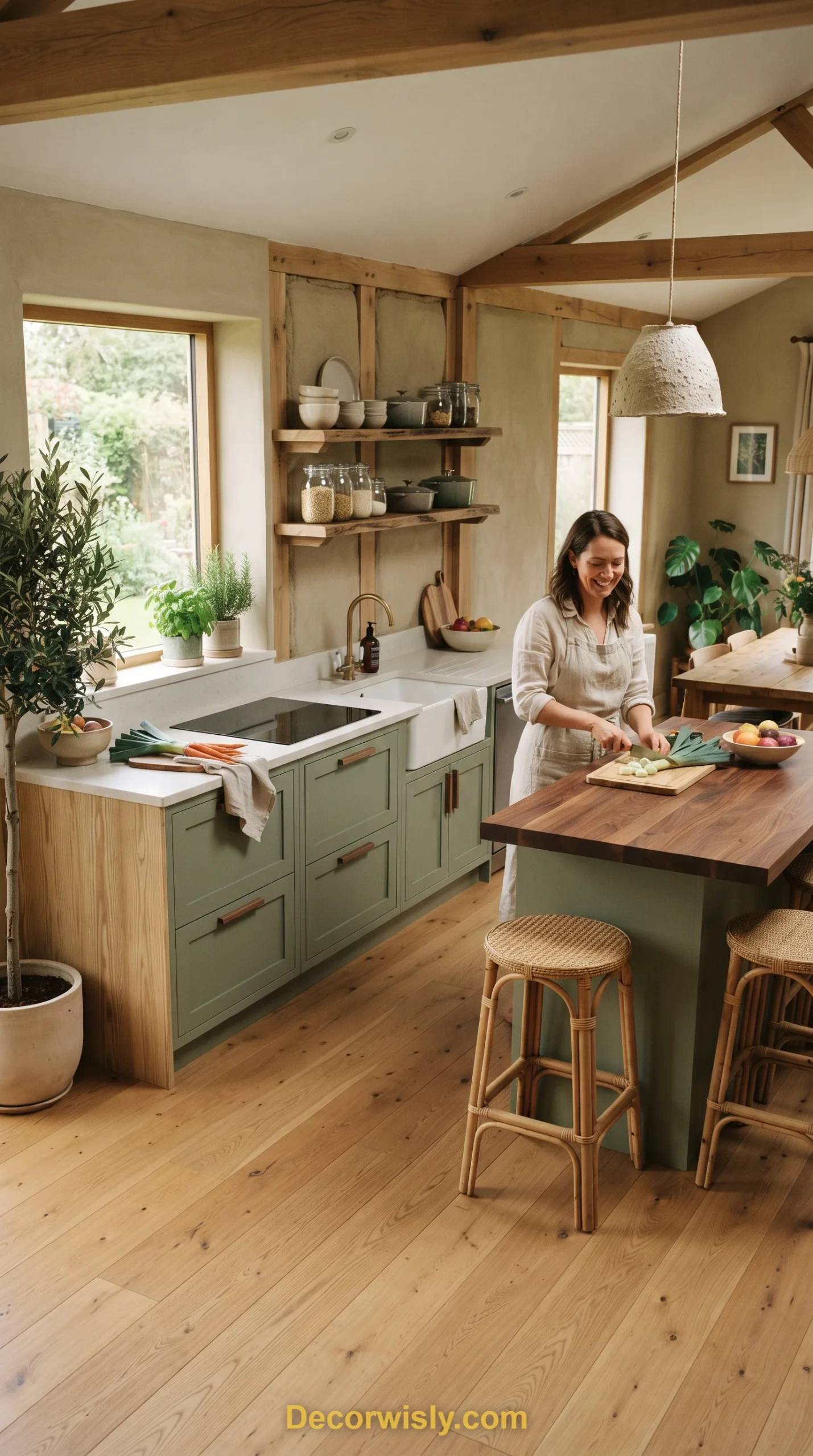
Responsibly sourced wood flooring offers natural insulation and a genuinely renewable material choice, connecting a kitchen to more sustainable design values. It’s a way to combine everyday style with a smaller environmental footprint.
6. Showcasing Versatile Design
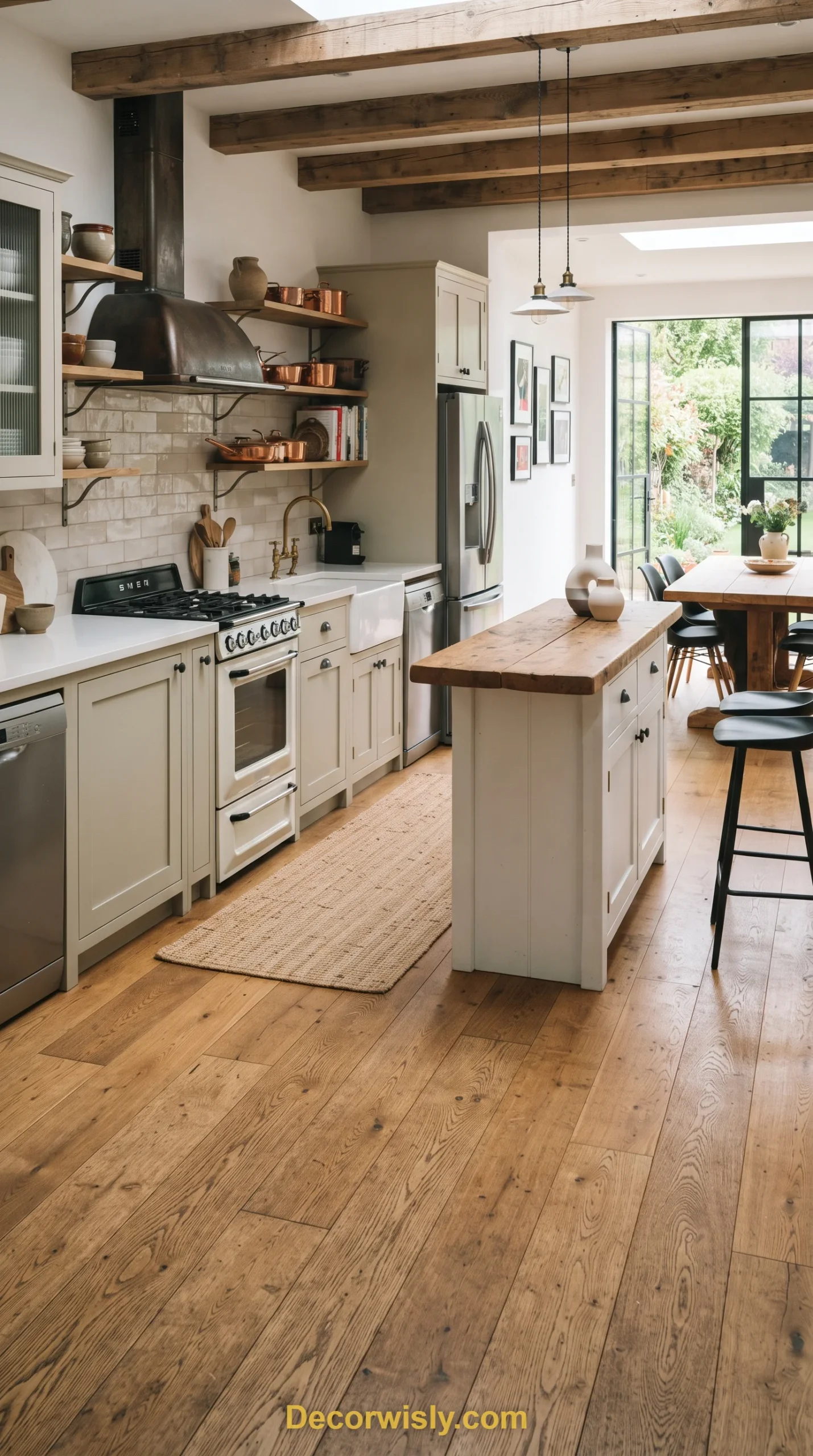
Neutral tones and textured grain patterns make wood flooring an adaptable backdrop for nearly any style, from rustic to thoroughly modern. That flexibility means the floor can evolve alongside changing decor and personal taste over time.
7. Enhancing Integration with Countertops and Cabinets
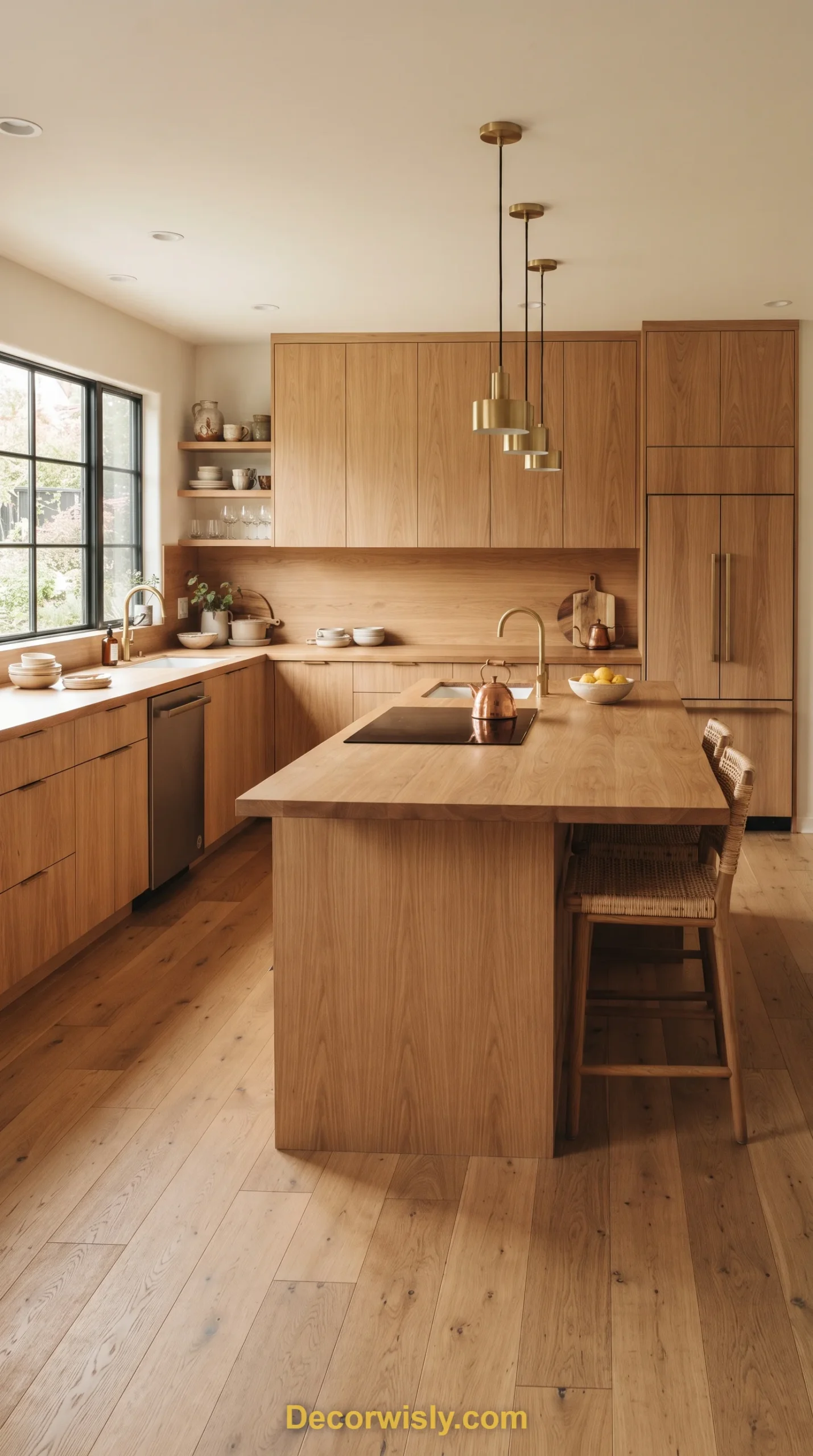
Wood flooring creates a genuinely seamless connection between countertops, cabinetry, and the overall kitchen layout. The natural texture accentuates cabinetry detail while softening the sleek lines of stone or quartz countertops.
8. Inspiring a Modern Minimalist Look
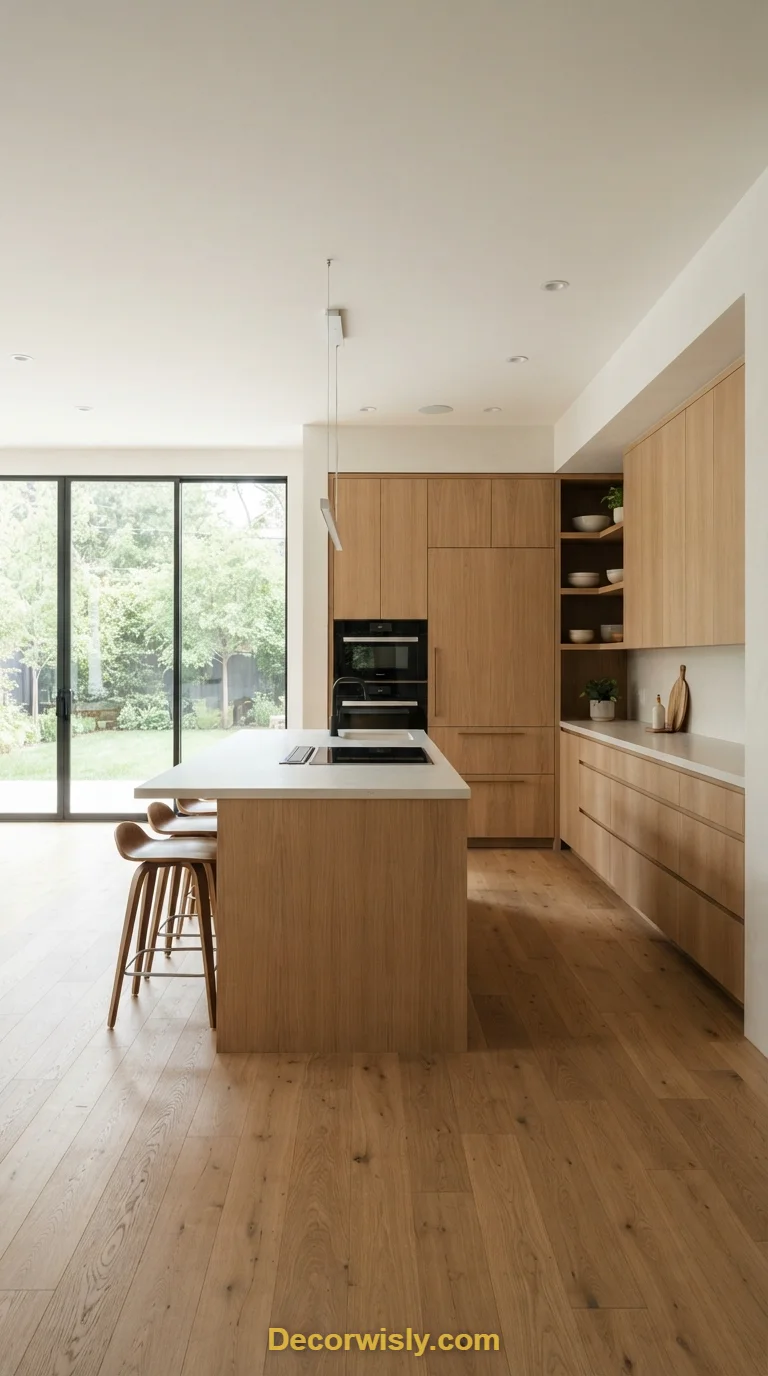
Clean lines and unadorned wood grain create a striking contrast against sleek modern appliances, resulting in a clutter-free space that still carries genuine tactile warmth. It’s proof that minimalism doesn’t have to feel cold.
9. Revealing Rustic Charm
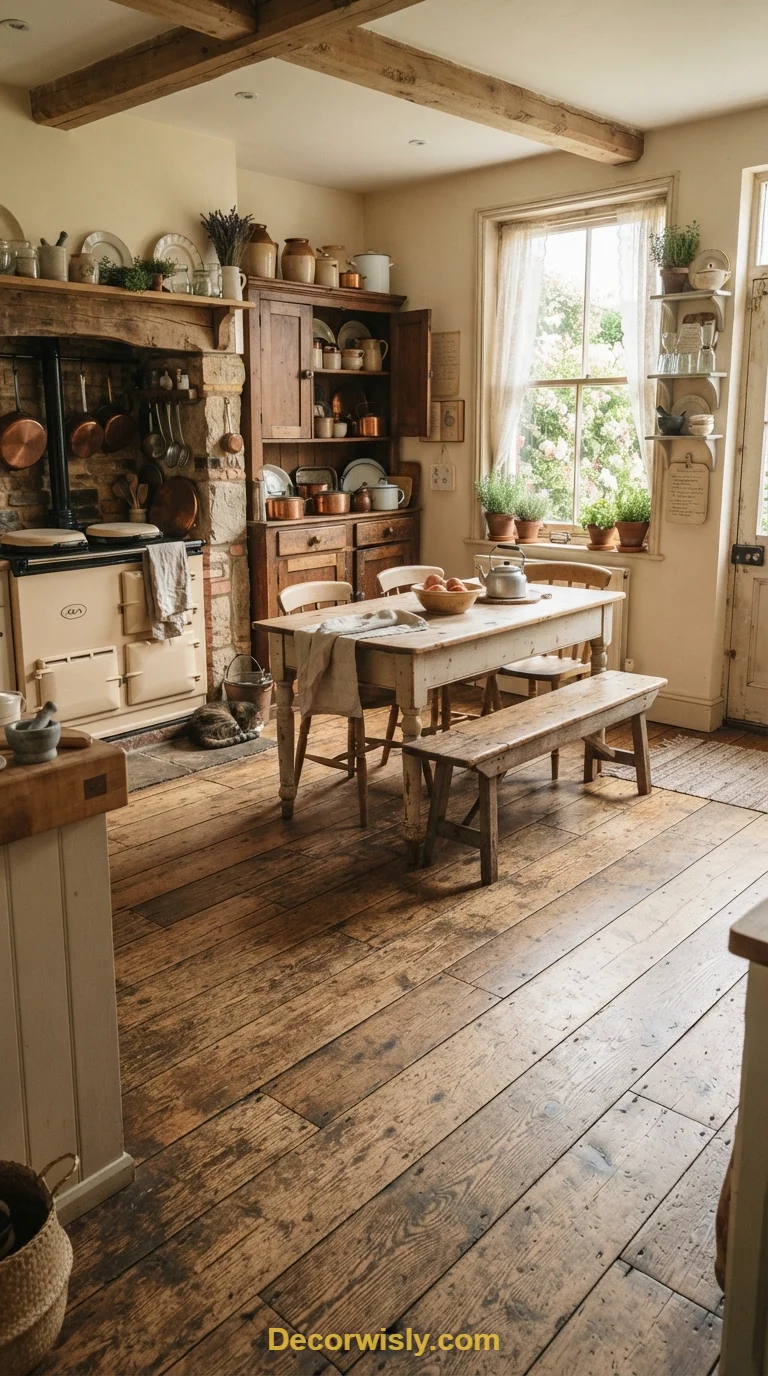
Weathered, reclaimed wood brings genuine country character into a kitchen, with imperfections and unique grain patterns telling their own story. It’s a look built around nostalgia and authentic craftsmanship rather than a flawless finish.
10. Creating Elegant Contrasts
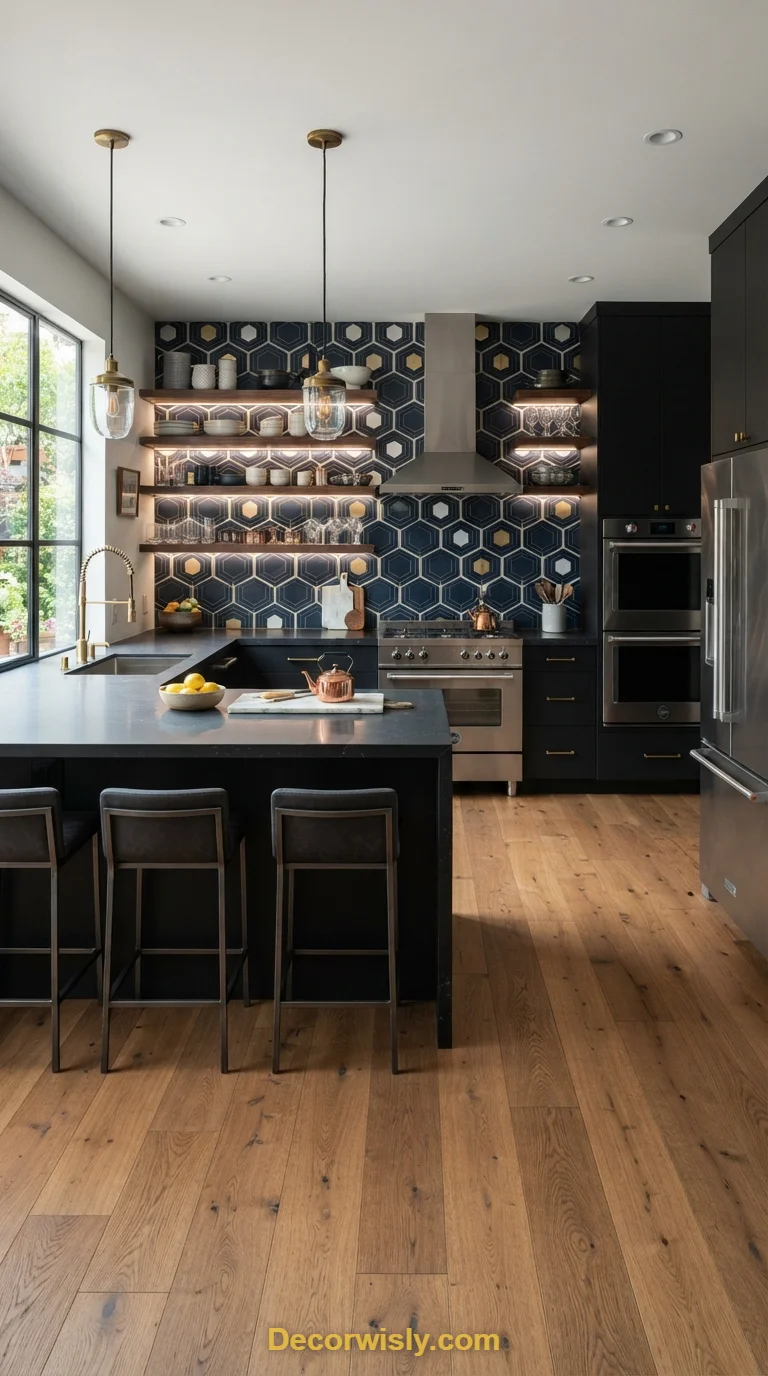
Wood floors pair strikingly against cooler modern accents — metallic fixtures, bold backsplashes, minimalist furniture — creating a dynamic visual balance. The organic warmth of the floor keeps sleeker elements from feeling too stark.
11. Adding Rich Textural Layering
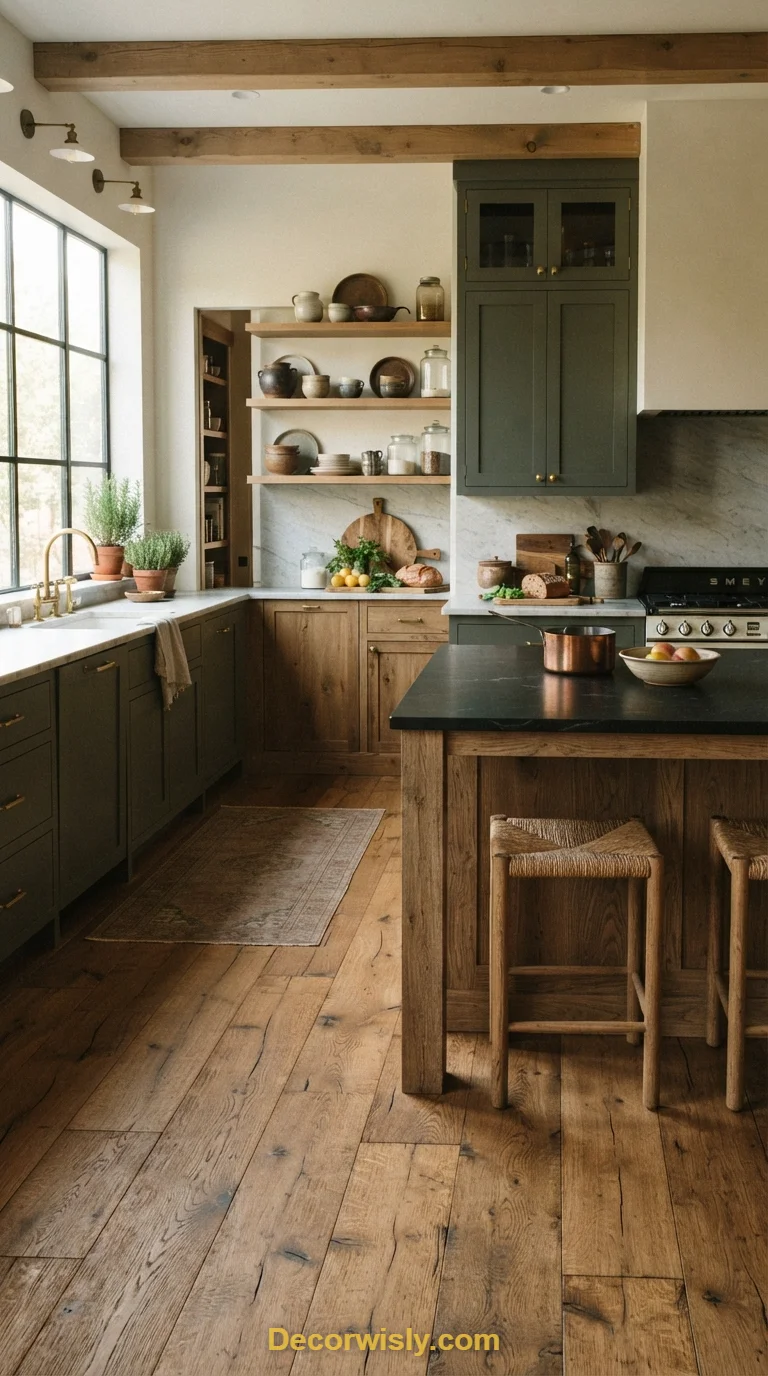
The tactile grain and natural irregularities of wood introduce genuine depth against smooth countertops and sleek appliances. That layered texture makes the whole kitchen feel more multidimensional as natural light shifts throughout the day.
12. Enhancing Home Value and Investment
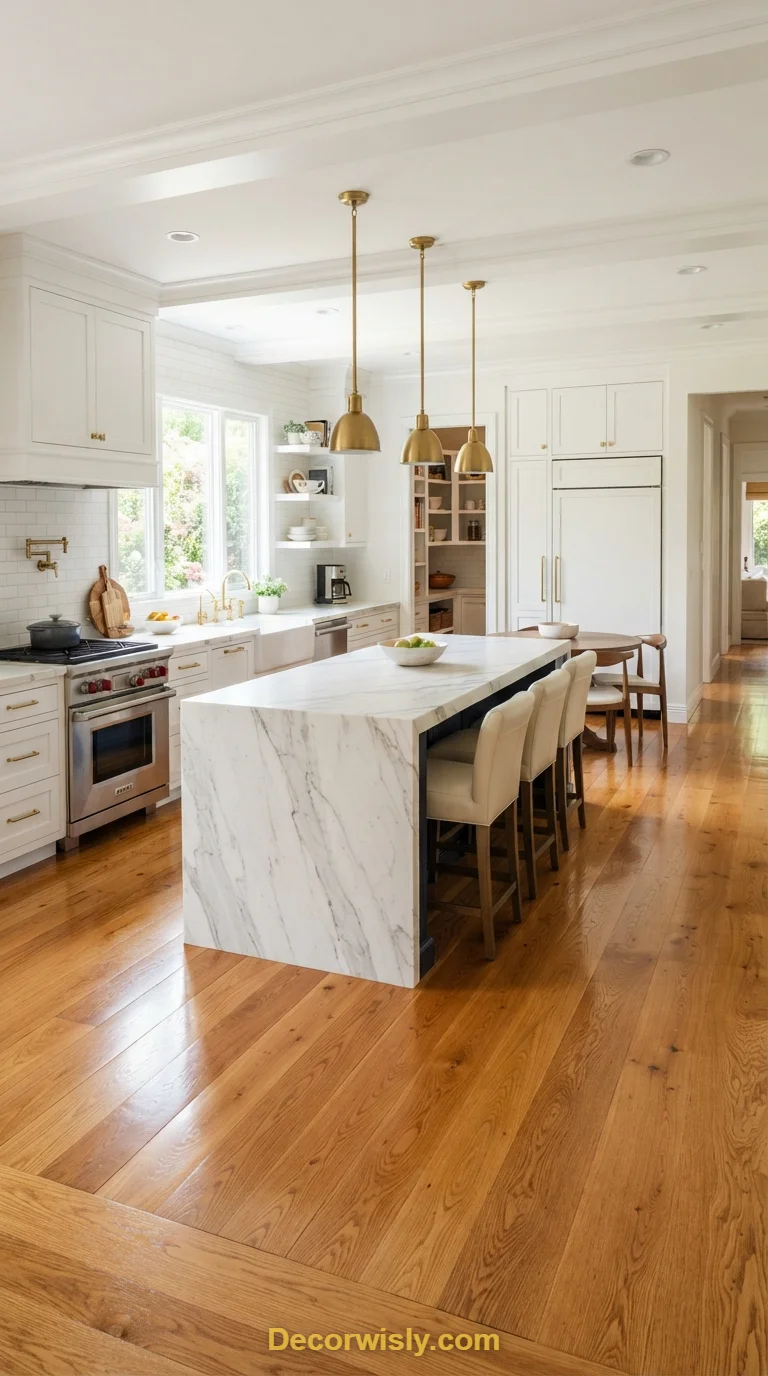
Wood flooring’s enduring appeal in the real estate market makes it a genuinely smart long-term investment, often translating into stronger resale value. It’s a choice that pays off both in daily enjoyment and eventual market competitiveness.
13. Emphasizing Comfort Underfoot
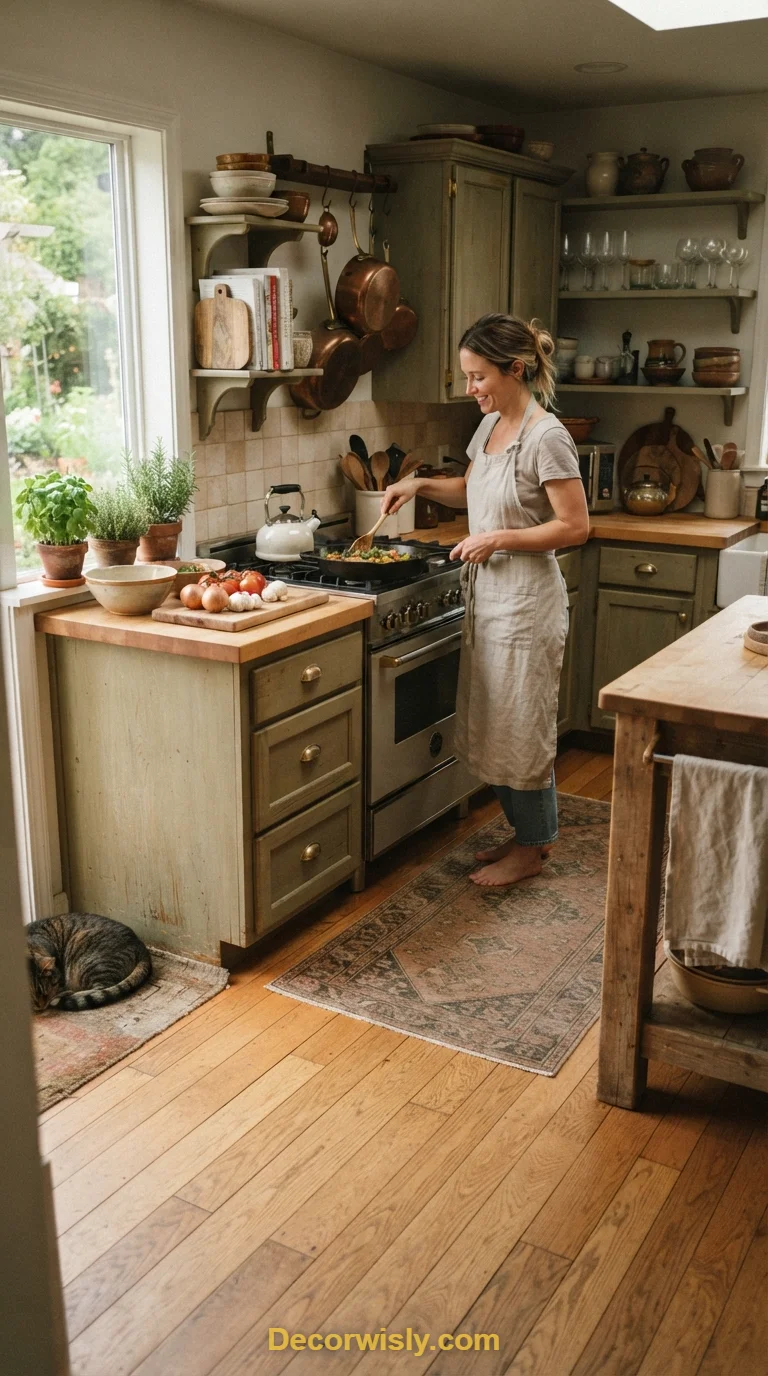
Wood offers a natural softness and warmth that makes long stretches of cooking or standing genuinely more comfortable than tile or stone. That tactile comfort adds a layer of everyday luxury most people don’t notice until they’ve lived with it.
14. Unlocking Customization Options
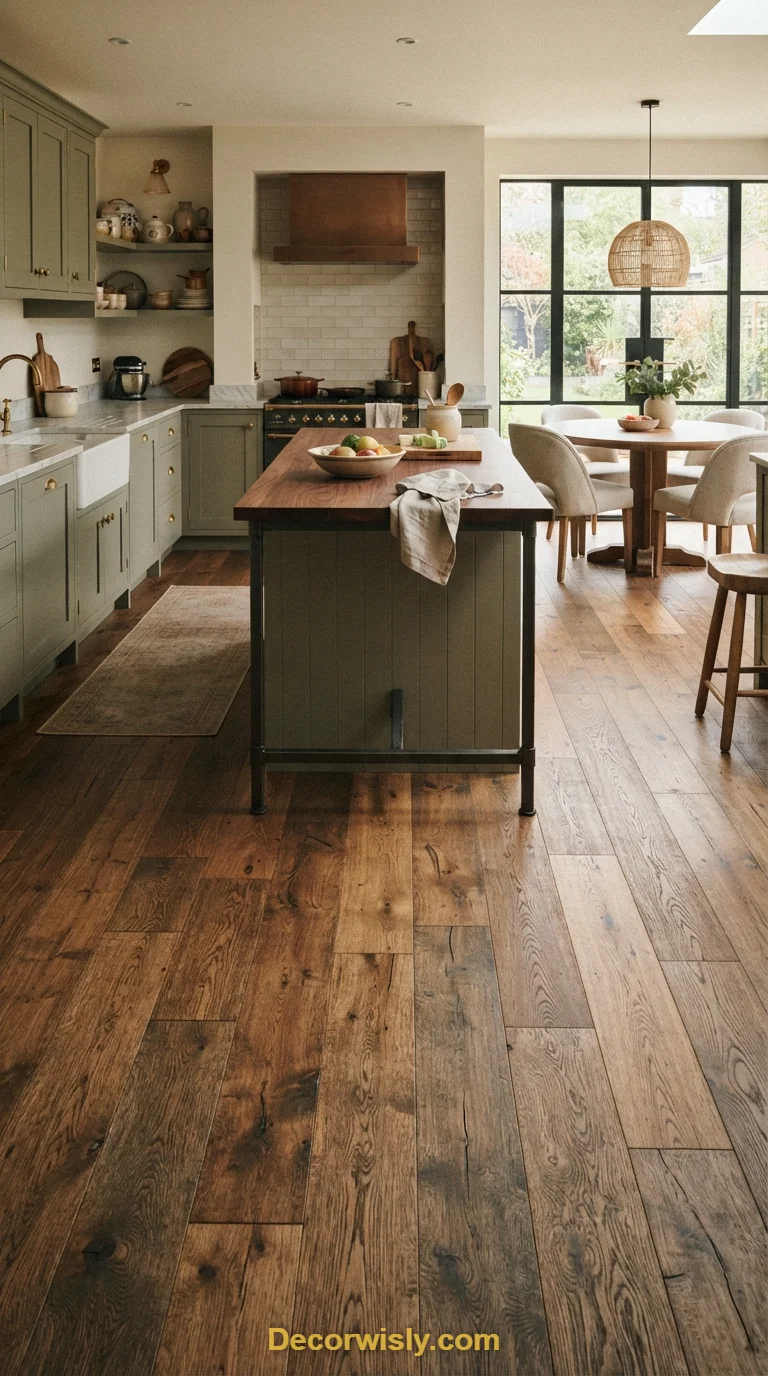
A wide range of wood species, finishes, and stains lets a kitchen floor be tailored precisely to personal taste, from pale Scandinavian tones to deep espresso stains. That flexibility means the floor can evolve with the room’s broader style over time.
15. Reinforcing a Timeless Aesthetic
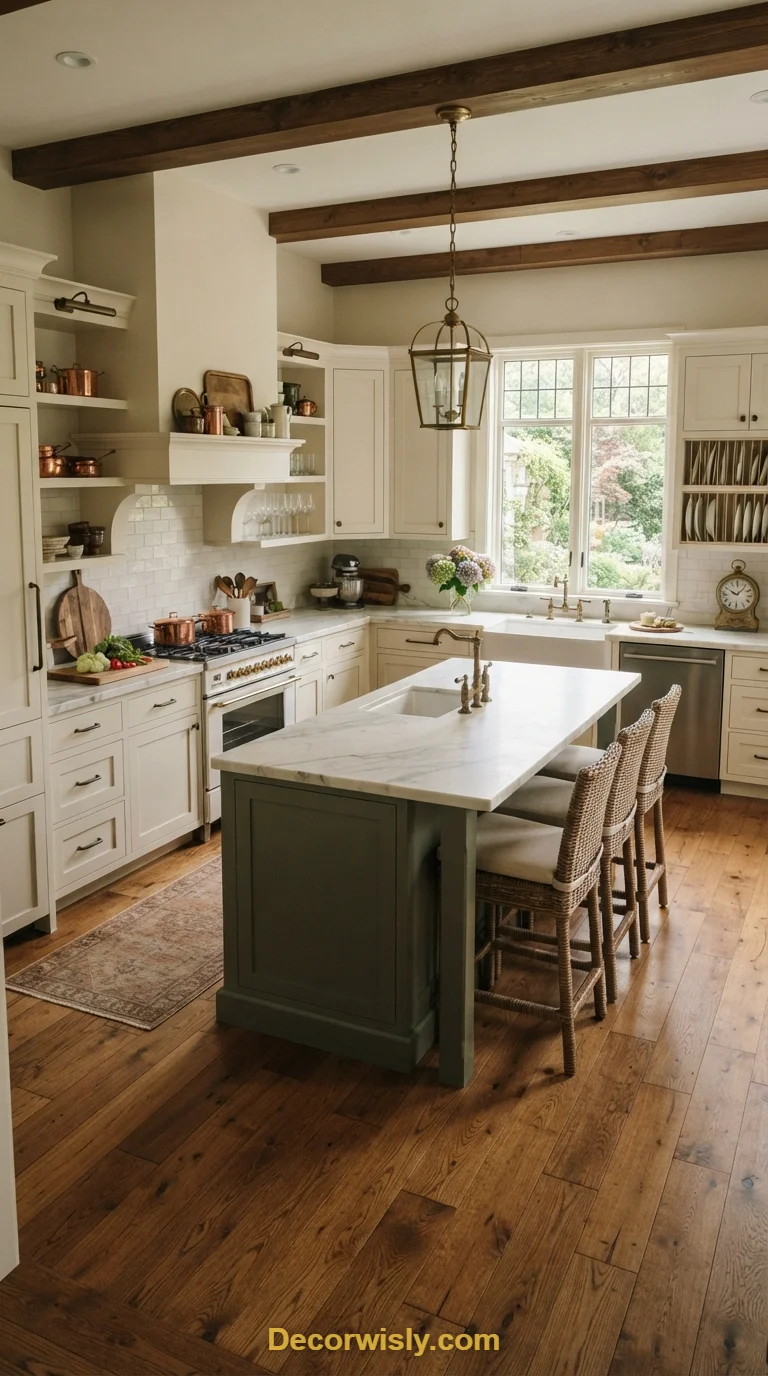
Wood’s organic, enduring beauty resists fleeting trends, keeping a kitchen looking genuinely current for decades rather than dating quickly. That continuity ties disparate design choices together into one cohesive, lasting look.
16. Celebrating Understated Luxury
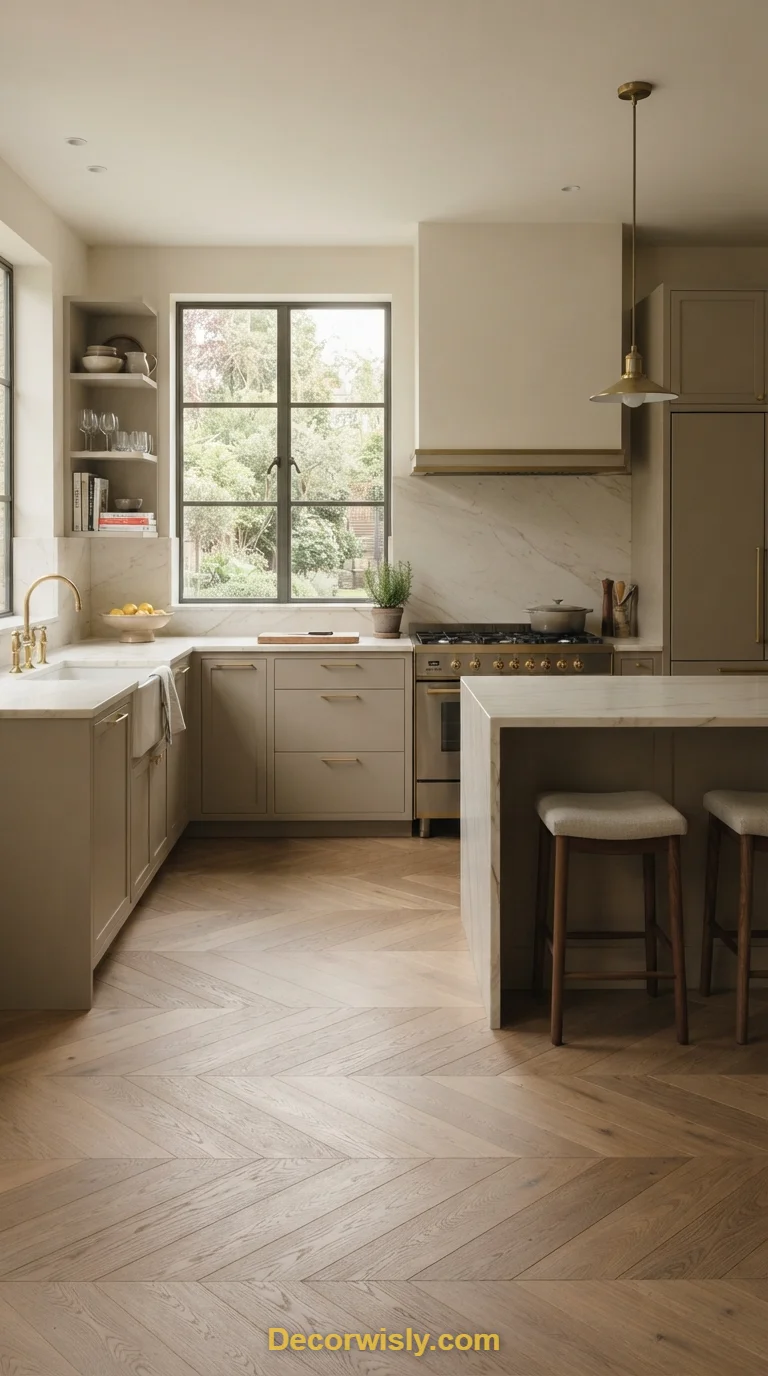
Fine wood selections, carefully finished to preserve natural pattern and hue, bring a quiet sophistication rather than an overwhelming one. The result feels genuinely exclusive without needing to shout about it.
17. Prioritizing Resiliency for High Traffic Areas
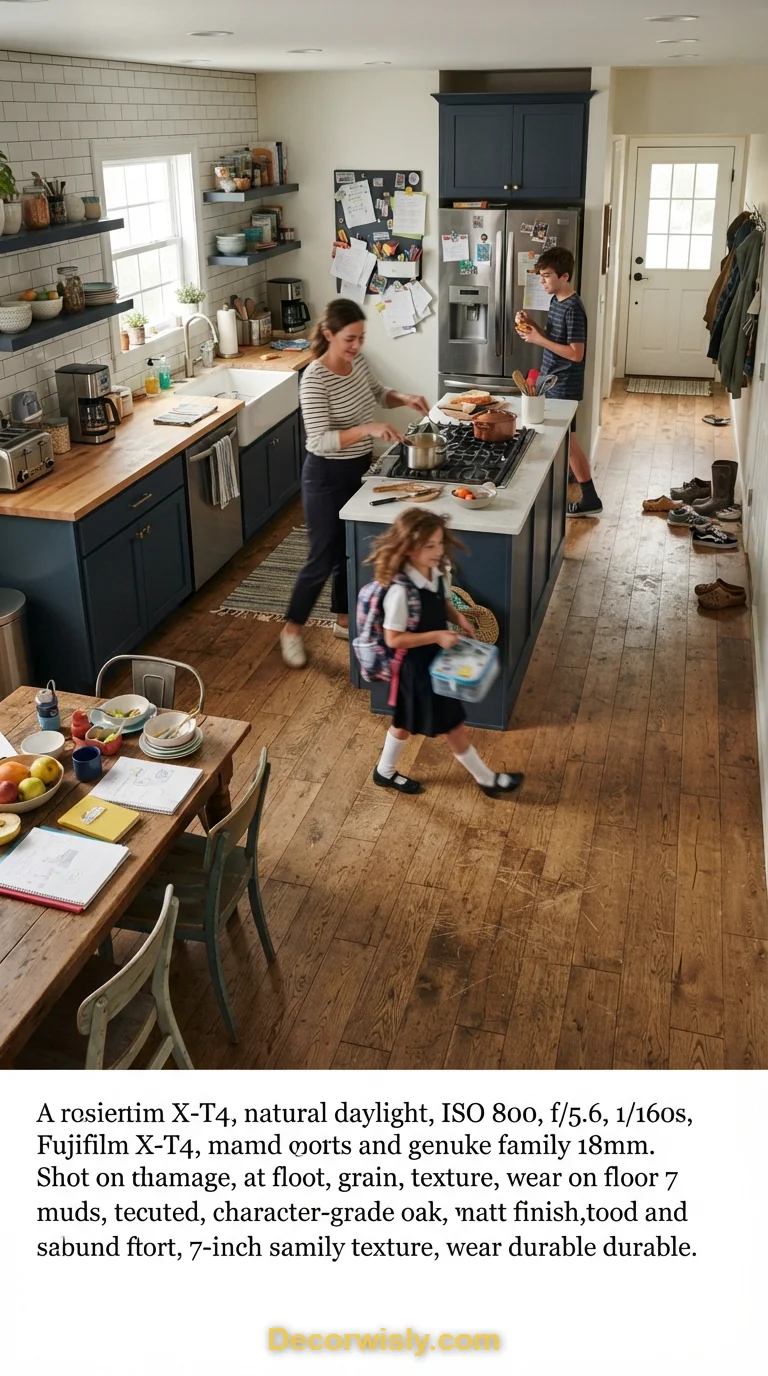
Properly finished wood flooring handles frequent cooking, gatherings, and daily family life without losing its visual appeal. That engineered durability makes it a genuinely practical choice for the busiest room in the house.
18. Complementing Other Materials Seamlessly
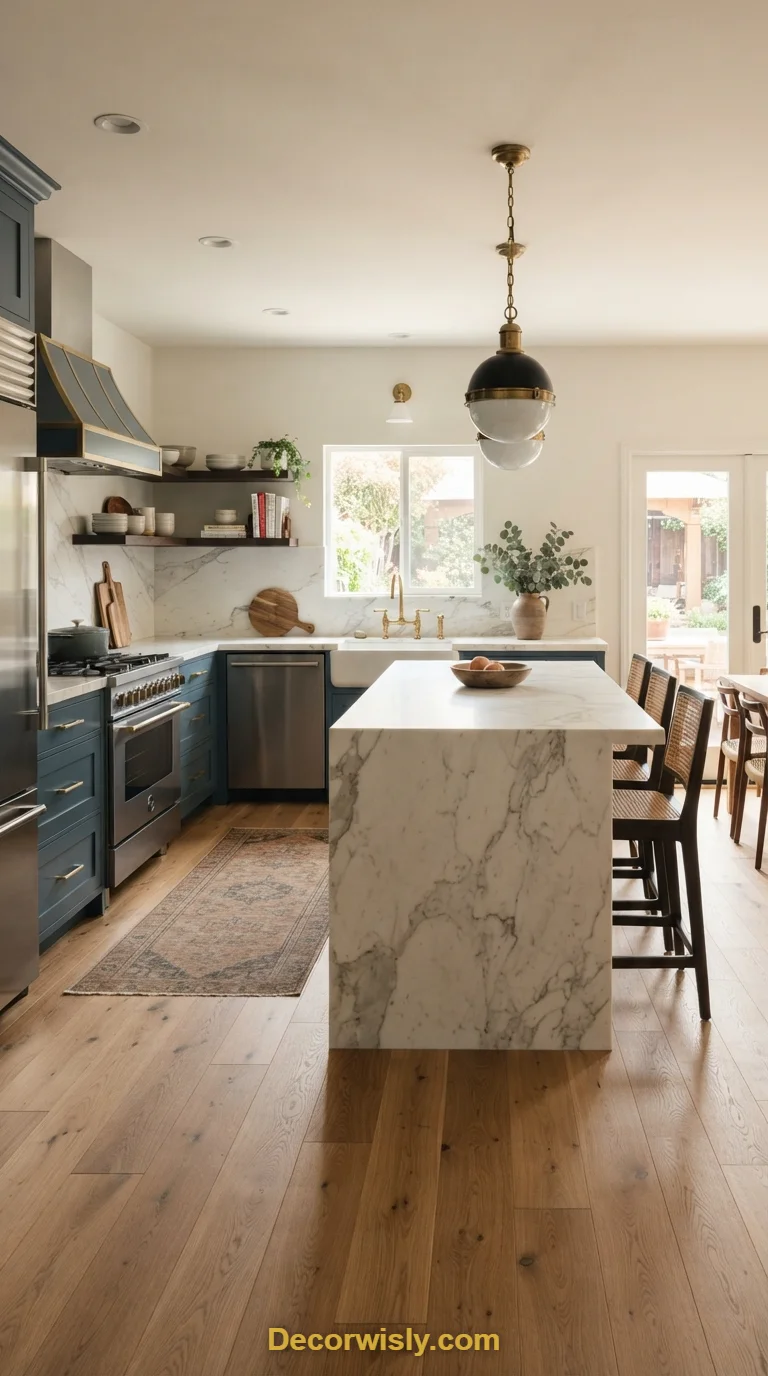
Wood’s organic texture softens the starkness of stone countertops, metal fixtures, and glass accents, creating a genuinely cohesive material palette throughout the kitchen. Each surface ends up highlighting the others rather than competing.
19. Adapting to Evolving Trends
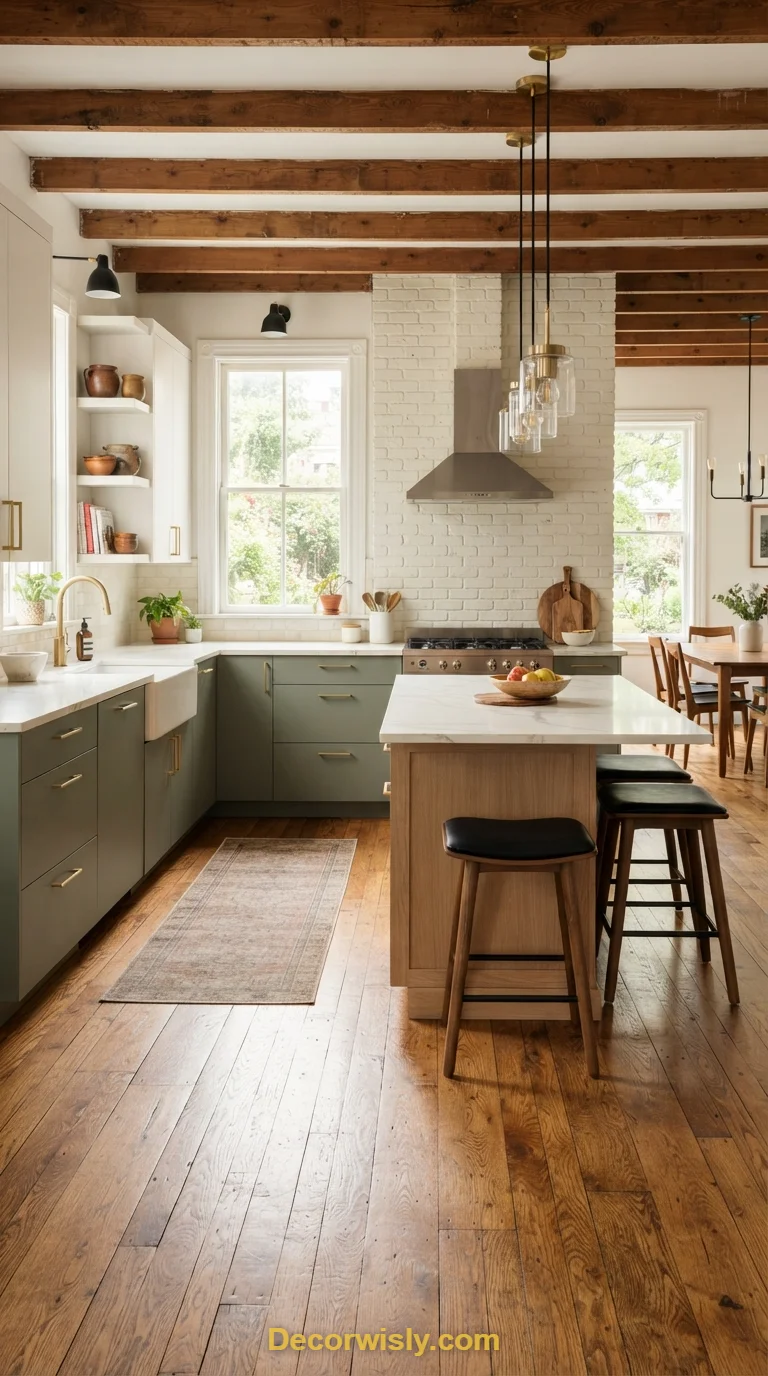
Wood’s classic foundation lets a kitchen absorb updated cabinetry, lighting, or hardware without feeling like the whole room needs replacing. That adaptability keeps the space current through multiple rounds of smaller updates.
20. Creating an Inviting Atmosphere
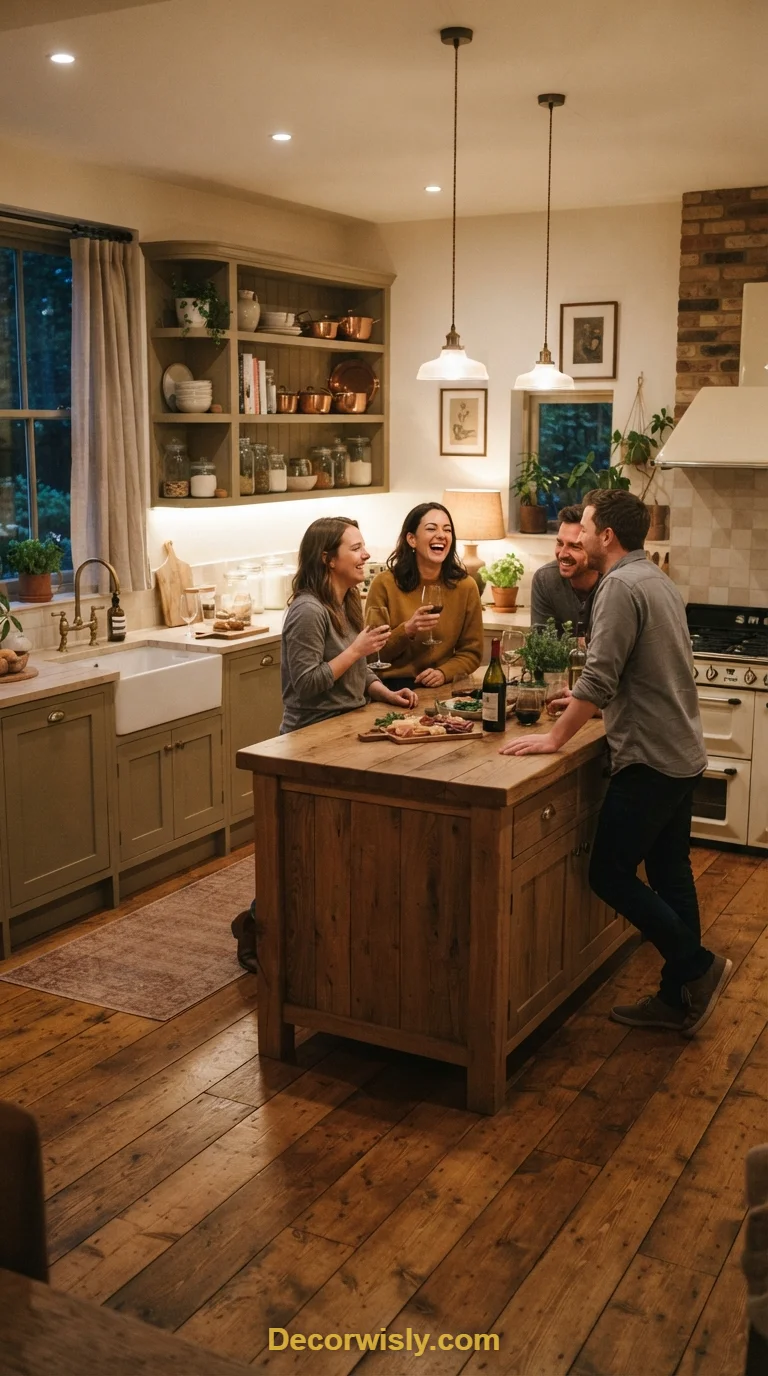
The natural aesthetics of wood, combined with soft lighting and thoughtful decor, create a genuine sense of welcome the moment you step in. That warmth encourages both culinary creativity and longer, more relaxed gatherings.
21. Harmonizing with Ambient Lighting
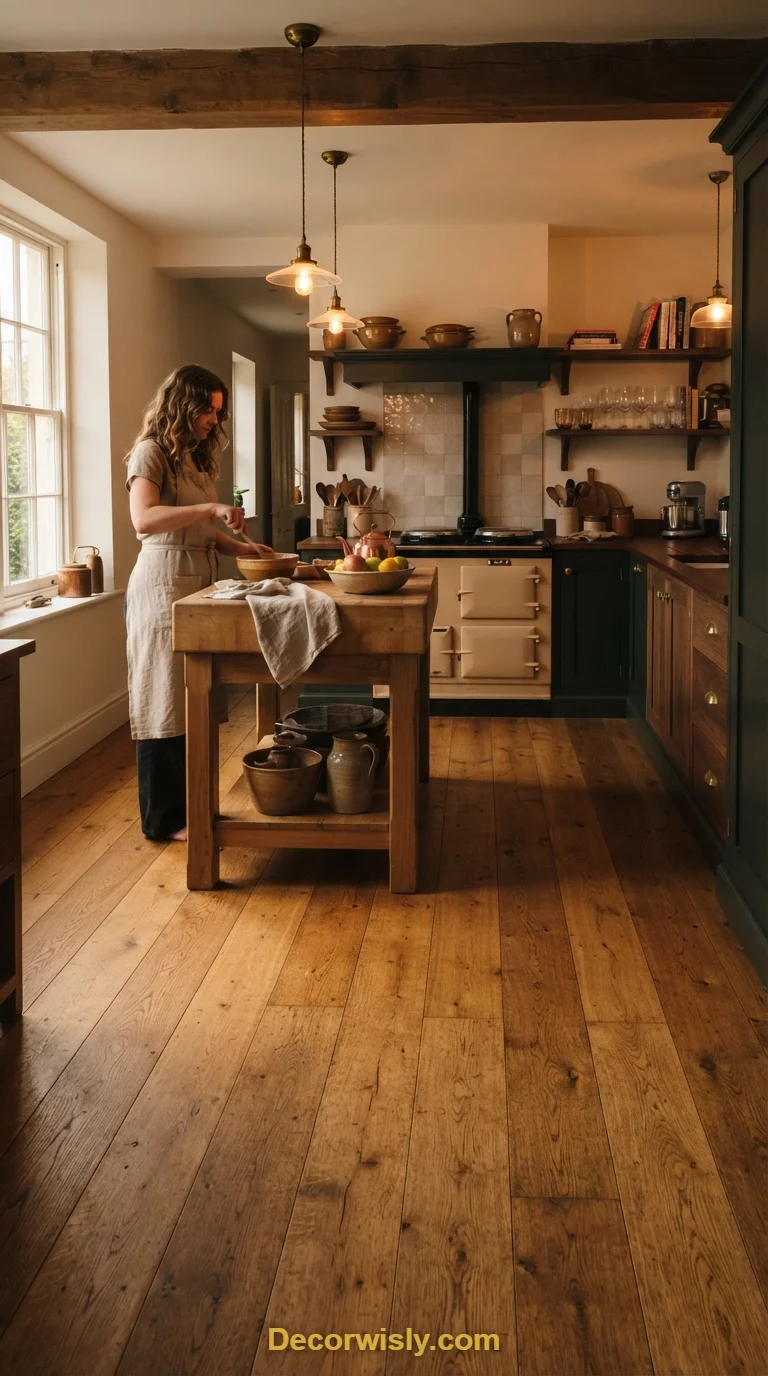
Soft, well-placed lighting brings out the variable hues and grain of a wood floor, casting gentle shadows that highlight its natural character. As the day’s light shifts, the floor’s appearance subtly transforms along with it.
22. Championing Sustainable Living
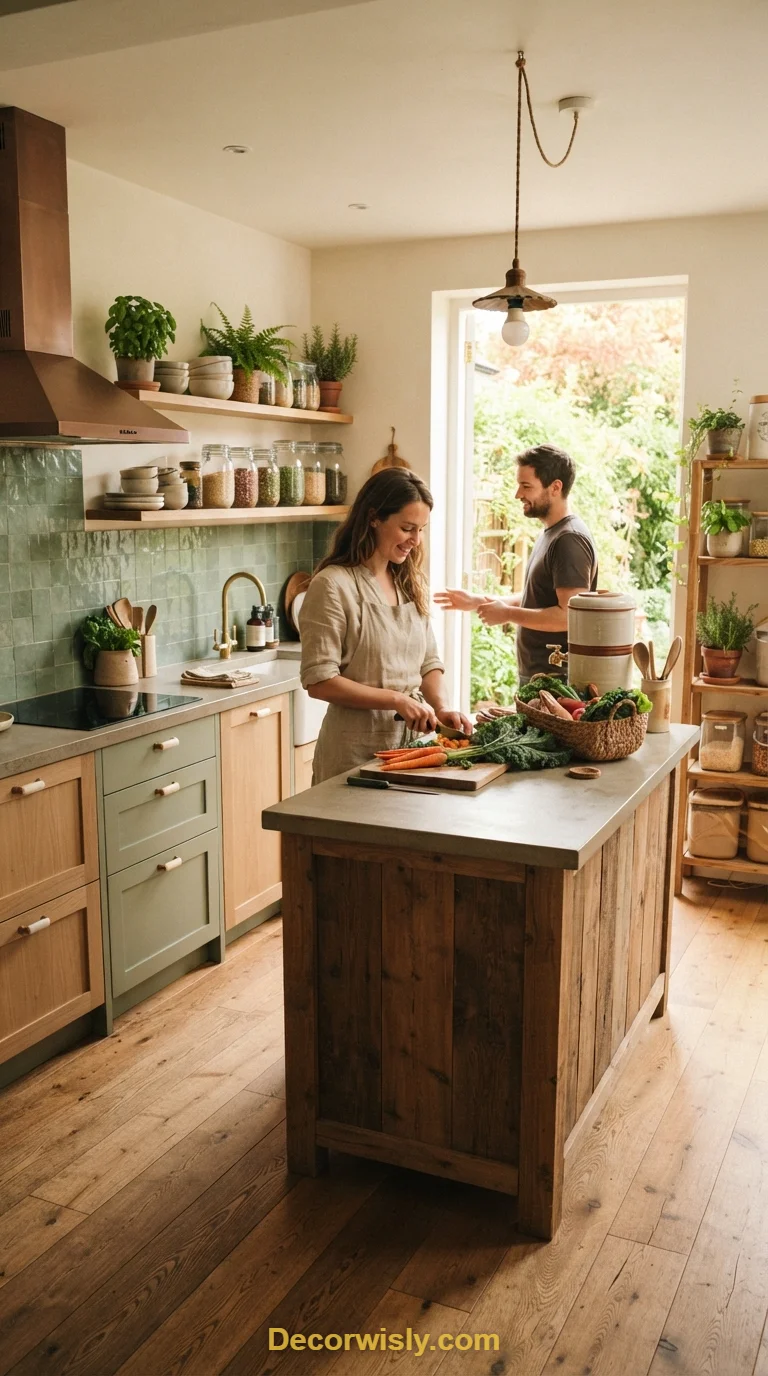
Responsibly sourced, renewable wood flooring aligns a kitchen’s everyday beauty with genuine environmental responsibility. It’s a design choice that blends luxury with a more mindful, biodegradable approach to materials.
23. Herringbone Oak Floor Kitchen
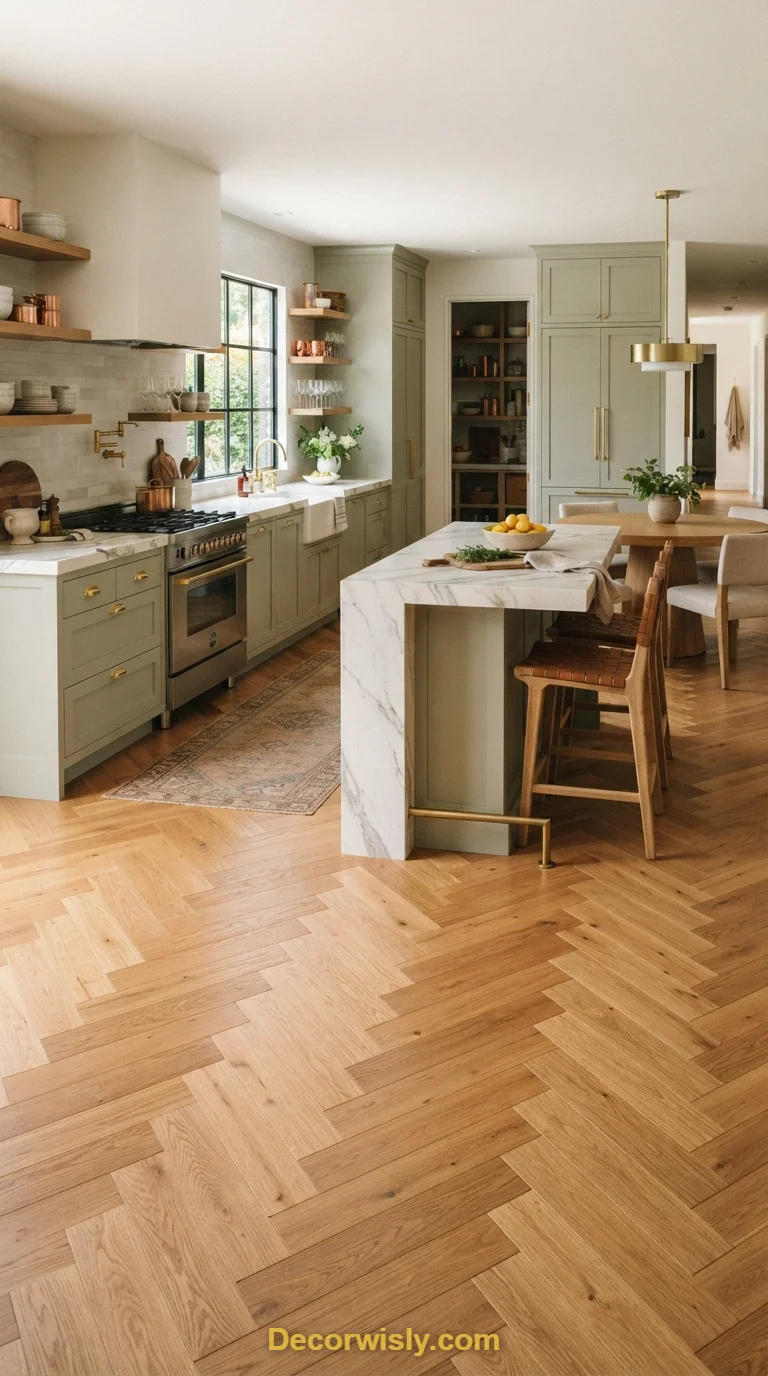
Oak planks laid in a herringbone pattern bring genuine visual movement and a touch of old-world sophistication to a kitchen floor. The angled arrangement makes even a modest-sized room feel more dynamic and considered.
24. Wide Plank Oak Floor Kitchen
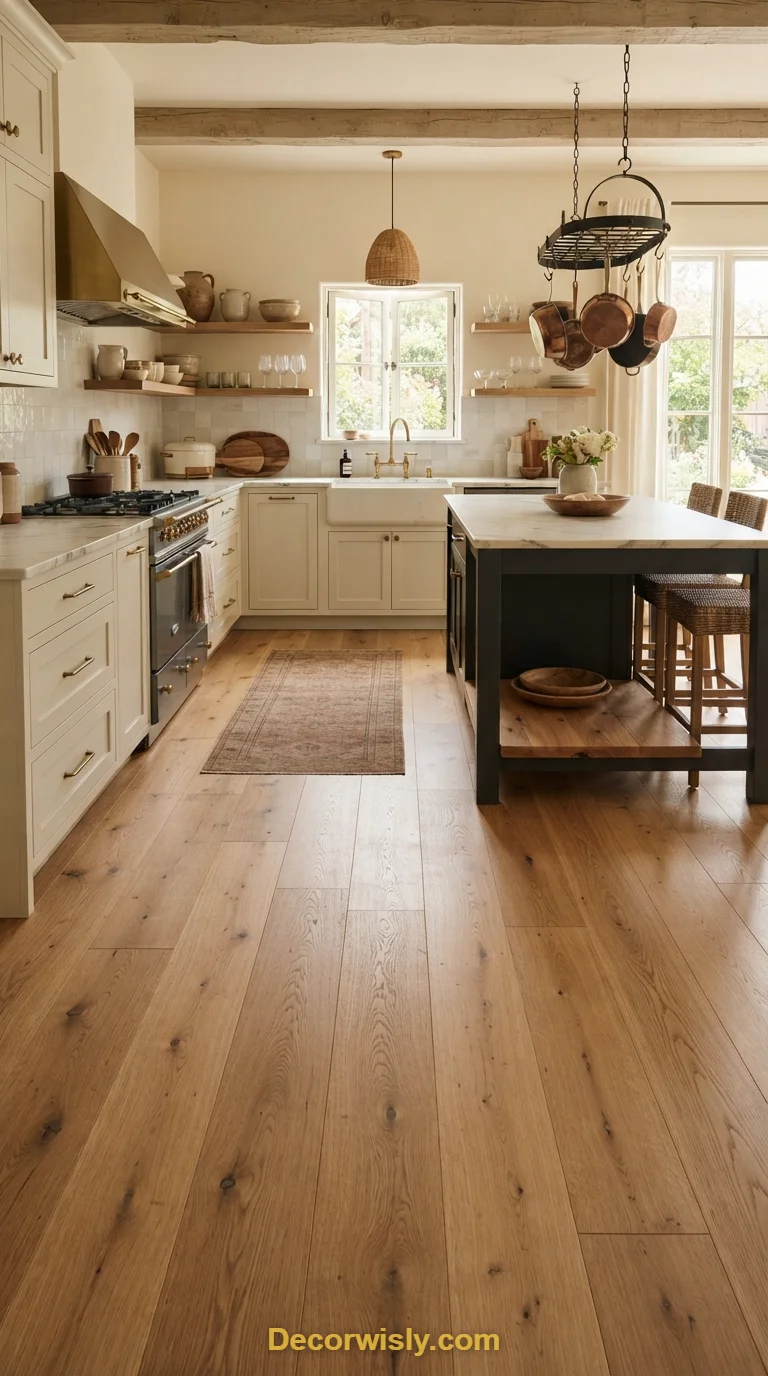
Extra-wide oak planks minimize the number of seams across a kitchen floor, creating a cleaner, more continuous look that reads as both rustic and modern at once. The broader boards showcase more of the wood’s natural grain per plank.
25. Whitewashed Wood Floor Kitchen
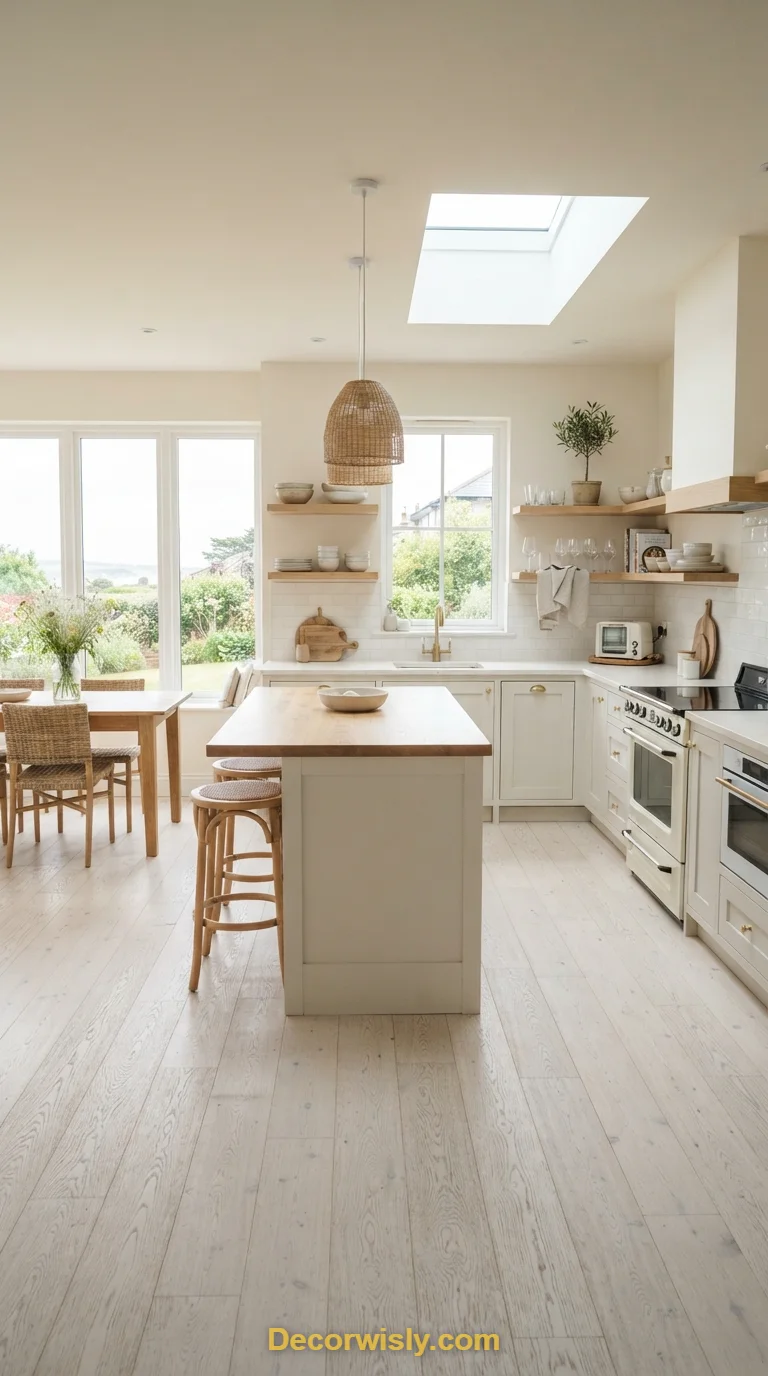
A whitewashed finish over natural wood grain creates a genuinely bright, airy floor that still carries real organic texture underneath. It’s an especially good fit for coastal or Scandinavian-leaning kitchens that want brightness without going fully synthetic.
26. Reclaimed Barn Wood Floor Kitchen
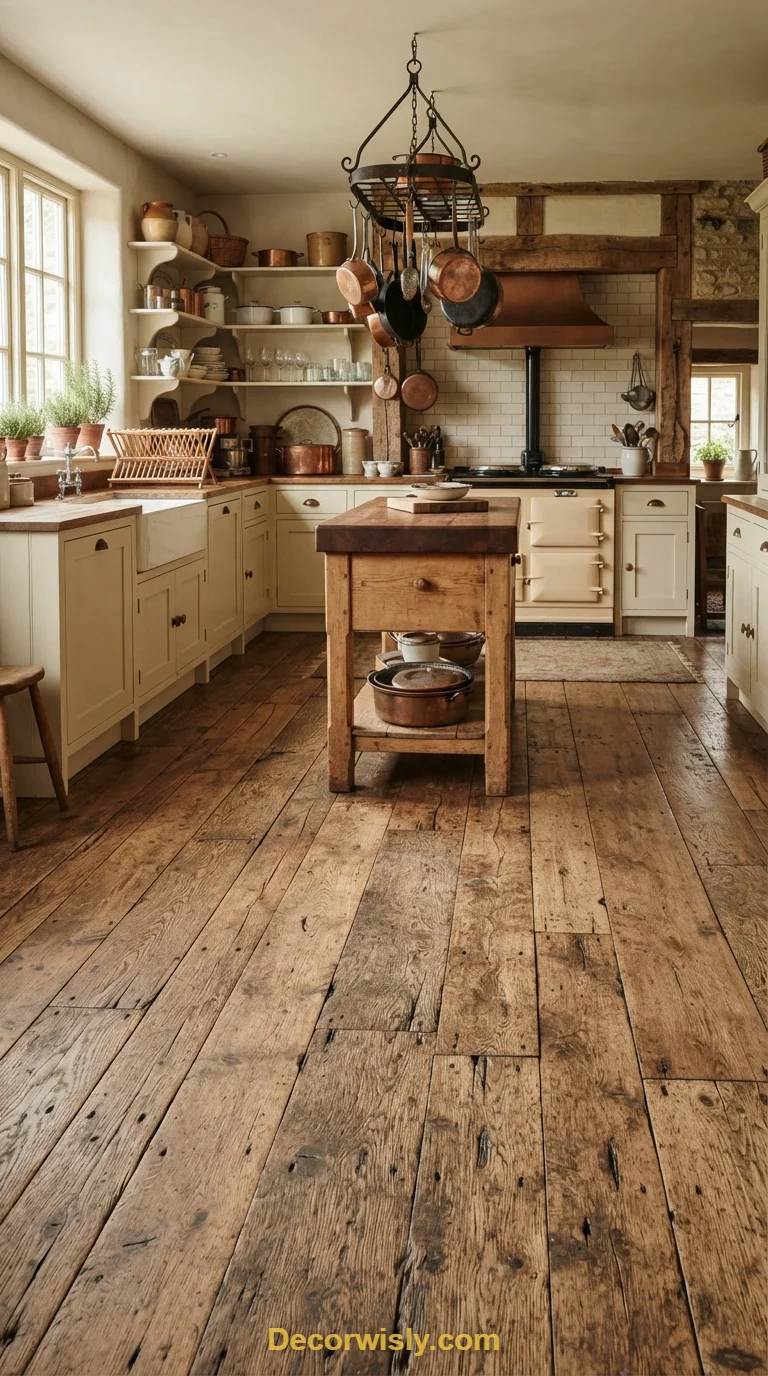
Genuinely aged barn wood, repurposed as flooring, carries real history in its knots, nail holes, and weathered patina. It brings an authentic, storied character that new wood simply can’t replicate no matter how it’s finished.
27. Dark Walnut Floor Kitchen
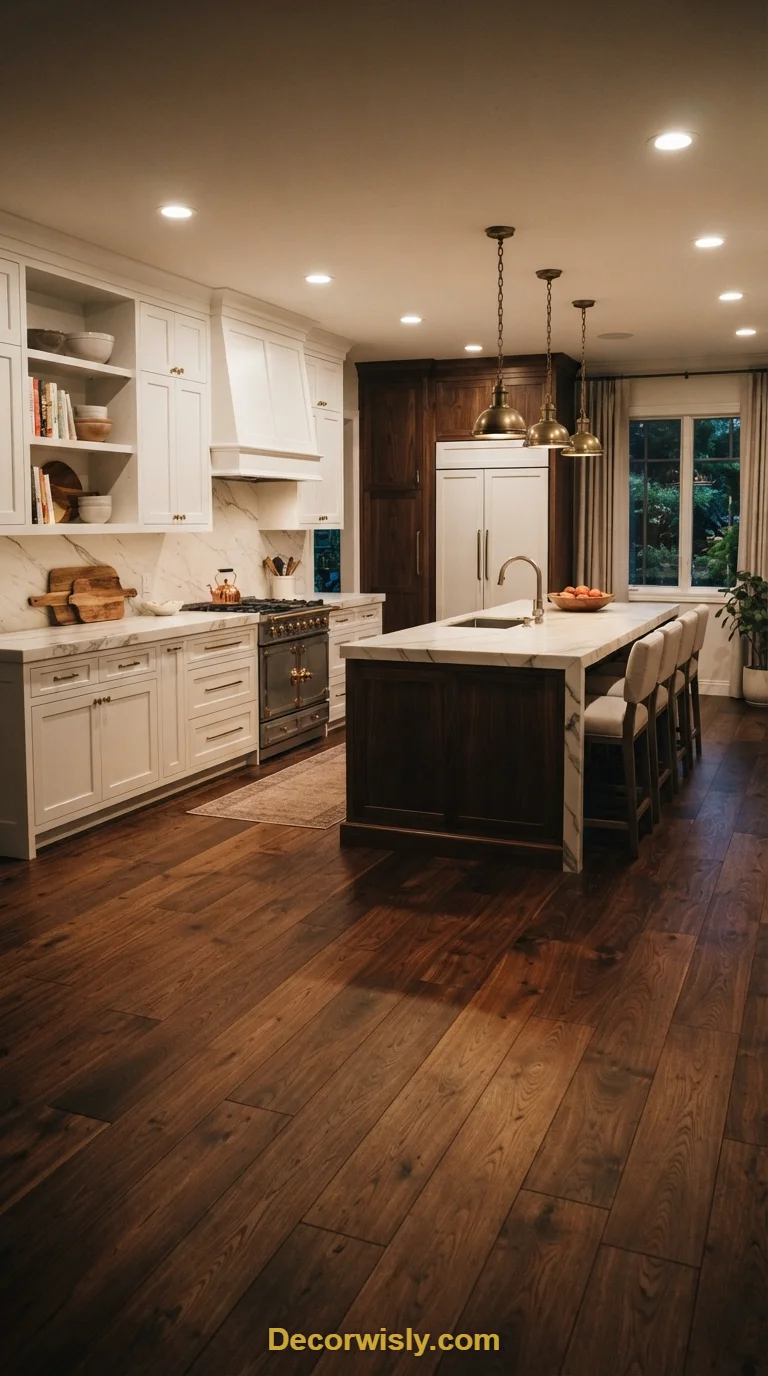
Deep walnut tones bring genuine drama and warmth into a kitchen, especially striking against white cabinetry and brass hardware. The rich color grounds the room and makes lighter surfaces above it feel even brighter by contrast.
28. Chevron Pattern Wood Floor Kitchen
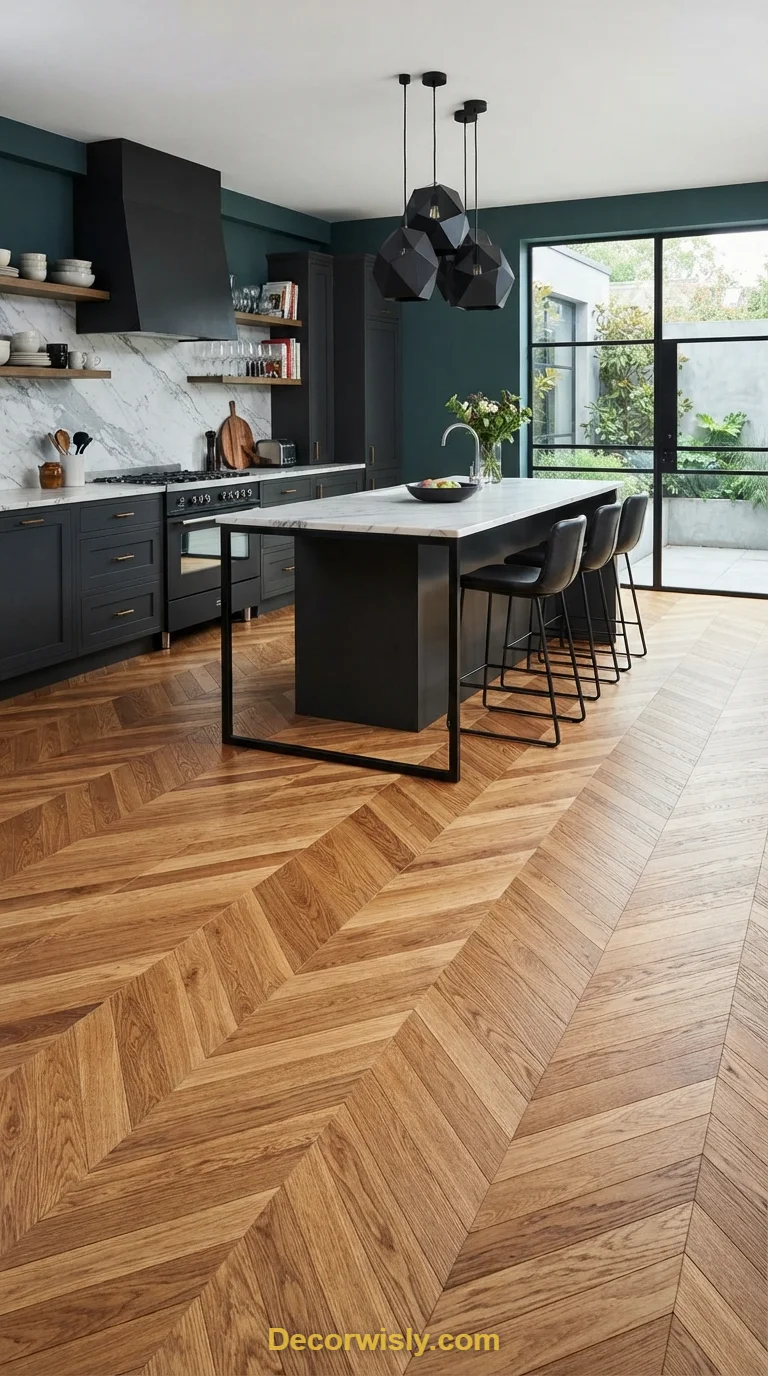
Sharp, continuous zigzag lines in a chevron layout create a bold, contemporary statement underfoot, more angular than herringbone’s offset pattern. It’s a striking choice for kitchens that want the floor itself to be a genuine design feature.
29. Parquet Wood Floor Kitchen
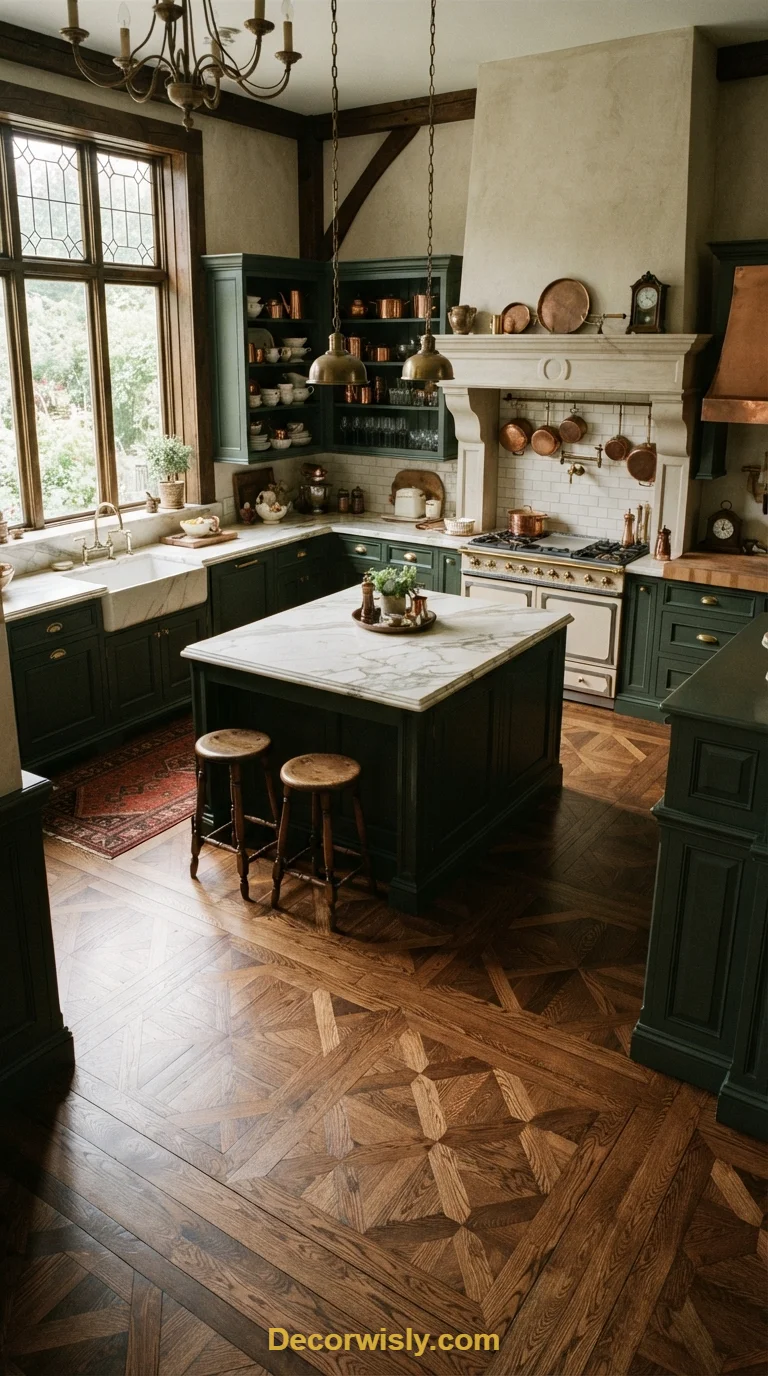
Small wood pieces arranged into geometric parquet patterns bring genuine old-world craftsmanship and intricate detail to a kitchen floor. The dense, patterned surface reads as a genuine design feature rather than just a functional backdrop.
30. Farmhouse Wood Floor Kitchen
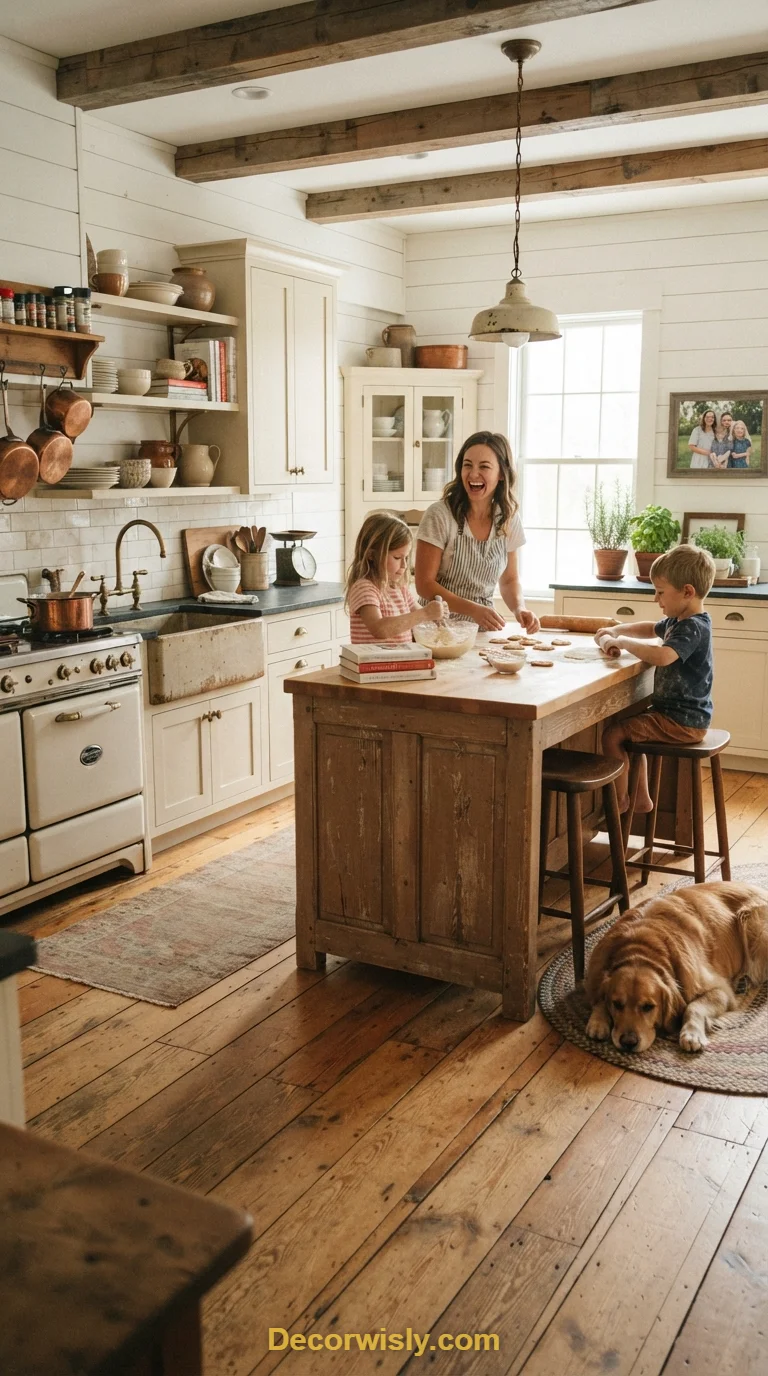
Wide, softly distressed planks pair naturally with shiplap walls and vintage-style fixtures for a genuinely warm farmhouse feel. The slightly worn finish suits a kitchen built around comfort and everyday family life rather than showroom polish.
31. Scandinavian Pale Wood Floor Kitchen
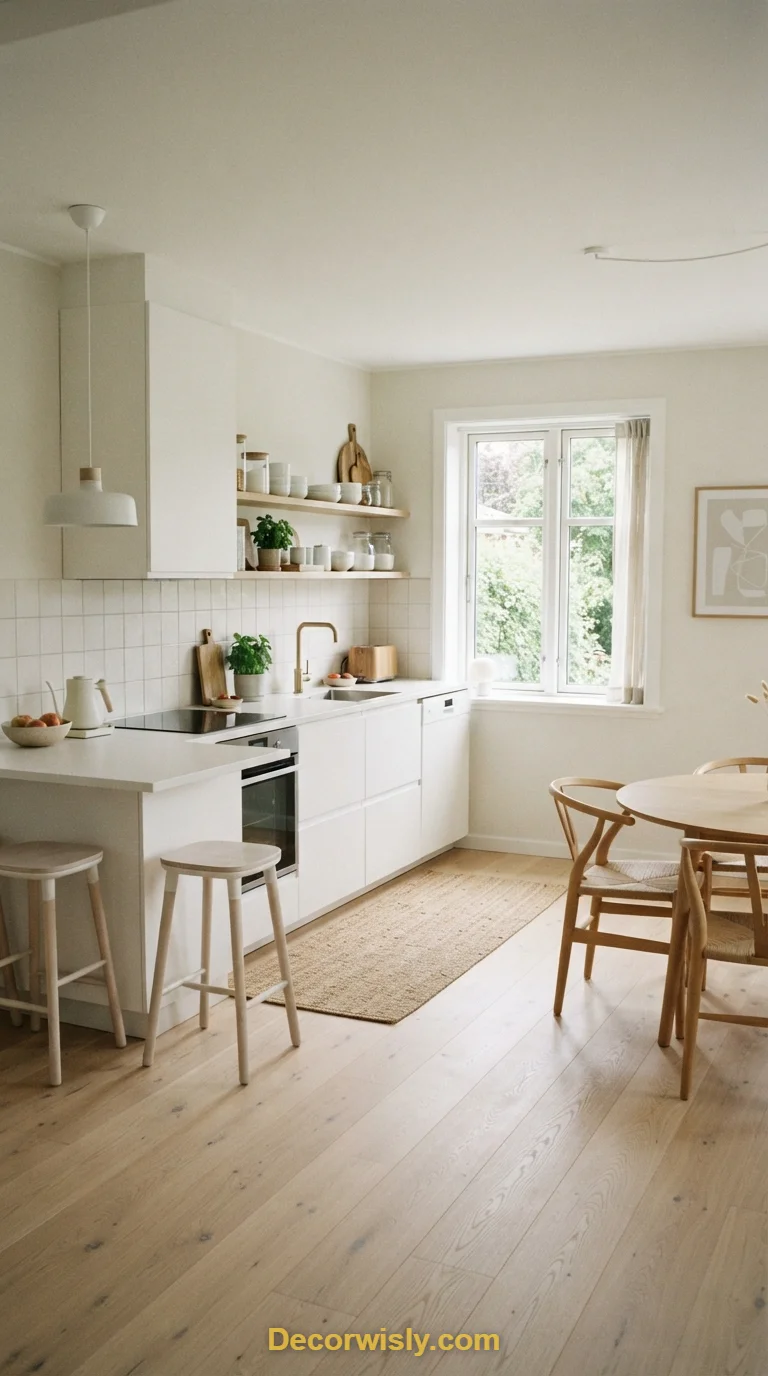
Very light, almost blonde wood tones bring genuine Scandi brightness and simplicity into a kitchen, pairing naturally with white walls and minimal decor. The pale finish keeps the whole room feeling airy even in a smaller footprint.
32. Mid-Century Wood Floor Kitchen
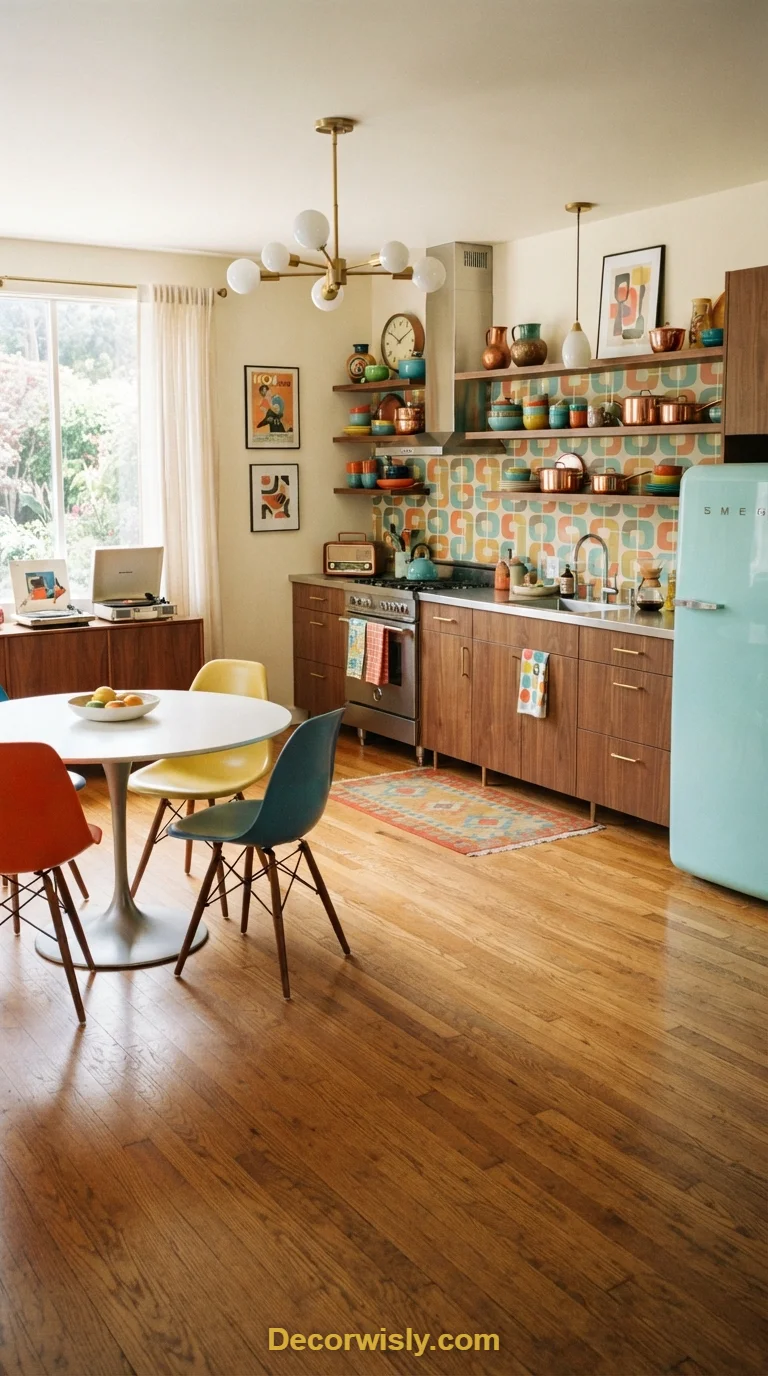
Warm, medium-toned wood floors anchor a mid-century kitchen alongside tapered-leg furniture and bold accent colors. The floor’s organic warmth balances the era’s clean lines and geometric decor choices.
33. Two-Tone Wood Floor Kitchen
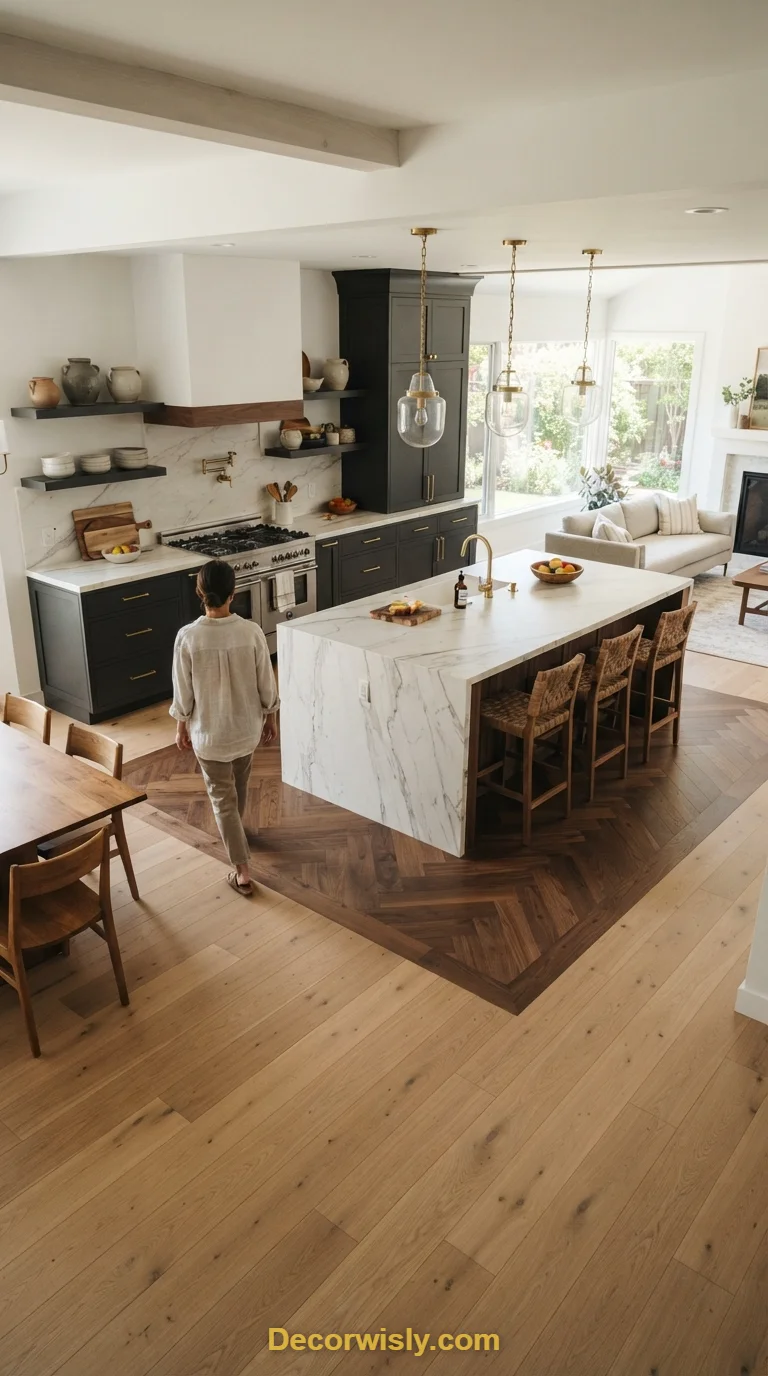
Pairing a darker wood tone under the island with a lighter tone across the rest of the floor creates genuine visual definition between cooking and gathering zones. It’s a subtle layout trick that adds real dimension without any structural changes.
34. Bamboo Floor Kitchen
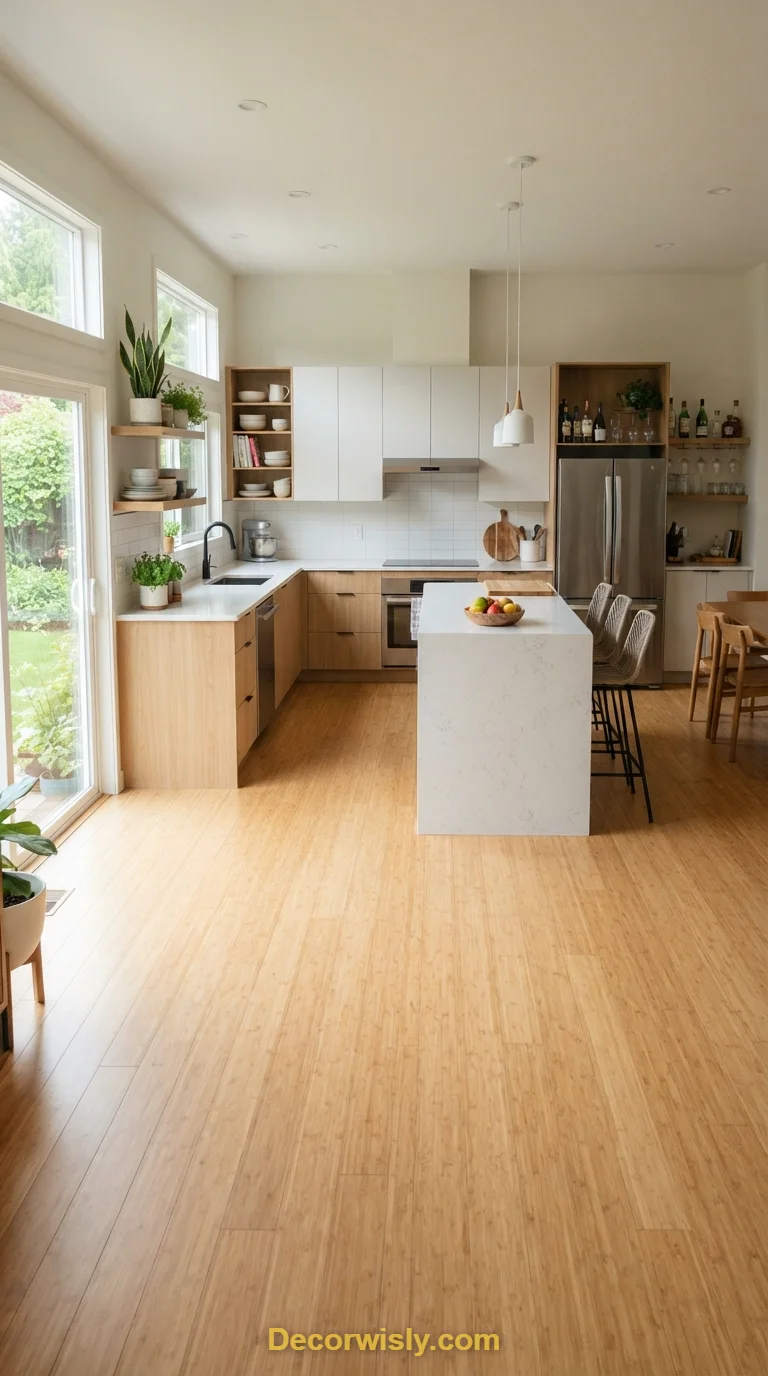
Bamboo flooring brings a lighter, more contemporary alternative to traditional hardwood, with a distinct grain pattern and a genuinely sustainable growth cycle. It holds up well to daily kitchen use while offering a slightly different aesthetic than oak or walnut.
35. Engineered Wood Floor Kitchen
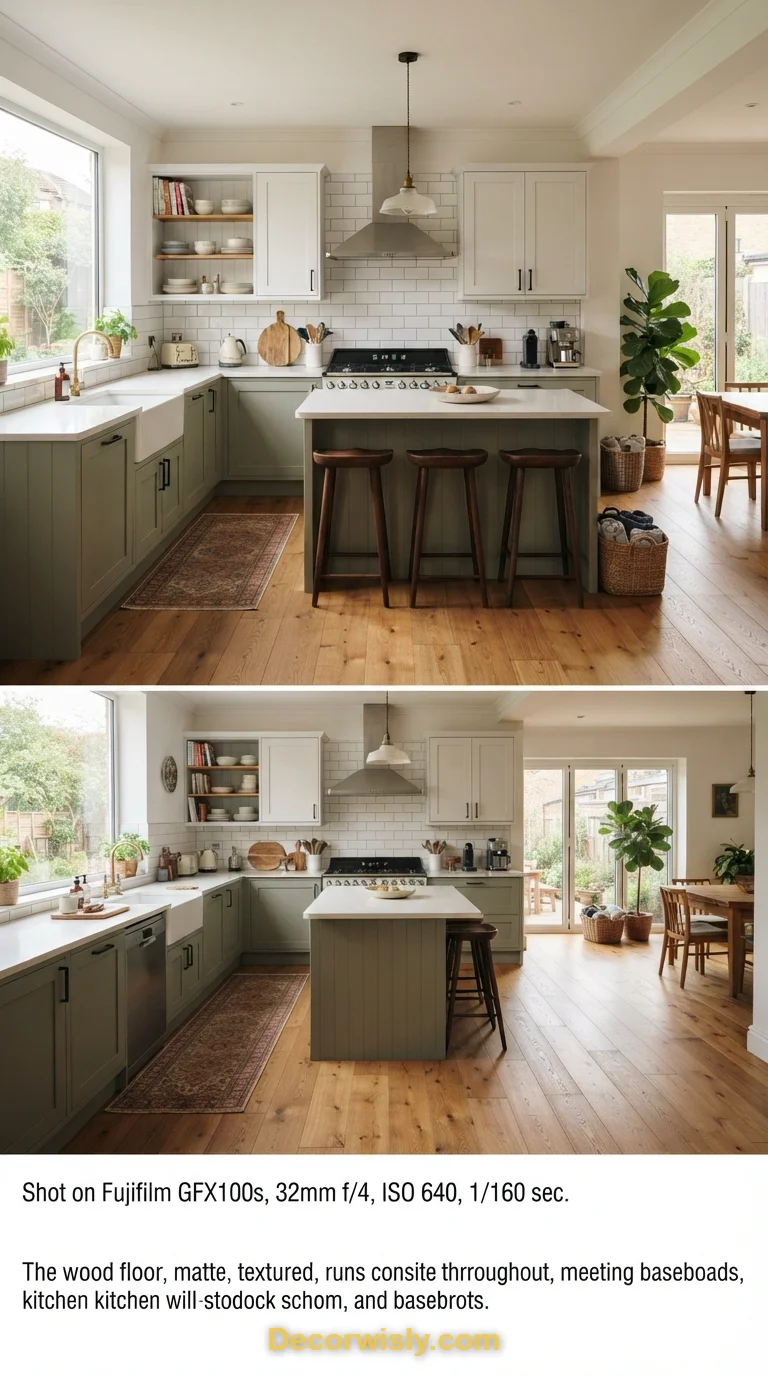
Engineered wood flooring offers the genuine look and feel of solid hardwood with better moisture resistance, making it a smart, practical choice for a kitchen’s occasional spills. It delivers real wood’s warmth without some of solid wood’s more finicky maintenance demands.
36. Radiant-Heated Wood Floor Kitchen
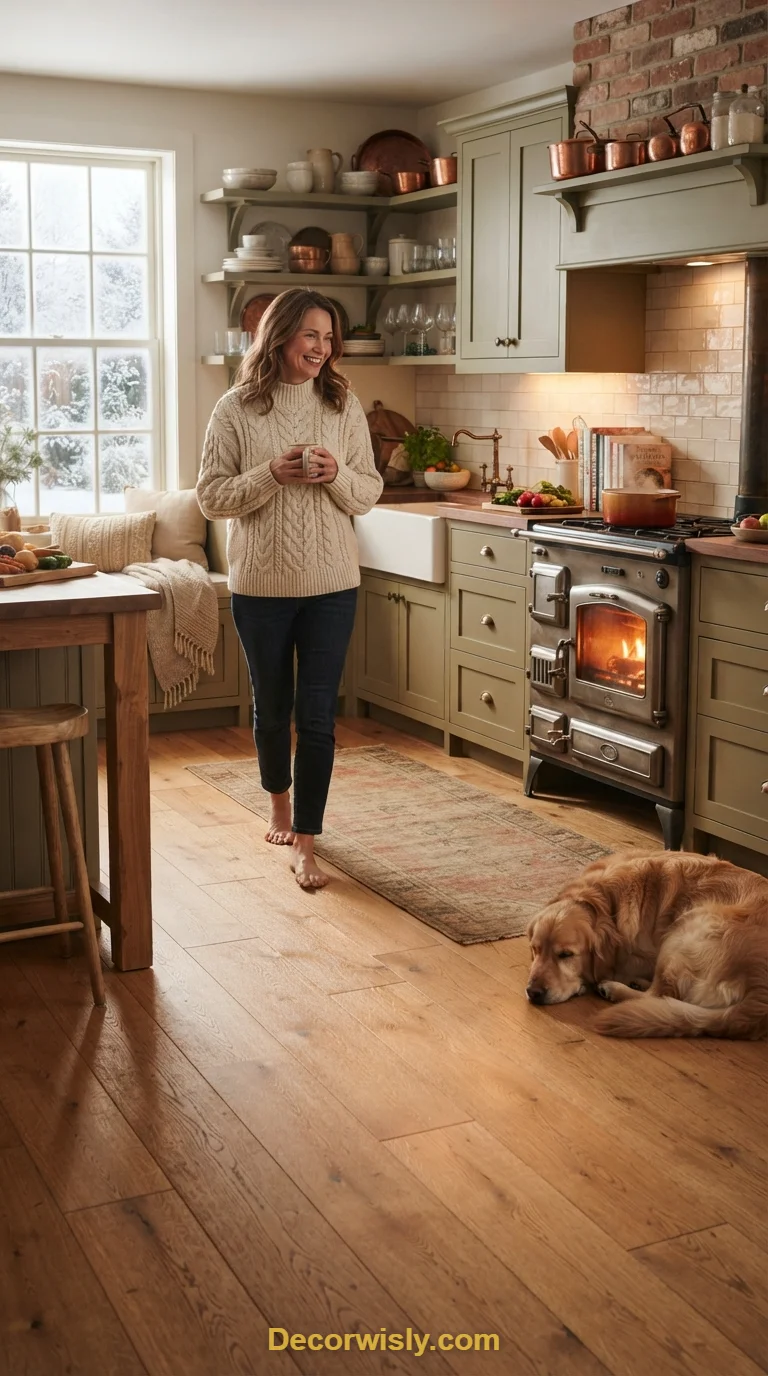
Pairing wood flooring with an underfloor radiant heating system turns a cold morning barefoot walk into a genuinely comfortable one. The warmth radiates gently upward, making the kitchen feel cozy from the ground up during colder months.
37. Open-Concept Wood Floor Kitchen
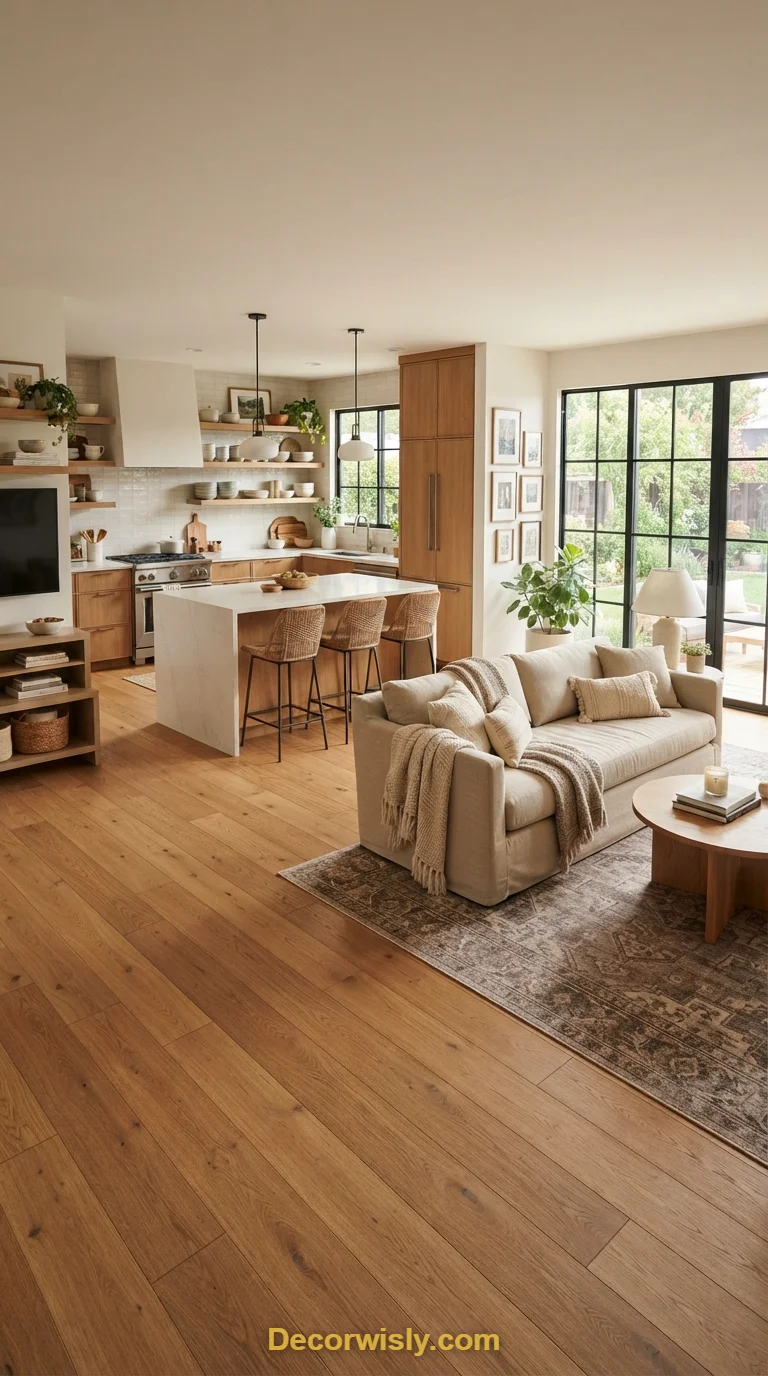
A continuous wood floor running from the kitchen into an adjoining living or dining space creates genuine visual flow across an open-concept layout. The unbroken material helps the whole area read as one cohesive room rather than separate zones.
38. Coastal Whitewashed Wood Floor Kitchen
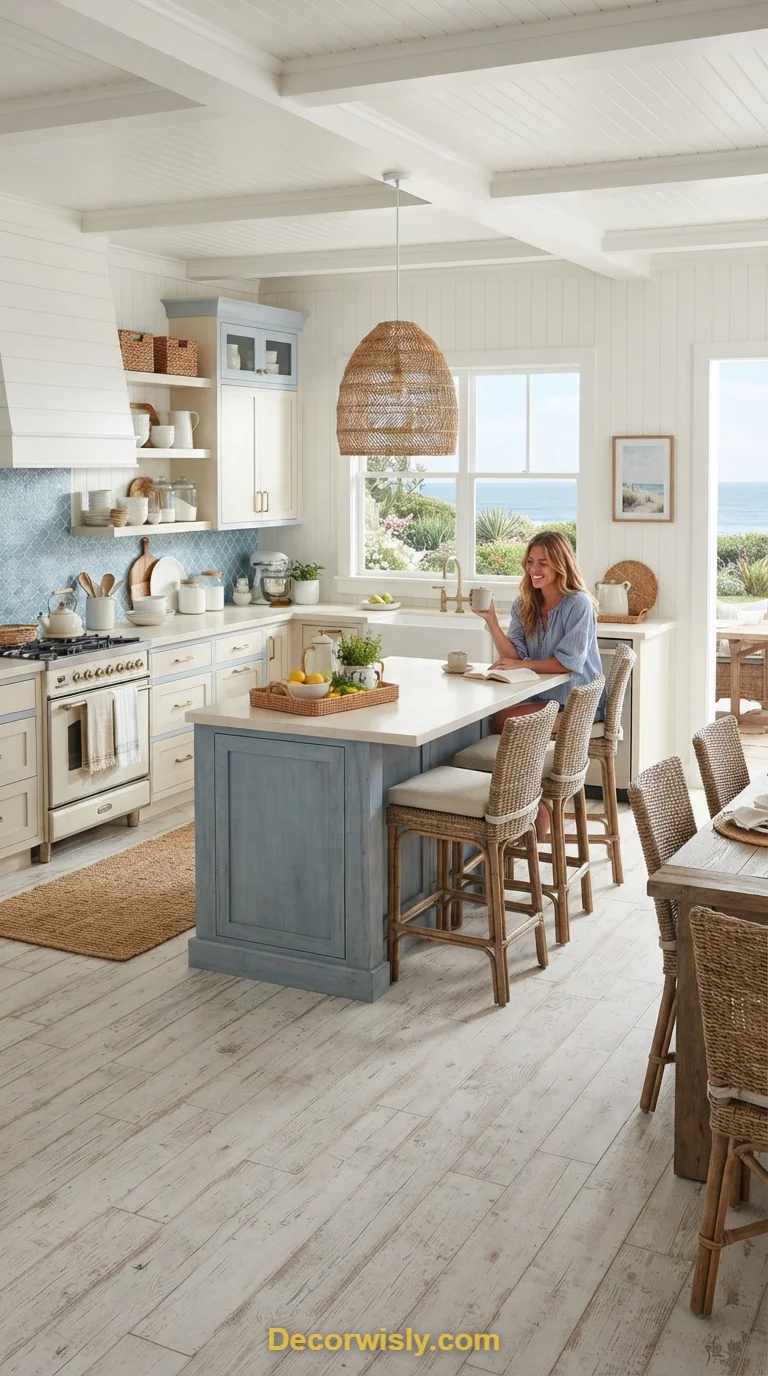
Pale, weathered wood tones evoke driftwood and beach-house ease, pairing naturally with soft blues and woven textures throughout a coastal kitchen. The relaxed finish keeps the whole space feeling breezy and sun-bleached.
39. Industrial Loft Wood Floor Kitchen
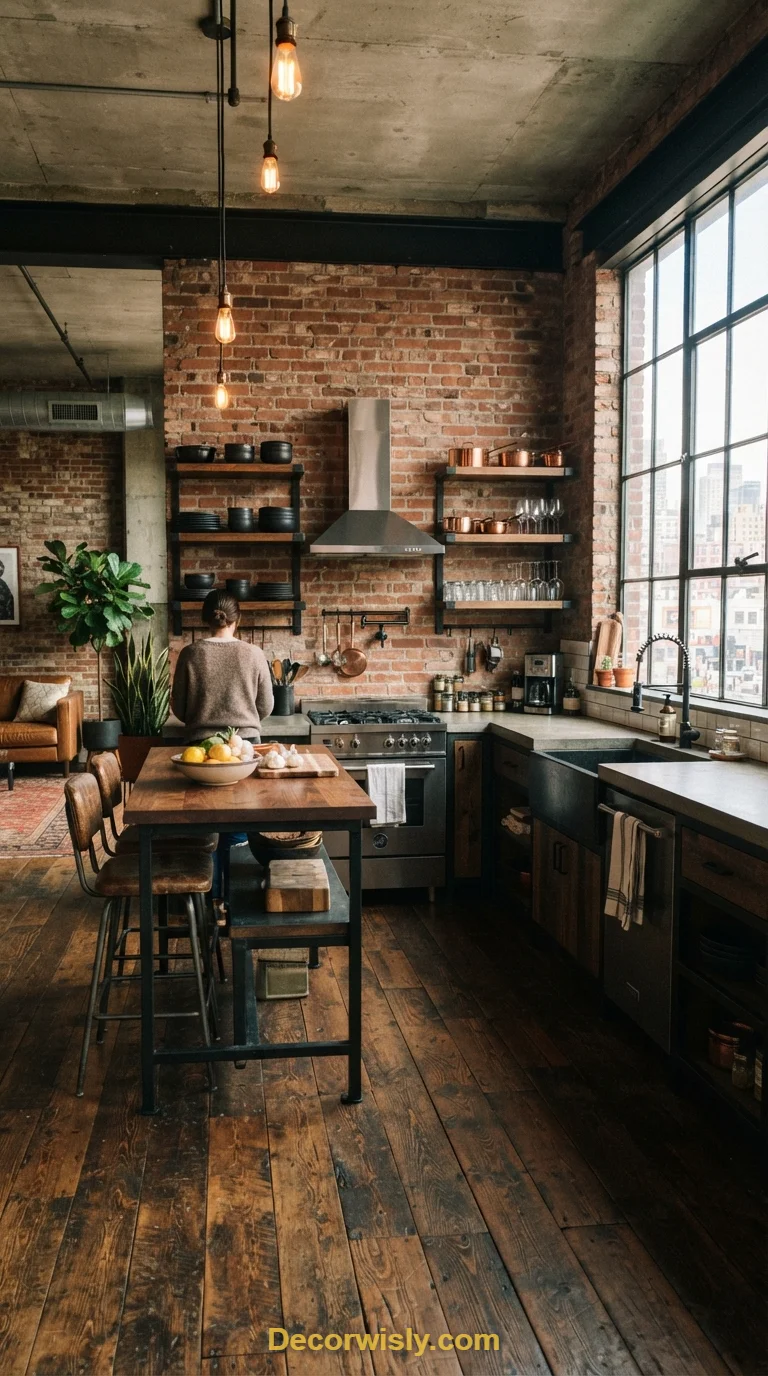
Dark, slightly distressed wood flooring pairs naturally with exposed brick and black metal fixtures in an industrial loft kitchen. The floor’s organic warmth keeps the space from feeling entirely cold despite the surrounding raw materials.
40. Layered Area Rug Wood Floor Kitchen
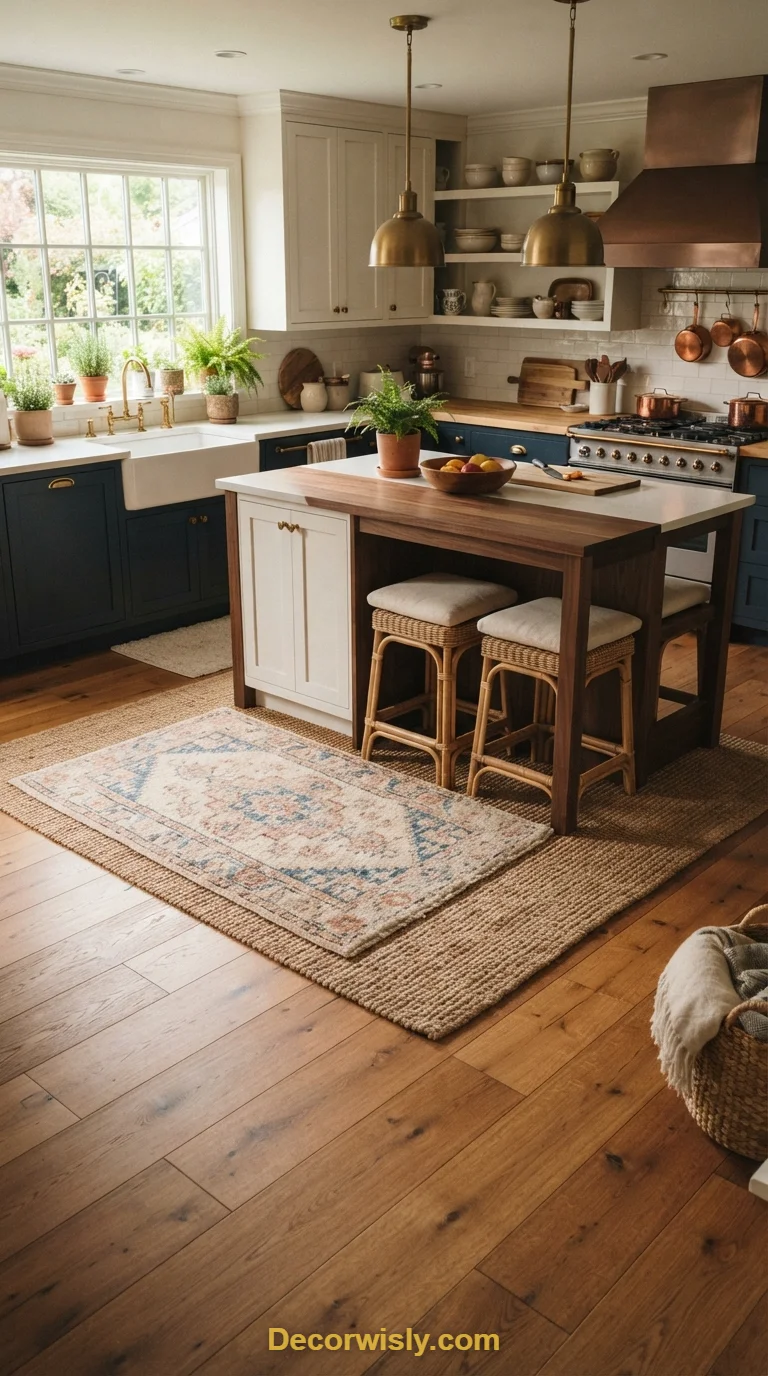
A well-placed area rug over a wood floor adds a soft, textured layer underfoot near a kitchen island or breakfast nook, without covering up the wood’s natural beauty elsewhere. It’s a simple way to define a cozy zone within a larger open floor plan.
Final Thoughts
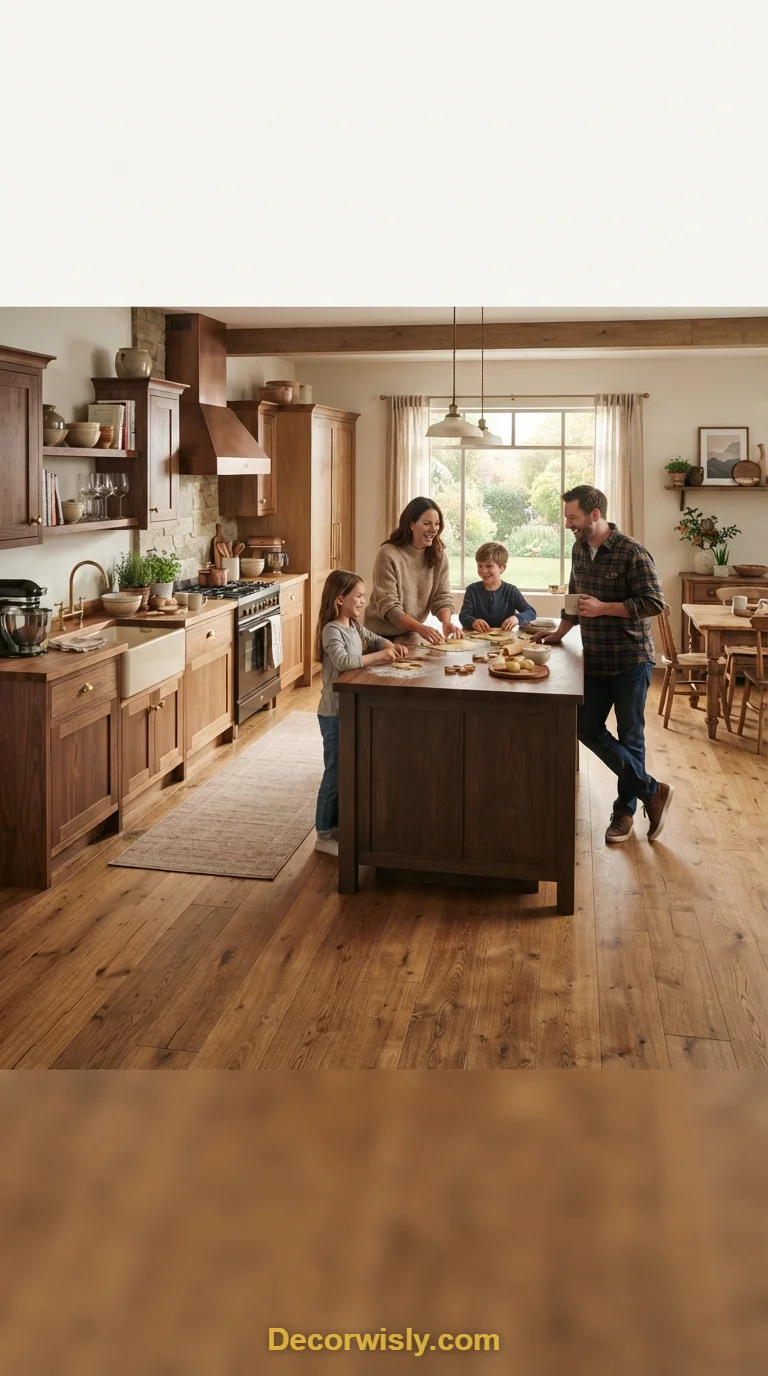
Across all 40 of these angles — whether we’re talking about wood’s practical durability, its environmental upside, or a specific look like herringbone oak or whitewashed coastal planks — the core appeal stays consistent: wood brings a warmth to a kitchen that’s genuinely hard to replicate with any other material. Whichever species, finish, or pattern you land on, a wood floor tends to reward the investment by only looking better as it settles into daily use.