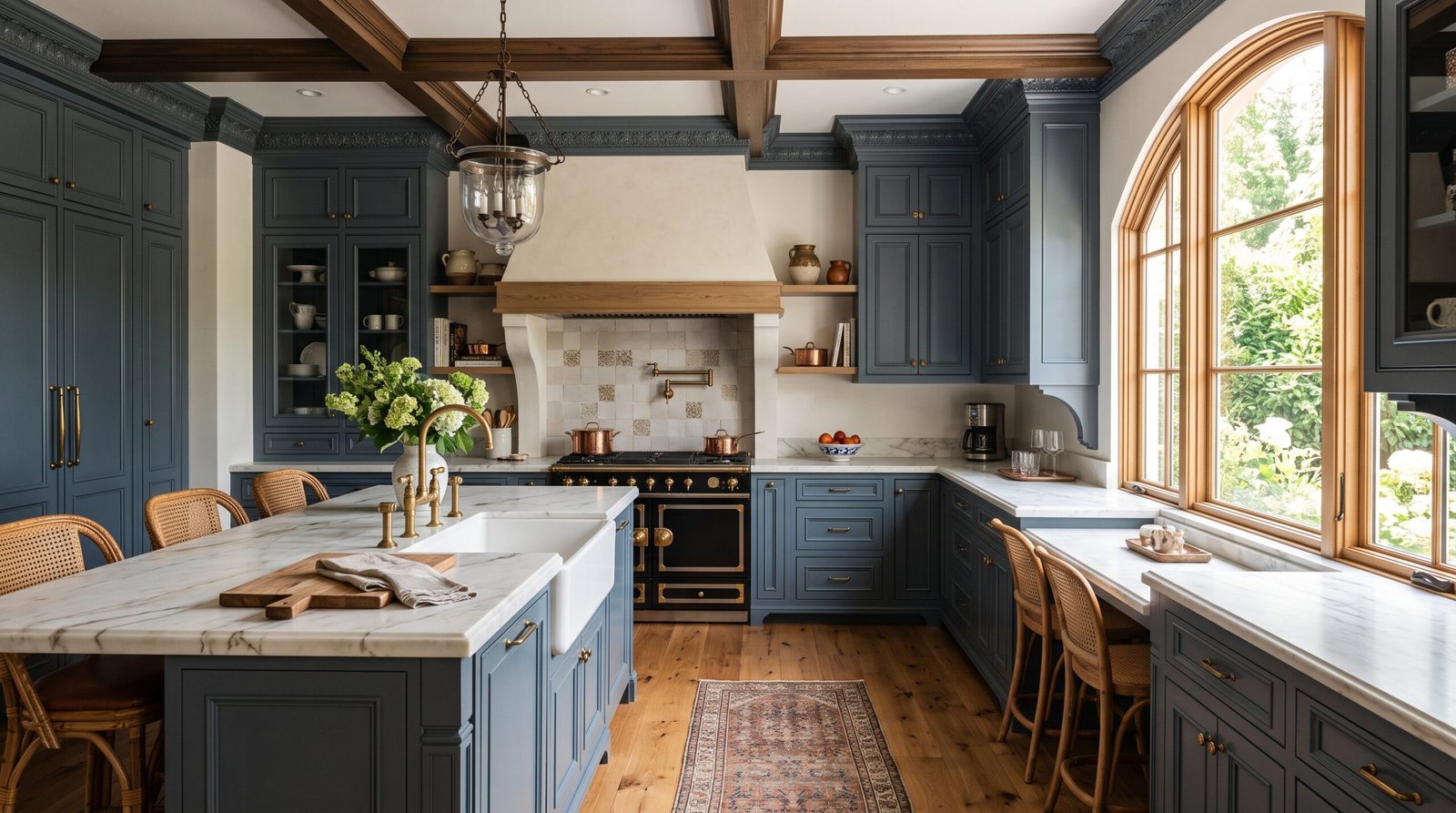
A traditional kitchen isn’t trying to chase a trend — it’s built on details that have already proven they last: solid cabinetry, natural materials, and finishes with a bit of history behind them. Here are 25 ways to bring that warmth and craftsmanship into a kitchen, from structural choices like crown molding to smaller touches like handmade ceramics, all built around the idea that good design doesn’t need to be new to feel right.
1. Classic Raised-Panel Cabinetry
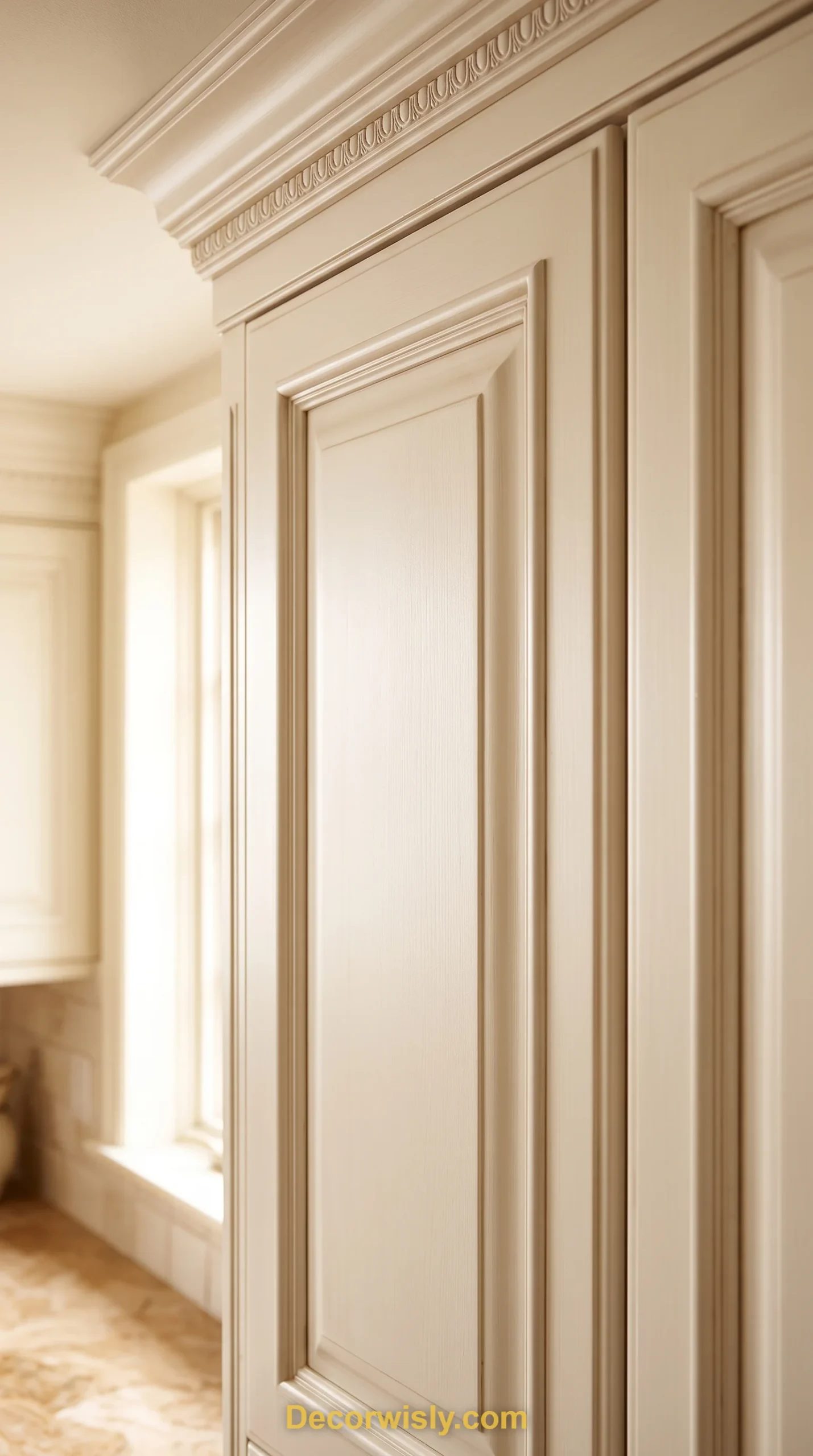
Wood cabinetry with detailed panel molding and a soft, muted finish is the backbone of a traditional kitchen. It reads as substantial and well-made rather than trendy, and its detailing gives the room a sense of craftsmanship that flat modern cabinetry simply doesn’t offer.
2. Vintage-Inspired Hardware

Aged brass knobs, cup pulls, and detailed hinges give even brand-new cabinetry a sense of history. These small touches are inexpensive relative to the rest of a kitchen renovation, but they do more than almost anything else to sell the traditional feel of the room.
3. Reclaimed Wood Accents

A reclaimed wood beam, shelf, or accent wall introduces natural texture and a bit of weathered character into an otherwise polished kitchen. The visible grain and imperfections tie the space to something older and more organic, softening whatever modern appliances sit nearby.
4. A Warm, Traditional Color Palette
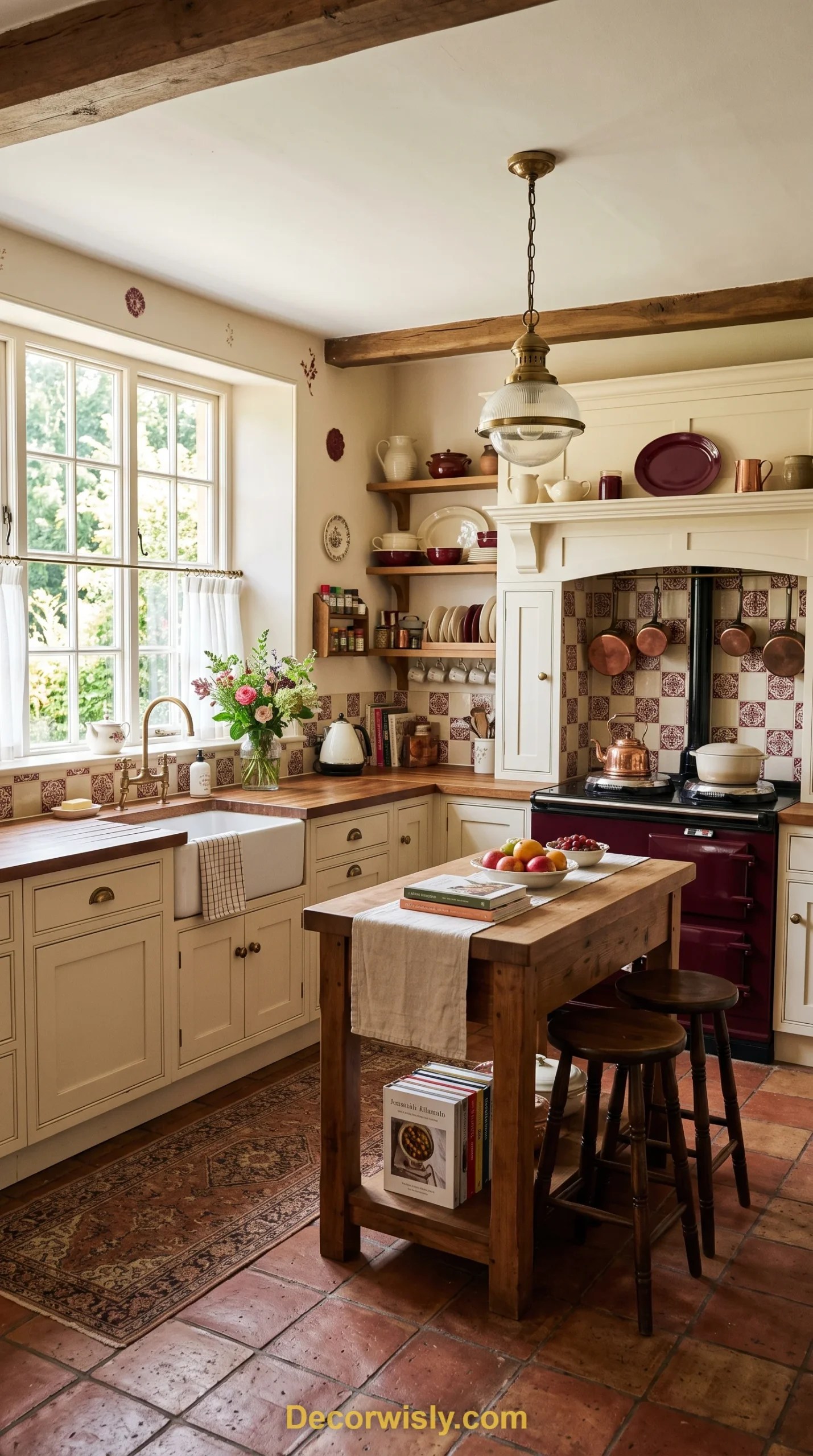
Creams, soft burgundies, and warm earth tones layer together into a palette that feels settled rather than trend-driven. These colors also do a good job of setting off architectural details like molding or paneling, since the palette itself stays quiet enough to let the woodwork lead.
5. Ornate Crown Molding
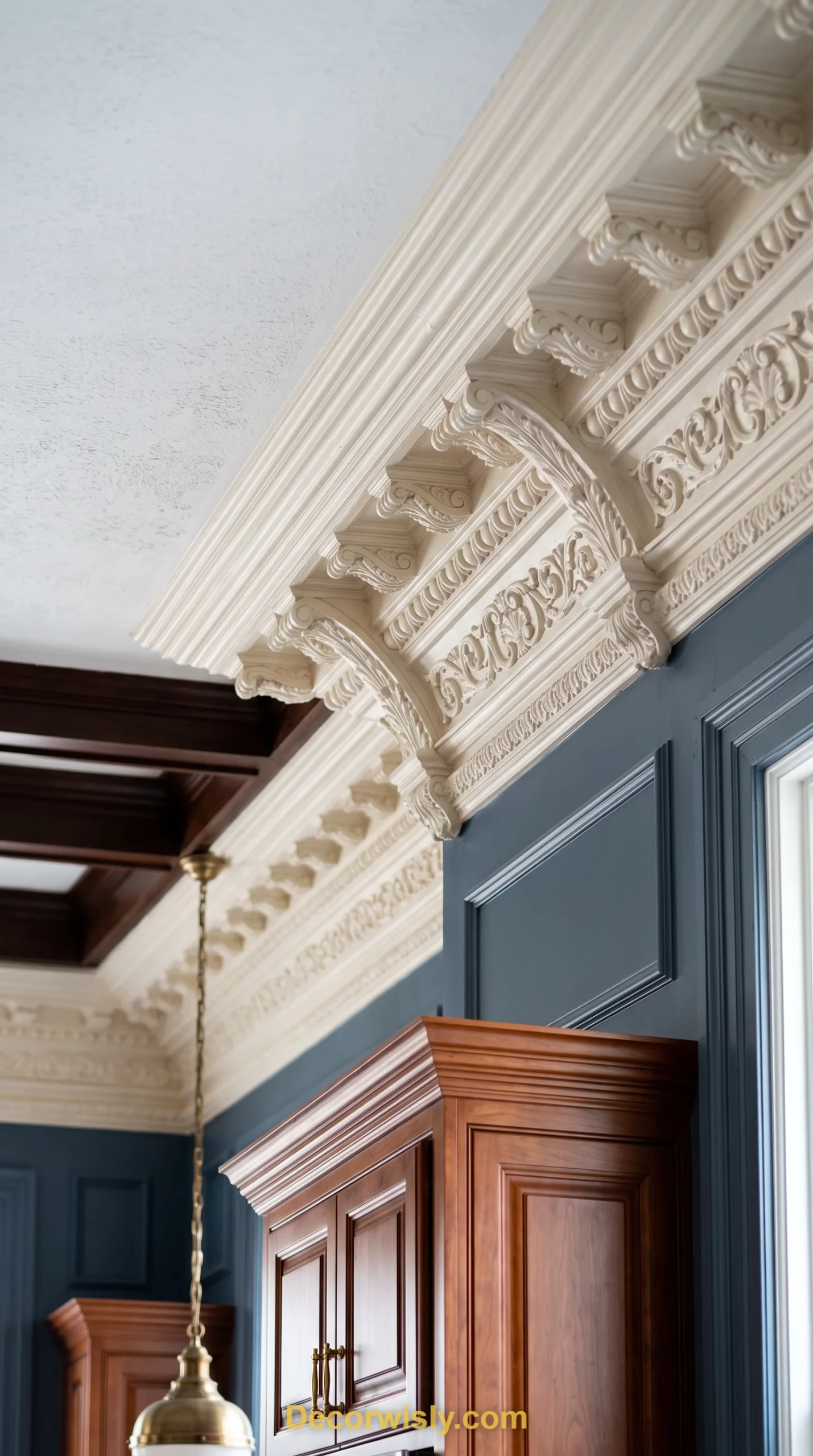
Detailed molding along the ceiling line adds a formal, finished quality that a plain drywall edge never achieves. It’s a relatively small carpentry investment that pulls the whole room together, especially when it’s echoed in cabinetry or door casings elsewhere in the kitchen.
6. A Decorative Tile Backsplash

Patterned tile behind the range or sink introduces color and craftsmanship into a functional surface. Classic motifs — hand-painted florals, subtle geometrics — give the backsplash a handmade quality that plain subway tile doesn’t carry on its own.
7. A Farmhouse Sink Centerpiece
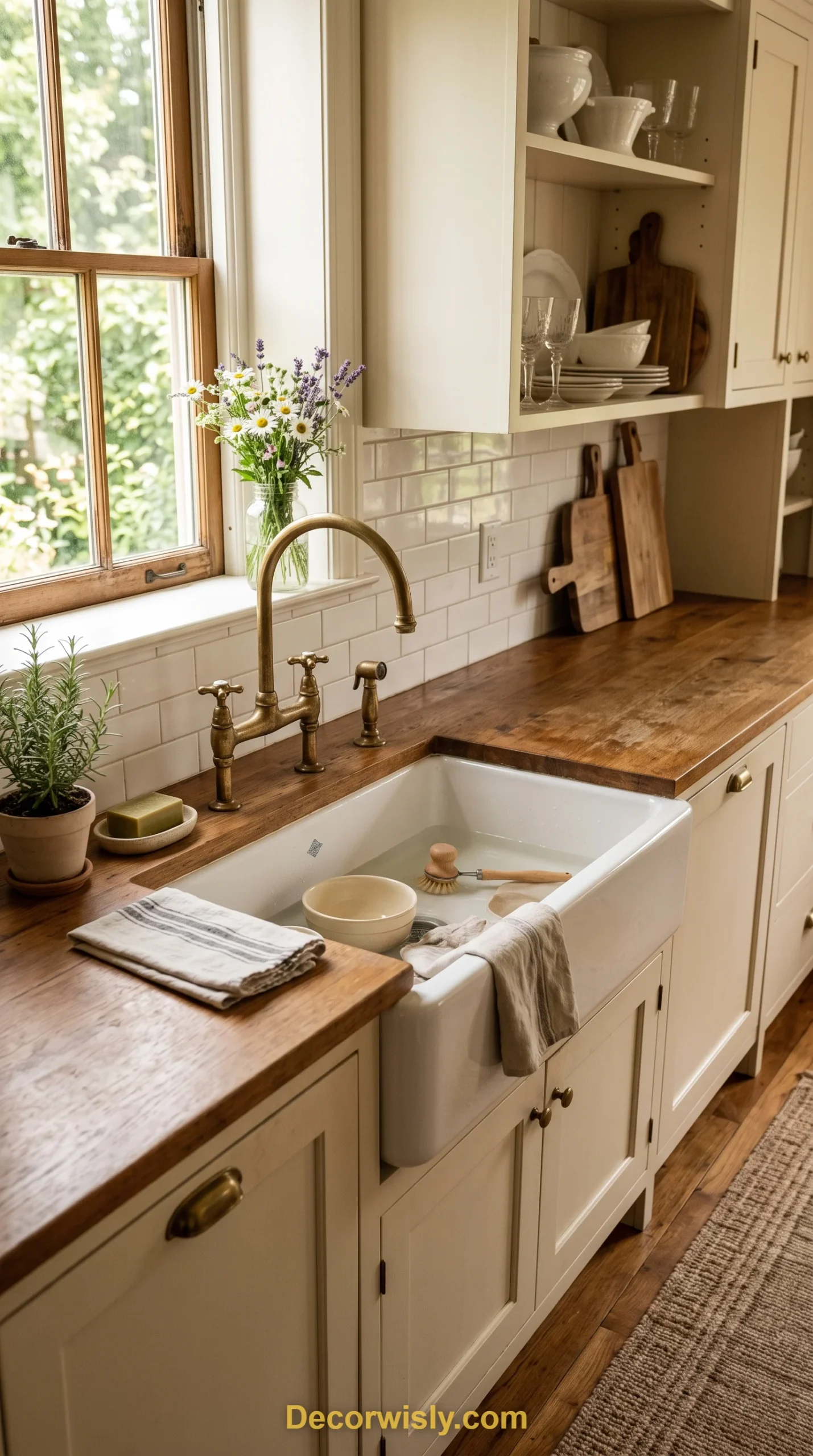
The deep, apron-front basin of a farmhouse sink is both a practical workhorse and a visual anchor for the whole kitchen. Its exposed front breaks up a run of cabinetry and gives the space a slightly rustic, lived-in quality that a standard undermount sink can’t replicate.
8. Natural Stone Countertops

Granite, marble, or quartz with visible veining pairs naturally with traditional cabinetry, offering both durability and a material history that feels appropriate to the style. The subtle color variation across a stone slab keeps the surface from looking manufactured, which matters in a kitchen built around natural materials.
9. A Built-In Breakfast Nook
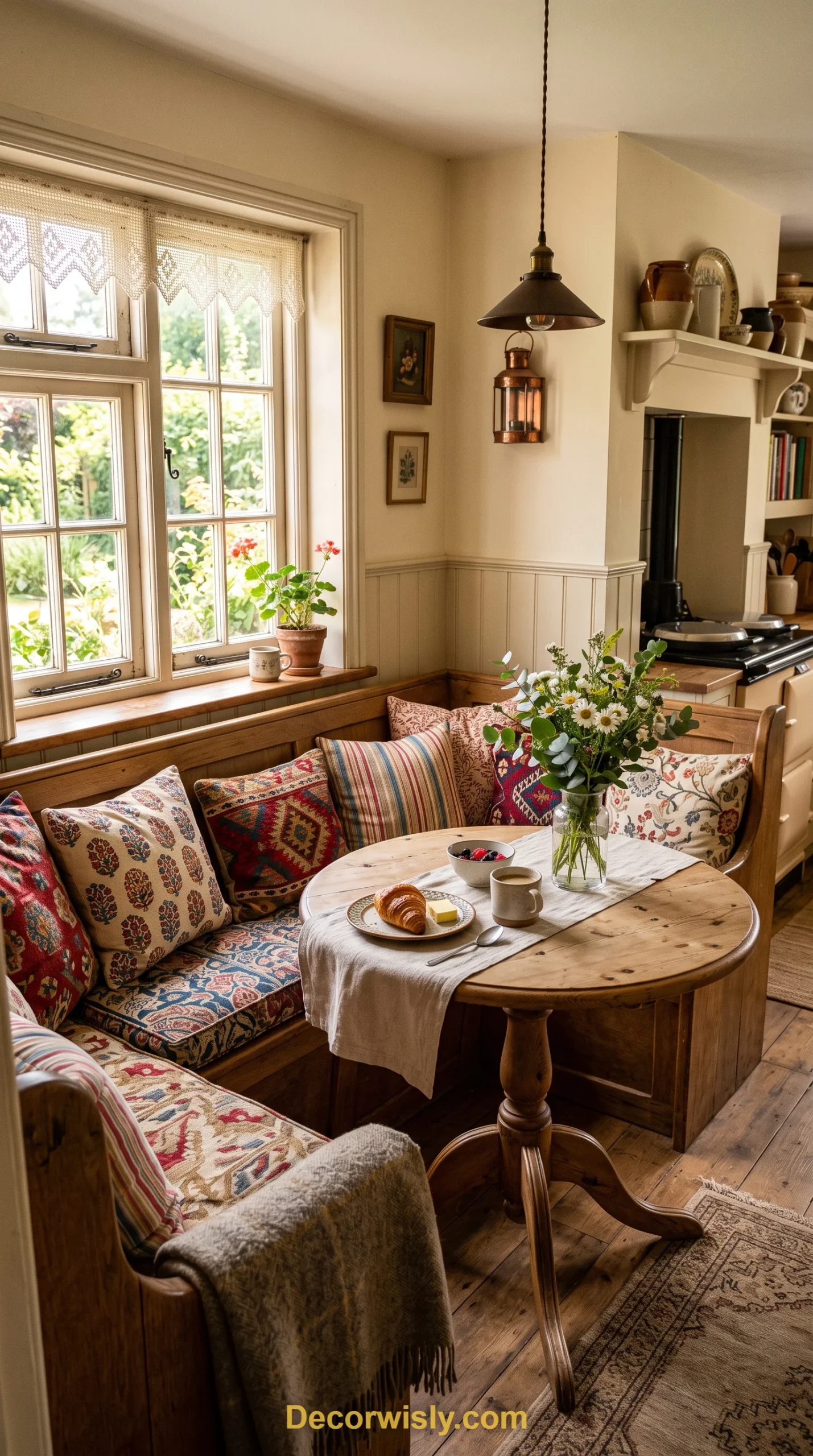
Bench seating tucked into a window alcove, dressed with patterned cushions, gives a traditional kitchen a dedicated spot for slower mornings. The natural light and soft textiles make it feel like the most lived-in corner of the room, which is usually exactly the point.
10. Curated Open Shelving

Displaying vintage ceramics, glassware, or heirloom dishware on open shelves turns storage into a running visual story rather than something hidden behind cabinet doors. It works particularly well in a traditional kitchen, where the items themselves often carry as much character as the shelving holding them.
11. Antique-Style Lighting Fixtures
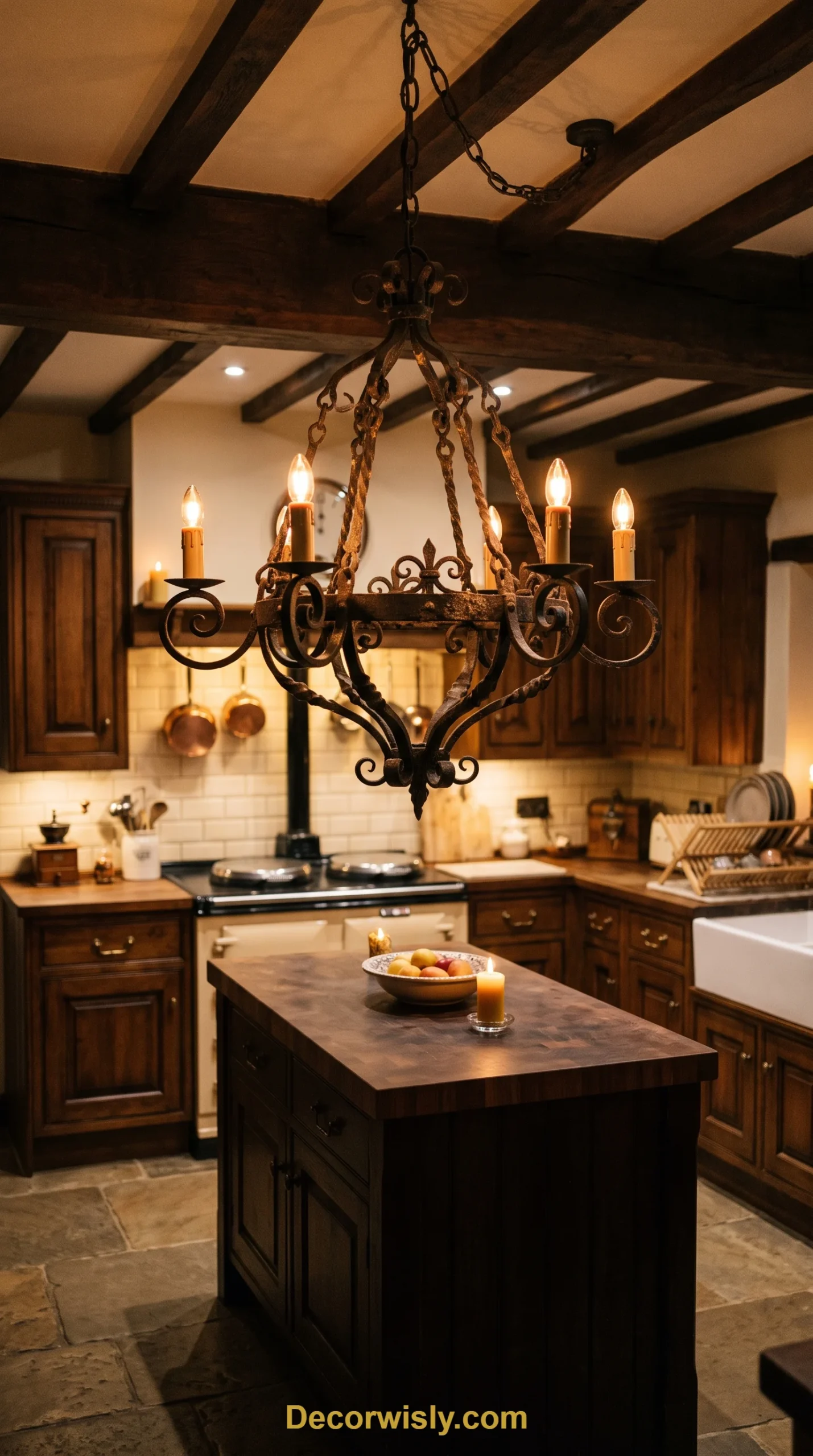
A wrought-iron chandelier or a pair of vintage sconces give a traditional kitchen a softer, warmer light than most modern fixtures. Their patina and detailing double as decor on their own, so they’re doing double duty — illuminating the room and adding to its story at the same time.
12. A Traditional Wood Island
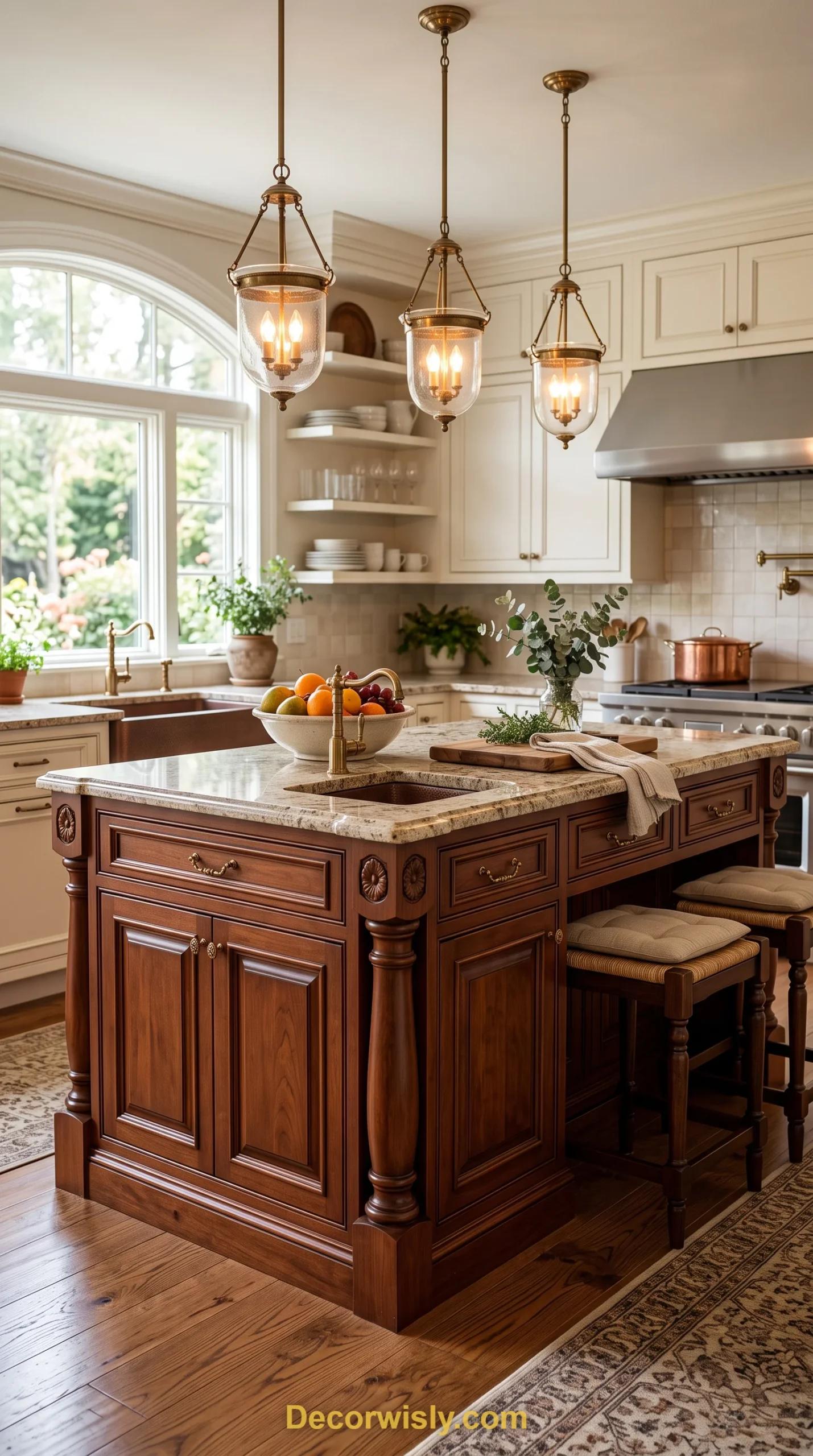
An island finished in rich wood tones, detailed with the same molding as the surrounding cabinetry, becomes the room’s natural gathering point without breaking from the overall style. It offers extra prep space and storage while still reading as furniture-grade rather than purely utilitarian.
13. Wrought Iron Decorative Accents

Small iron details — a window grate, trim around a fixture, decorative brackets — bring a bit of old-world craftsmanship into the room without requiring a full renovation. Their dark, textured finish also creates a nice contrast against lighter cabinetry or walls.
14. Appliances Styled for the Era
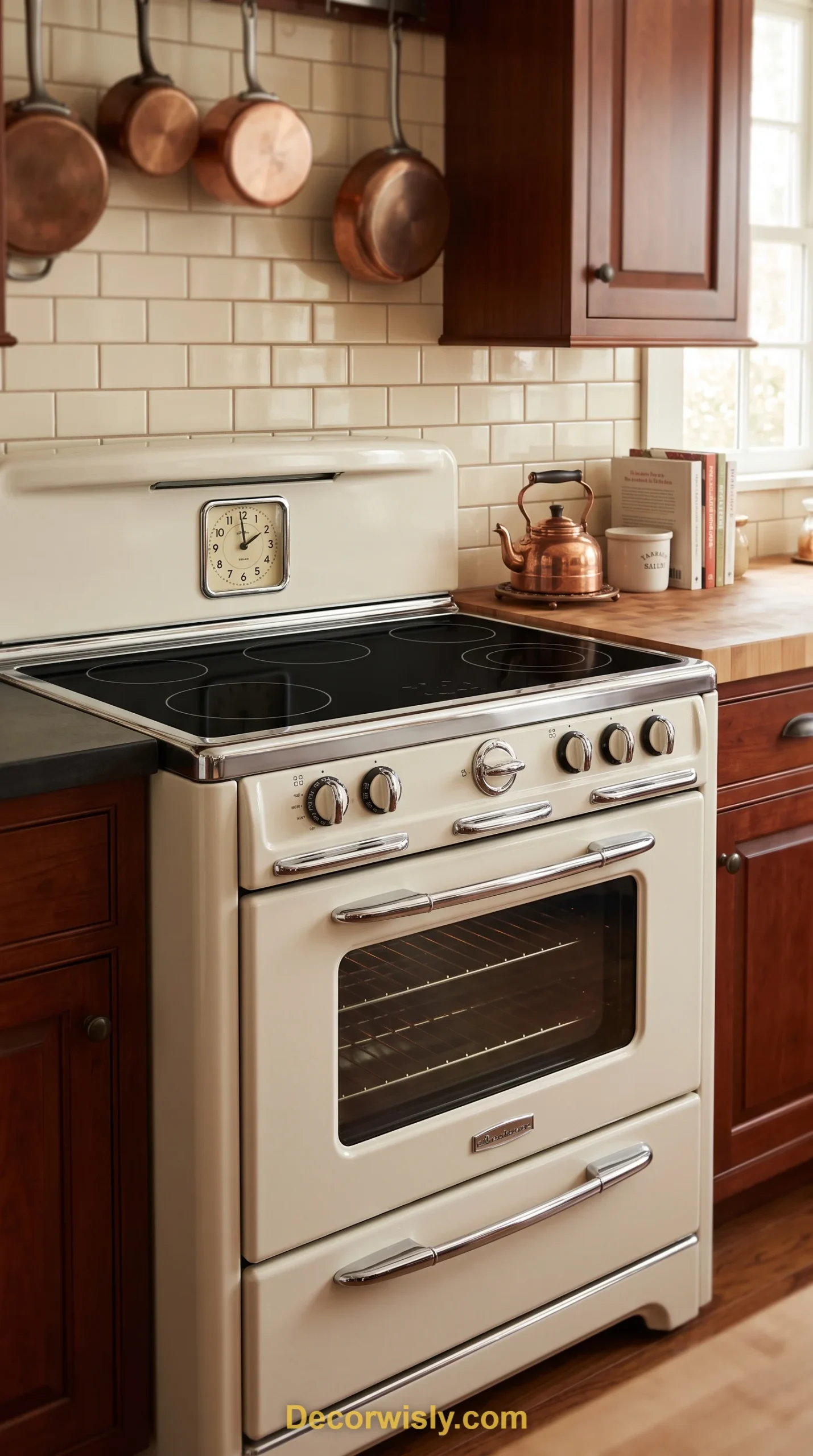
Appliances designed to echo a classic silhouette — rounded edges, retro dial controls, enamel finishes — blend into a traditional kitchen far more convincingly than sleek stainless models. Modern performance hides comfortably behind a period-appropriate exterior.
15. Heritage-Inspired Millwork

Wainscoting, decorative corbels, and detailed paneling add architectural texture to walls and cabinetry that would otherwise be flat. These details take real carpentry skill, which is part of why they read as high-end and considered rather than simply decorative.
16. Warm Hardwood Flooring
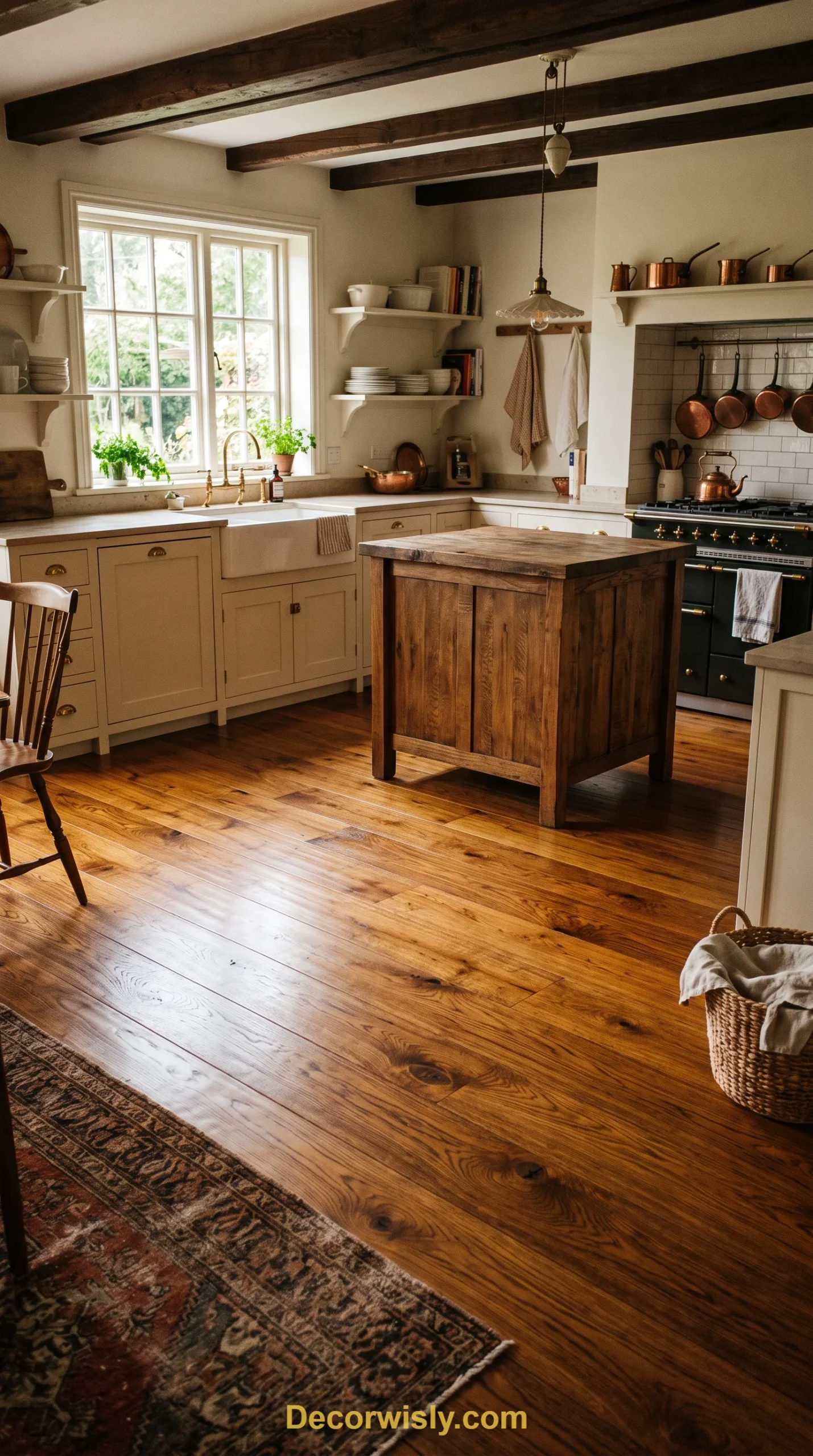
Polished wood floors ground a traditional kitchen with the kind of natural warmth that tile or vinyl can’t quite match. The grain and color variation in real hardwood also age well, picking up character over years of use rather than simply wearing out.
17. A Custom-Built Pantry
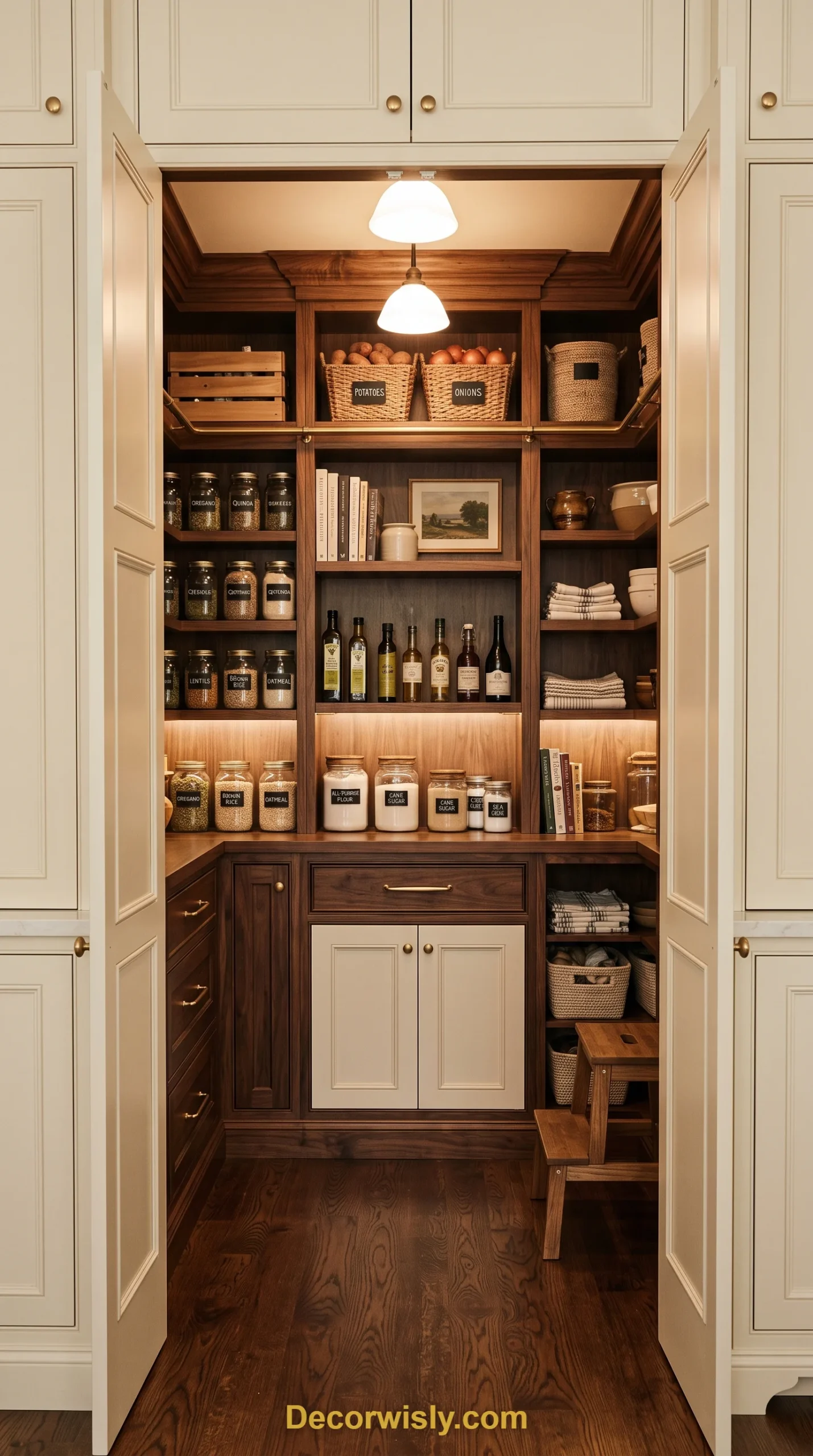
A pantry designed with the same detailing as the rest of the kitchen — paneled doors, vintage-style hardware, dedicated shelving — keeps bulk storage from feeling like an afterthought. It also gives the main kitchen room to stay uncluttered while everything else stays close at hand.
18. Handmade Ceramic Details

Hand-painted dishware, pottery, and decorative tiles bring a tactile, artisanal quality into the kitchen that mass-produced items can’t replicate. Each piece carries small imperfections that read as authenticity rather than flaw, adding warmth to shelves and countertops alike.
19. A Painted or Detailed Ceiling
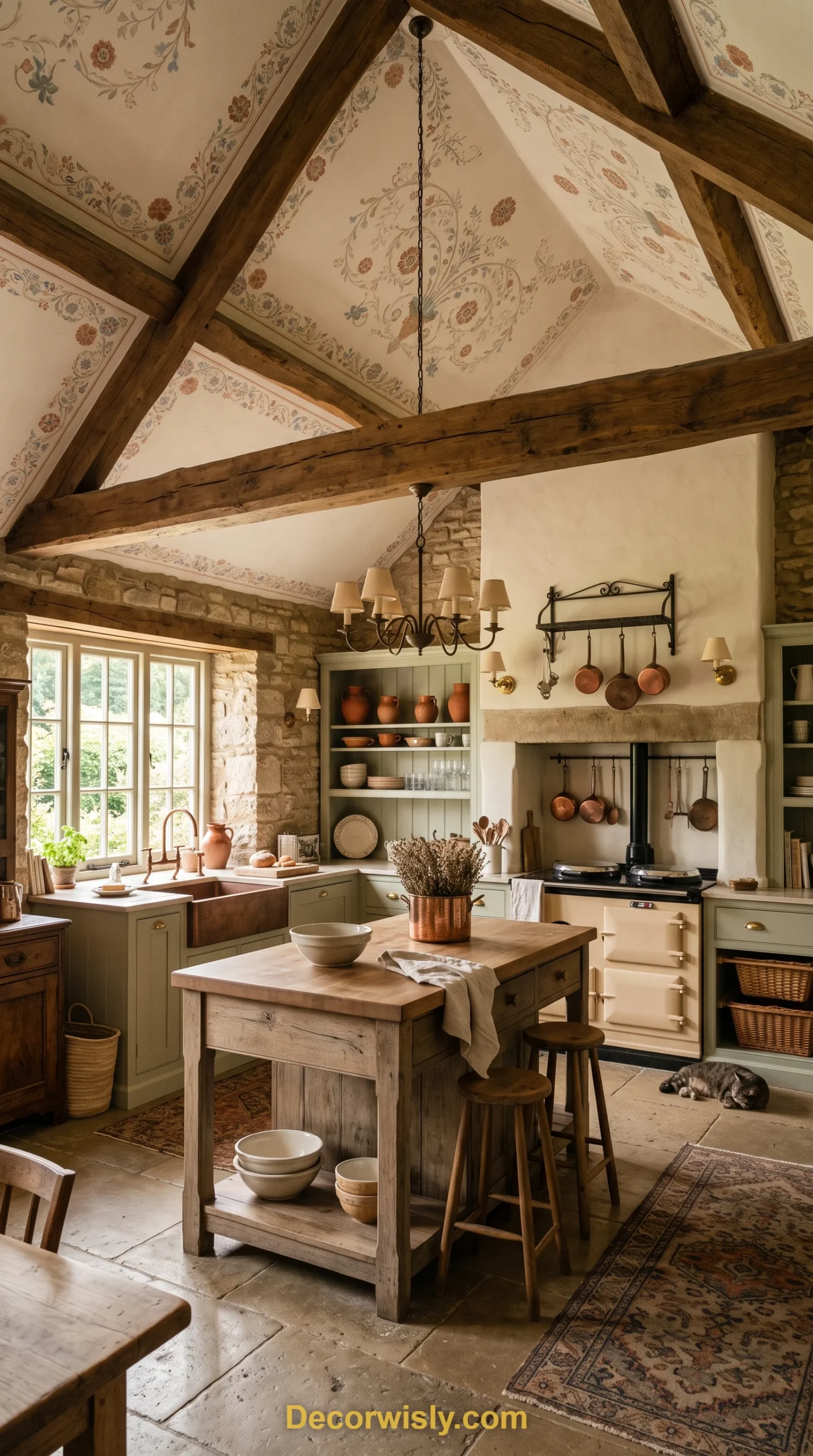
A subtly stenciled or hand-painted ceiling treatment is an unexpected place to add character, drawing the eye upward and giving the room a sense of depth it wouldn’t have otherwise. It’s a detail most kitchens skip entirely, which is exactly why it stands out when done well.
20. Thoughtfully Built Storage
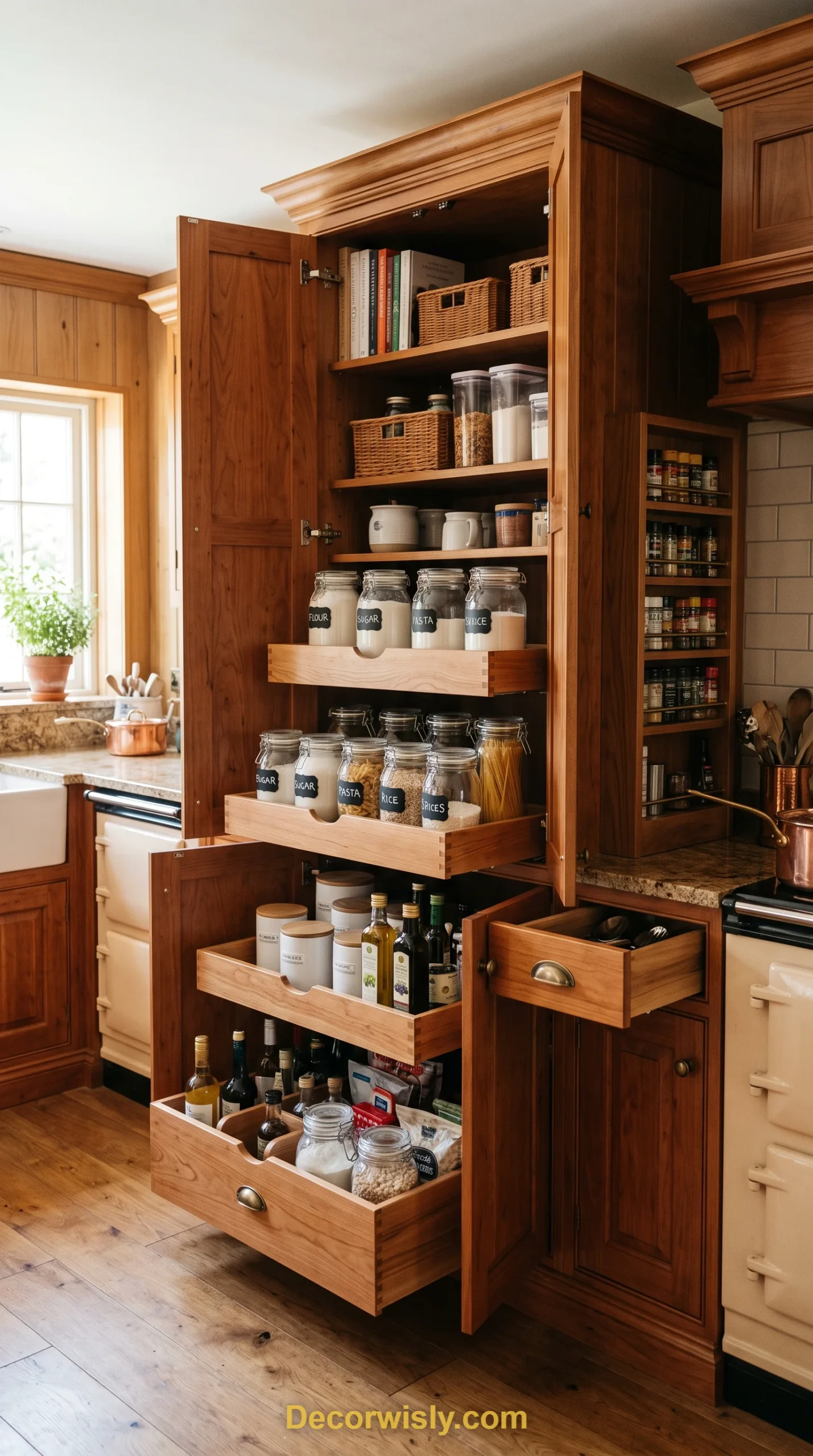
Custom cabinets, pull-out pantries, and specialized shelving tailored to the room’s actual needs let a traditional kitchen stay organized without sacrificing its period detailing. The best storage in a kitchen like this is often invisible — built to disappear into the cabinetry rather than announce itself.
21. Classic Window Treatments
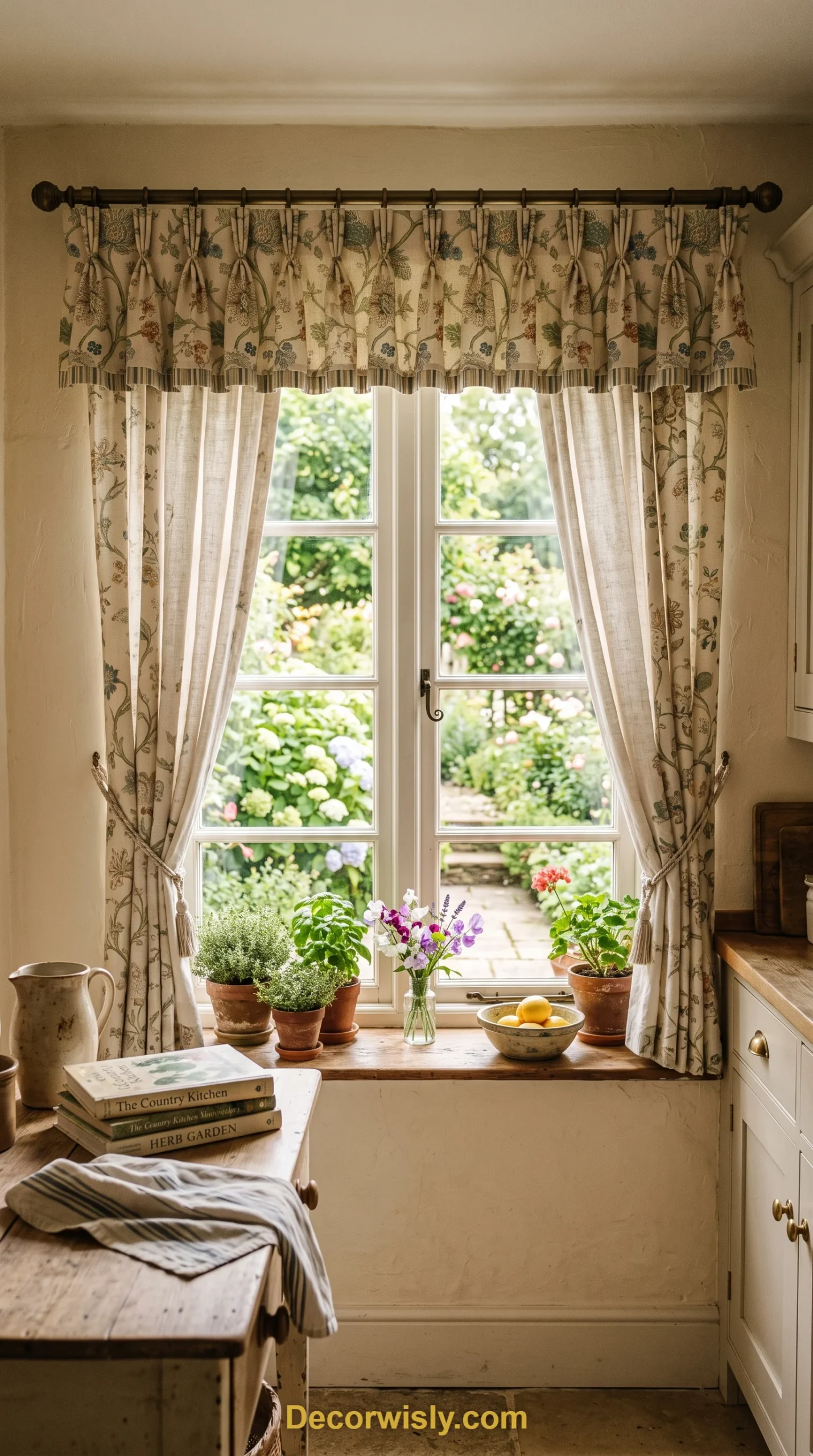
Soft draperies, roman shades, or fabric valances in period-appropriate patterns filter light gently while reinforcing the room’s overall palette. They add texture and softness to what would otherwise be a hard architectural edge at the window.
22. An Integrated Dining Area

Placing a dining table with vintage-style chairs directly off the kitchen keeps cooking and gathering in the same visual world, reinforcing the sense that this room is built for togetherness rather than just food prep. The coordinated furniture and decor make the transition between the two feel seamless.
23. Beadboard Wainscoting Panels
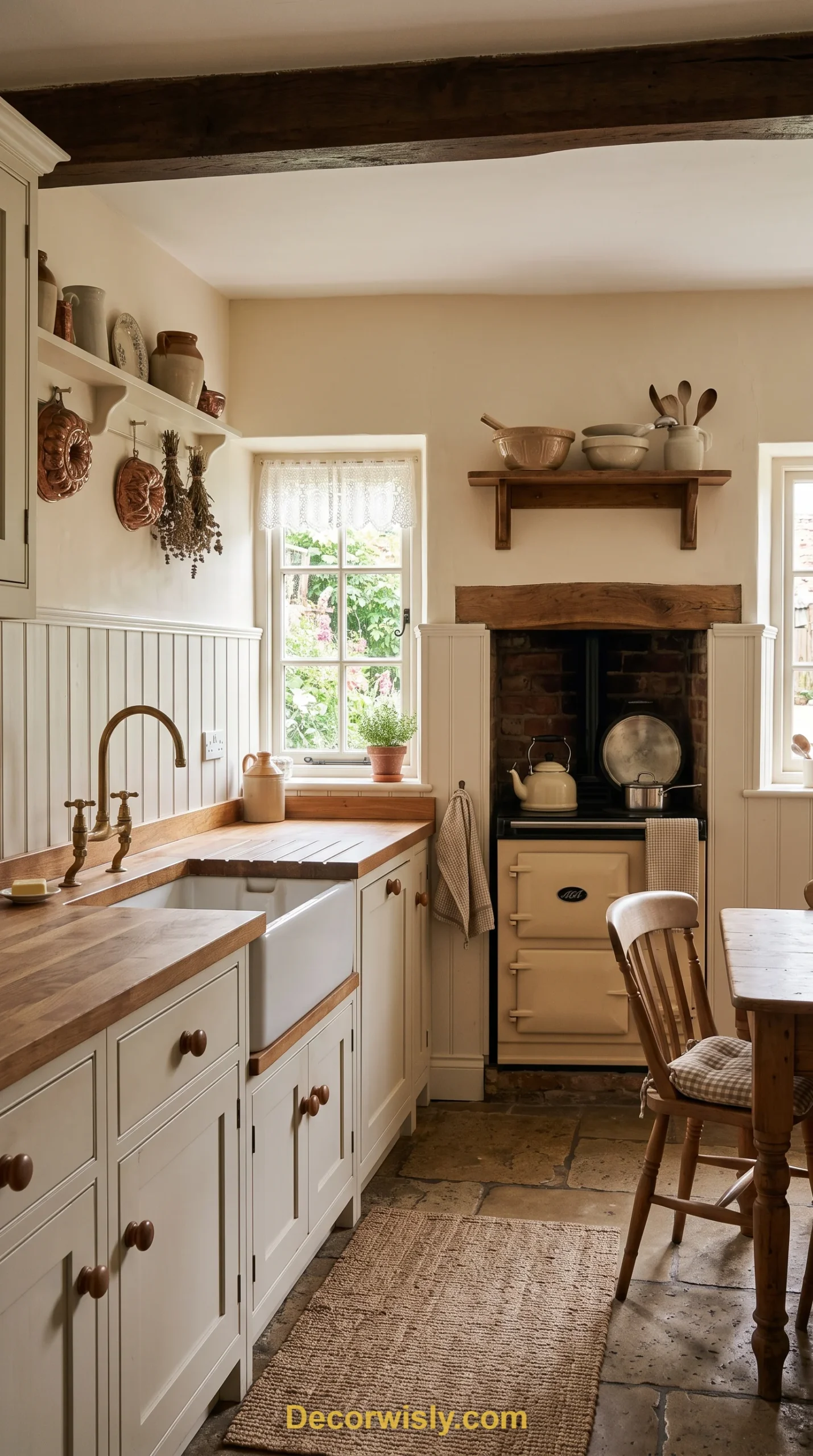
Beadboard along the lower half of a wall or as a cabinet backing adds a simple, cottage-adjacent texture that’s less formal than full paneling but just as effective at breaking up a plain wall. It’s an inexpensive way to bring in that classic vertical-groove detail without a major renovation.
24. A Furniture-Style Freestanding Hutch
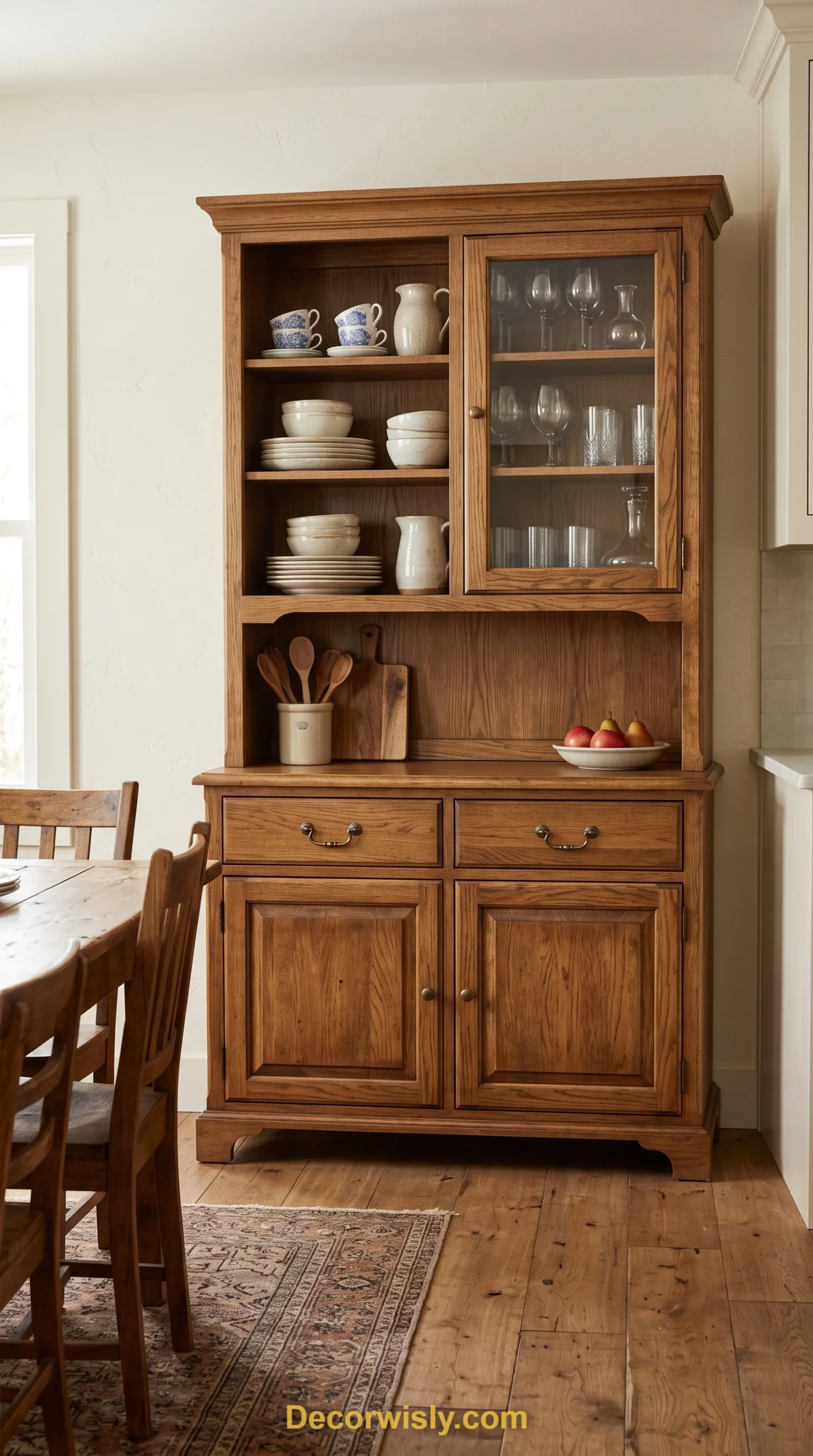
A standalone wood hutch or dresser repurposed for kitchen storage brings a furniture quality that built-in cabinetry can’t offer on its own. It reads as a piece collected over time rather than installed all at once, which is part of what gives a traditional kitchen its sense of history.
25. Classic Checkerboard Flooring

Black-and-white checkerboard tile is one of the most instantly recognizable traditional kitchen details, adding graphic rhythm underfoot without competing with cabinetry or wall color. It works especially well in kitchens that keep the rest of the palette fairly neutral, letting the floor carry the pattern.
Final Thoughts
These 25 ideas all point back to the same principle: a traditional kitchen is built on materials and details that were designed to last, not to trend. Layer in a few structural choices — molding, wainscoting, natural stone — alongside smaller finishing touches like vintage hardware and handmade ceramics, and the result is a kitchen that feels collected, warm, and genuinely timeless rather than simply old-fashioned.