
Industrial design has a trap built into it: lean too hard into exposed pipe and raw concrete and a kitchen stops feeling like somewhere you’d want to cook, and starts feeling like a converted warehouse nobody bothered to finish. The industrial kitchens that actually work know which raw materials to keep and which ones to soften.
Here are 12 ways to get the look right — the honest materials, without the cold-warehouse feeling.
1. The Exposed Brick Anchor Wall
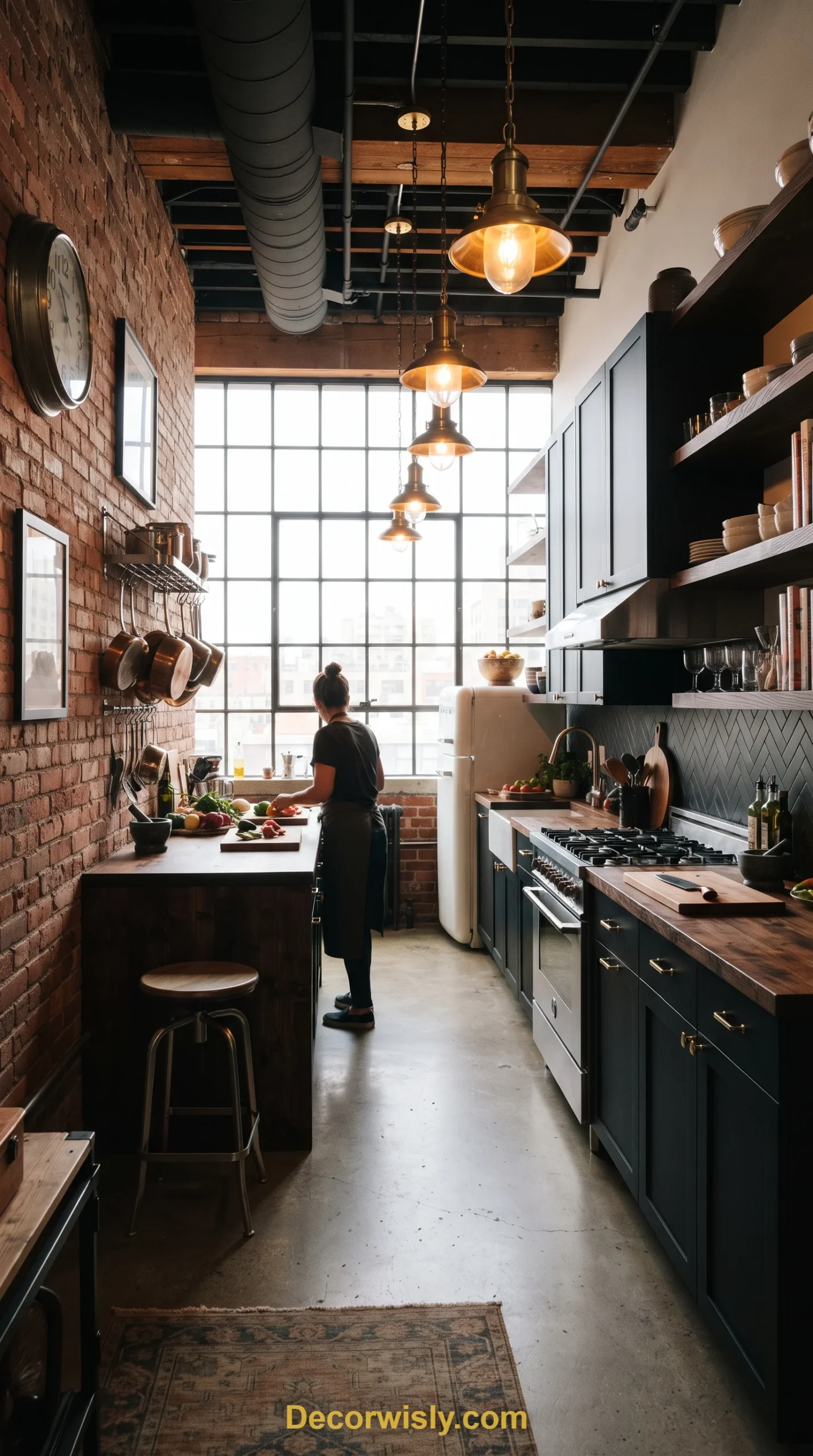
One wall of original or reclaimed brick left bare is usually enough to set an industrial tone for the whole room — everything else (cabinetry, lighting, flooring) can stay simple and let that one wall carry the texture.
2. The Blackened Steel Shelving
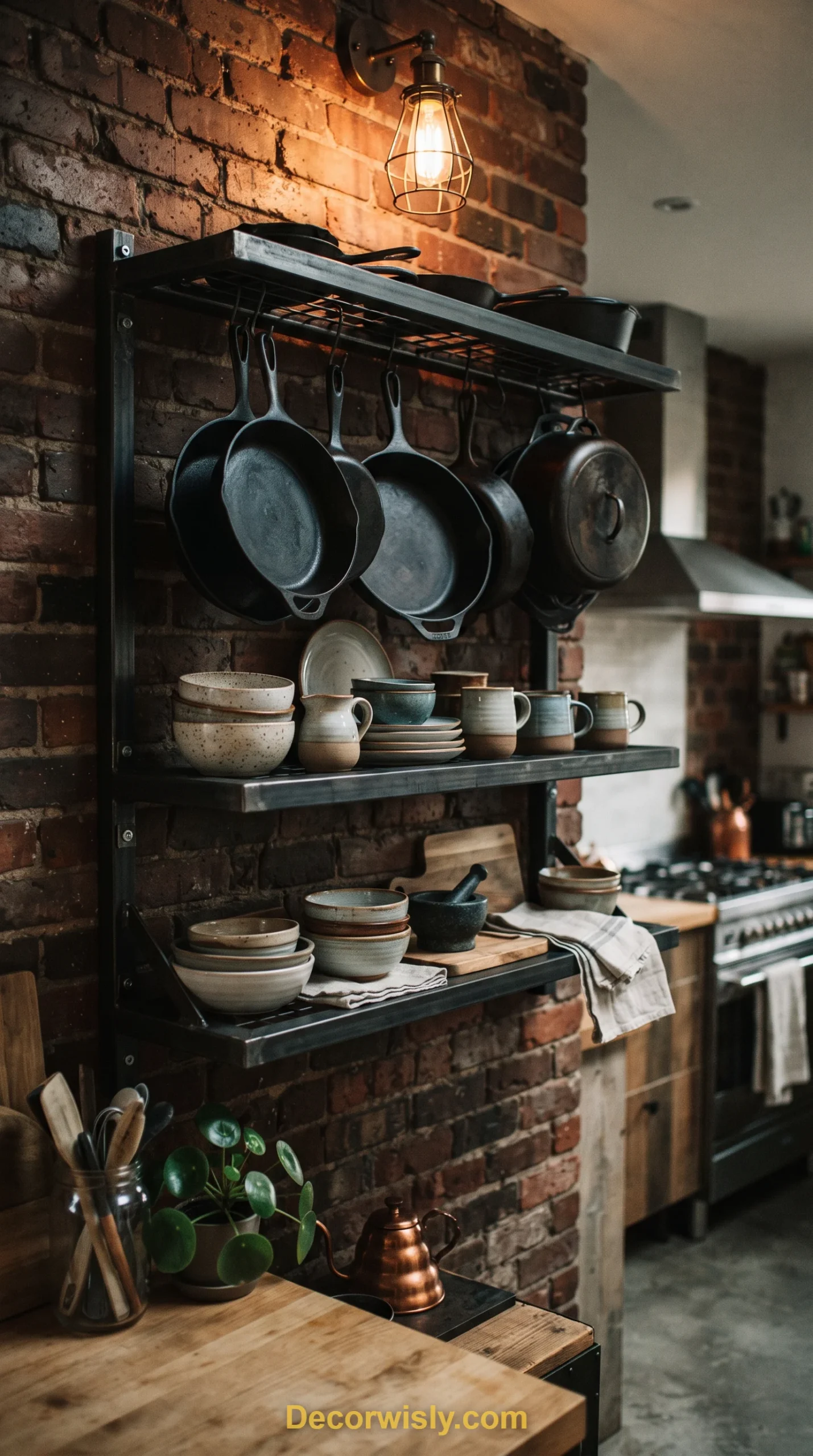
Open shelving built from blackened steel angle-iron reads as industrial in a way that wood shelving never quite does, and it’s sturdy enough to hold heavy cast iron and stoneware without sagging.
3. The Concrete Countertop
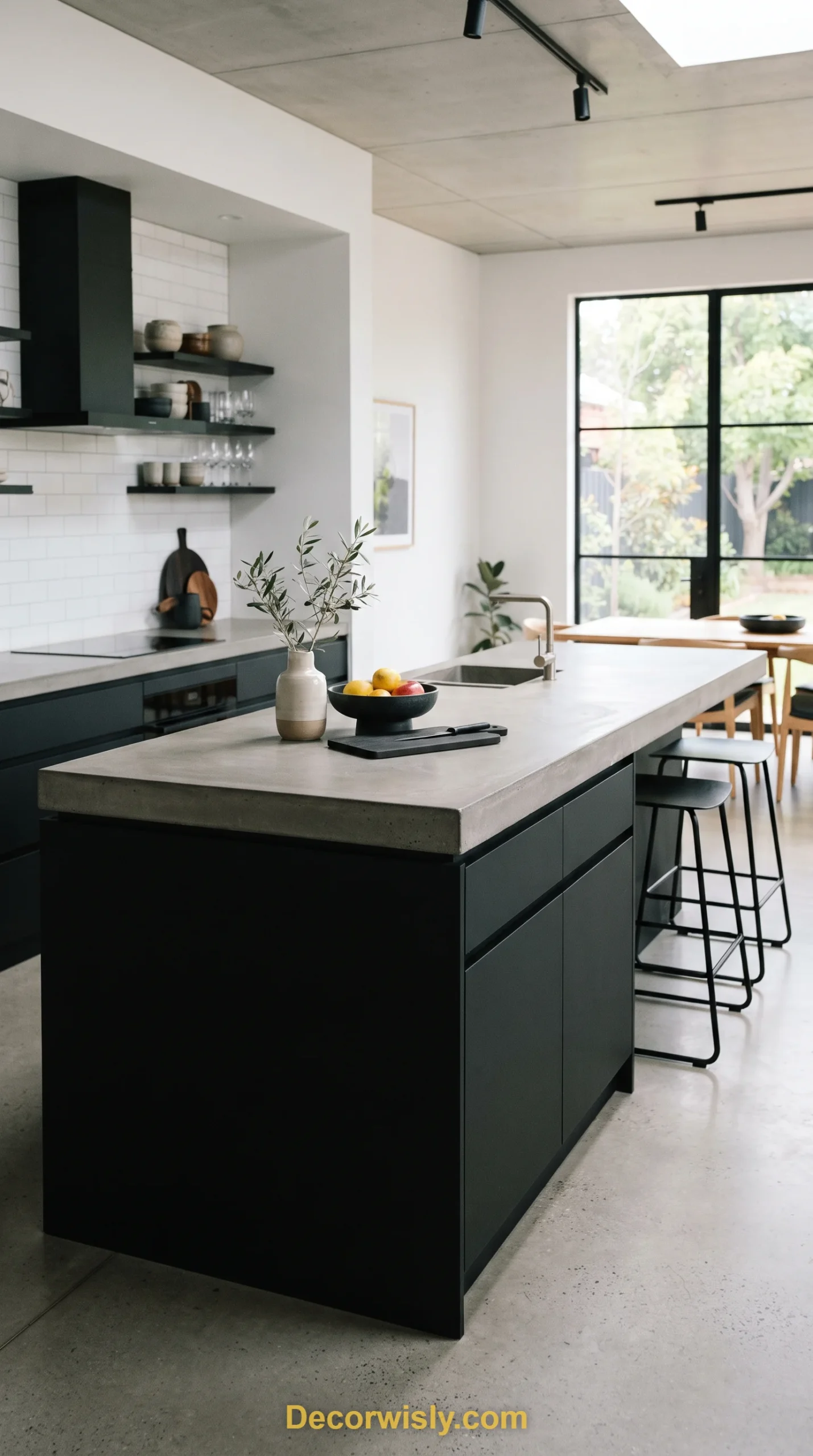
Poured concrete counters are the industrial answer to marble — matte, slightly imperfect, and able to take a beating. Adding a subtle sealer keeps them practical without losing the raw look.
4. The Factory-Style Pendant Row
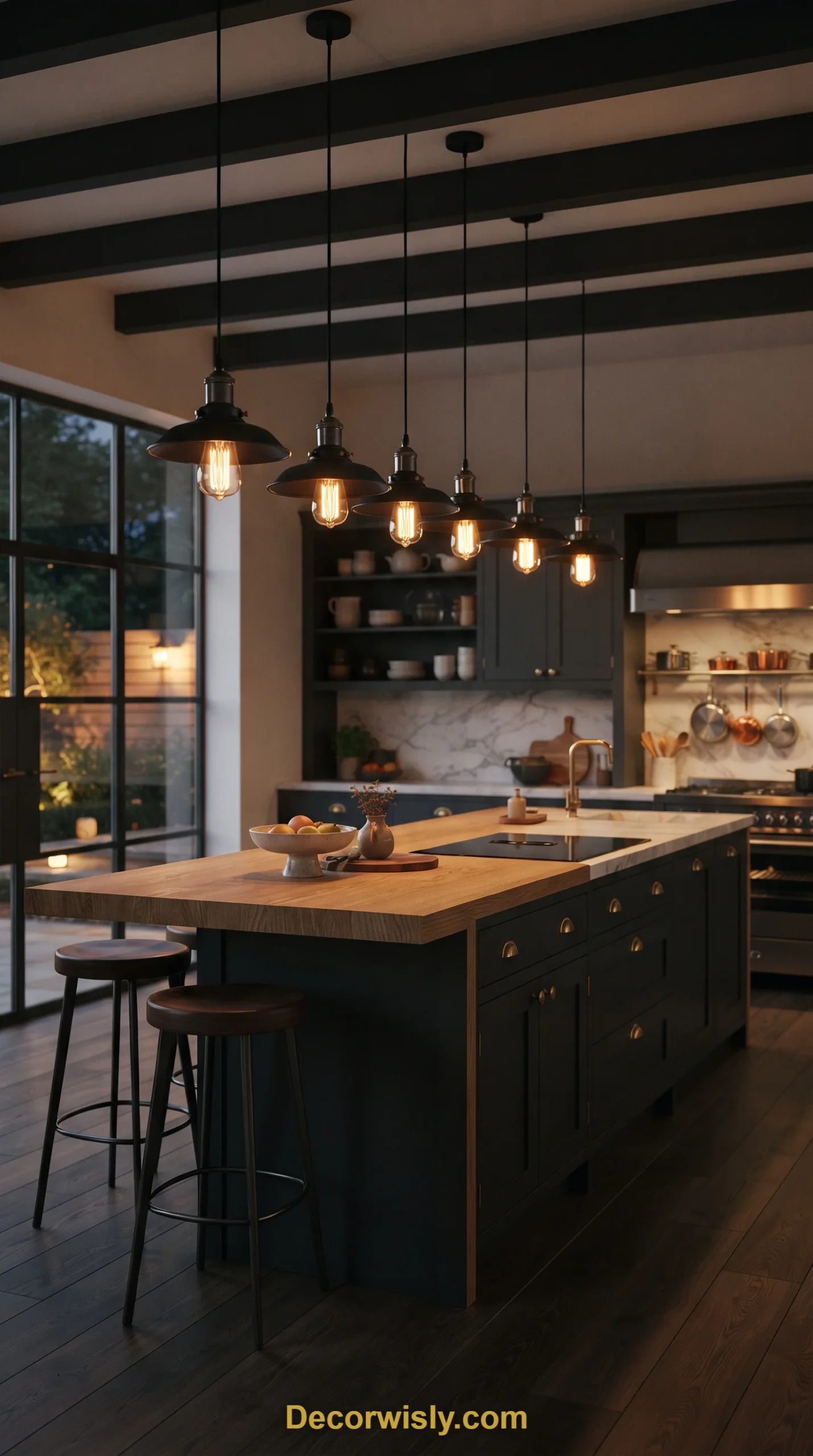
A line of matching black metal factory pendants over an island or counter run is one of the fastest ways to signal “industrial” without touching a single wall or cabinet — it’s a lighting choice more than a renovation.
5. The Stainless Open Kitchen
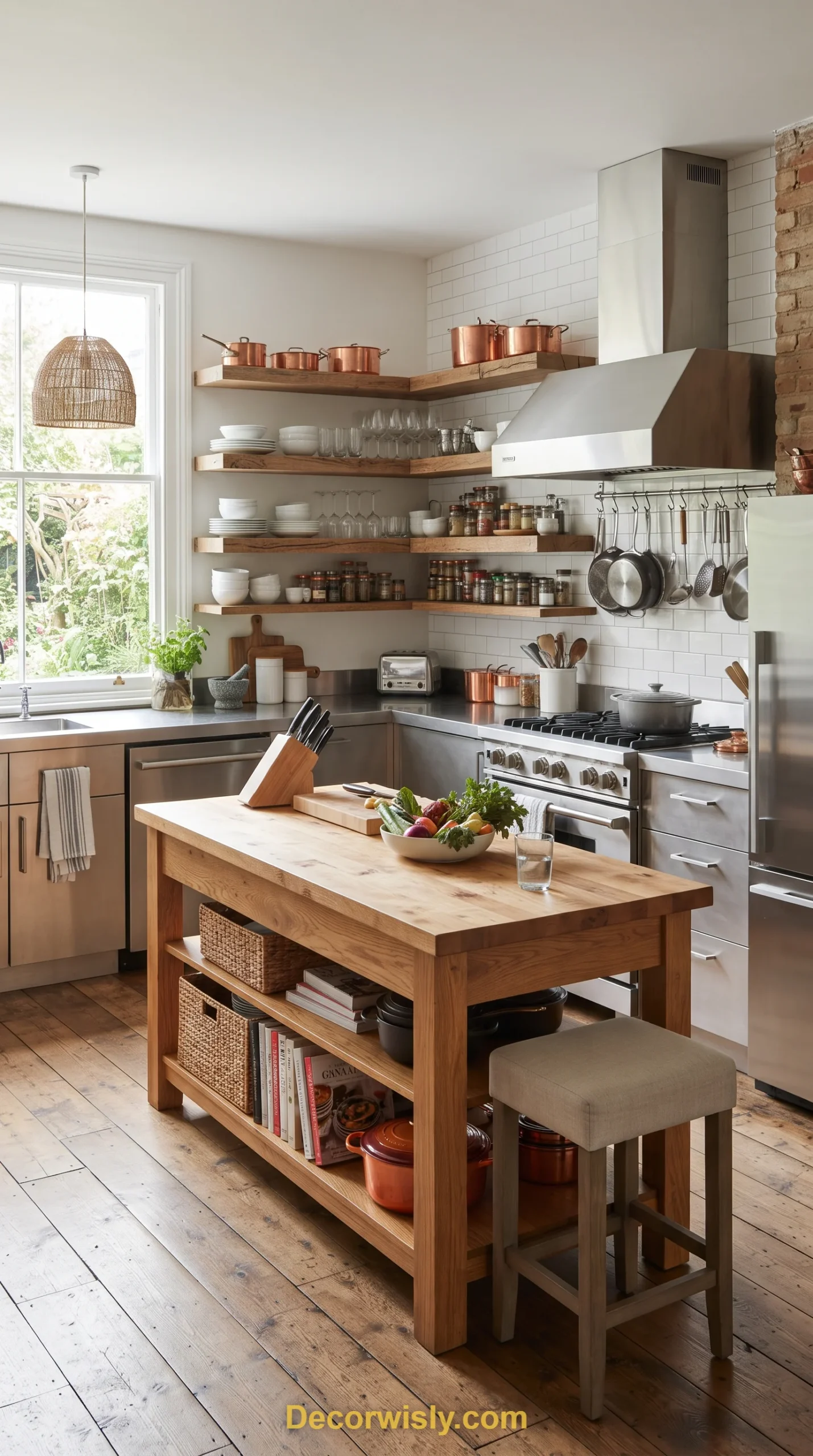
Borrowing directly from restaurant kitchens, exposed stainless steel counters, shelving, and range hoods give a home kitchen genuine working-kitchen credibility — best balanced with warm lighting so it doesn’t feel like a commercial galley.
6. The Reclaimed Wood & Metal Island
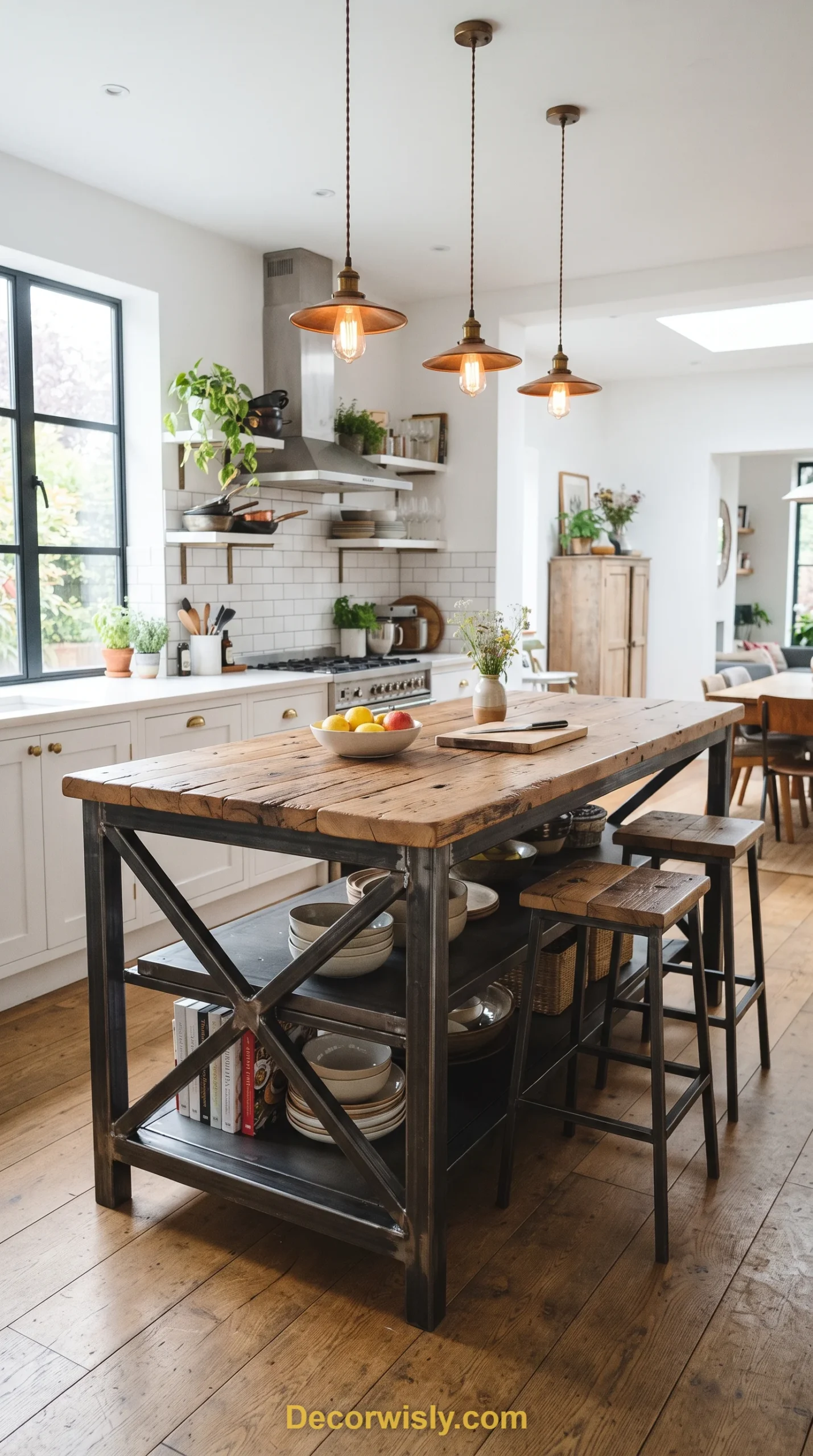
Pairing a reclaimed wood countertop or waterfall edge with a raw steel or blackened metal island base is one of the most reliable industrial combinations — the wood keeps the metal from feeling sterile.
7. The Ductwork-on-Display Ceiling
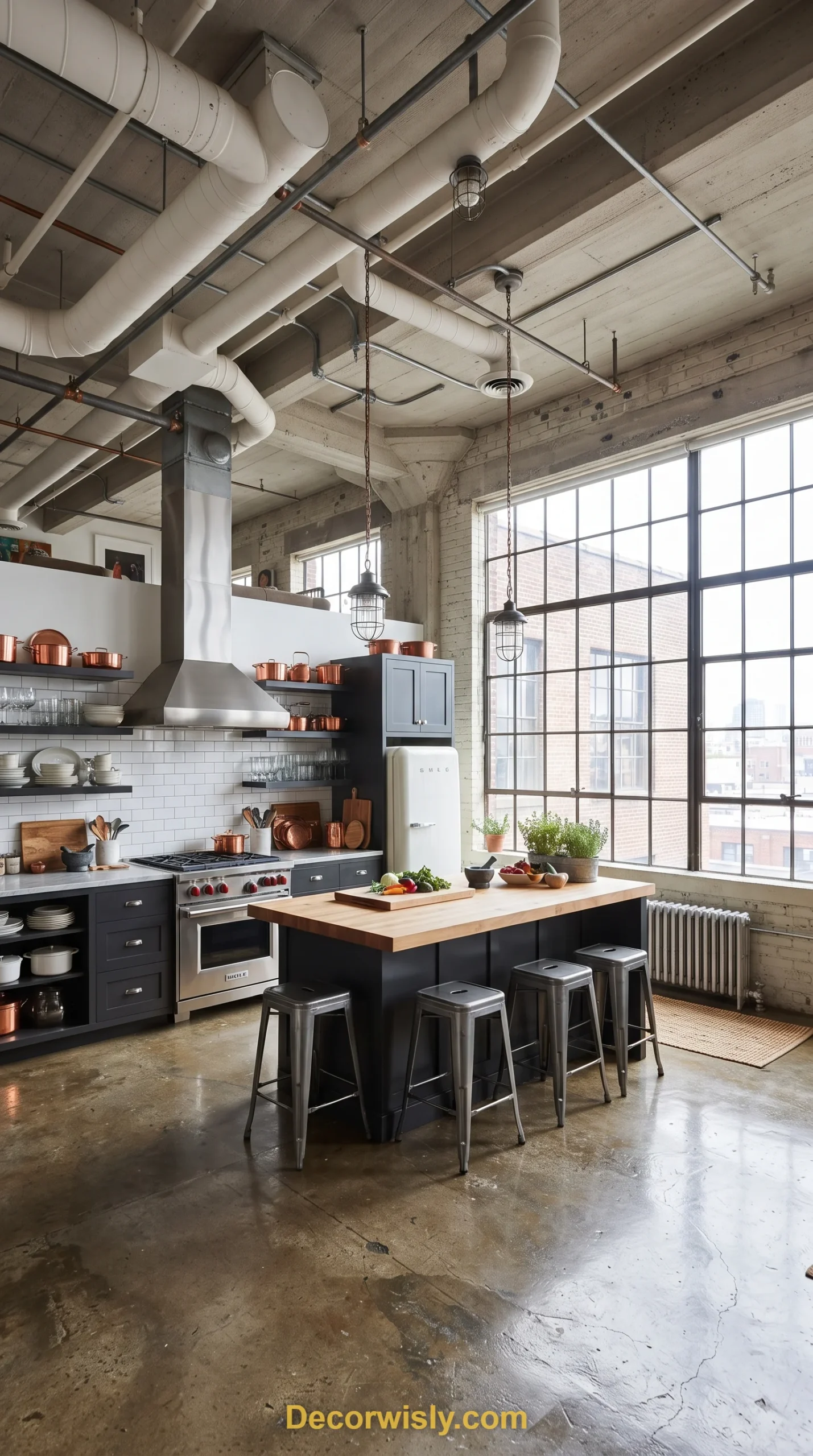
Rather than boxing in HVAC ductwork with drywall, some industrial kitchens leave it fully exposed and painted to match the ceiling — a genuinely practical choice in converted warehouse or loft spaces that also reinforces the look.
8. The Matte Black Everything Kitchen
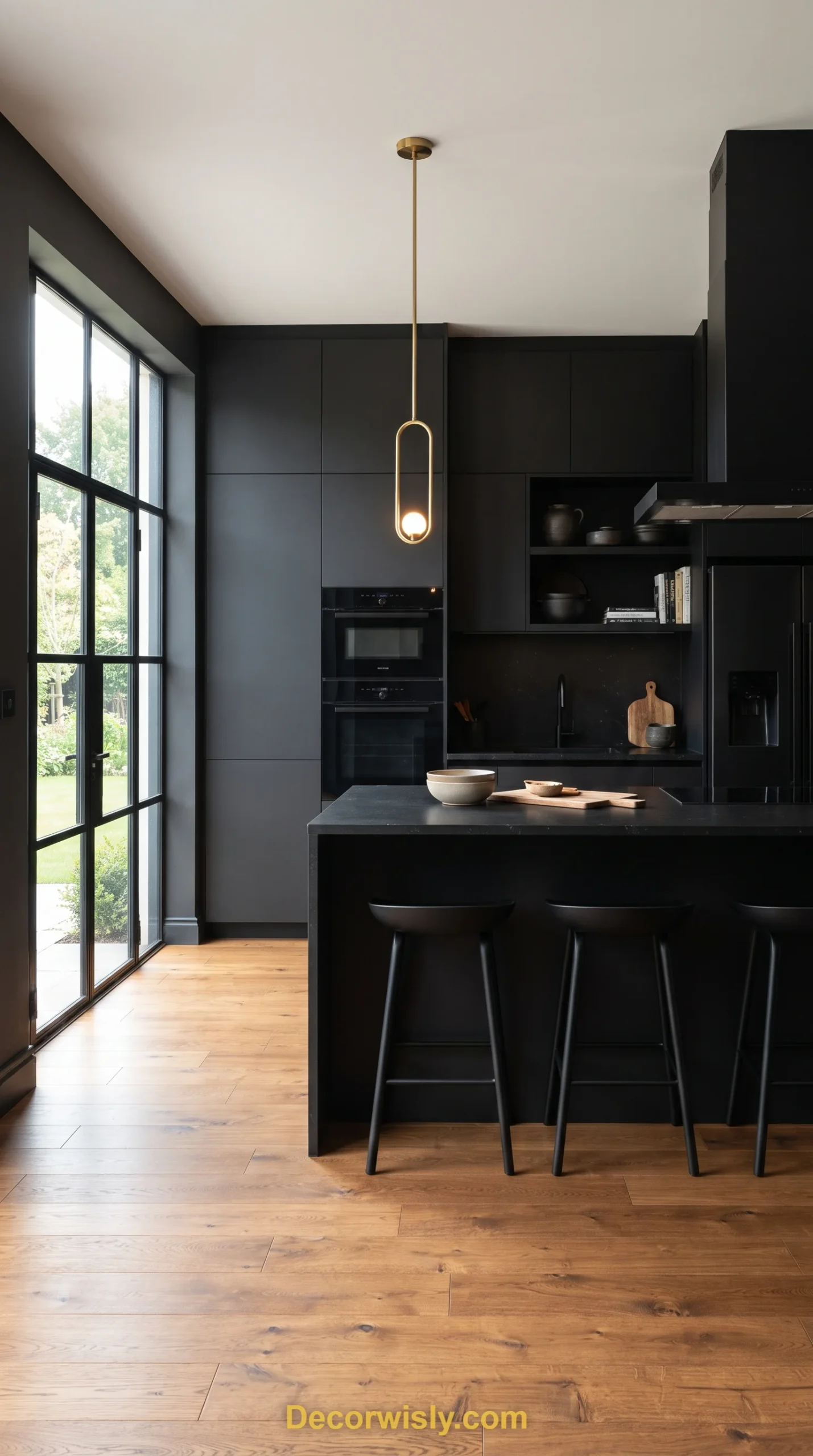
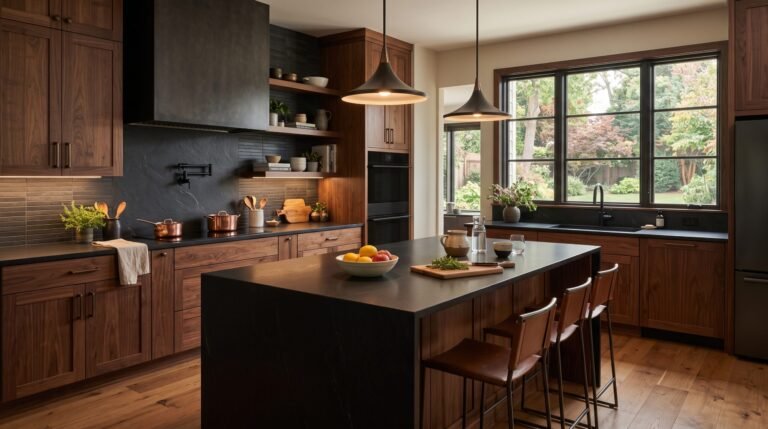
Matte black cabinetry, matte black fixtures, and matte black appliances together create a cohesive, almost architectural industrial look — best offset with at least one warm material (wood floor, brass accent) so the room doesn’t go flat.
9. The Metal-Framed Glass Cabinets
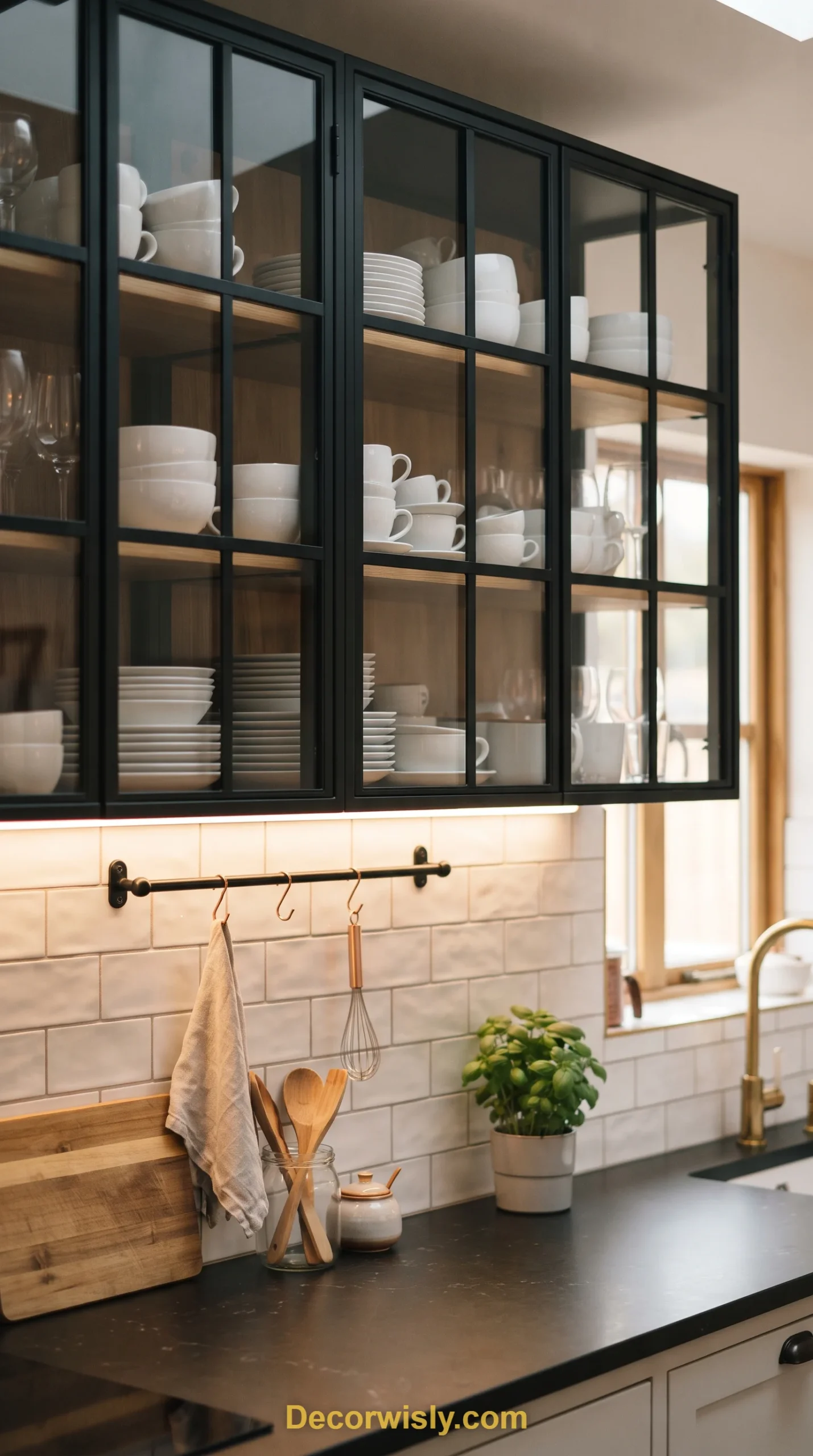
Steel-framed glass cabinet doors — the kind associated with old factory windows — bring an industrial edge to storage while still letting dishware be seen, splitting the difference between open shelving and closed cabinetry.
10. The Leather & Metal Bar Stools
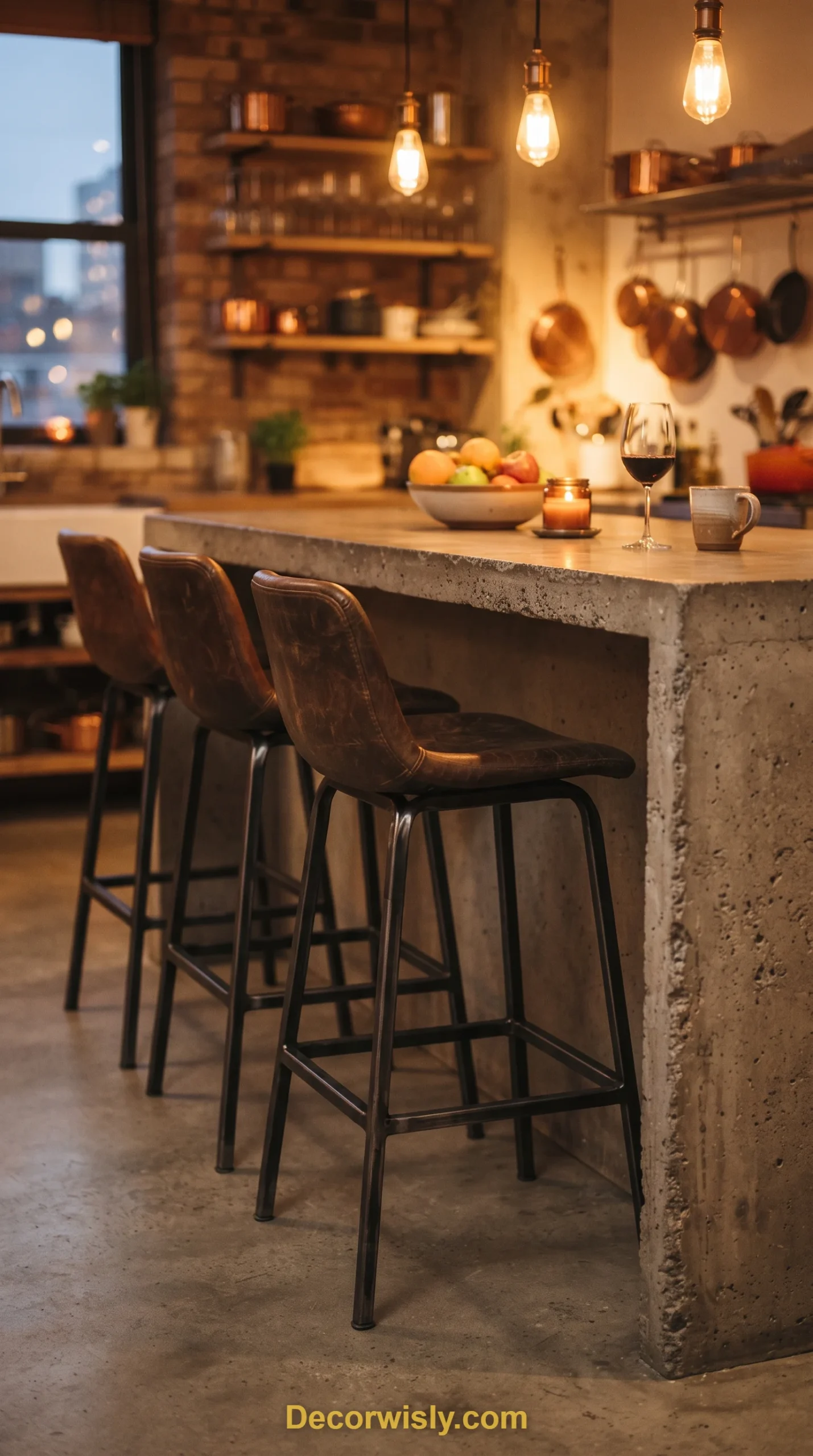
Small furniture choices carry a lot of the industrial look. Leather-seated stools with a raw or blackened steel frame at the island do more to set the tone than most people expect from a seating choice.
11. The Salvaged Factory Cart Island

Instead of a built-in island, some industrial kitchens use an actual salvaged factory cart or workbench on locking casters as the central prep surface — genuinely mobile, and full of the wear marks a new piece can’t fake.
12. The Warm-Toned Industrial Kitchen
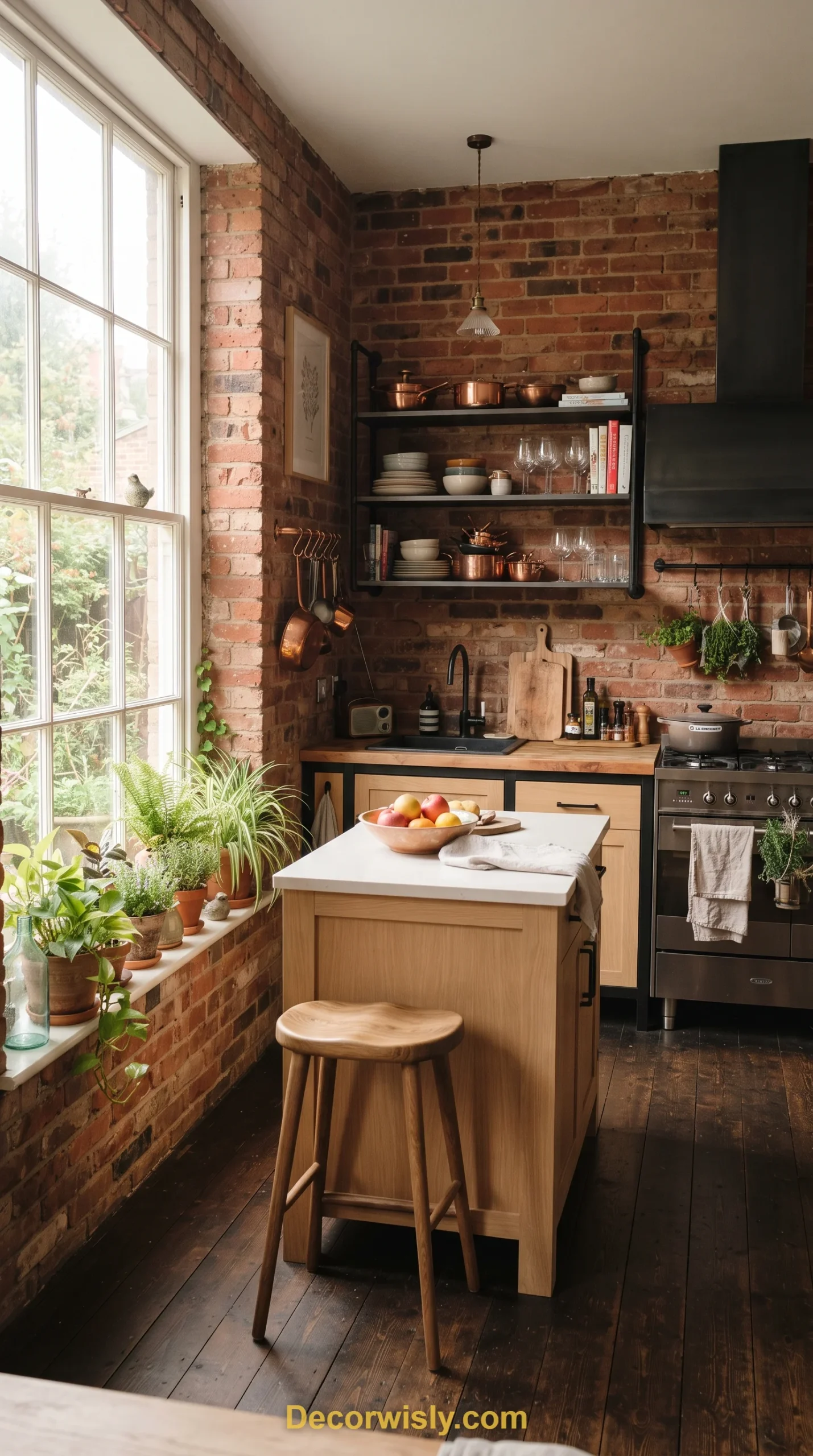
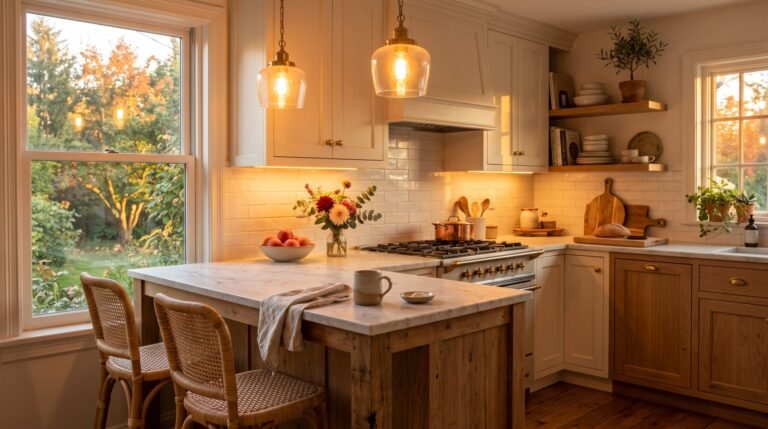
The most livable version of this style leans on warm woods, soft ambient lighting, and one or two raw materials rather than filling the whole room with steel and concrete — industrial as an accent, not a theme park.