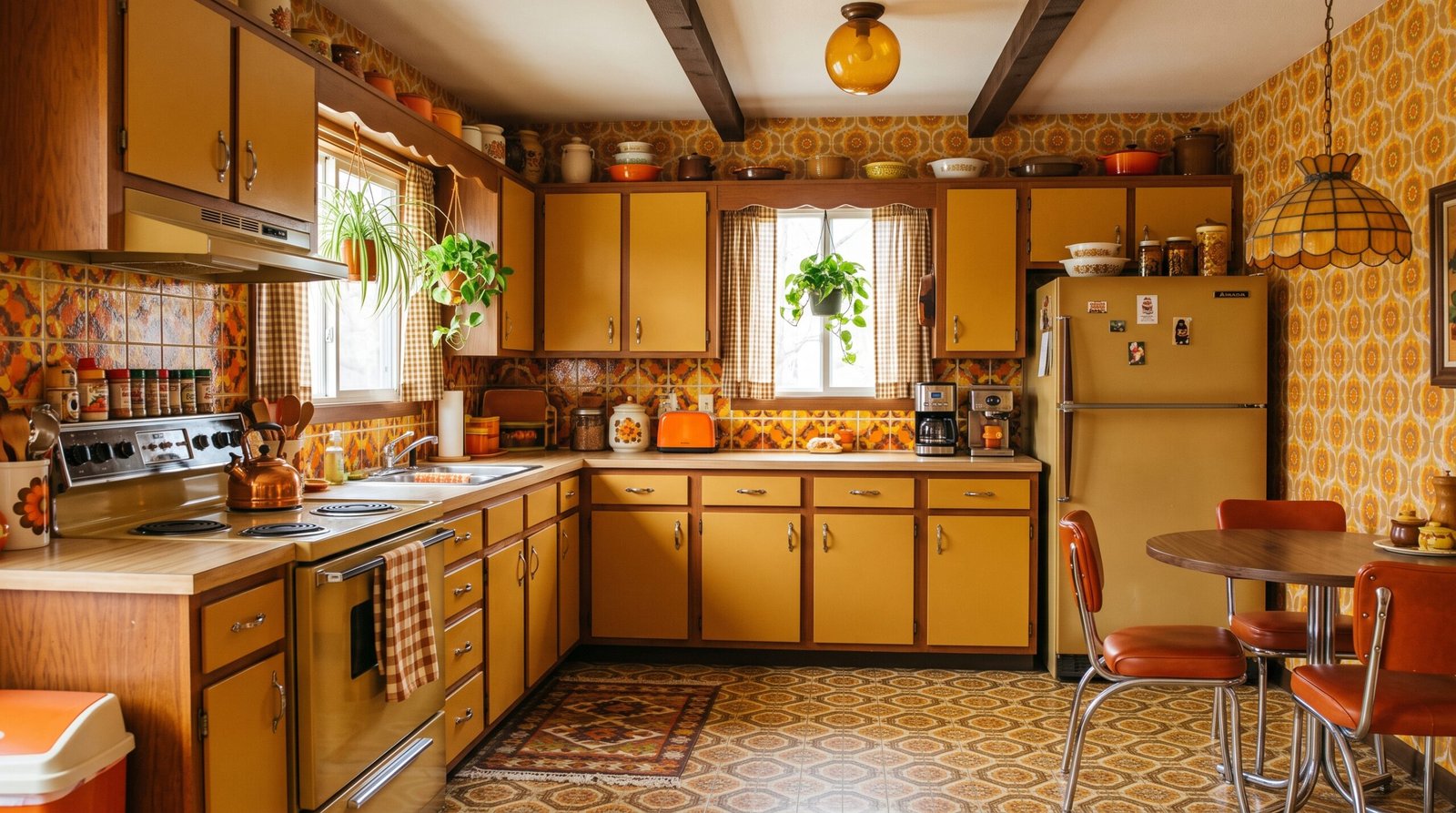
The 70s kitchen gets a bad rap for being loud, but that same boldness is exactly why it’s aging so well as a design reference again. Warm colors, tactile materials, and patterns that actually commit to something — none of it reads as dated when it’s done with a bit of restraint and blended with modern function. Whether you want a full nostalgic overhaul or just a few standout details, these 22 ideas cover the range: color, appliances, lighting, texture, and layout, all built around that unmistakable groovy energy without sacrificing a kitchen that actually works for daily life.
1. Reviving Retro Colors
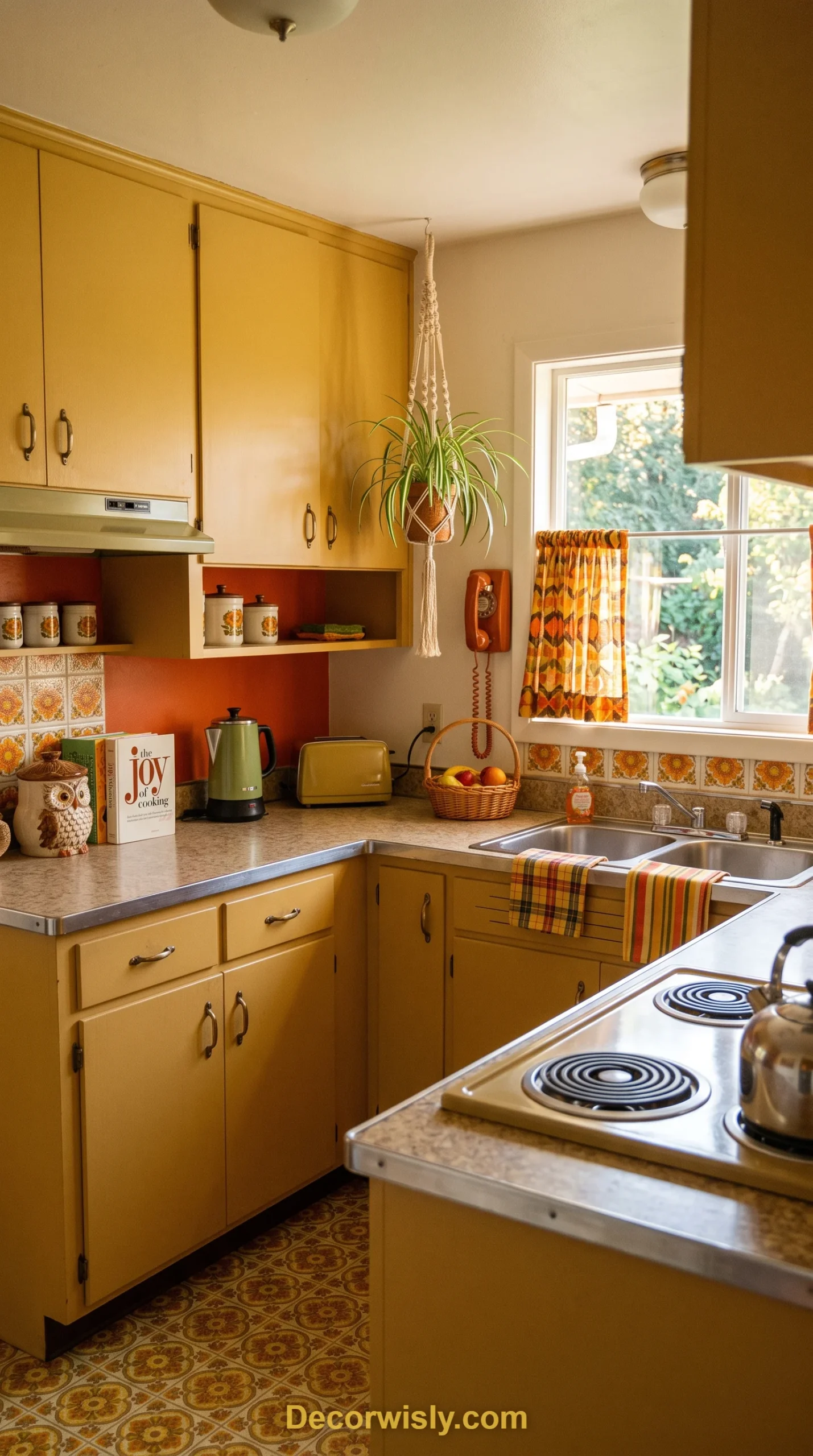
Warm oranges, deep browns, and mustard yellows are the fastest way to transport a kitchen straight back to the 1970s. These tones bring genuine energy and a sense of history into the room, working as a strong backdrop for other vintage details layered on top. Mixing a painted accent wall with matching cabinetry keeps the effect balanced rather than overwhelming — a striking look that stays functional for everyday cooking.
2. Vintage Appliance Revival
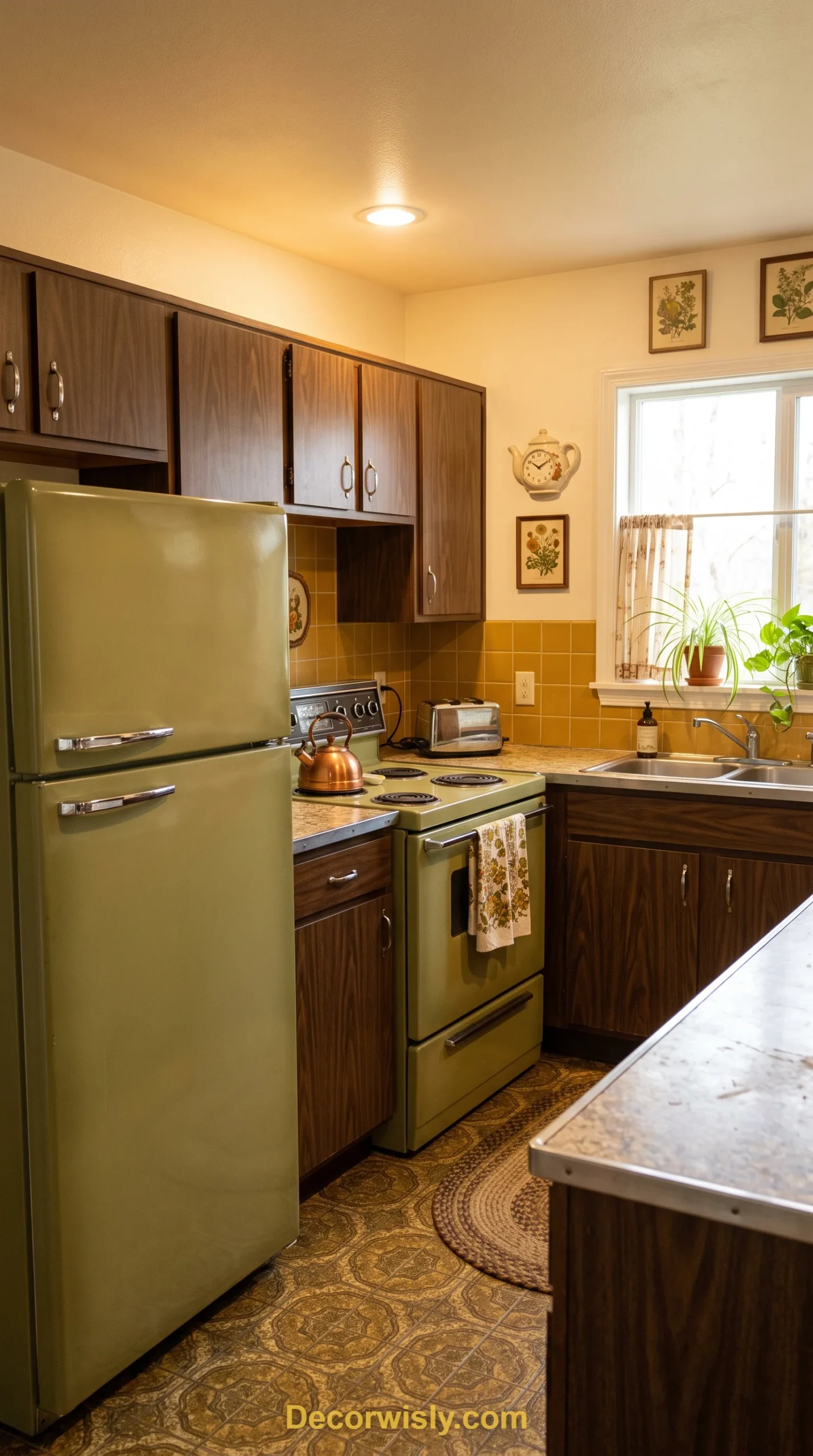
Vintage-style refrigerators, stoves, and mixers do double duty as both functional appliances and genuine statement pieces. Their distinctive shapes and finishes echo decades past while still performing reliably by modern standards. Restoring or upgrading to these pieces brings real character into meal prep, turning an everyday task into something that feels a bit more like a ritual — a straightforward way to blend old-school charm with current convenience.
3. Bold Patterns and Textures
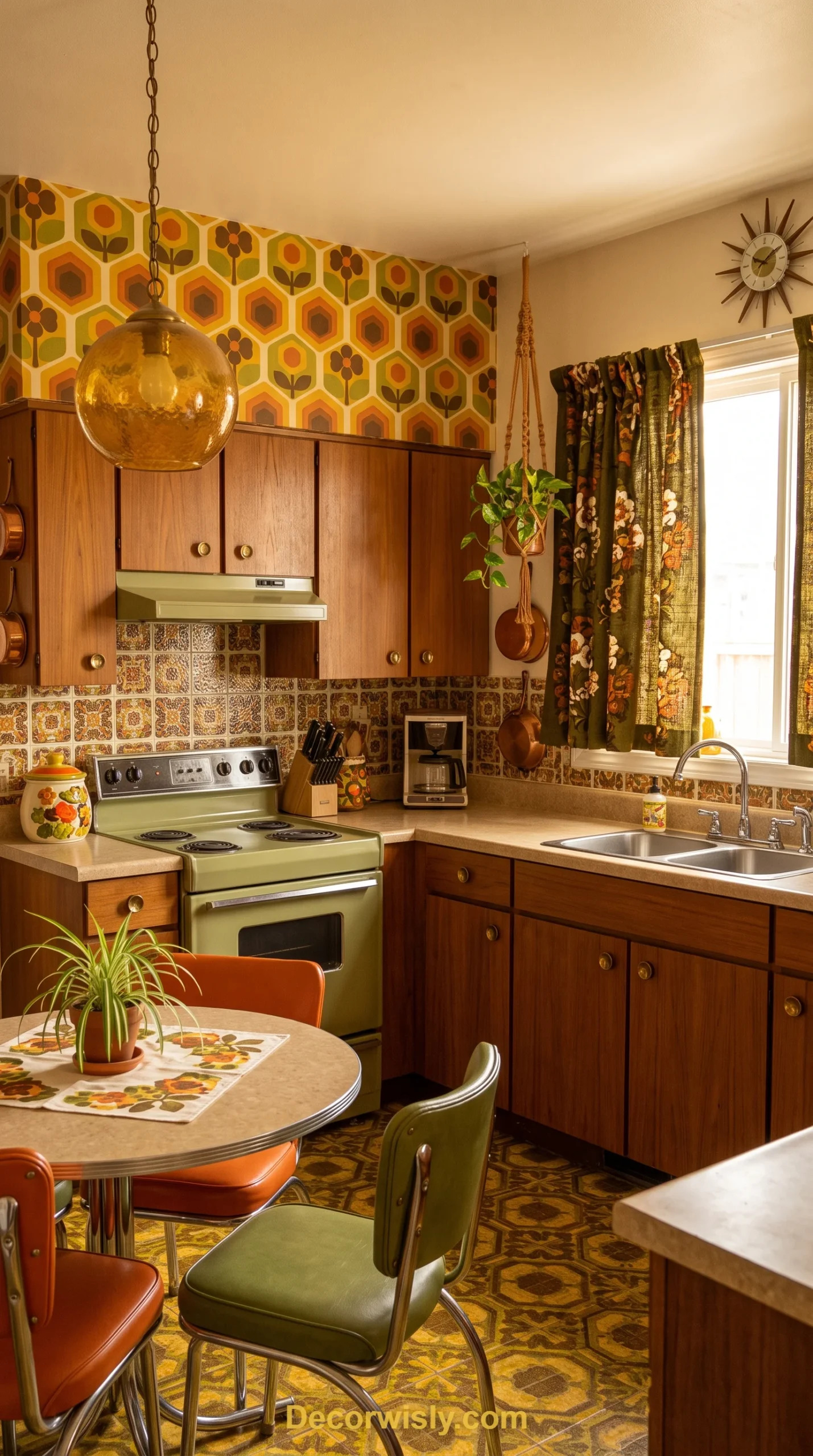
Pattern does a lot of the heavy lifting in recreating an authentic 70s feel. Textured wallpaper, patterned curtains, and eye-catching upholstery work together to build genuine depth, especially when paired with vibrant floor tiles or a patterned backsplash. The interplay between smooth and tactile surfaces gives the room real visual layering — playful without tipping into chaotic.
4. Retro Lighting Statements
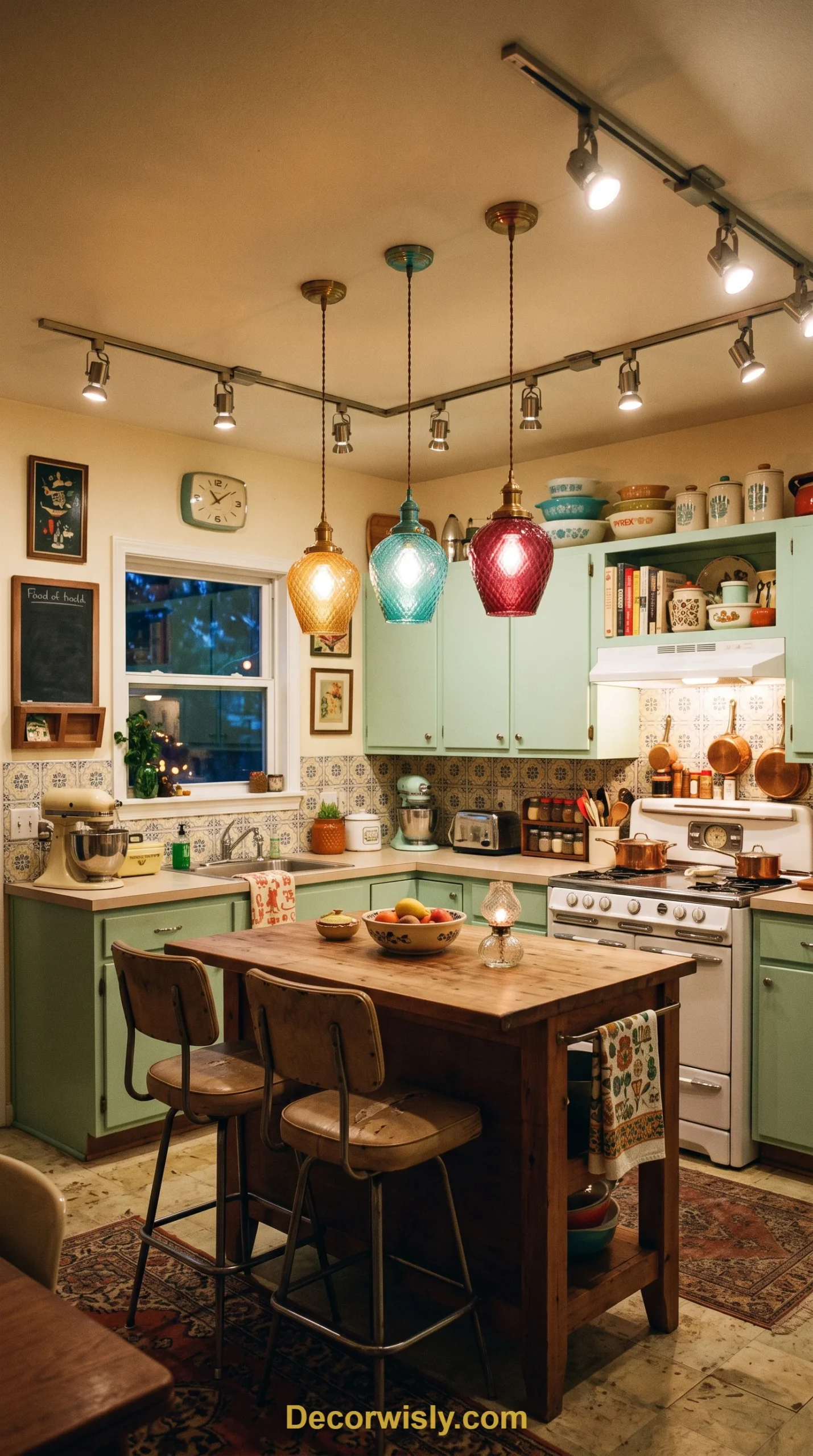
Lighting in a 70s kitchen isn’t just functional — it’s a design statement in its own right. Pendant lamps, chandeliers, and track lighting all bring both illumination and nostalgic character, and the right fixture can shift the whole mood of the room. Brushed metal or colored glass finishes strike a nice balance between whimsical and refined, tying the lighting scheme into the era’s aesthetic without feeling like a costume.
5. Wood Accents and Paneling
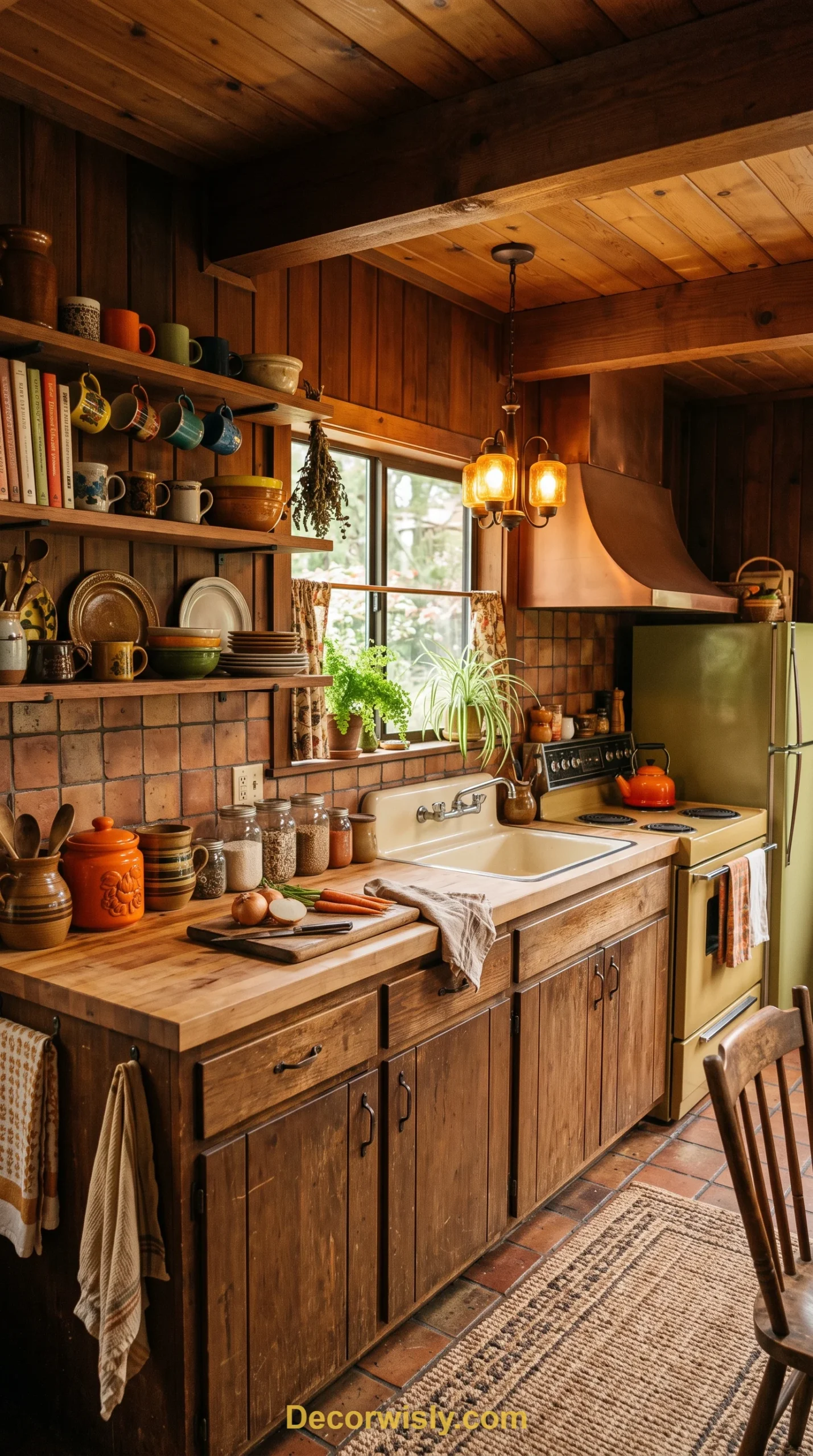
Wood paneling and accent pieces bring a rustic warmth that was central to 70s kitchen design. Rich, earthy tones paired with retro patterns strike a balance between natural material and nostalgic style, and the tactile texture of wood complements other vintage details nicely. Wooden cabinetry, open shelving, or a paneled accent wall all deliver that cozy, grounded feel without sacrificing everyday function.
6. Open Shelving with Nostalgic Flair
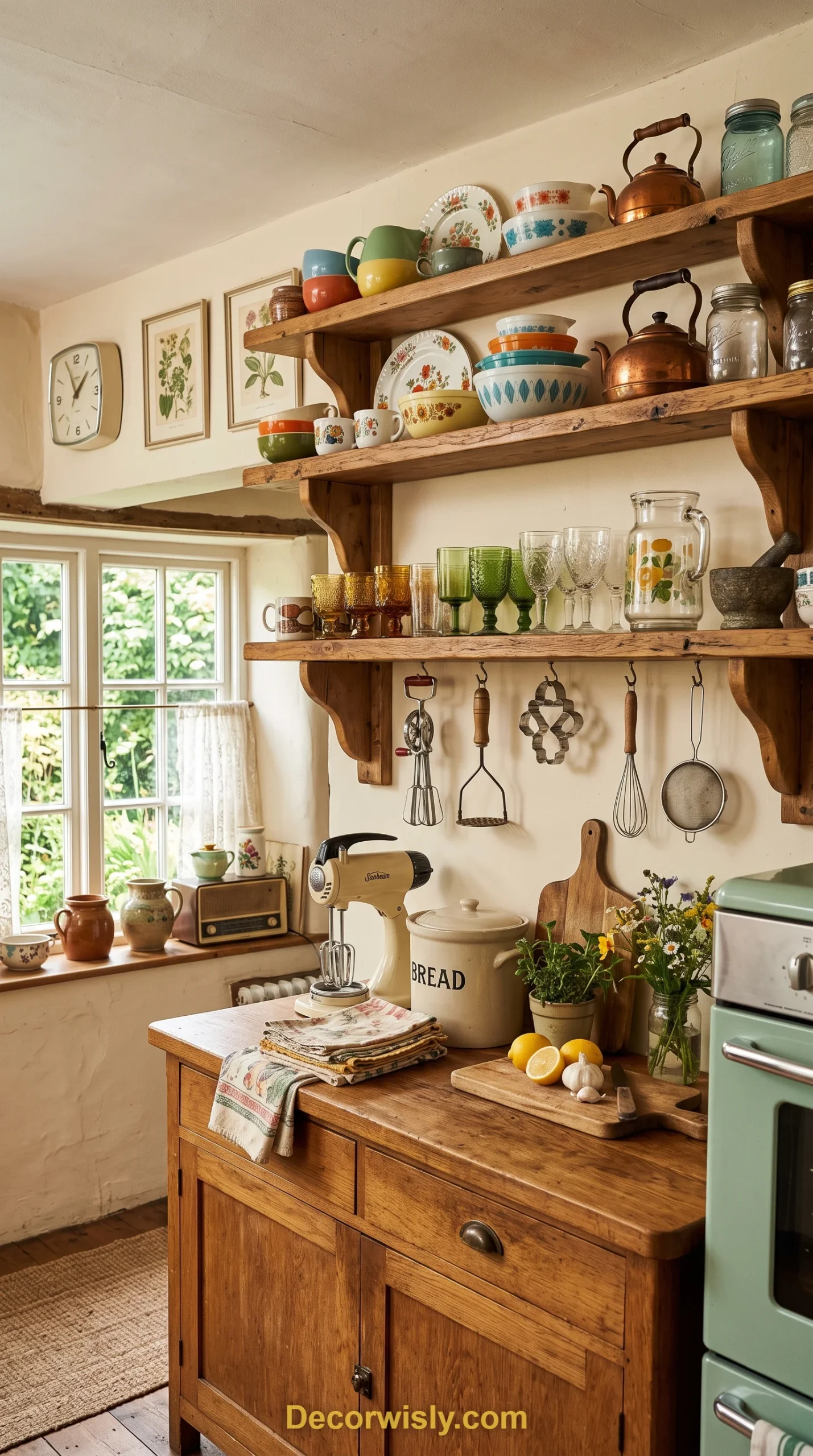
Open shelving turns everyday storage into a stage for vintage dinnerware, classic glassware, and collectible kitchen gadgets. Beyond easy access to cooking essentials, it creates a lived-in, personal look that feels warm rather than staged. The transparency of open shelves brings a sense of openness to the room while still emphasizing the era’s design sensibility — simple, functional, and genuinely charming.
7. Funky Formica Countertops
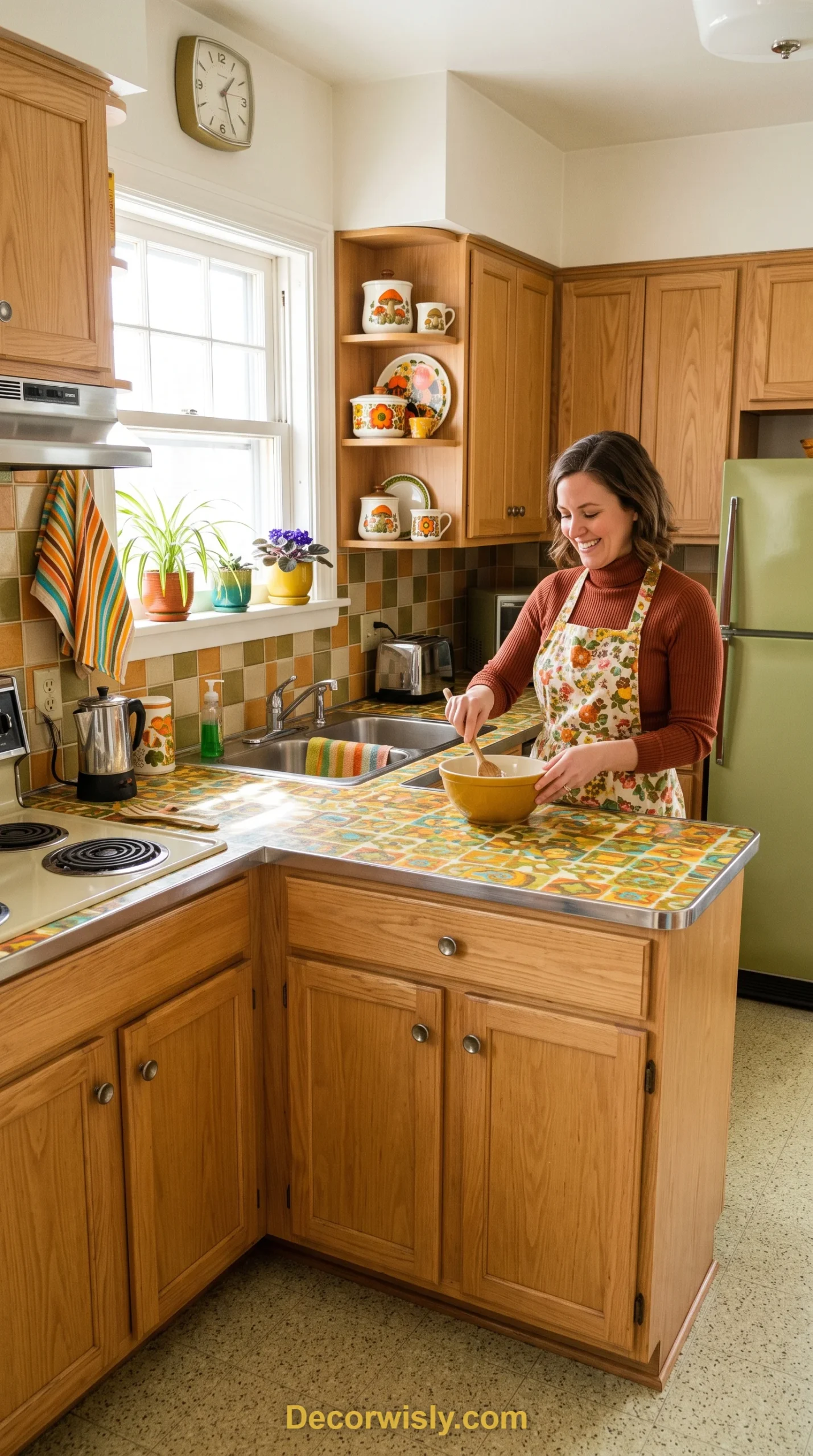
Formica was the defining countertop material of the era, and vibrant, patterned versions bring that same energy back today. These surfaces combine real durability with an unmistakably retro look, offering a cost-effective way to transform an ordinary workspace into something with genuine personality. Easy to maintain and visually bold, Formica countertops deliver an authentic vintage feel without the upkeep of pricier materials.
8. Statement Backsplash Tiles
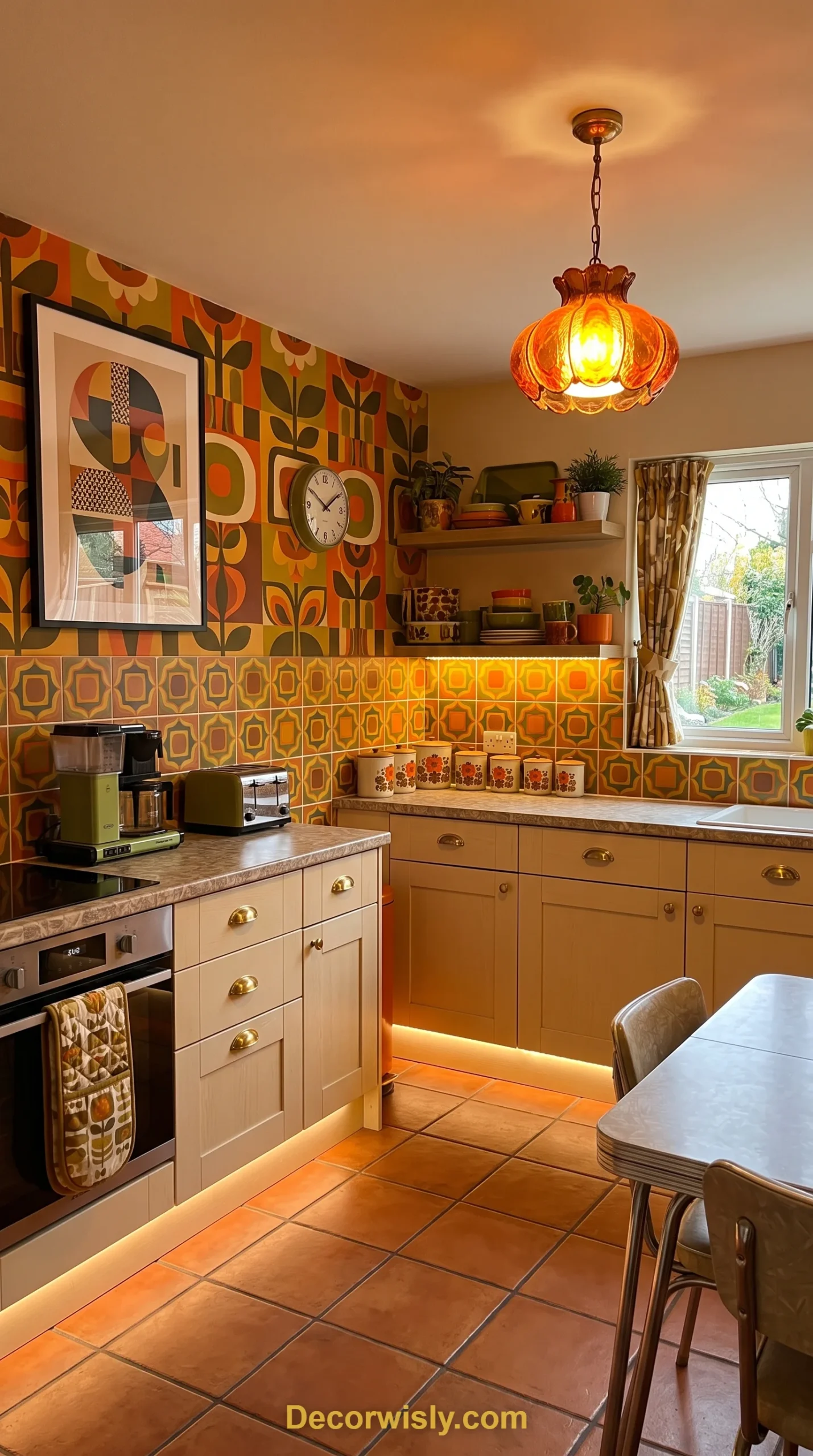
A colorful, intricately patterned backsplash turns a purely functional wall into a genuine design feature. Geometric or floral tile patterns typical of the era create a focal point that draws the eye while still protecting the wall from everyday splashes. It’s a detail that does double duty — practical and decorative at once — and brings the lively spirit of the 70s right into the cooking zone.
9. Patterned Floor Dynamics
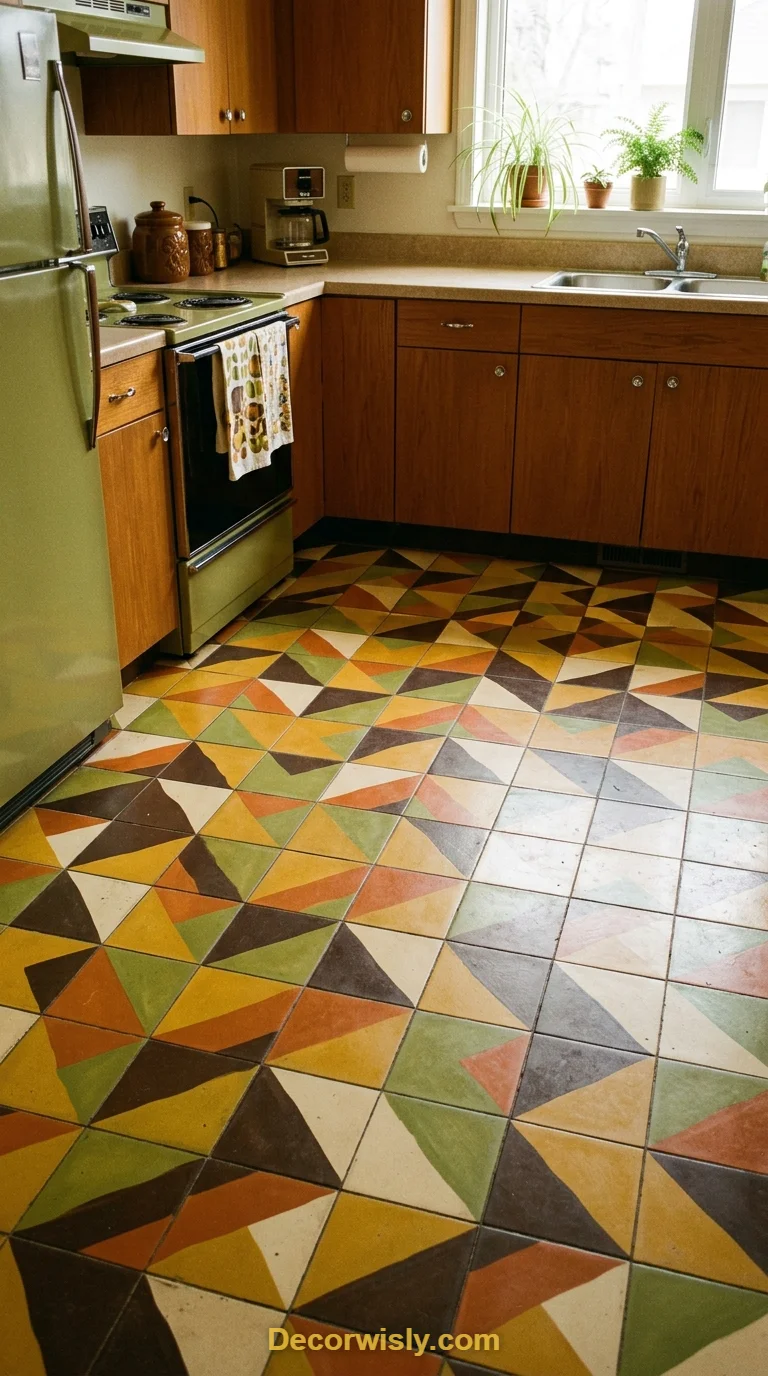
A patterned floor gives a kitchen a foundation that feels genuinely designed rather than incidental. Chevron, abstract, or contrasting geometric tile layouts bring the playful energy of the 70s underfoot, while still being practical and easy to clean day to day. The pattern harmonizes with other retro elements in the room, turning every step into part of the overall look.
10. Islands with Vintage Accents
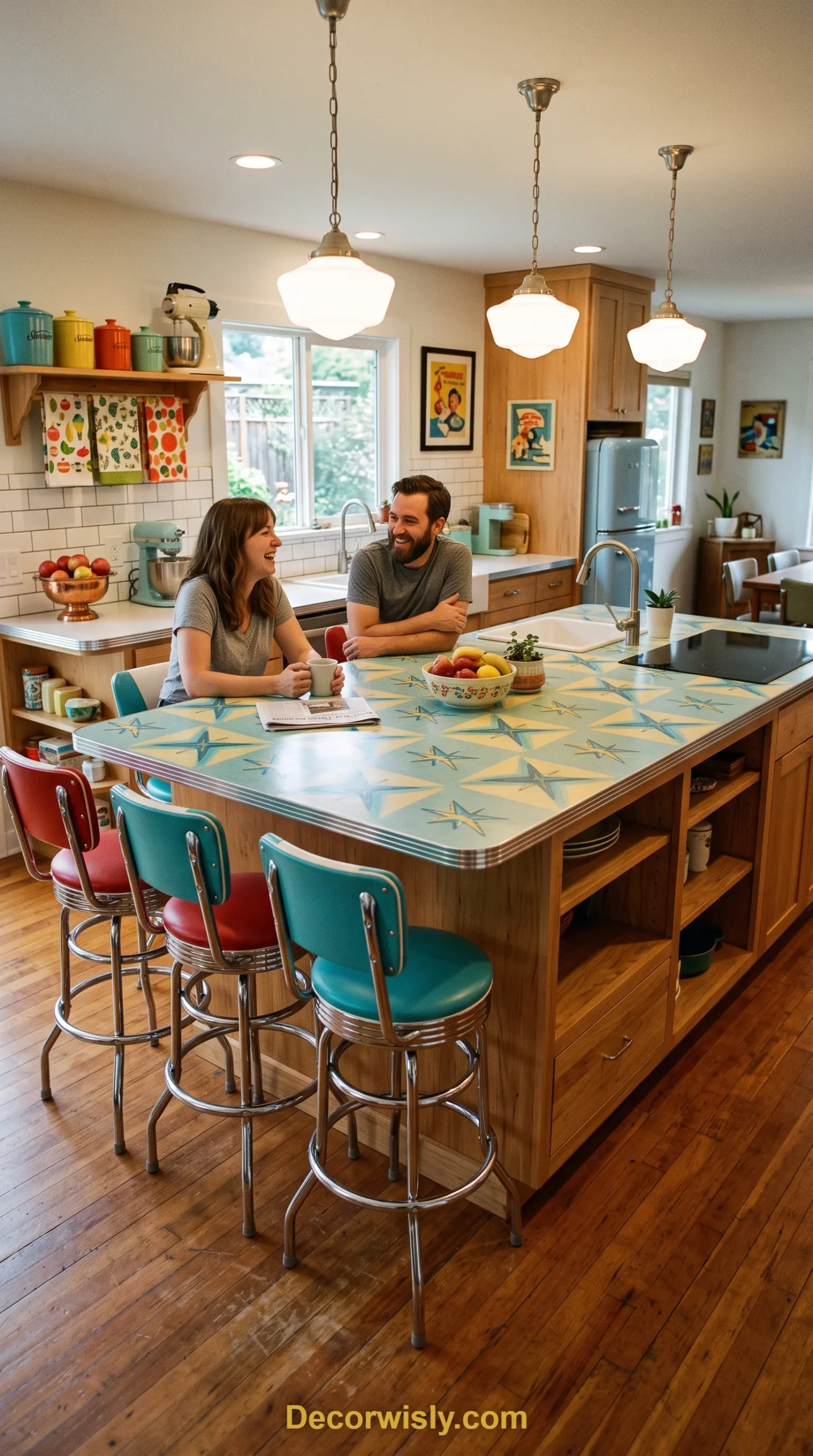
A kitchen island built around vintage details — retro bar stools, a patterned countertop, a few nostalgic decorative touches — becomes both a workspace and a social hub. It brings together the charm of the era with the practicality modern kitchens need, offering ample storage and seating in one central piece. It’s the kind of feature that naturally draws people in, whether for meal prep or casual conversation.
11. Unique Storage Solutions
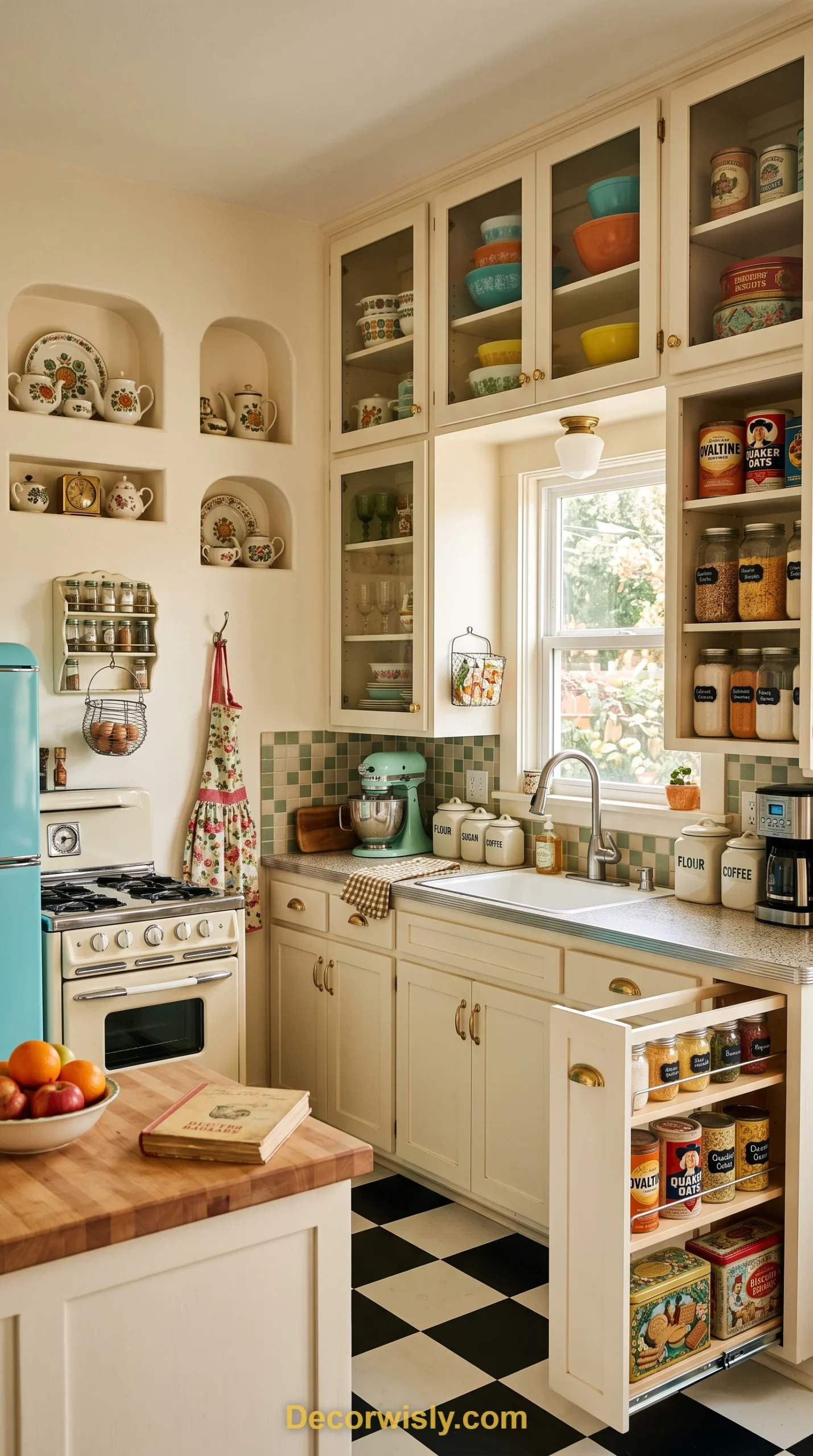
Storage doesn’t have to sacrifice style to stay functional. Retro-inspired cabinets, pull-out pantries, and decorative wall niches all keep a kitchen organized while leaning into the quirky details of the era. Thoughtfully arranged storage declutters the space without losing the personality that makes a 70s-inspired kitchen feel distinct — form and function working together rather than against each other.
12. Iconic Floral Prints
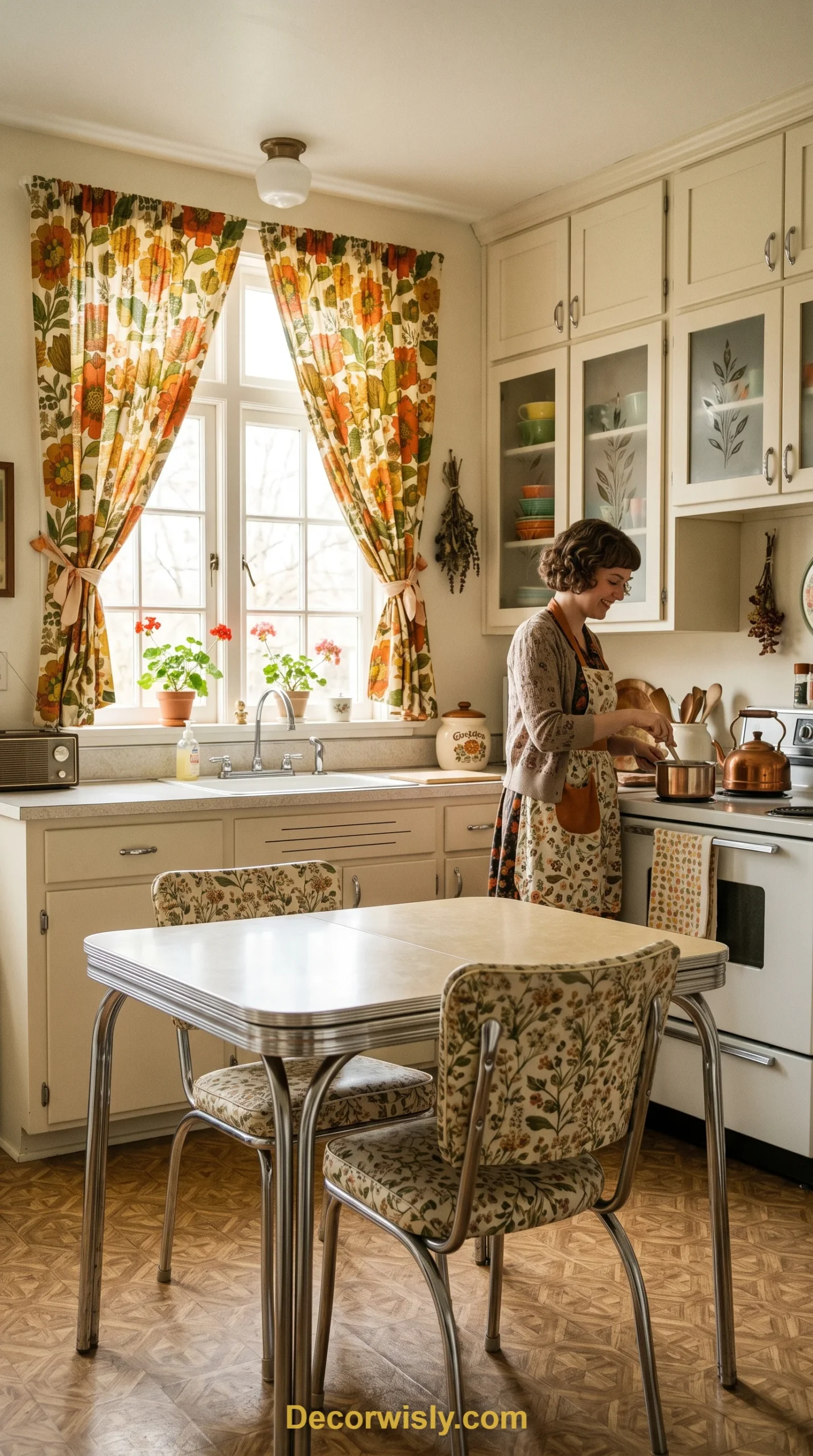
Floral prints were everywhere in 70s interiors, and bringing them into curtains, chair upholstery, or cabinet inserts is one of the easiest ways to channel that same charm today. The patterns soften and enliven a space at the same time, tying together other vintage elements into a cohesive, nature-inspired look. It’s a detail that celebrates the era’s creativity without overwhelming the room.
13. Retro Bar Stools and Seating
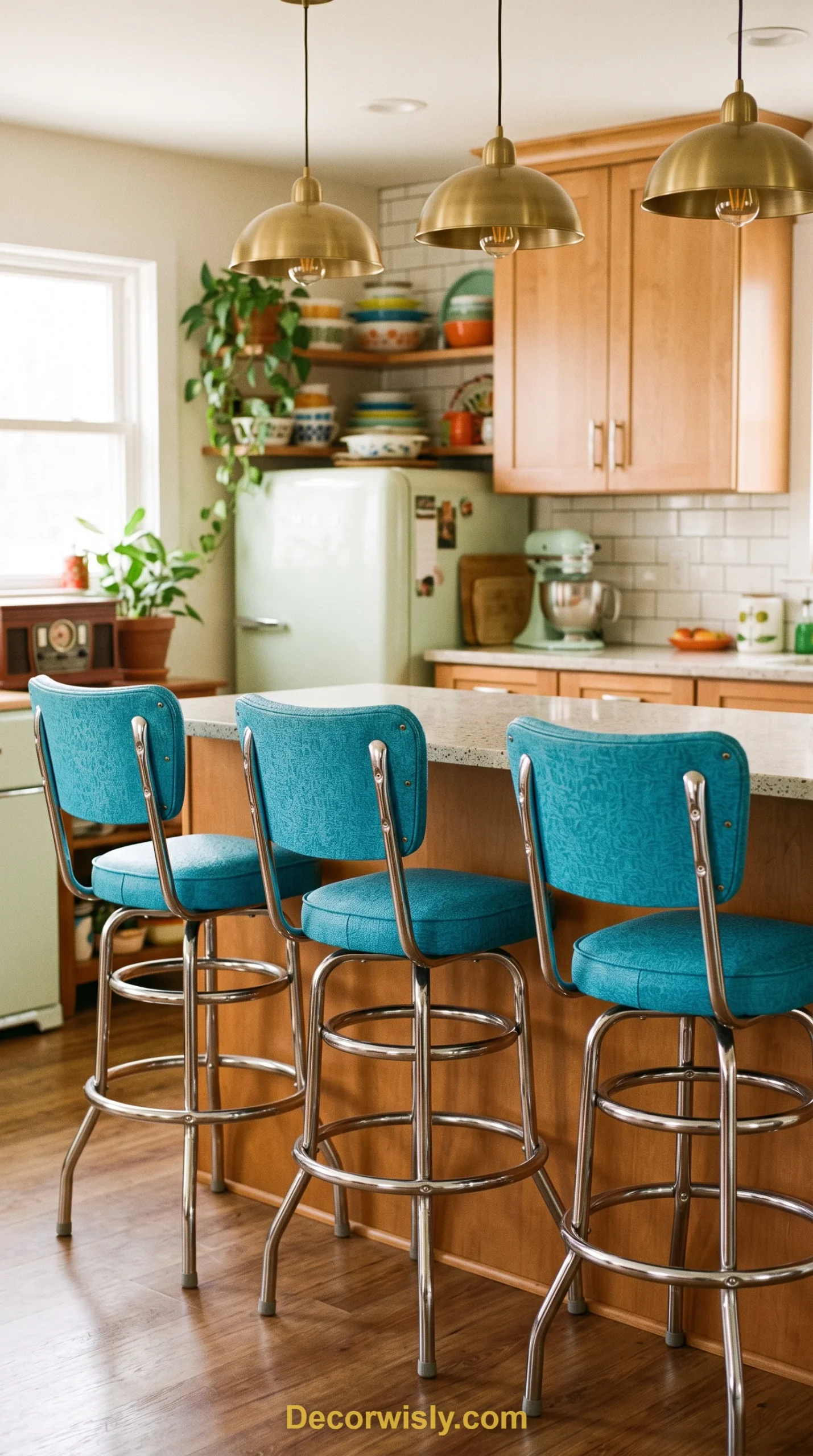
Retro seating brings both comfort and unmistakable character to a kitchen. Classic, ergonomic bar stool designs in vibrant upholstery act as genuine conversation pieces while still being practical for everyday use. Perfect for casual dining or socializing, well-chosen seating like this makes the space feel more inviting for both family meals and get-togethers with friends.
14. Retro-Inspired Décor Details
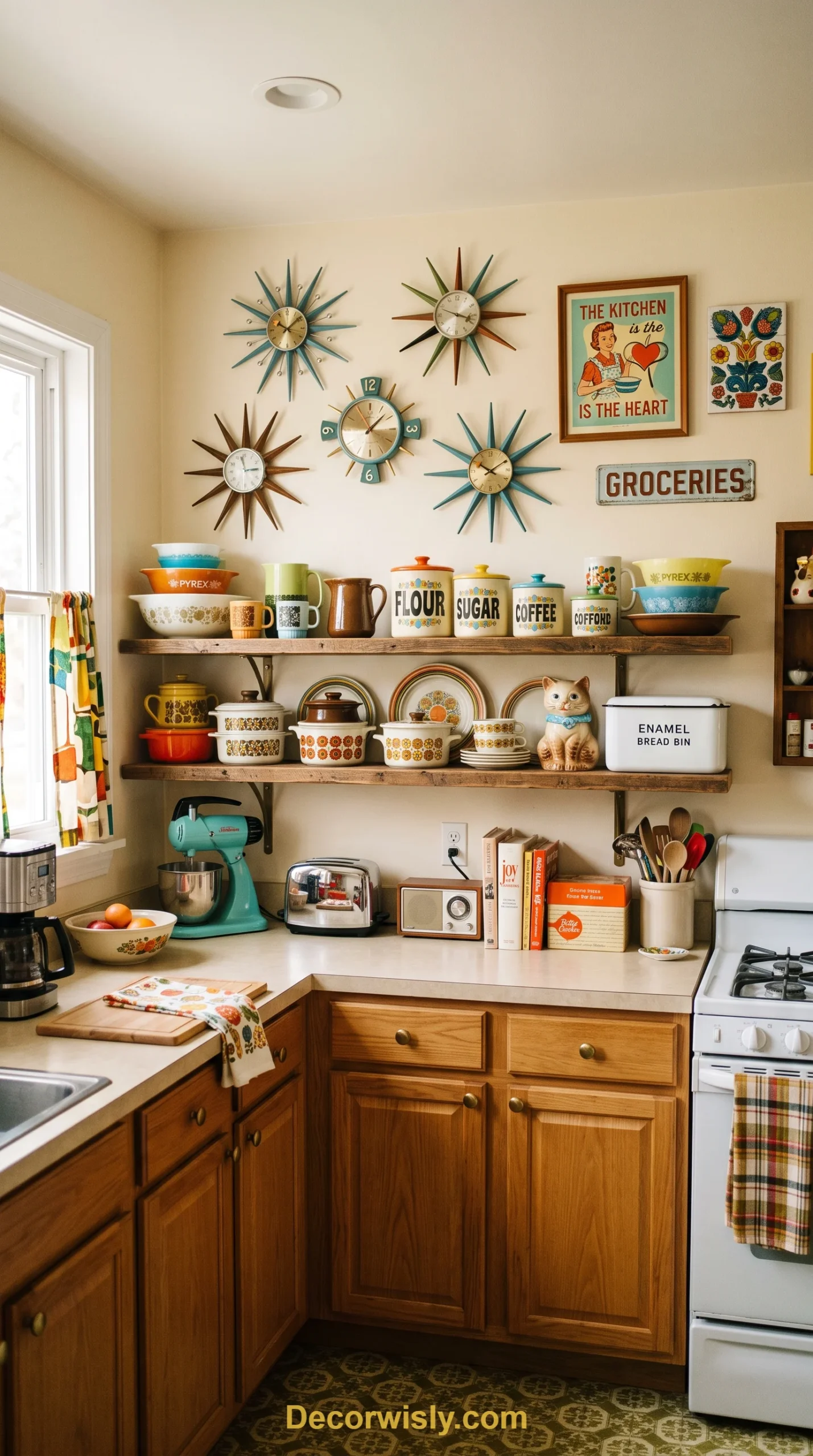
Small decorative details — vintage clocks, funky wall art, retro pottery — do a lot to establish a kitchen’s personality without requiring a full renovation. Each piece adds a layer of history while staying practical enough for daily use. Curated thoughtfully, these accessories create a space that feels genuinely engaging, honoring the past while still fitting comfortably into modern life.
15. Minimalistic Counter Accessories
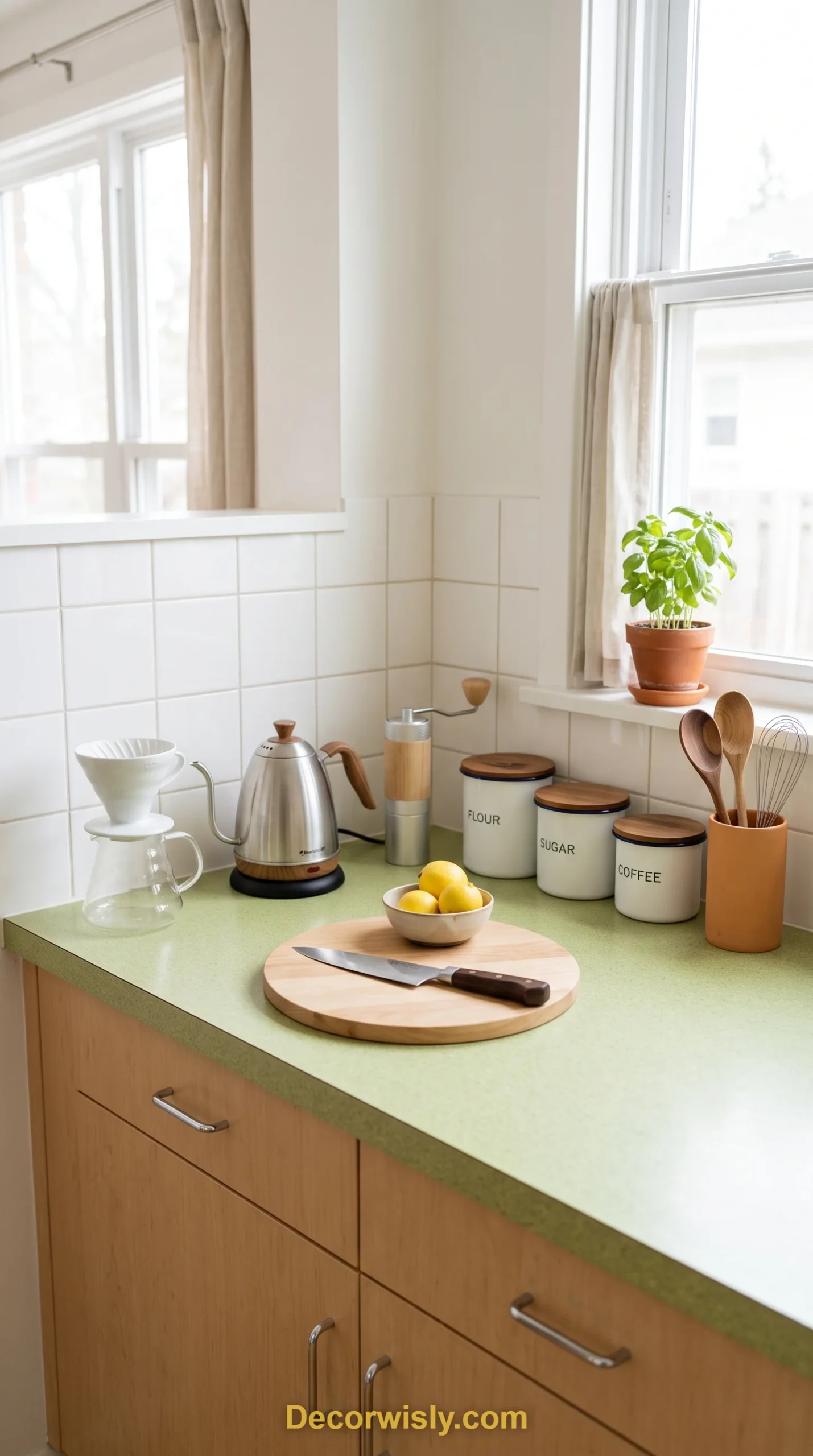
An uncluttered countertop can still reflect retro elegance when the right accessories are chosen carefully. Streamlined, well-designed tools and decorative items complement the boldness of 70s style without overwhelming the workspace. This approach keeps daily tasks practical and the counter genuinely usable, while still resonating with the era’s distinctive aesthetic in a more understated way.
16. Vintage Kitchen Utensils Charm
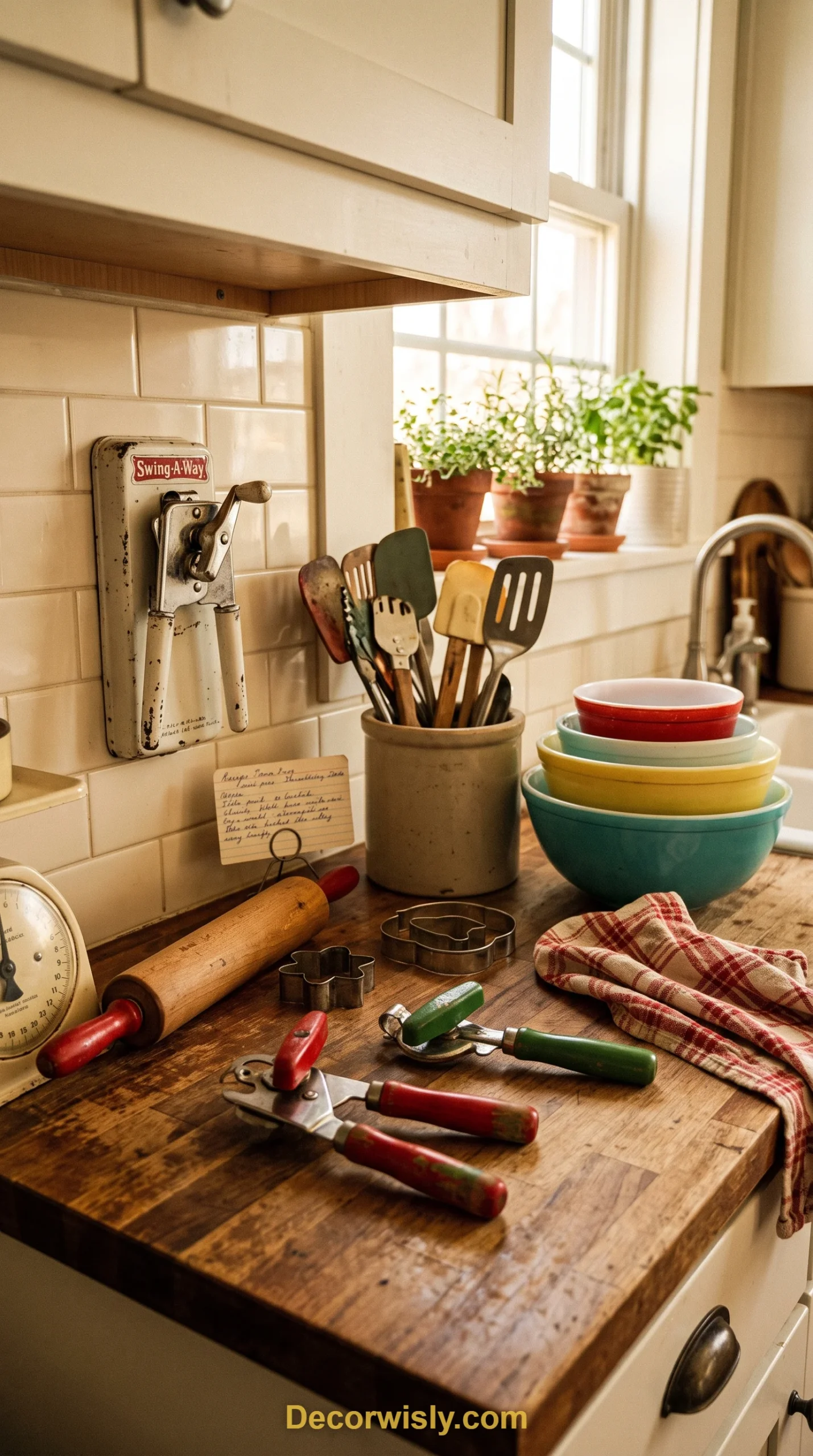
Bringing back classic tools — retro can openers, colorful mixing bowls, old-fashioned spatulas — adds a layer of authenticity that’s hard to fake with modern reproductions. These pieces are functional as well as decorative, turning everyday meal prep into something a bit more nostalgic. Displaying or actually using them creates a tactile connection to vintage culture that feels personal rather than staged.
17. Quirky Pendant Lighting Fixtures
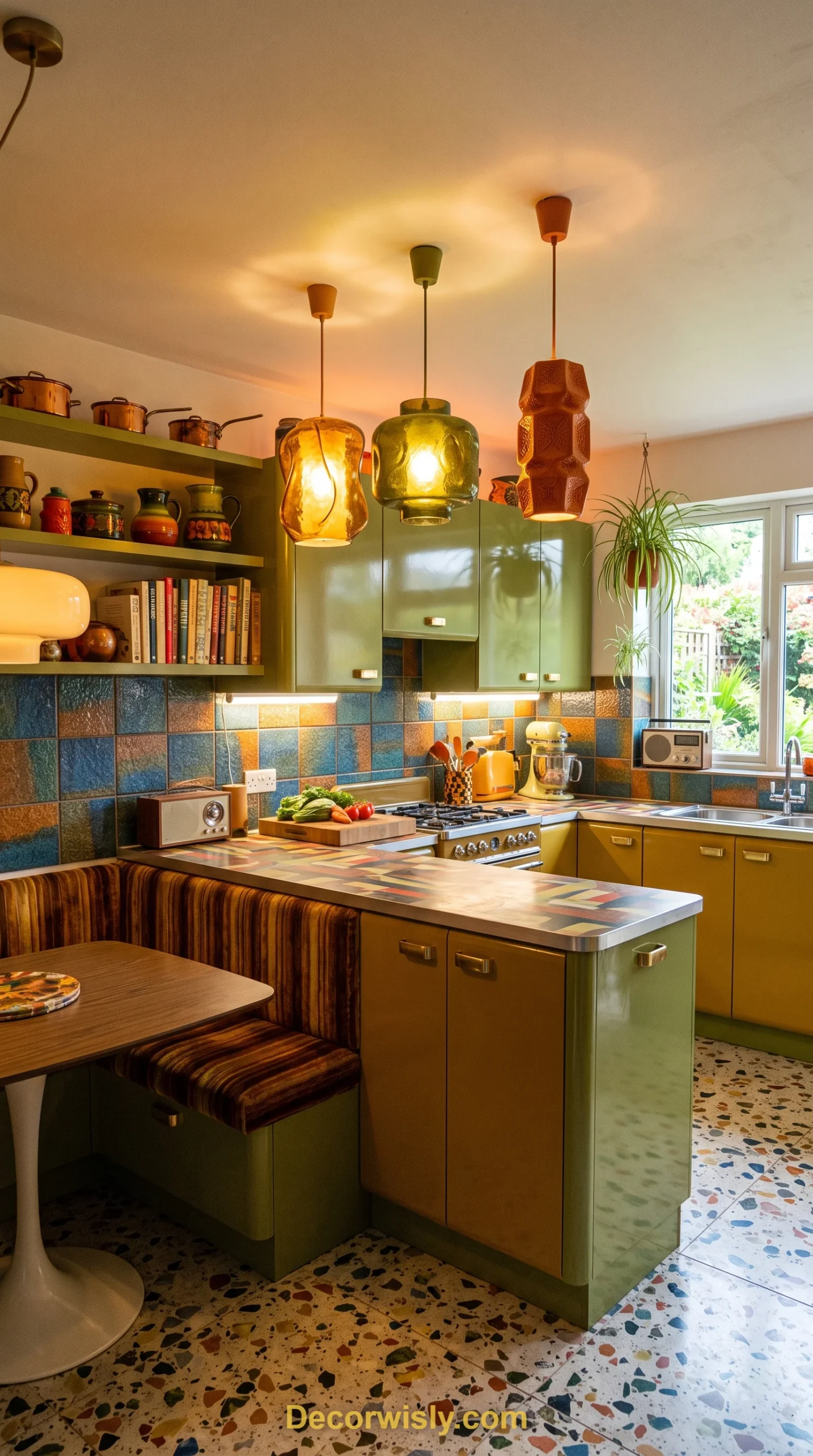
Pendant lights with bold, unusual shapes capture the experimental spirit that defined 70s lighting design. Beyond illumination, these fixtures act as small art pieces, setting the tone for the whole room while still providing focused light for meal prep. The right pendant brings genuine character and energy that ties the rest of a retro kitchen’s design together.
18. Eclectic Wall Accessories
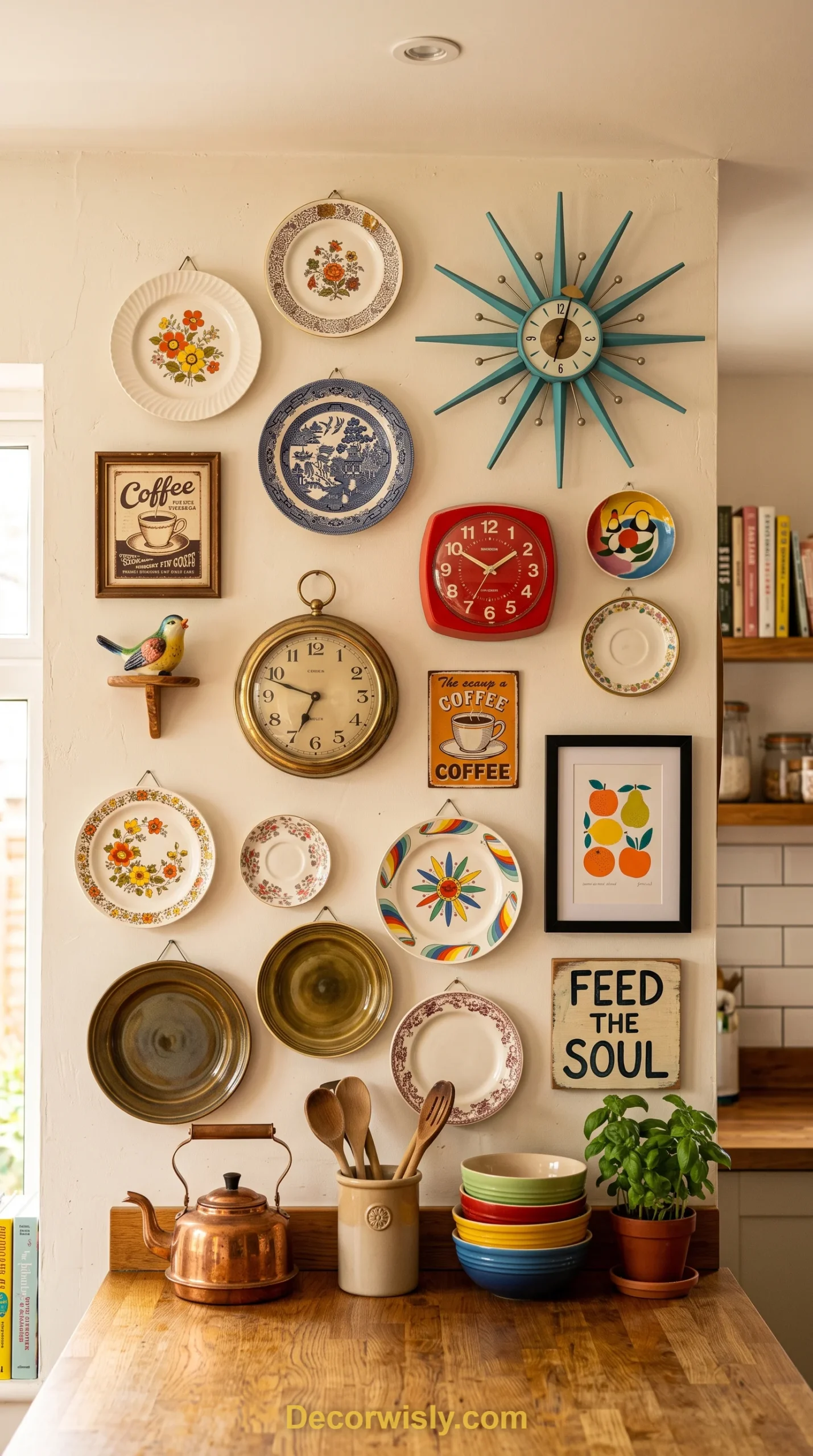
A wall filled with vintage plates, retro clocks, and quirky art pieces tells its own visual story of decades past. The eclectic mix defines the space while offering genuine room for personal expression, with each piece echoing 70s design principles while still allowing for modern personalization. It’s a simple way to turn a bare wall into a display of history and character.
19. Funky Rug Patterns
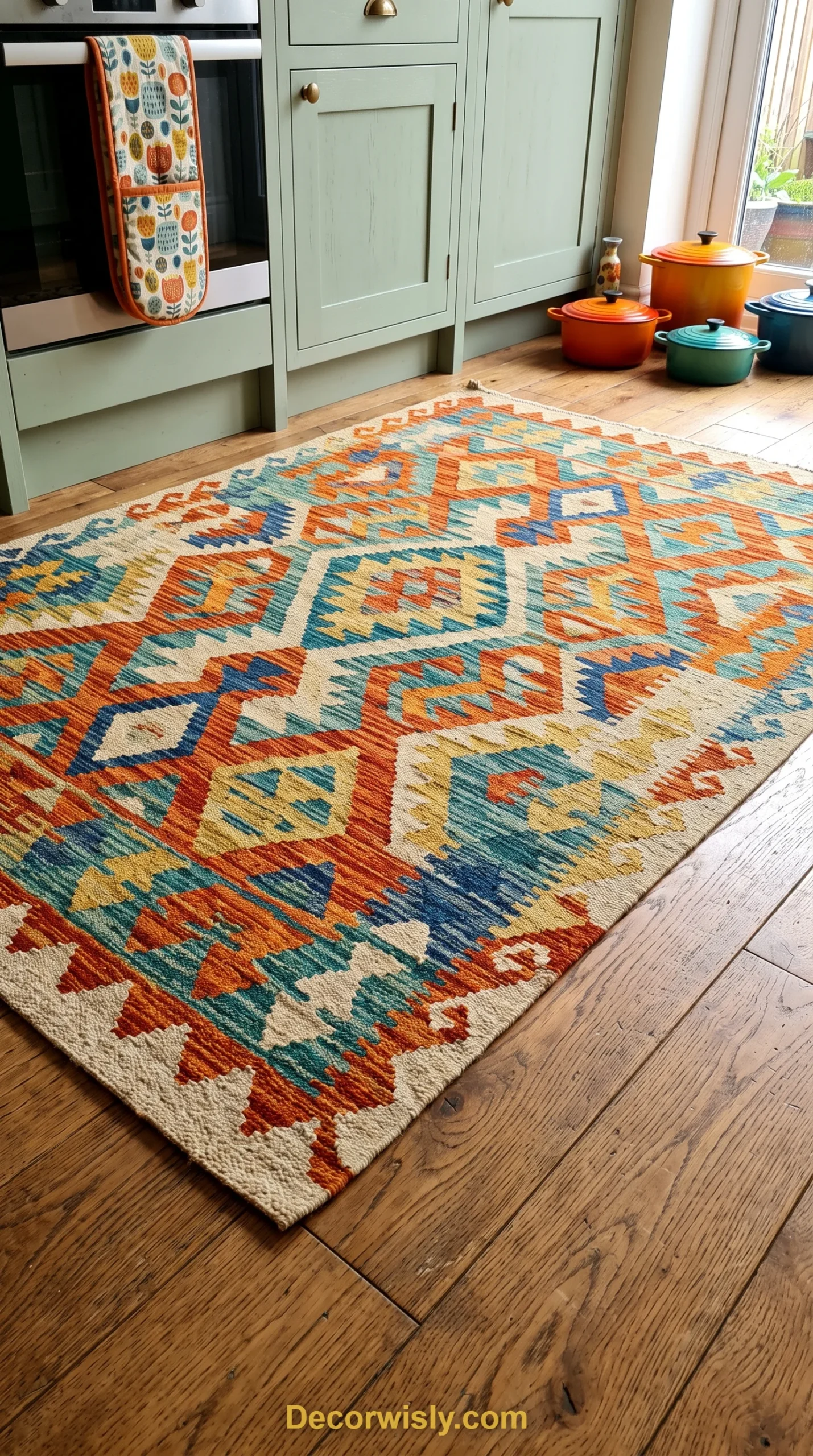
A bold, geometric or abstract rug adds a pop of color and texture underfoot, playing off sleek countertops and vintage cabinetry for a nice contrast. Beyond the visual drama, a good rug adds comfort and safety to daily kitchen routines. It’s a relatively small addition that injects real energy into the room, turning every step into part of the retro-inspired design.
20. Space-Saving 70s Innovations
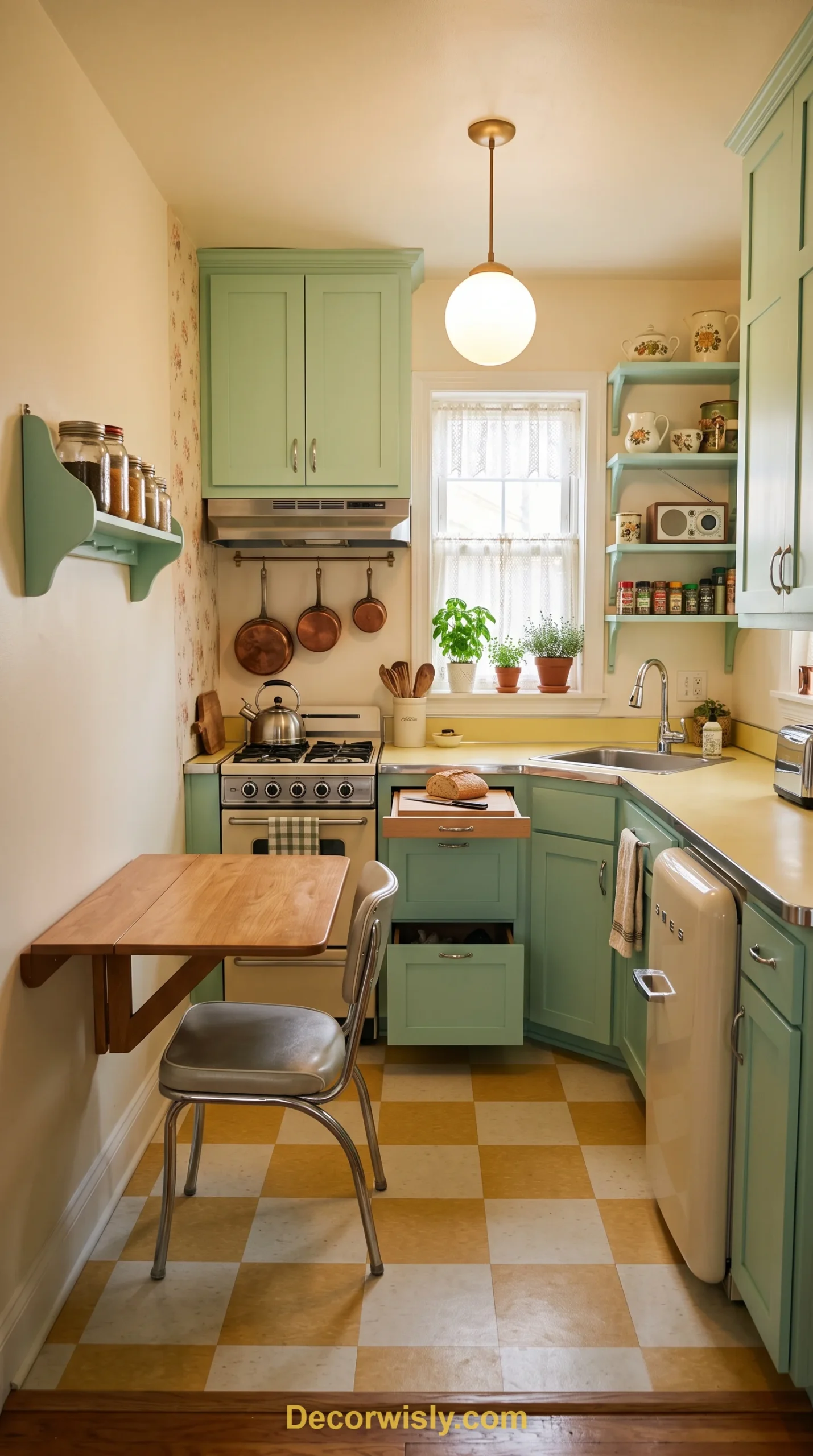
Multi-functional furniture, hidden compartments, and convertible layouts reflect the resourceful, problem-solving spirit that defined 70s design under space constraints. These solutions keep a compact kitchen uncluttered and visually appealing without sacrificing character. The blend of practicality and vintage aesthetics gives even a small space room to breathe while staying true to the era’s ingenuity.
21. Chic Open Layout Design
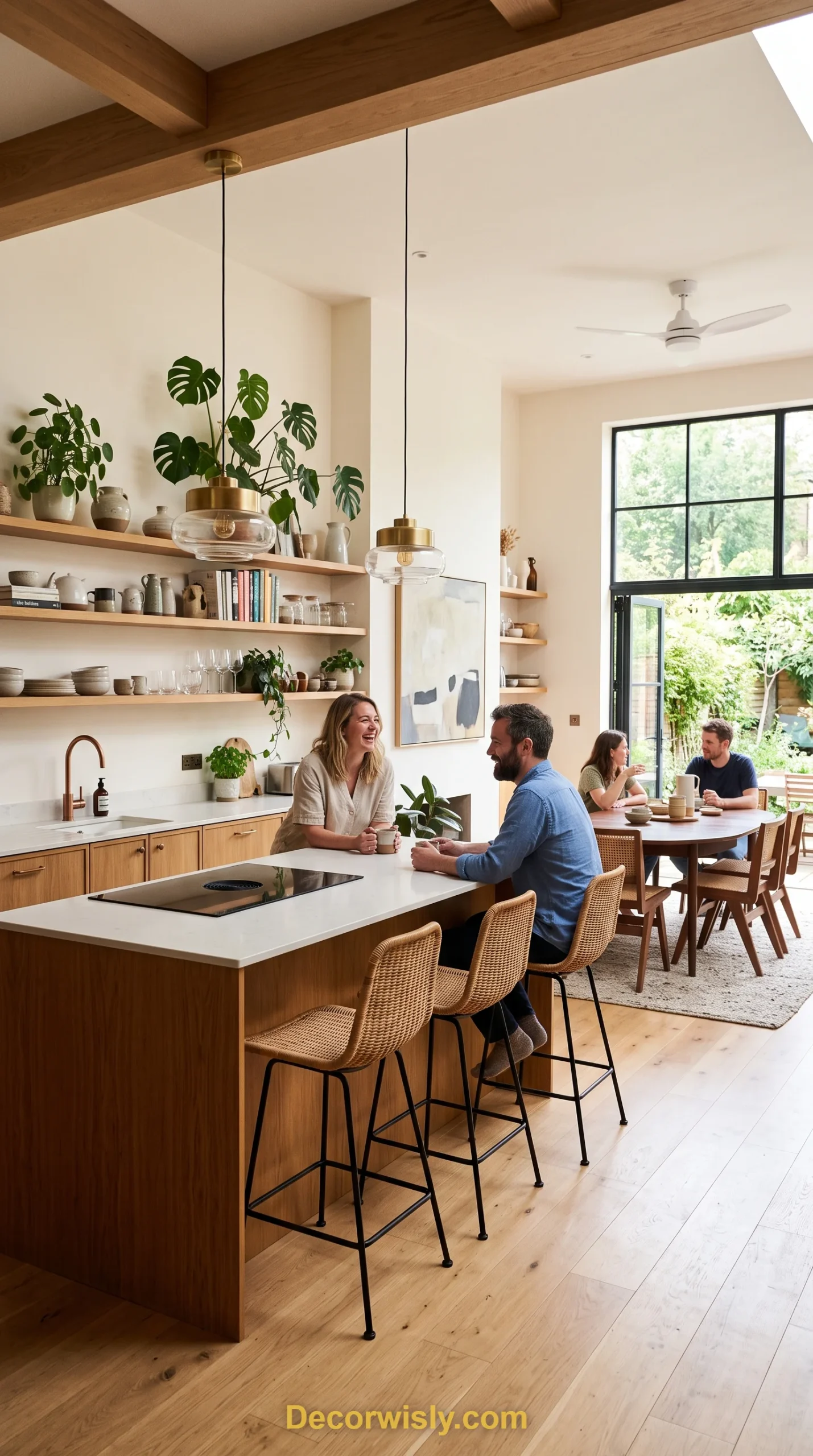
Removing barriers between kitchen and dining space captures a sense of openness and flow that fits naturally with 70s-era charm. Merging cooking and dining areas under soft, natural lighting creates a welcoming space for everyday conversation. Open shelving, integrated seating, and thoughtful décor tie the whole layout together — a retro concept that still reads as genuinely modern today.
22. Modern Retro Fusion Techniques
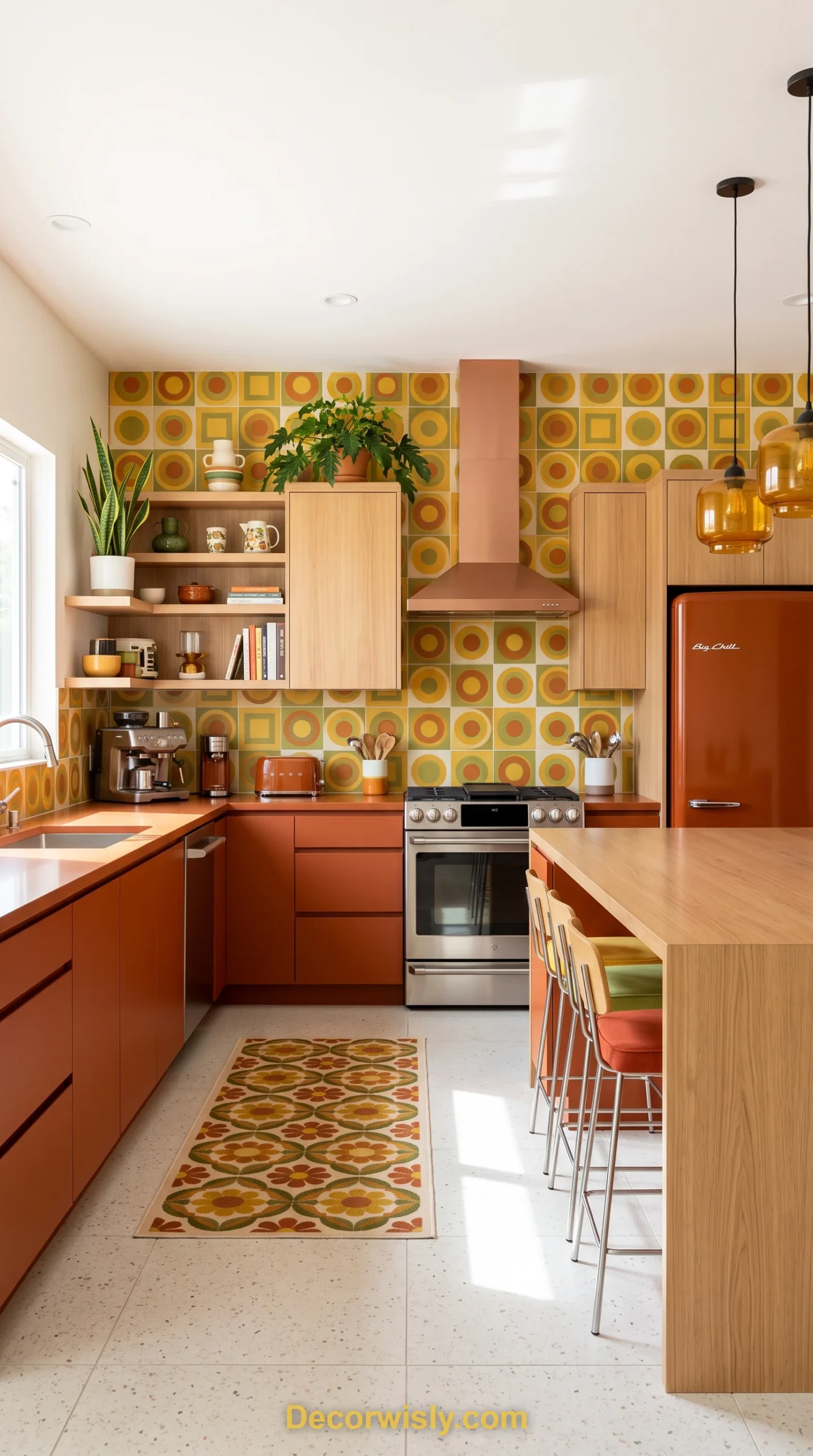
Blending sleek modern finishes with vintage staples creates a kitchen that honors the past while fully embracing current convenience. Smart appliances paired with retro color choices and nostalgic patterns result in a space that feels both functional and full of personality. Clean lines and innovative layout choices keep the fusion approach feeling intentional rather than mismatched — playful sophistication rather than costume-party nostalgia.
Final Thoughts
A 70s-inspired kitchen doesn’t have to mean committing to shag carpet and harvest gold everything — the era’s real strength was its willingness to commit to color, pattern, and texture without apologizing for it. Pick a few ideas that resonate, whether that’s a bold backsplash, a vintage-style appliance, or just warmer paint tones, and let those anchor the rest of the room. Done with a bit of restraint and blended with modern layout sensibilities, a 70s kitchen ends up feeling less like a theme and more like a genuinely warm, characterful space to cook in.