If you’re weighing flooring options for a bedroom remodel, bamboo deserves a serious look. It’s technically a grass, not a hardwood, which means it regrows in a fraction of the time a tree takes — but you’d never guess that from how it feels underfoot. Bamboo has the warmth, grain, and durability people expect from timber, plus a price tag and environmental footprint that are hard to beat. It also comes in a surprising range of finishes, tones, and plank styles, so “bamboo floor” doesn’t have to mean one single look. Below are 30 ways to bring it into a bedroom, whether you want something bright and airy, moody and dramatic, or somewhere comfortably in between.
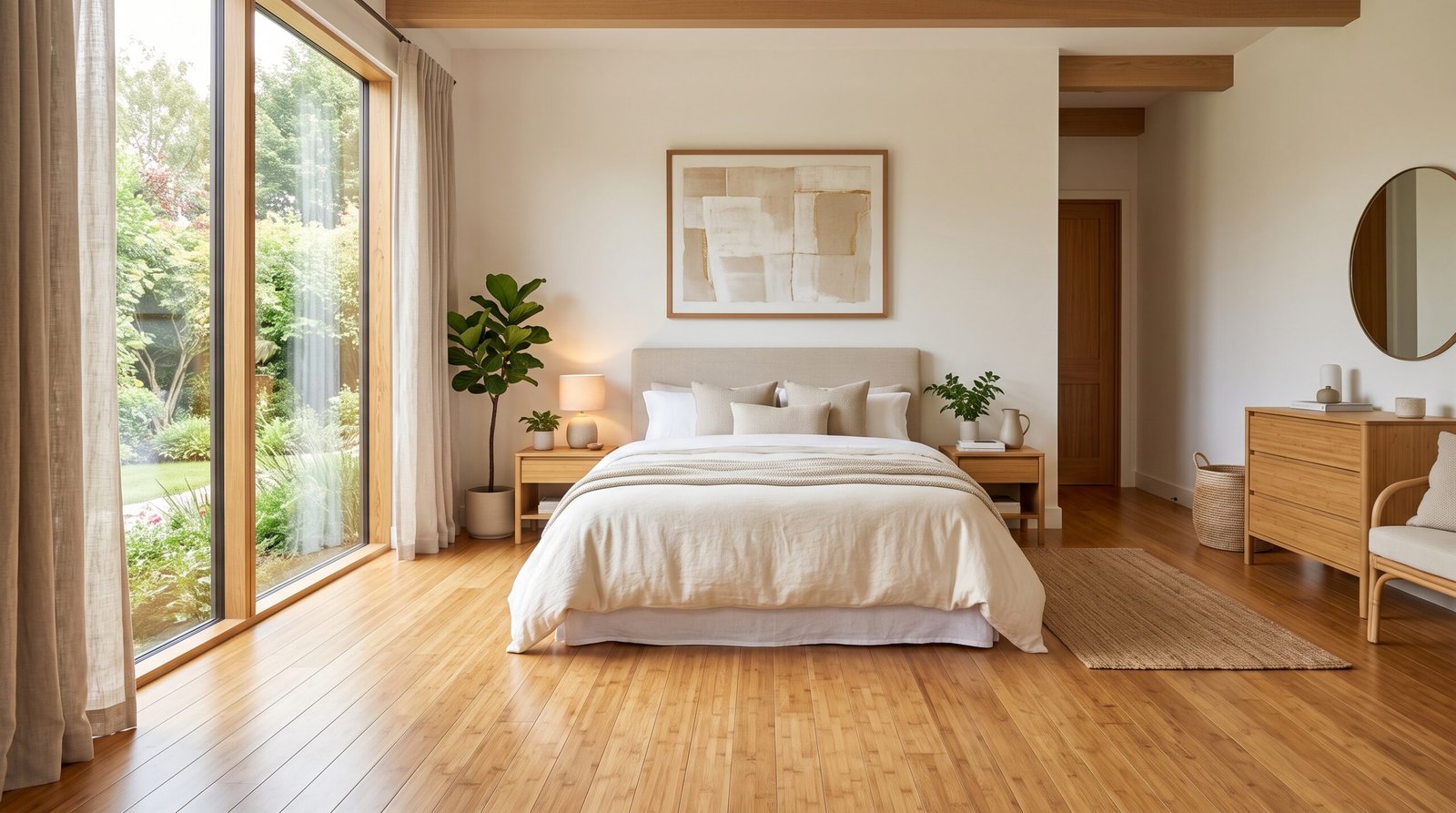
1. Natural Bamboo Bedroom
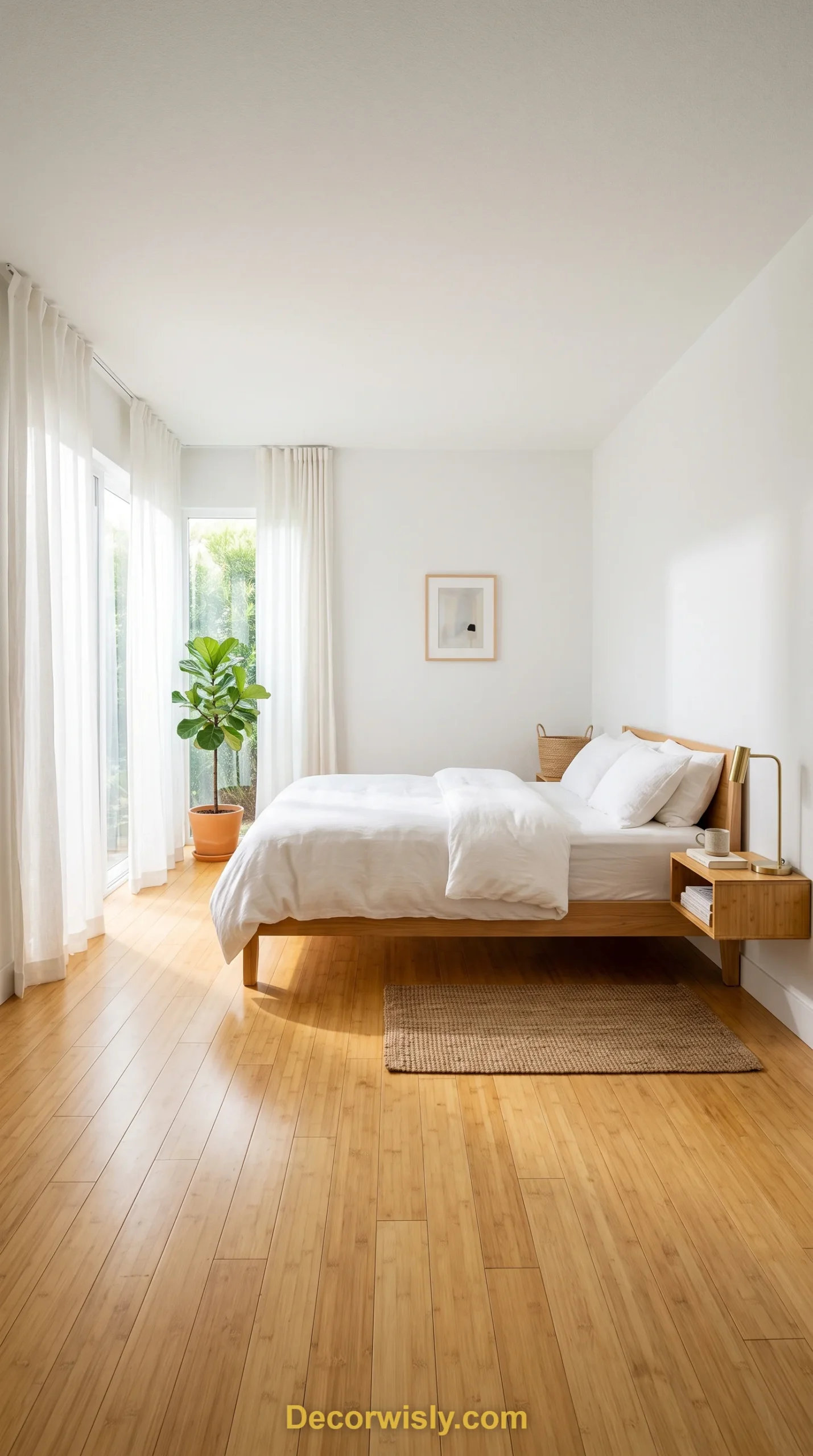
Natural bamboo is the classic starting point, prized for its pale, honeyed tone that bounces light around a room. It reads clean and uncomplicated, which is exactly why it works so well in a bedroom meant for winding down. Pair it with white or off-white walls and simple linen bedding, and the floor practically does the decorating for you. It’s also a smart pick for smaller bedrooms, since the light color visually pushes the walls outward. Beyond looks, natural bamboo holds up well to years of everyday foot traffic without losing its character.
2. Dark Carbonized Bamboo Bedroom

Carbonized bamboo gets its deep, coffee-brown color from a heat treatment that caramelizes the natural sugars in the fibers. The result is a floor that feels closer to traditional hardwood, with a rich tone that instantly adds weight and sophistication to a room. It’s especially effective in a primary bedroom where you’re going for a boutique-hotel feel, since the darker floor grounds lighter furniture and bedding beautifully. The contrast it creates against pale walls or a cream rug is one of the easiest ways to make a space feel intentional. It’s a finish that still leans traditional, even though the material itself is anything but.
3. Strand Woven Bamboo Bedroom
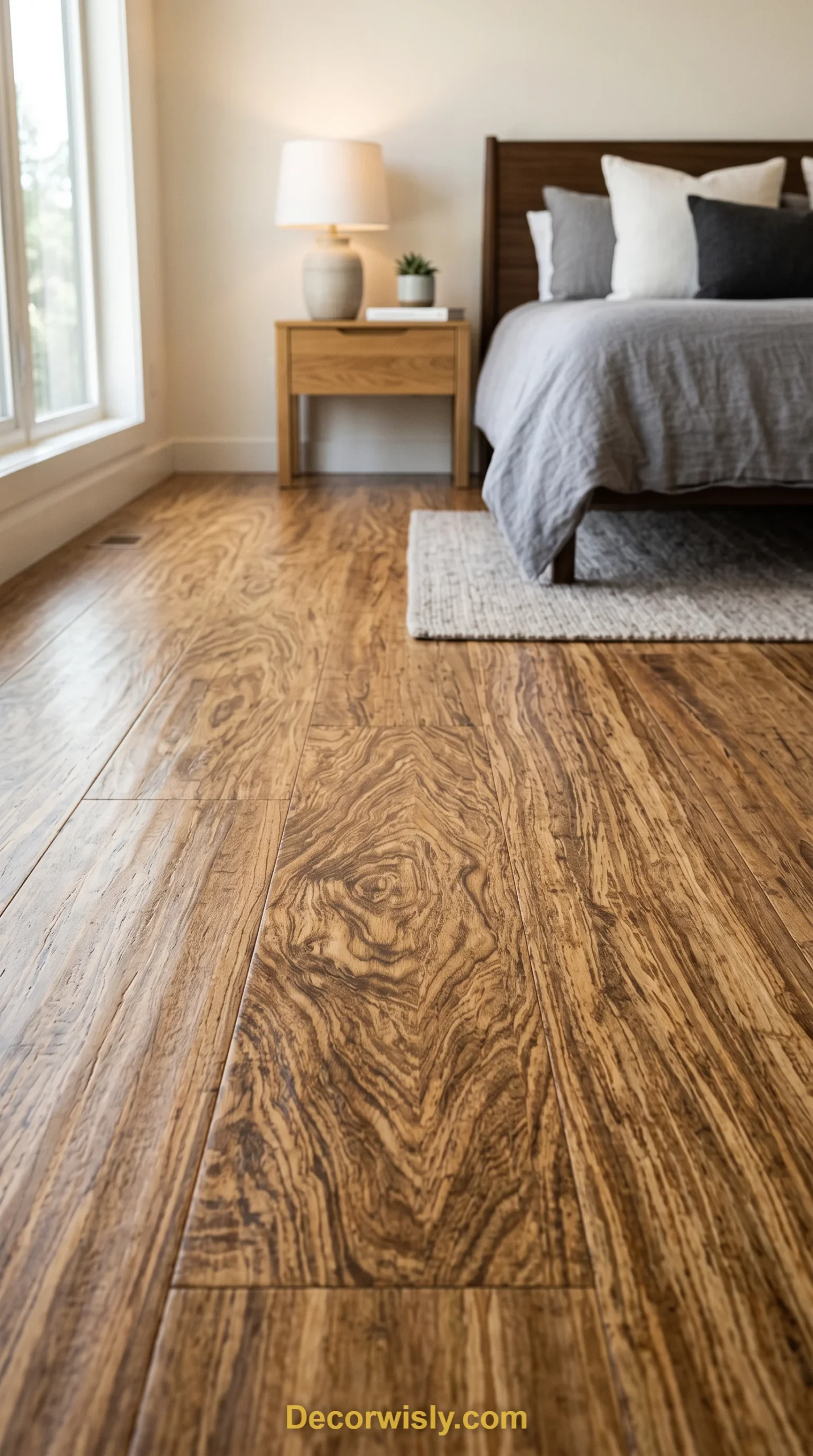
When durability is the top priority, strand woven bamboo is worth the upgrade. The manufacturing process compresses shredded bamboo fibers under intense heat and pressure, producing a plank that’s notably harder than most oak flooring. That toughness makes it a great match for bedrooms that see a lot of use — think kids, pets, or anyone who just wants a floor that won’t show every scuff. It also has a distinctive marbled grain that adds texture without looking busy. You can find it in a wide range of stains, so the added strength doesn’t mean sacrificing style.
4. Vertical Grain Bamboo Bedroom
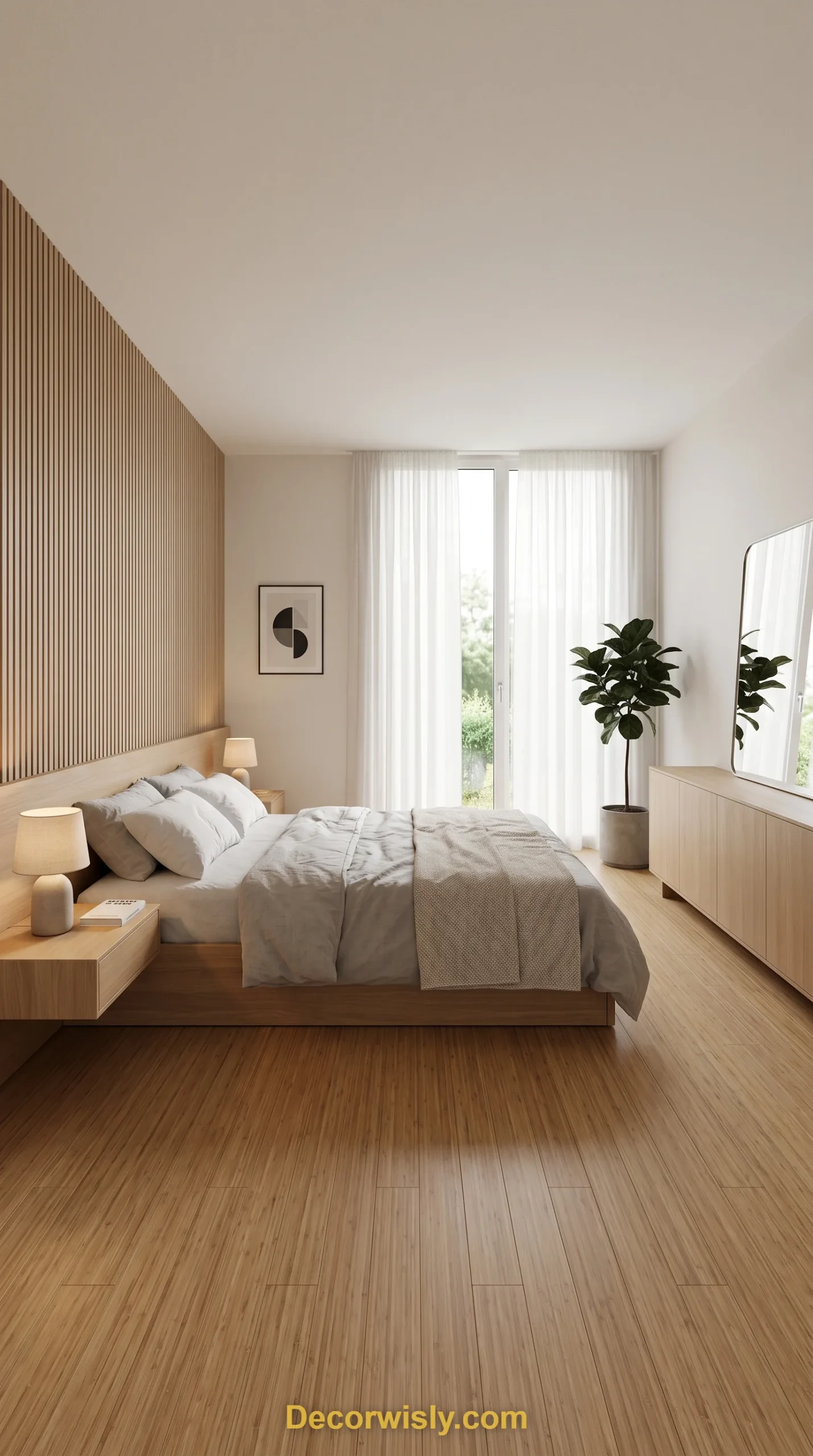
Vertical grain bamboo is made by stacking bamboo strips on their edge before bonding them, which produces a tight, linear grain pattern. It has a tidy, uniform look that suits contemporary and minimalist bedrooms particularly well. Laid the right direction, the linear pattern can visually stretch a room, making it feel longer than it actually is. Because the grain is so consistent, it doesn’t compete with furniture or artwork — it just quietly does its job. For anyone who wants a calm, orderly backdrop for sleeping, this is one of the more understated bamboo options.
5. Horizontal Grain Bamboo Bedroom
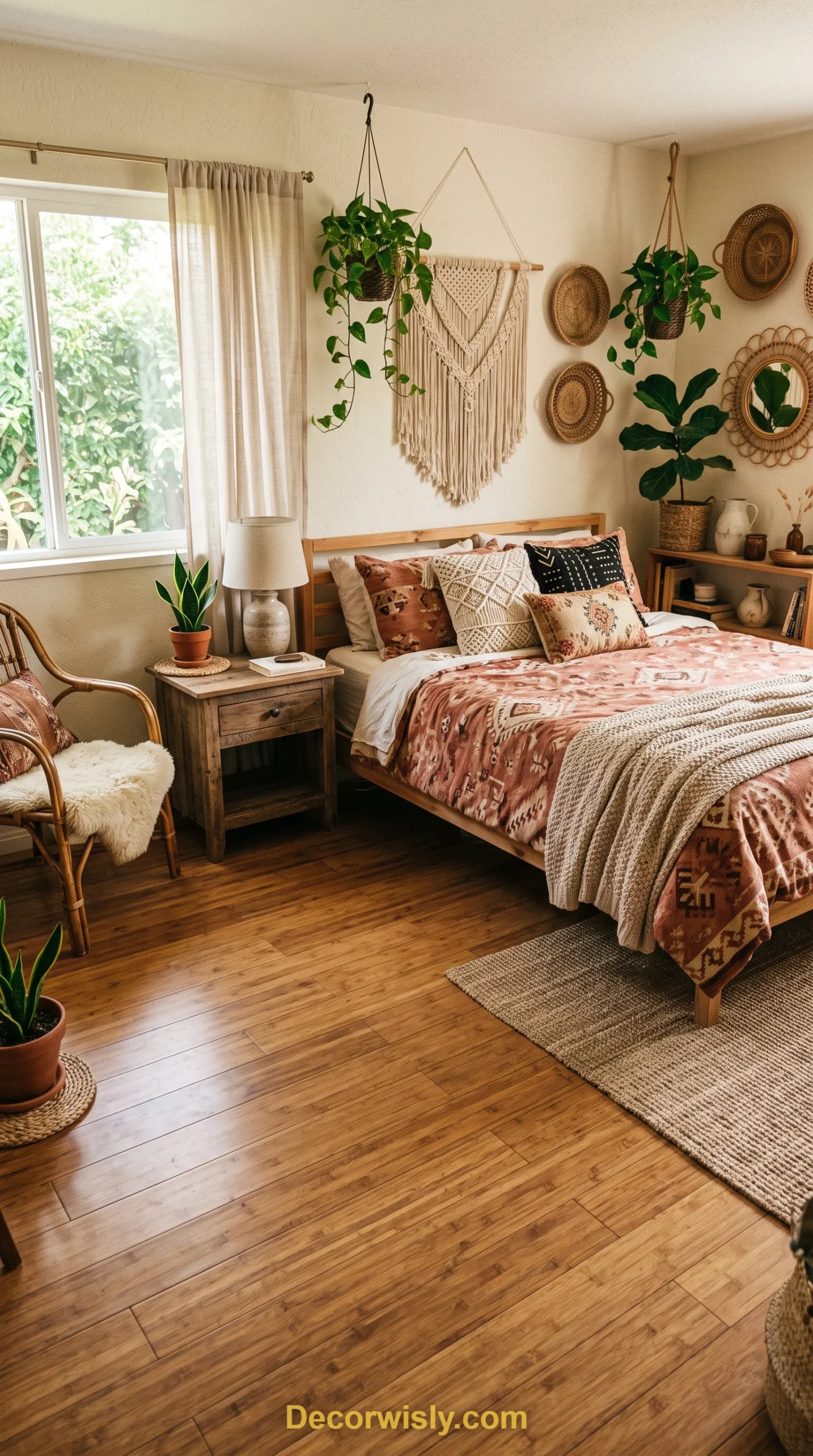
If you like flooring that shows off where it actually came from, horizontal grain bamboo is the more expressive choice. The visible knots and growth rings from the original bamboo stalk stay intact, giving the planks a rustic character similar to traditional wood grain. It has more personality than the smoother vertical-grain option, which makes it a strong fit for eclectic or bohemian bedrooms. The wider, more organic pattern brings a lived-in warmth that feels authentic rather than manufactured. It’s an easy way to bring a bit of the outdoors into a cozy sleeping space.
6. Grey Bamboo Bedroom

Grey has been a dominant color trend in flooring for good reason — it’s neutral enough to sit under almost any color palette without a fight. Grey-stained bamboo gets its tone from specialized finishes that let the natural grain show through the cooler cast. It pairs particularly well with blue, white, or charcoal accents, and it has a calming, muted quality that suits a bedroom meant for rest. Whether the rest of the room leans coastal or urban-loft, grey bamboo works as a flexible, low-maintenance foundation.
7. White Washed Bamboo Bedroom

White-washed bamboo takes the material’s natural yellow undertone and mutes it with a light stain, producing a pale, almost sun-bleached finish. It’s a favorite in Scandinavian and coastal-style bedrooms, where the goal is usually to maximize light and keep things feeling airy. The soft white tone makes rooms feel more spacious than they are, and it plays nicely with light wood furniture, pastel textiles, and gauzy curtains. It’s a subtle, gentle finish — the kind of floor you don’t really notice until you realize how peaceful the room feels.
8. Black Bamboo Bedroom

Black flooring is a bolder move, but it pays off in bedrooms where you want real drama. The high contrast against lighter walls and furniture gives the whole room a modern, almost editorial feel. Rather than making a space feel smaller, black bamboo often makes it feel more intimate and cocooned — especially at night. Balance it out with bright white bedding and generous natural light during the day so the room doesn’t feel too heavy. It’s a daring finish, but one that reads as genuinely high-end when done right.
9. Herringbone Pattern Bamboo Bedroom

Herringbone isn’t a bamboo finish so much as an installation choice, but it’s one of the most striking ways to lay any plank material. The angled, V-shaped layout adds movement and a sense of craftsmanship that a straight-laid floor simply can’t match. Bamboo’s consistent plank sizing actually makes it well-suited to this pattern, since the repetition reads cleanly rather than chaotic. Once you commit to a herringbone floor, it tends to become the room’s focal point, which means the rest of the decor can stay refreshingly simple. It brings a European, old-world sensibility into an otherwise modern material.
10. Wide Plank Bamboo Bedroom
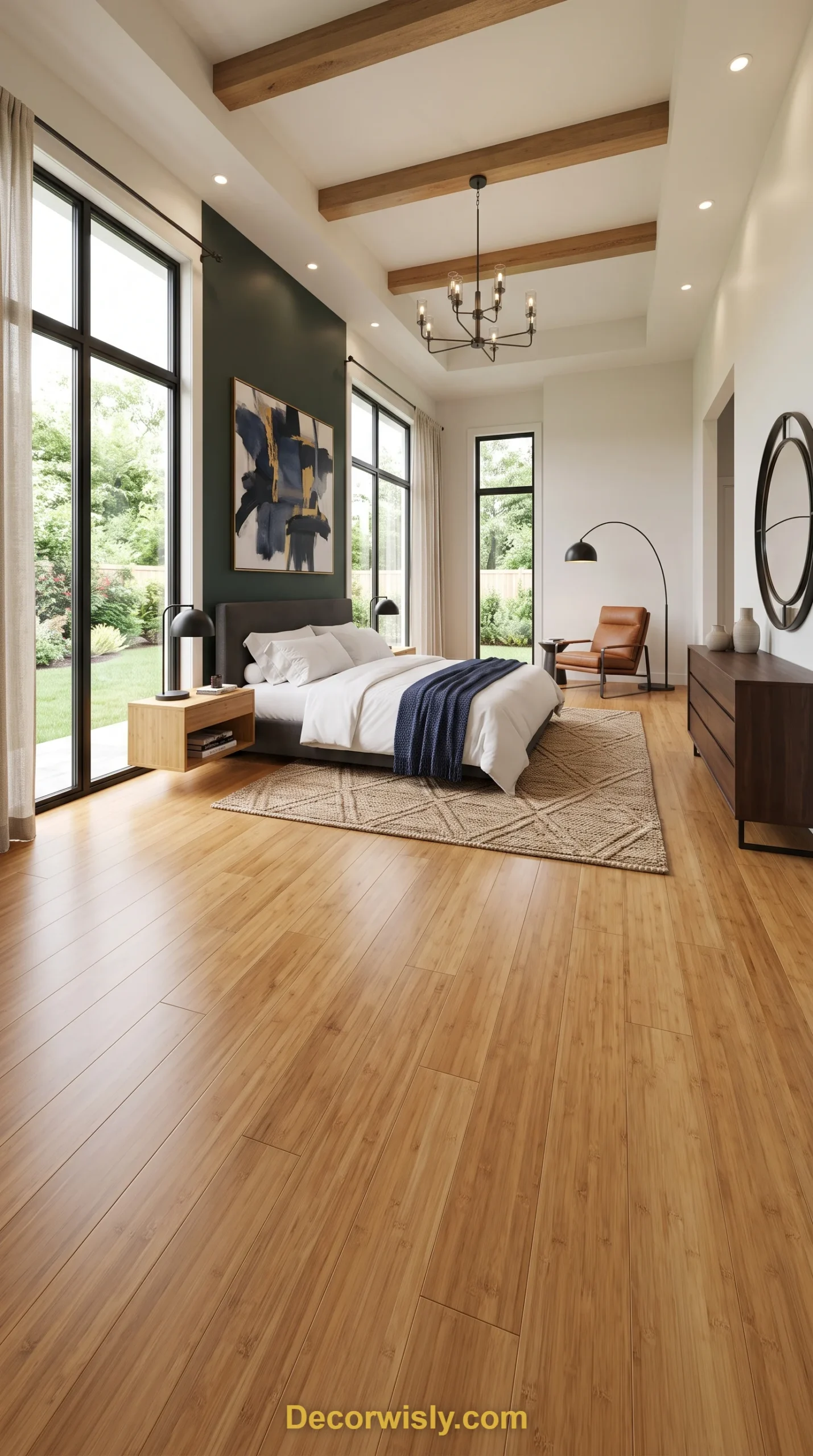
Wide planks trade busyness for scale. With fewer seams running across the floor, the surface reads smoother and more continuous, which tends to ground a large room and declutter a small one. The wider format also shows off bamboo’s natural grain more effectively than narrow strips do, giving each board a bit more presence. It’s a look that’s gained real traction in contemporary interiors precisely because it feels bold without being loud. If you want the floor itself to communicate quality, wide plank bamboo is one of the more effective ways to do it.
11. Narrow Plank Bamboo Bedroom
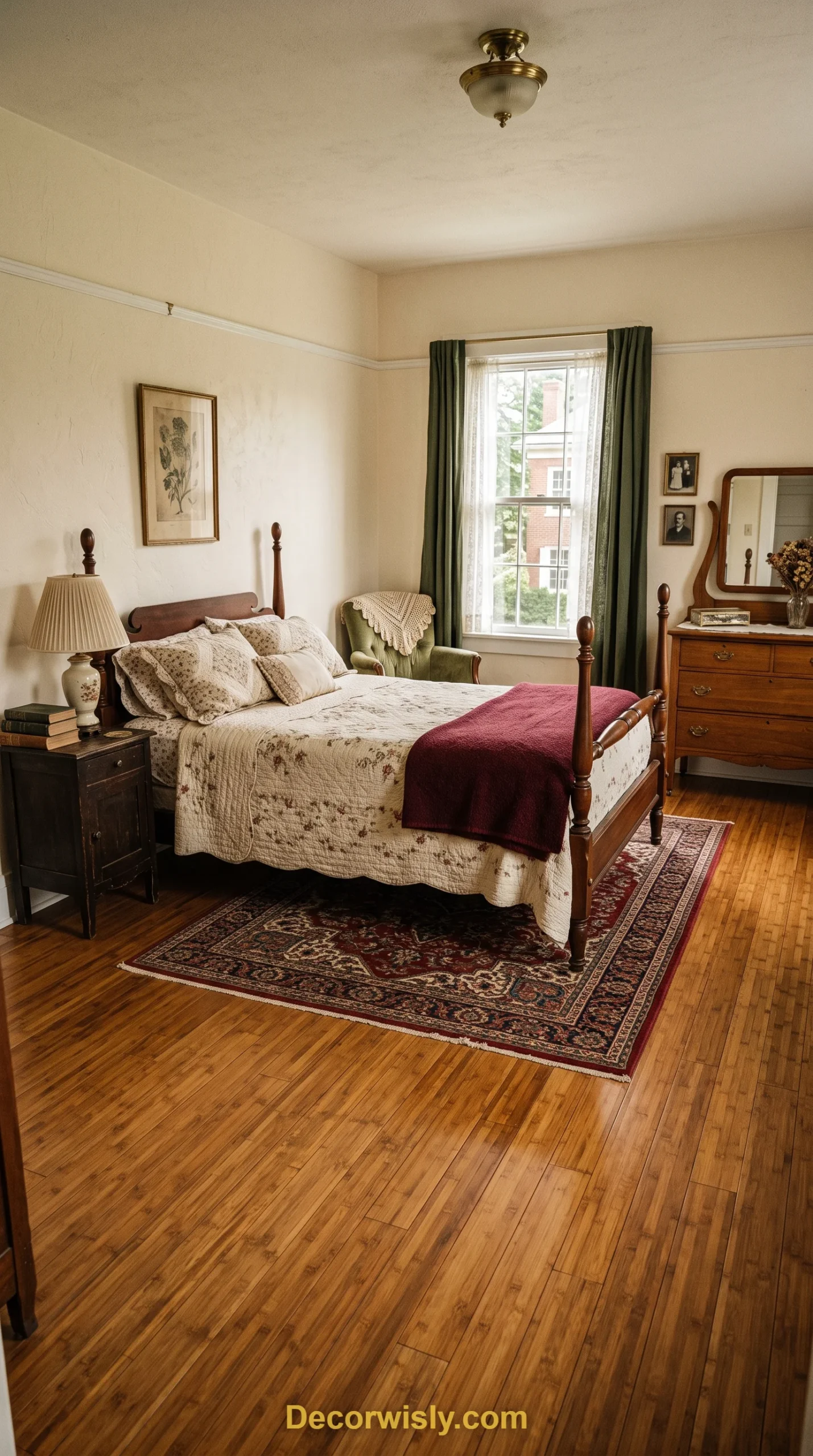
For a more traditional feel, narrow planks bring back some of the texture and busyness associated with older hardwood floors. The tighter strips create visual energy and a sense of detail that wider boards don’t offer. It’s a good option if the rest of the bedroom leans toward classic or vintage furniture, since the floor pattern echoes that same historic quality. Narrow planks can also be used deliberately to draw the eye — toward a window, a reading nook, or a statement bed frame. It’s a cozier, more textured alternative to the sleeker wide-plank look.
12. Matte Bamboo Bedroom
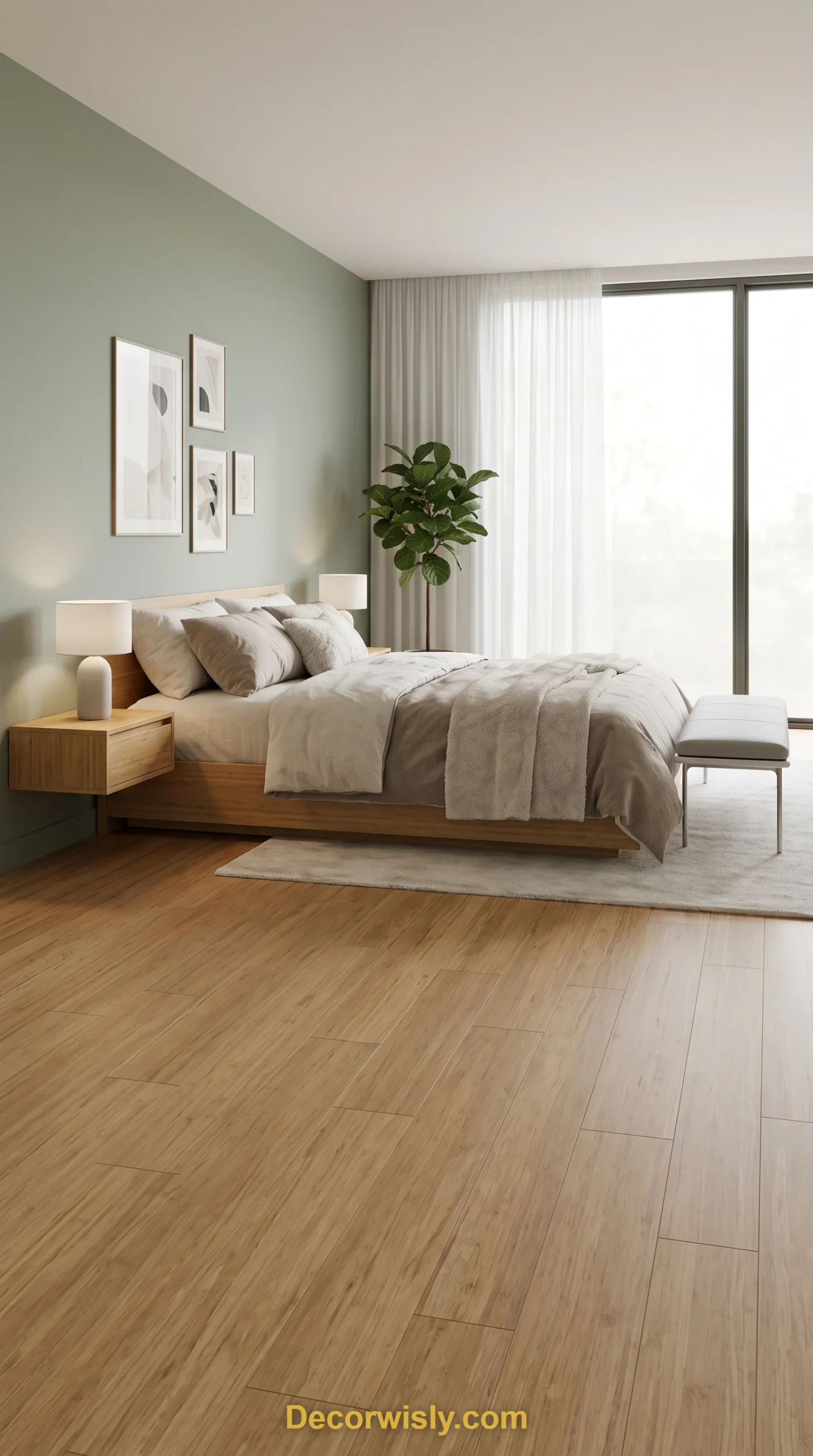
A matte finish keeps the focus on the bamboo itself rather than a glossy topcoat. Without harsh reflections, the floor takes on a soft, almost velvety quality that feels modern and low-key. Practically speaking, matte finishes are also better at hiding dust, footprints, and small scratches — a real bonus in a room you walk through barefoot every day. It’s a finish that favors function as much as looks, which makes it a solid choice for anyone who wants a floor that stays low-maintenance without sacrificing style.
13. Glossy Bamboo Bedroom

Glossy bamboo goes in the opposite direction, using a high-shine finish to bounce light around the room. It reads more formal and polished, which can make an entire bedroom feel a notch more upscale. In darker rooms especially, the reflective surface helps stretch whatever natural light is available. It does require a bit more upkeep to stay streak-free, but the payoff is a floor that looks genuinely luxurious — the kind of finish that makes a bedroom feel closer to a hotel suite than an everyday room.
14. Distressed Bamboo Bedroom
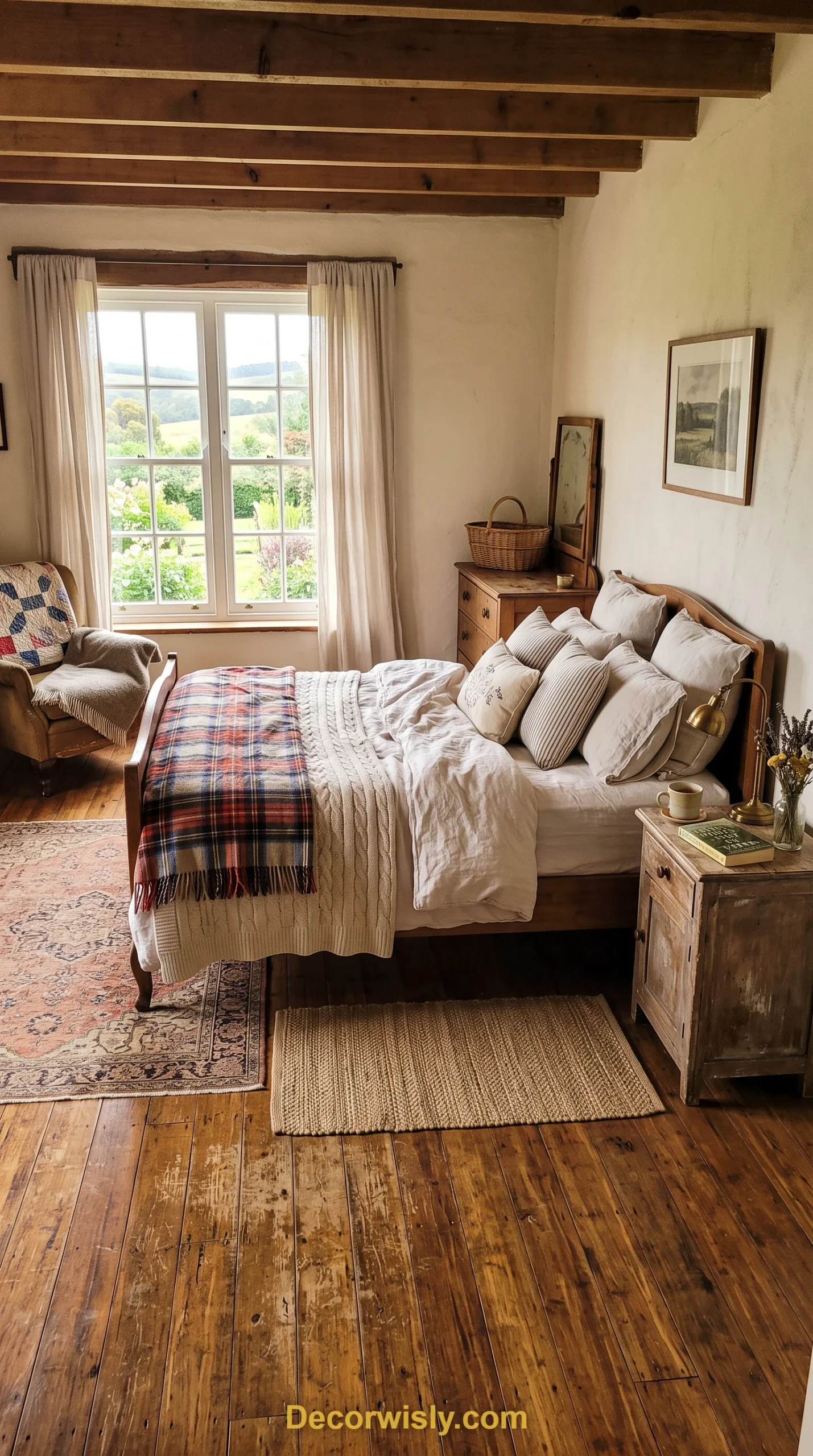
Distressed bamboo is manufactured with intentional marks and worn textures built right in, so it arrives already looking like it’s lived a full life. That aged character suits farmhouse or rustic bedrooms particularly well, and it has a practical upside too — new scuffs simply blend into the existing pattern instead of standing out. It’s a forgiving option for anyone who wants a floor that already feels broken in, without waiting years for actual wear. Paired with vintage textiles, it creates an easygoing, comfortable retreat.
15. Hand Scraped Bamboo Bedroom

Hand-scraped planks take craftsmanship a step further, with slight waves and indentations worked into each board to mimic old-world woodworking. That uneven surface catches light differently across the room, creating subtle shifts of shadow and highlight as the day goes on. It’s a texture that feels substantial underfoot and bridges the gap between rustic charm and modern polish. For anyone who appreciates visible craftsmanship in their materials, this finish delivers a floor that feels solid, tactile, and genuinely unique.
16. Click Lock Bamboo Bedroom

Click-lock bamboo is built for ease rather than tradition. The planks lock together into a floating floor with no glue or nails required, which makes it realistic for a weekend DIY project rather than a full contractor job. Because it floats above the subfloor, it also handles seasonal expansion and contraction more gracefully, making it a stable choice across different climates. It’s a practical way to get bamboo’s high-end look without the higher-end installation cost or timeline.
17. Tongue And Groove Bamboo Bedroom

Tongue-and-groove is the more traditional, permanent installation method, where interlocking planks are nailed or glued directly to the subfloor. It produces an especially tight, solid surface — the kind that feels substantial the moment you step onto it. This method is known for holding up for decades without shifting, and the tight seams keep dust and debris from working their way between boards. If you’re planning to stay in a home long-term, this classic approach is the more durable investment.
18. Bamboo Flooring With Large Area Rug

A large rug over bamboo flooring is an easy way to soften the room without giving up the floor’s durability or easy cleanup. It adds a layer of comfort right where you need it most — underfoot when you first get out of bed — while also helping to visually define the sleeping area. A cream or neutral rug looks especially good against dark carbonized bamboo, letting the contrast do some of the design work. It’s a simple combination that gets you both the practicality of hard flooring and the coziness of soft textiles.
19. Eco Friendly Bamboo Bedroom
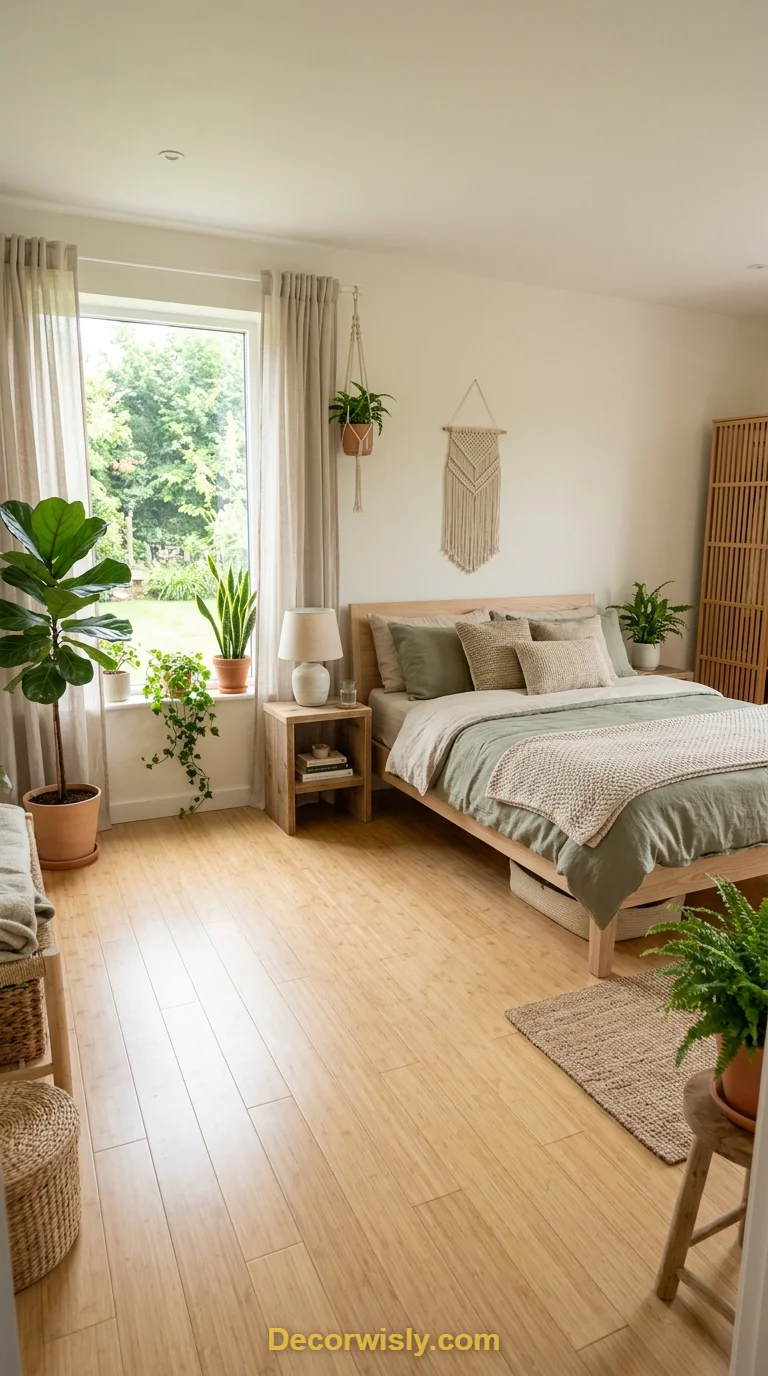
For anyone prioritizing sustainability, it’s worth looking for bamboo certified by the Forest Stewardship Council to confirm responsible sourcing. Bamboo already regenerates far faster than hardwood trees, but choosing certified products and low-VOC adhesives takes the eco-friendly angle a step further — which matters even more in a room where you spend roughly a third of your life breathing. You get a genuinely modern-looking floor while also making a more conscious choice for indoor air quality and long-term environmental impact.
20. Modern Bamboo Bedroom
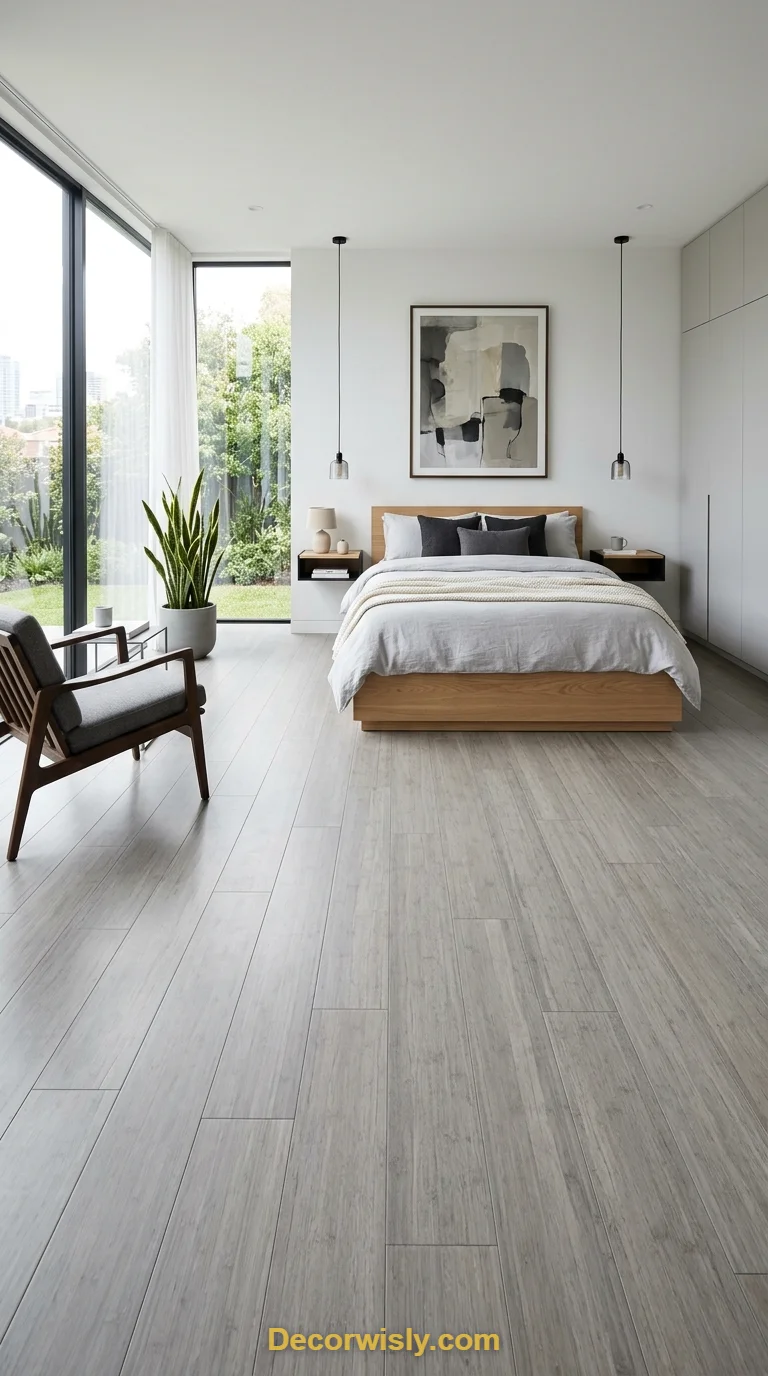
Modern bedroom design leans heavily on clean lines and quality materials, and bamboo checks both boxes. Strand-woven or vertical-grain bamboo in a neutral tone — light grey or natural blonde — pairs especially well with sharp-angled, minimally ornamented furniture. The uniformity of the planks creates a sense of visual harmony that modern spaces depend on, letting the floor act as a quiet backdrop rather than a focal point. A few color accents through artwork or textiles are plenty; the floor itself carries the room.
21. Minimalist Bamboo Bedroom

In a minimalist bedroom, the bamboo floor itself often becomes one of the few decorative statements in the room. A lighter shade keeps things feeling open, especially when you resist the urge to layer on heavy rugs or bulky furniture that would hide the grain. The goal is a space that feels calm and free of visual noise, and bamboo’s natural durability fits neatly into that same philosophy — low effort, high quality, no unnecessary fuss.
22. Boho Bamboo Bedroom

Bamboo’s tropical, organic origins make it a natural match for boho-chic bedrooms. Horizontal grain or distressed bamboo adds extra texture, and layering a few differently patterned rugs on top creates that comfortably lived-in look boho spaces are known for. The floor’s warm tones play well with macramé, rattan furniture, and plenty of greenery. It’s a style built around personality, and bamboo gives it a foundation that feels just as expressive as the decor sitting on top of it.
23. Farmhouse Bamboo Bedroom

Farmhouse style is all about warmth and rustic comfort, and wide-plank bamboo in a medium brown tone gets you most of the way to a barn-wood look without the barn-wood price. It pairs naturally with white-washed furniture and classic metal bed frames, and small imperfections in the grain only add to the authentic feel. Add quilted bedding and linen curtains, and you’ve got a bedroom that’s as practical for a busy household as it is photogenic.
24. Coastal Bamboo Bedroom

Light or white-washed bamboo planks do a convincing impression of sun-bleached driftwood, which makes them a natural fit for a coastal-themed bedroom. Paired with soft blues, sandy beiges, and crisp whites, the whole room starts to feel like a permanent beach getaway. Bamboo’s grassy origins also complement other natural coastal materials like jute and sea grass, and large windows only amplify the effect by letting the light really hit the floor.
25. Industrial Bamboo Bedroom
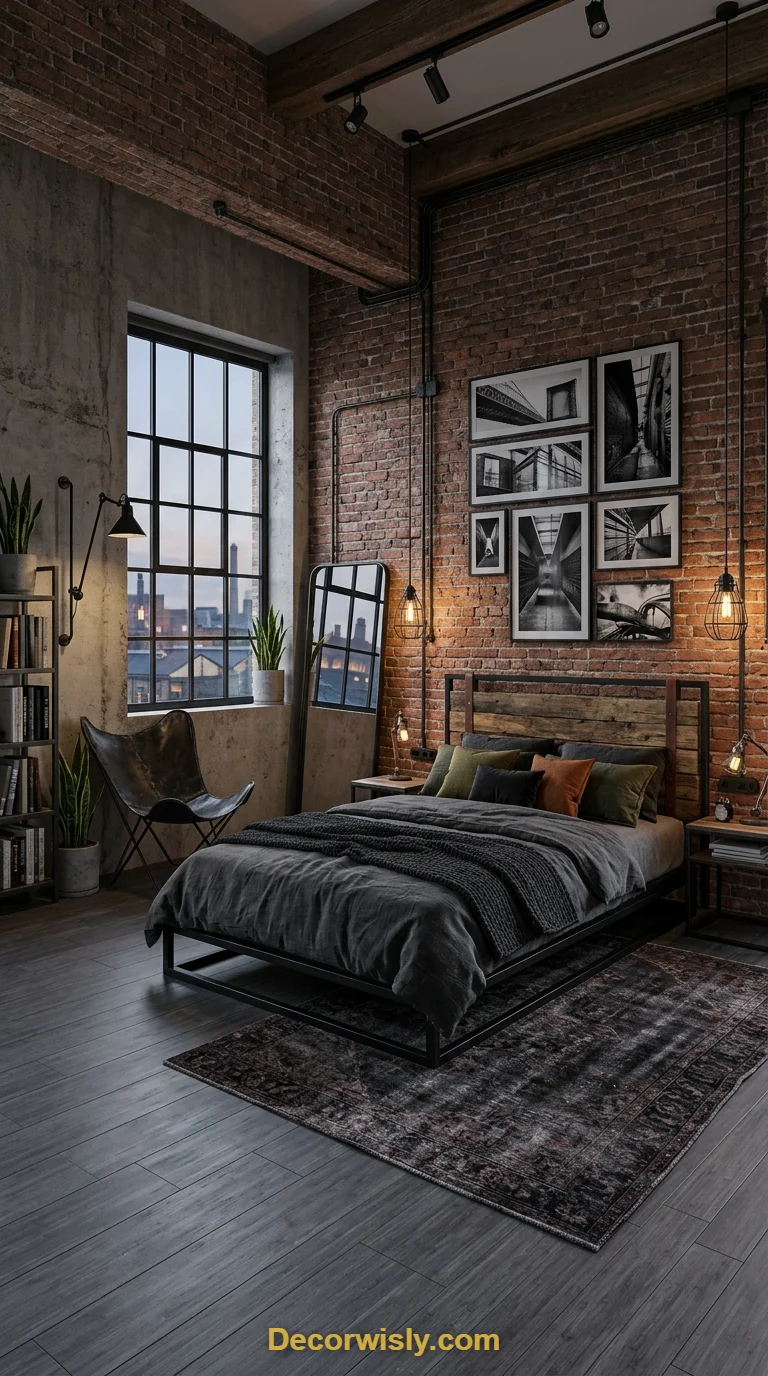
Dark or grey bamboo works surprisingly well against raw industrial materials like exposed brick, metal fixtures, and concrete. The floor’s clean lines soften some of that ruggedness without losing the room’s edge, and a matte finish keeps everything feeling grounded rather than polished. In larger, more open bedrooms, the consistency of the bamboo planks helps tie disparate elements together into one cohesive look — ideal for loft-style spaces that lean bold and architectural.
26. Scandinavian Bamboo Bedroom

Scandinavian design leans on light woods and understated function, which makes the palest natural bamboo an easy fit. Furniture with tapered legs and simple silhouettes keeps the room feeling open, while a few plants and soft grey textiles round out the Scandi look. The floor’s bright, clean appearance does a lot of the heavy lifting here, giving the room that organized, livable calm the style is known for.
27. Mid Century Modern Bamboo Bedroom
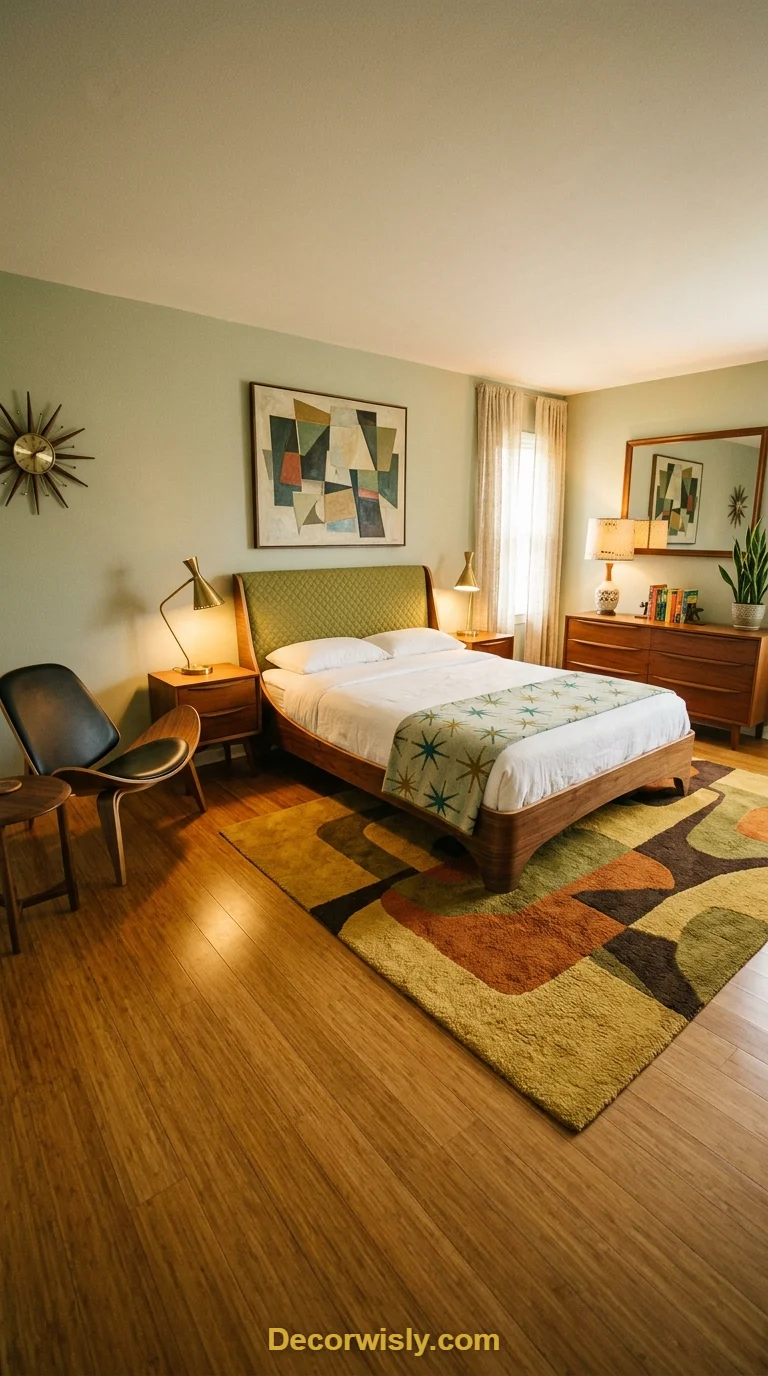
Natural bamboo’s warm, honey tones aren’t far off from the teak and acorn woods that defined mid-century interiors. Pairing the floor with furniture that has organic curves and geometric detailing keeps the era’s spirit intact, while bamboo’s fine grain sits comfortably alongside those sleek, era-appropriate surfaces. A bold retro-print rug anchoring the bed adds a splash of color without breaking the mood — the result feels both nostalgic and genuinely well-designed.
28. Japanese Style Bamboo Bedroom
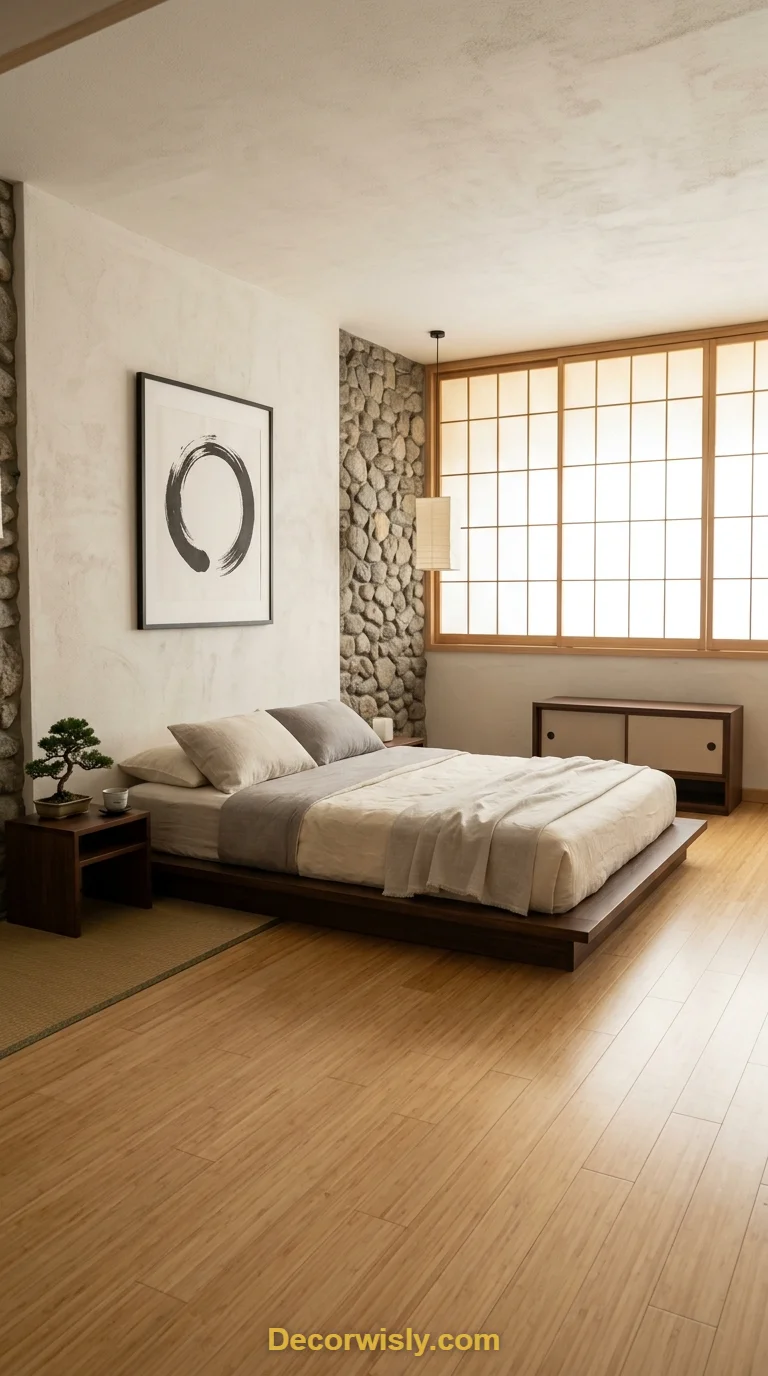
Bamboo carries real symbolic weight in Asian design traditions, representing strength paired with flexibility, which makes it a fitting choice for a Japanese-inspired bedroom. Keeping the bed low and the room free of clutter reinforces the calm, and vertical-grain bamboo’s clean linear pattern supports that same sense of order. Paper screens, stone accents, and silk fabrics round out the atmosphere, with the floor acting as a smooth, quiet surface underfoot throughout.
29. Tropical Bamboo Bedroom

Bamboo’s exotic origins make it a fitting anchor for a fully tropical-themed bedroom. Horizontal-grain bamboo shows off the plant’s natural nodes for an authentic look, and it pairs beautifully with leaf-print wallpaper, bamboo furniture, and plenty of green accents. Even a ceiling fan with leaf-shaped blades helps sell the island vibe. The floor’s inherent warmth keeps the room feeling sunny year-round, making it a fun, energetic option for anyone chasing a private-oasis feel.
30. Transitional Bamboo Bedroom

Transitional style is built around blending traditional warmth with contemporary simplicity, and a medium-toned bamboo floor bridges that gap effortlessly. It’s versatile enough to support mixed furniture styles without the room feeling scattered, especially when paired with neutral walls and varied bedding textures. The consistency of the floor acts as a unifying thread, pulling together a bedroom that feels both current and comfortably timeless.
Final Thoughts
Bamboo flooring earns its popularity honestly — it’s fast-growing, genuinely durable, and available in enough finishes, patterns, and tones to suit almost any bedroom style you can picture. From the brightness of white-washed planks to the drama of a black floor or the texture of hand-scraped boards, there’s real range within a single material. Whichever direction you go, bamboo gives you a floor that looks good, holds up over time, and doesn’t cost the planet much to make. That combination is hard to find elsewhere, which is exactly why it keeps showing up in bedroom after bedroom.