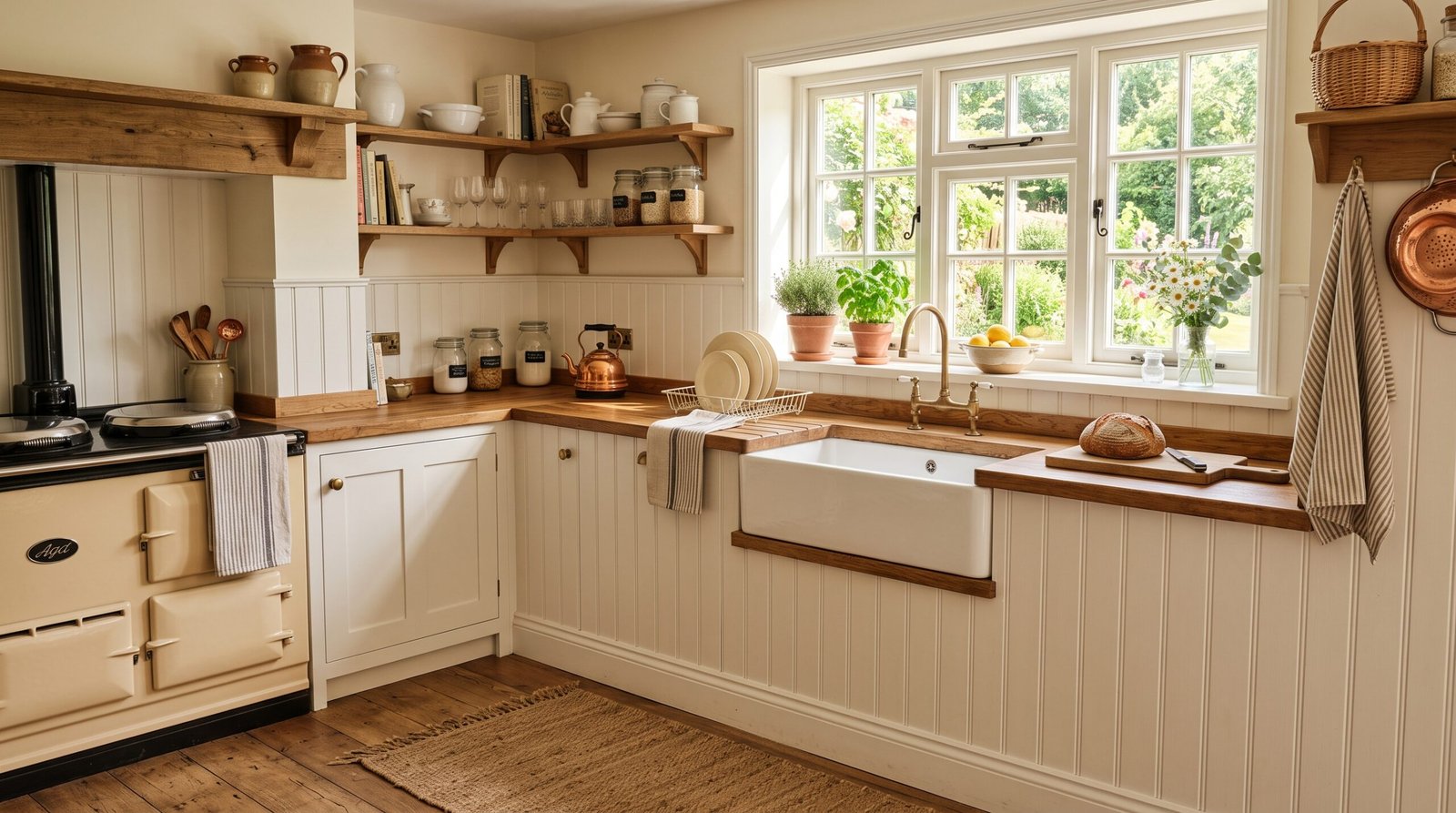
Wainscoting solves a problem most kitchens have without anyone quite naming it: the lower half of a kitchen wall takes more abuse — chair scuffs, splashes, bumped cabinet doors — than the upper half ever will. Paneling that lower section, whether with beadboard, board-and-batten, or raised panel millwork, adds durability and texture in the exact place a kitchen needs it most, while giving the room an architectural detail that flat drywall never will.
Here are 12 ways to bring wainscoting into a kitchen.
1. The Classic Beadboard Wall
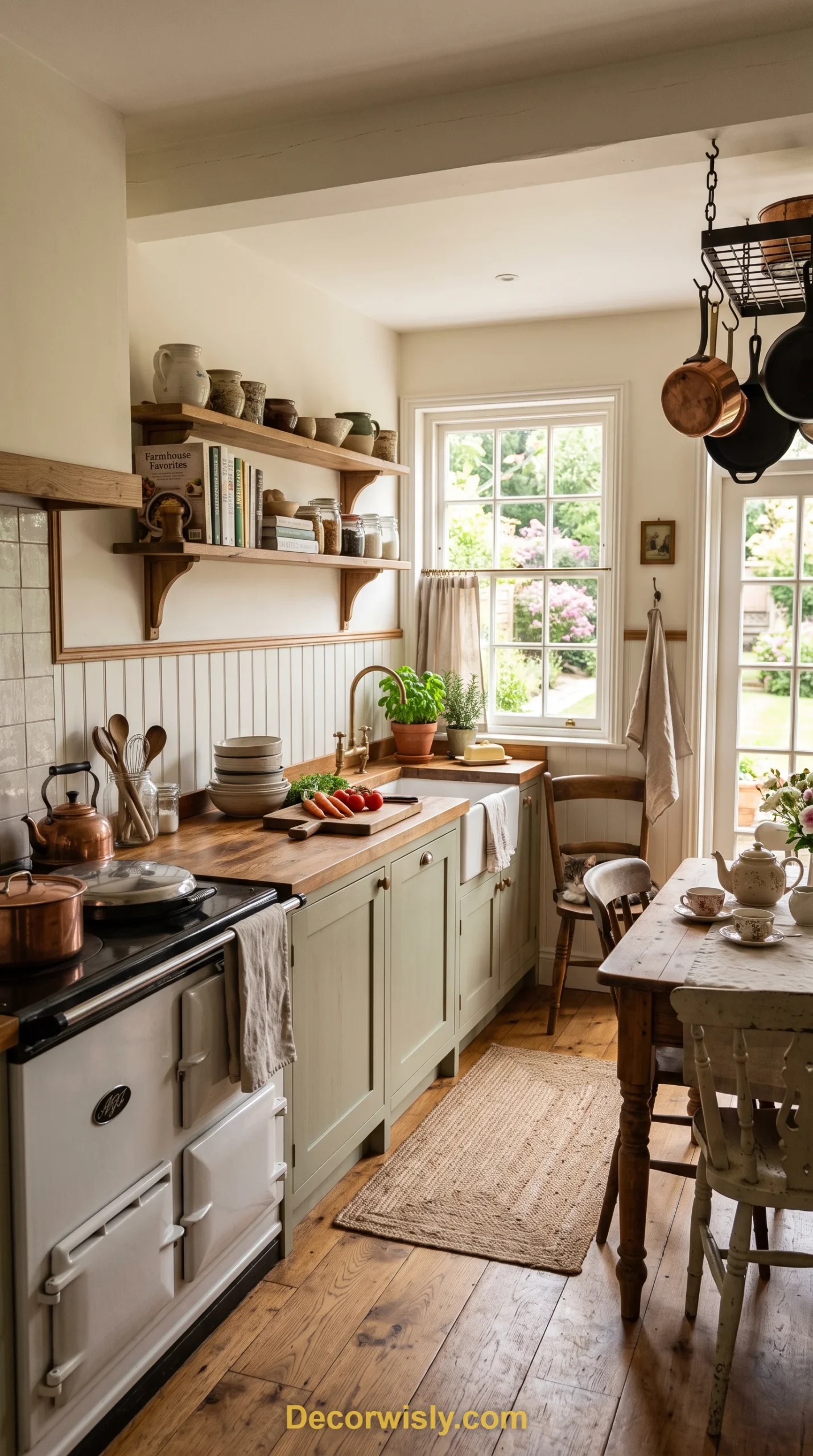
Beadboard — narrow vertical grooved panels — is the most traditional wainscoting choice, and it pairs naturally with farmhouse or cottage-style kitchens without needing anything else to justify the look.
2. The Board-and-Batten Dining Nook
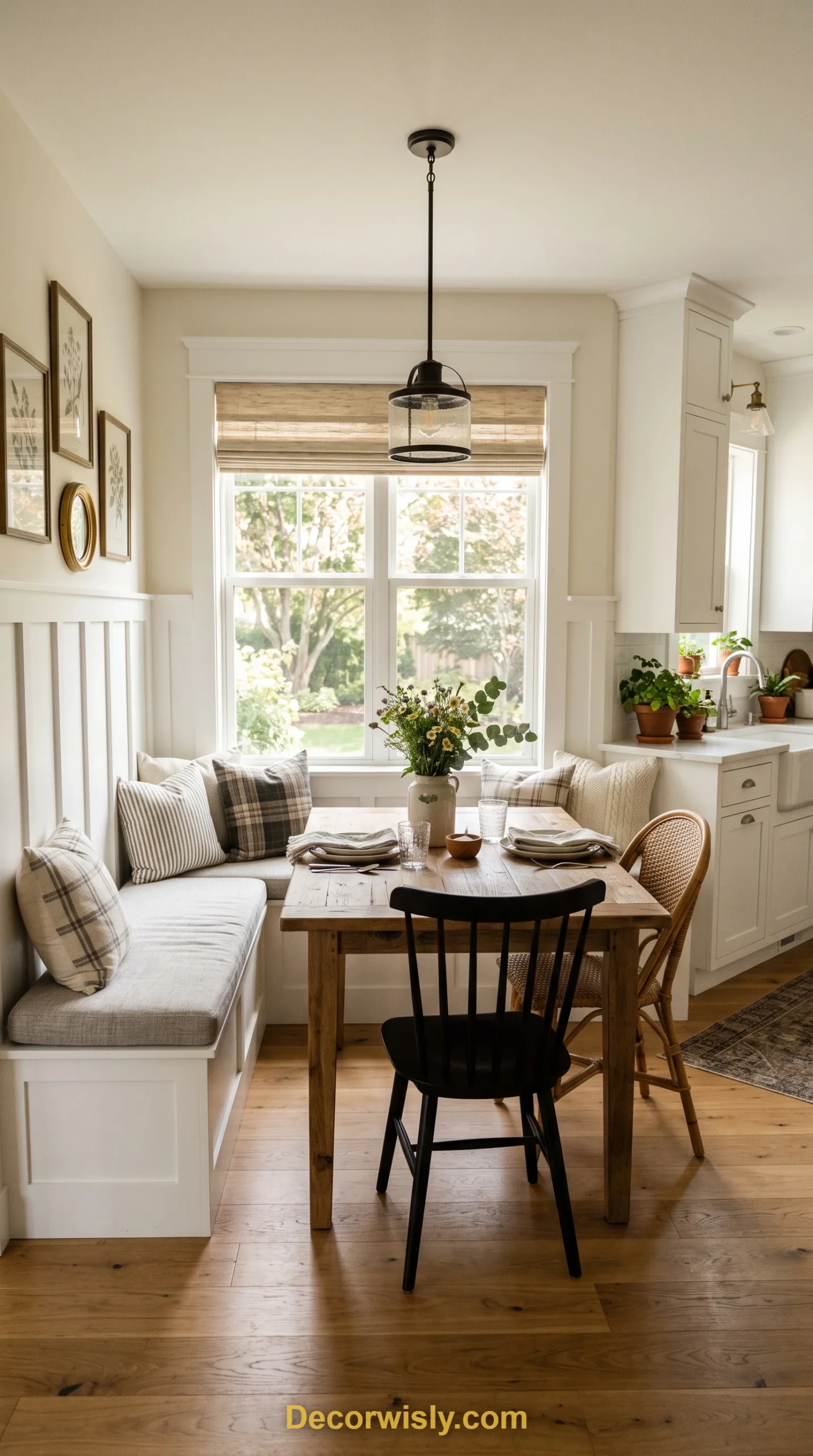
Vertical boards with a raised batten strip over each seam gives a slightly more modern, geometric take on wainscoting than beadboard, especially effective wrapped around a kitchen dining nook.
3. The Painted Island Base
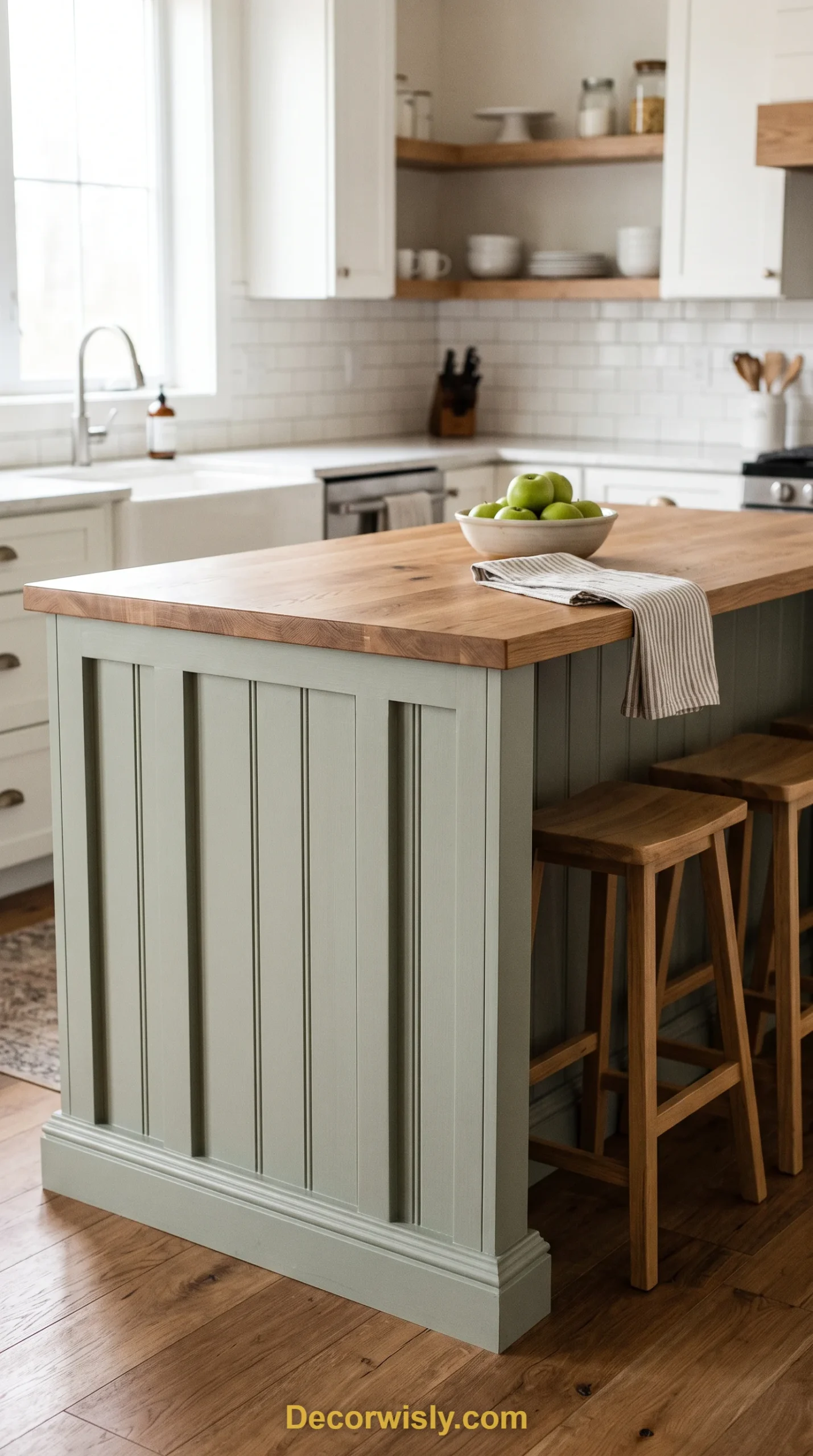
Applying wainscoting-style paneling to just the island base, rather than the surrounding walls, turns the island itself into a furniture-like piece with real architectural detail instead of a flat slab cabinet front.
4. The Full-Height Paneled Wall

Rather than stopping at chair-rail height, running raised panel millwork all the way to the ceiling on one accent wall turns wainscoting into a full architectural statement rather than a lower-wall detail.
5. The Two-Tone Paint Break
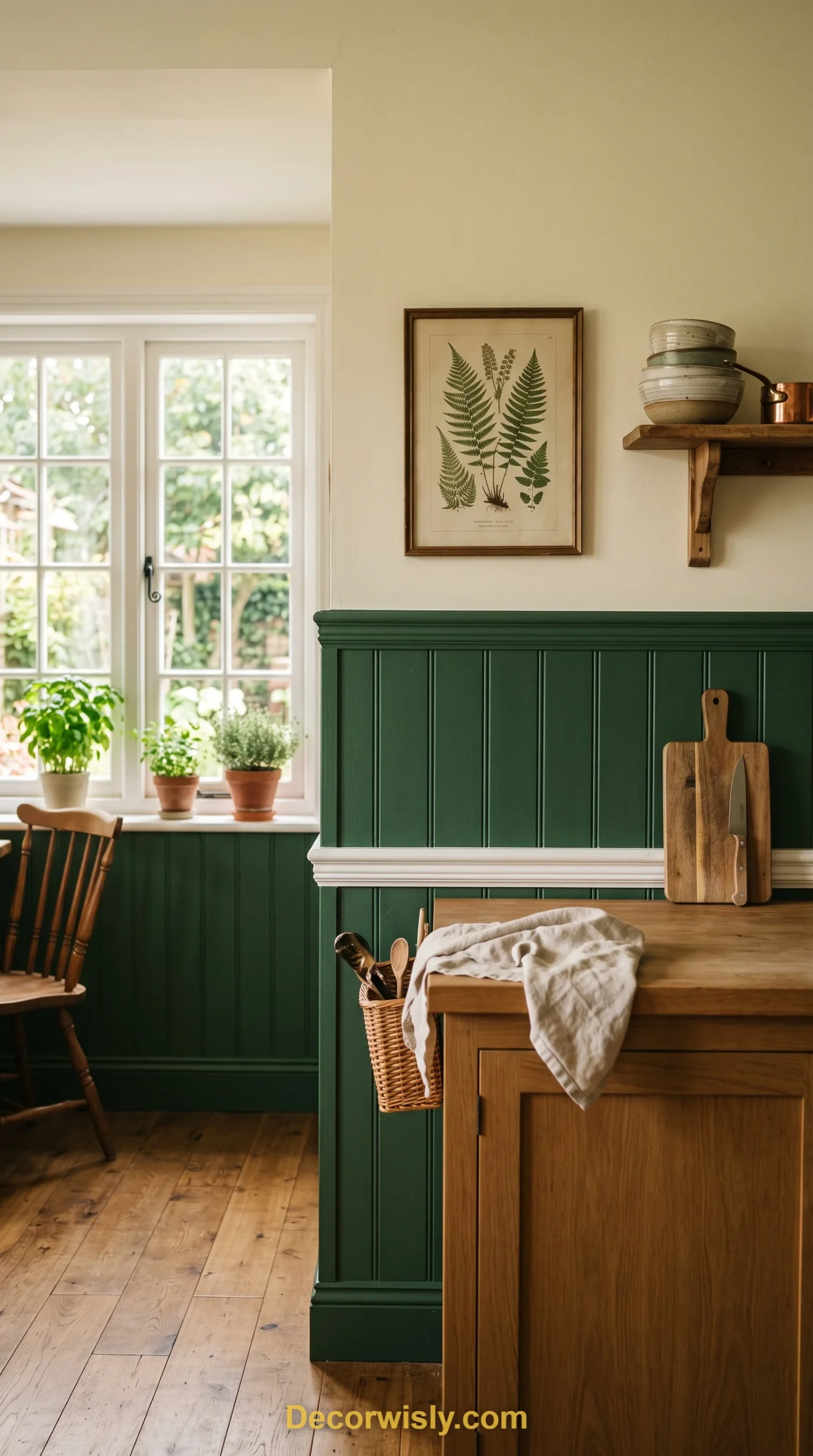
Painting the wainscoting a different (usually deeper) tone than the wall above it, with a chair rail marking the transition, adds definition and lets a kitchen use two colors without them competing for the same space.
6. The Under-Window Paneling
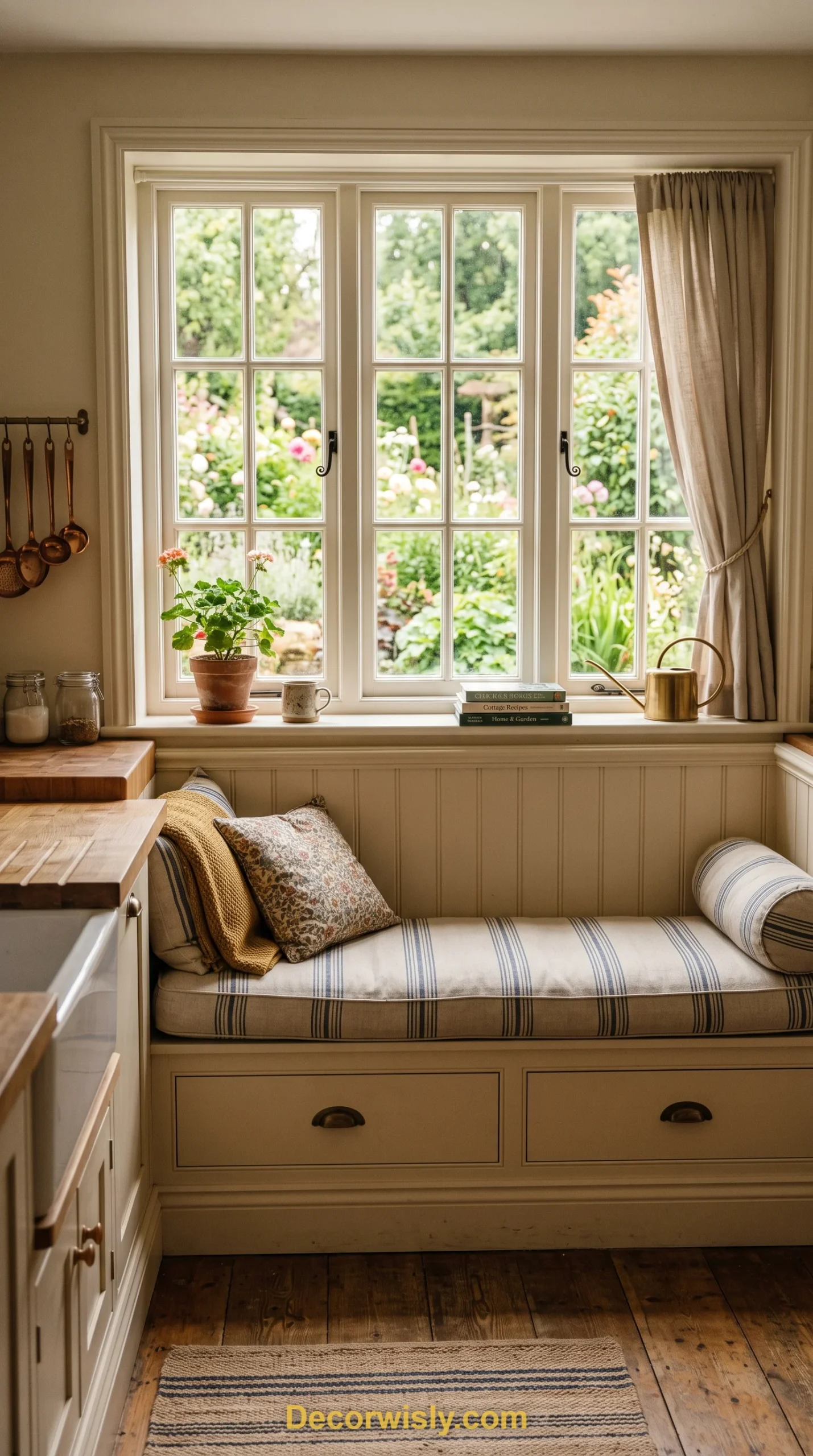
Adding a small run of wainscoting just beneath a kitchen window — rather than a full wall — is a lower-cost way to introduce the detail in one contained spot, often behind a window seat or bench.
7. The Shiplap Alternative
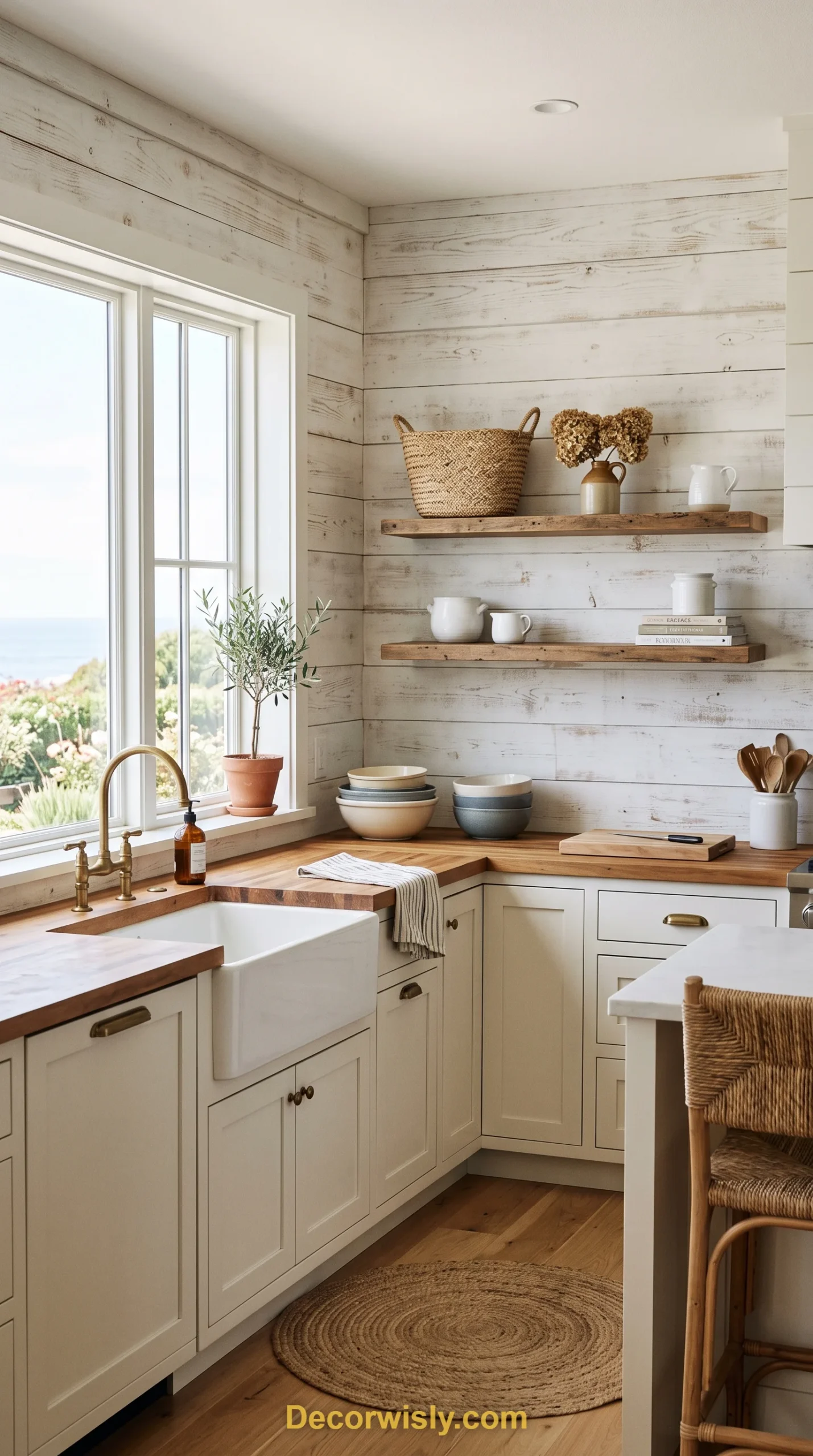
Horizontal shiplap boards give a similar textured-wall effect to wainscoting but read a bit more casual and coastal, especially when left in a raw or whitewashed wood finish rather than fully painted.
8. The Dark Wainscoting, Light Wall Contrast
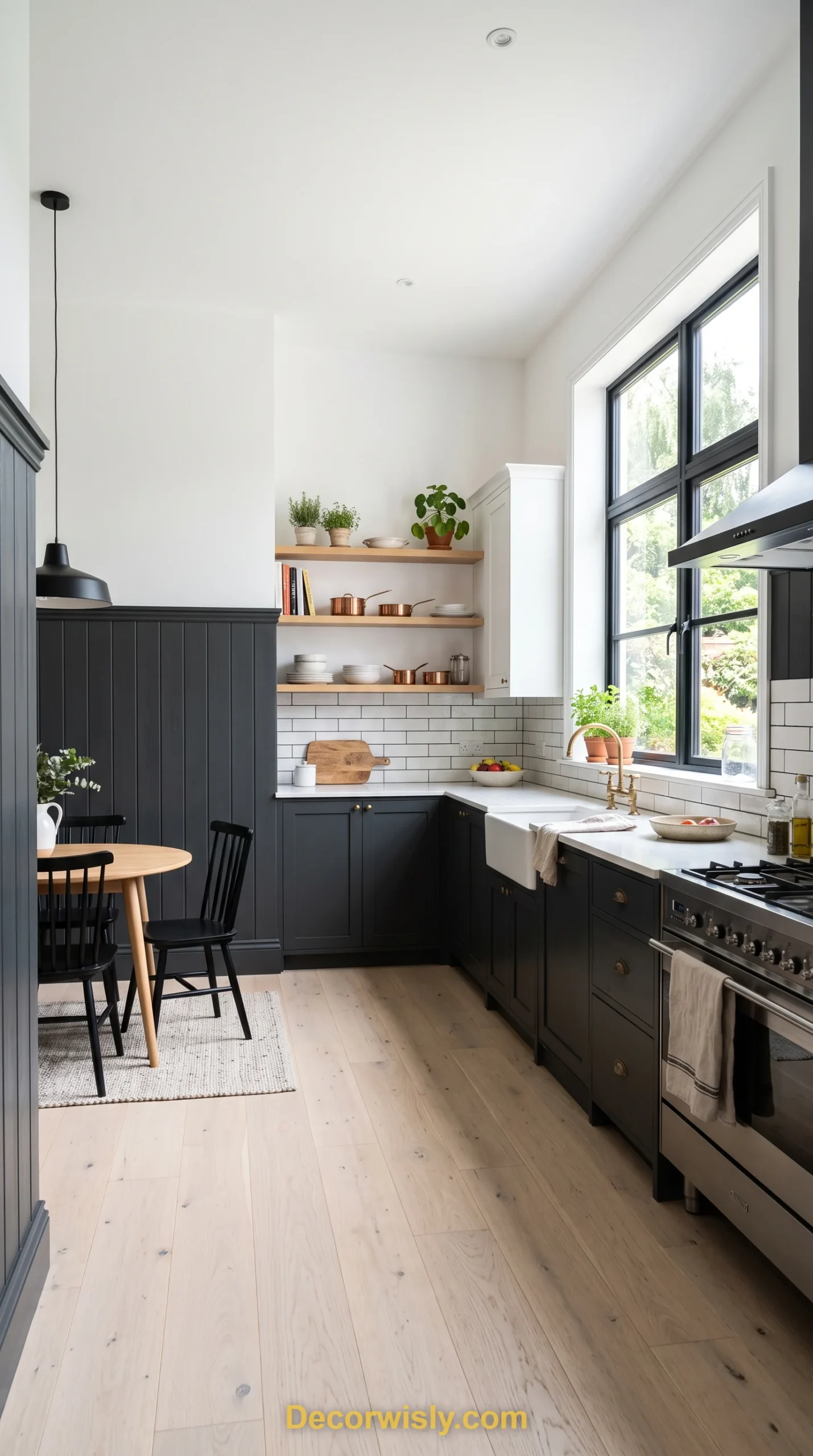
Deep charcoal or black wainscoting under a crisp white upper wall creates a grounded, high-contrast base for the room, especially effective in kitchens with pale flooring that needs some visual weight lower down.
9. The Raised Panel Formal Look
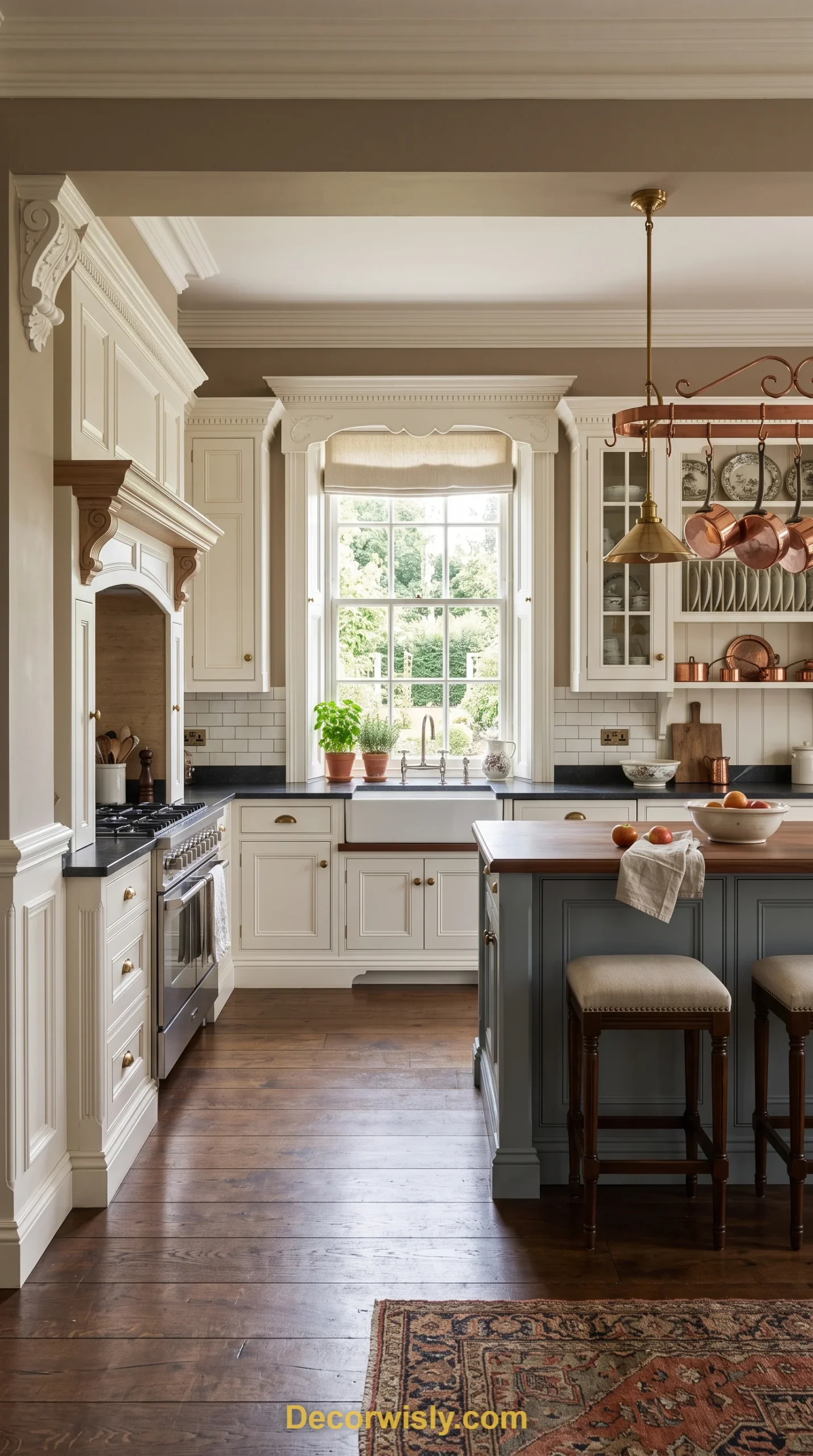
Traditional raised panel wainscoting, with its beveled recessed center, brings a more formal, historic character to a kitchen — well suited to older homes with existing millwork elsewhere in the house.
10. The Wainscoting Behind Open Shelving
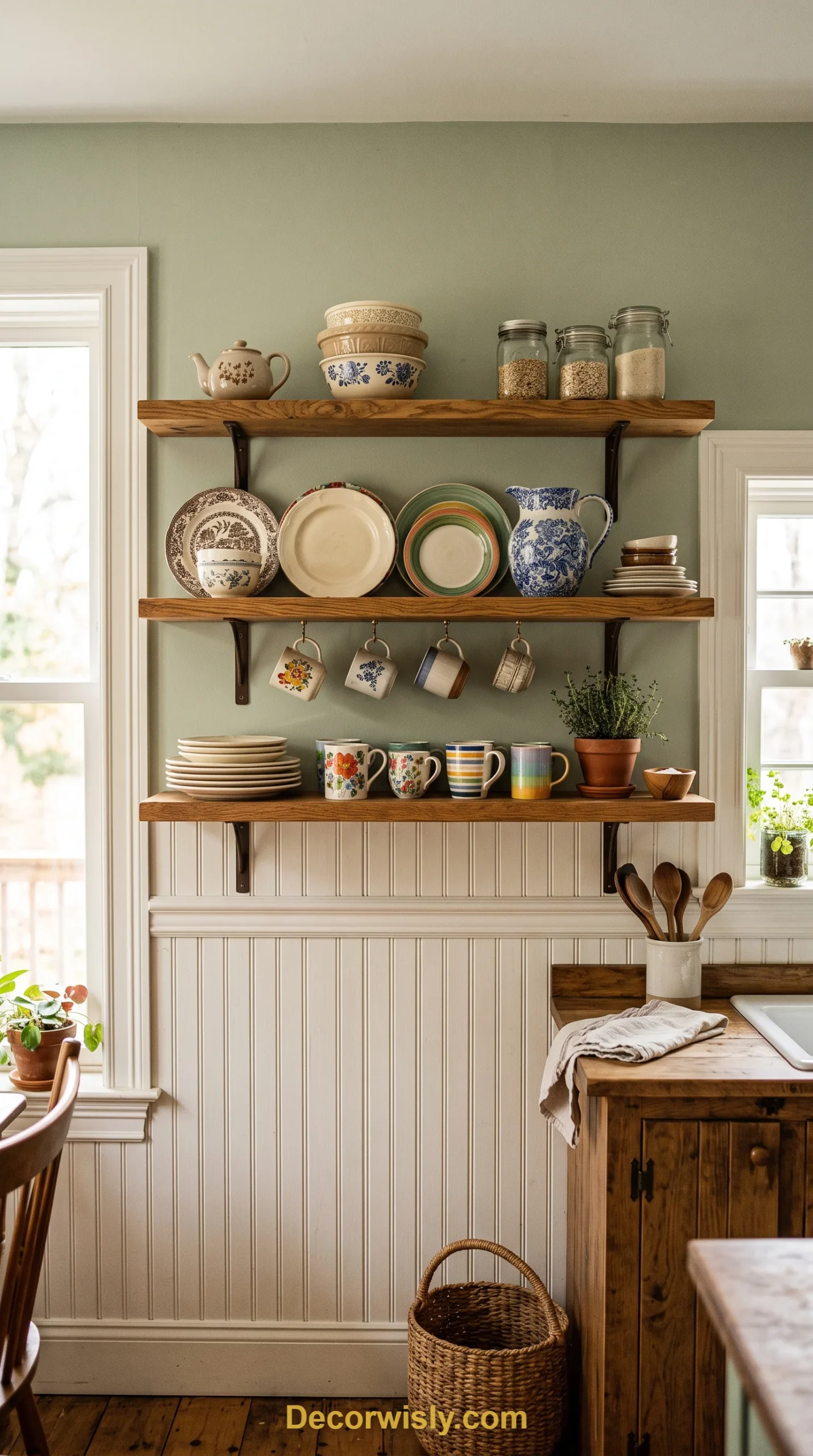
Installing wainscoting on the wall behind open shelving, rather than a flat painted wall, adds texture and depth behind displayed dishware that a plain wall color can’t provide on its own.
11. The Wainscoting Ceiling Detail
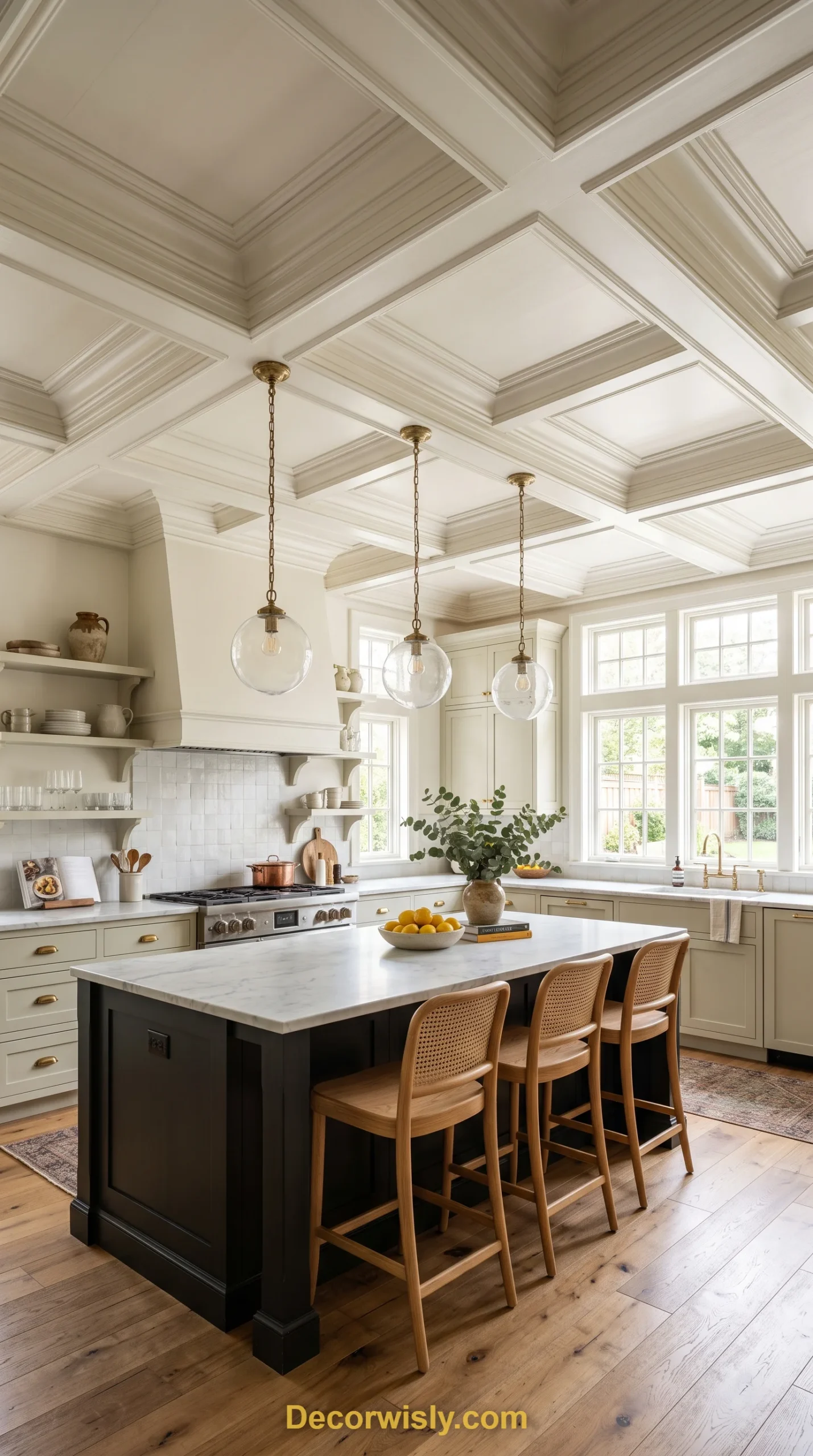
Applying a wainscoting-style panel treatment to the ceiling, rather than the walls, is a less common but striking move — especially in a kitchen with a lower ceiling height, where it adds texture overhead instead of visually lowering the room further.
12. The Mudroom-to-Kitchen Continuation

Running the same wainscoting detail from an adjacent mudroom or hallway directly into the kitchen ties the two spaces together, making the kitchen feel like part of a larger, considered floor plan rather than a separate room.