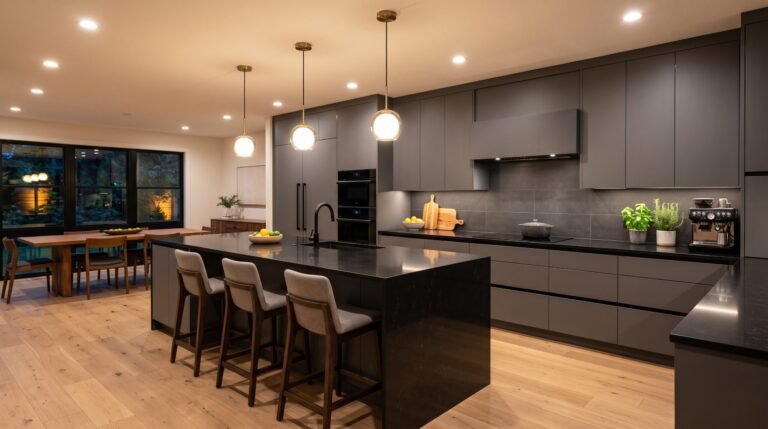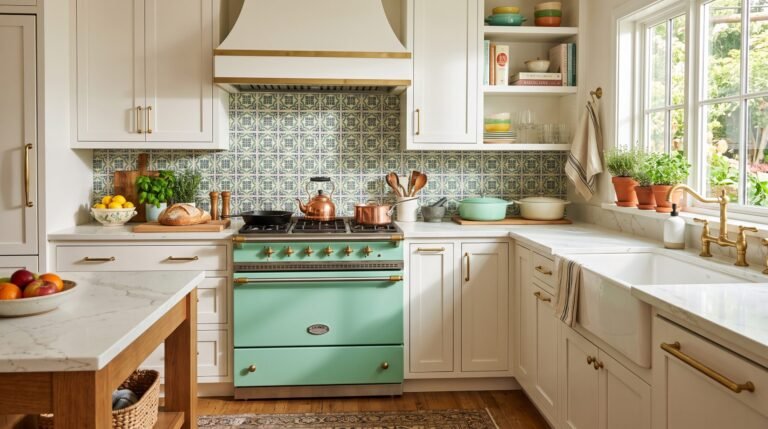
Black cabinetry has a reputation for feeling severe, and wood countertops have a reputation for feeling rustic — put together, though, the two soften each other into something that reads warm rather than cold, and grounded rather than fussy. It’s one of the more forgiving high-contrast pairings in kitchen design, because wood grain naturally breaks up the flatness that an all-black kitchen can sometimes fall into.
Here are 12 ways to build a kitchen around that combination.
1. The Butcher Block Classic
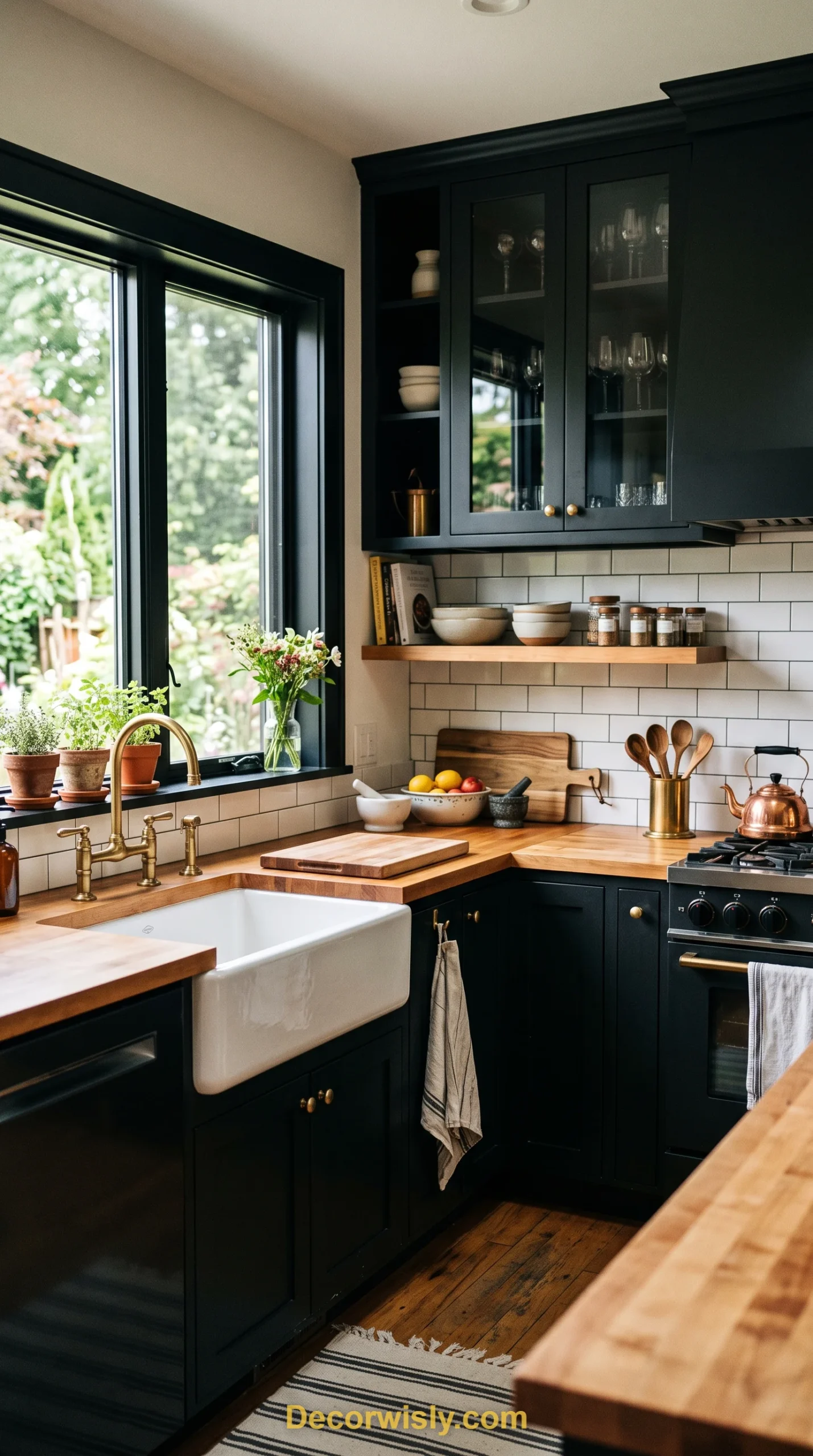
A straightforward butcher block countertop — usually maple or oak — against matte black cabinetry is the most direct version of this pairing, and it remains popular because the warmth-to-contrast ratio is nearly impossible to get wrong.
2. The Waterfall Wood Island
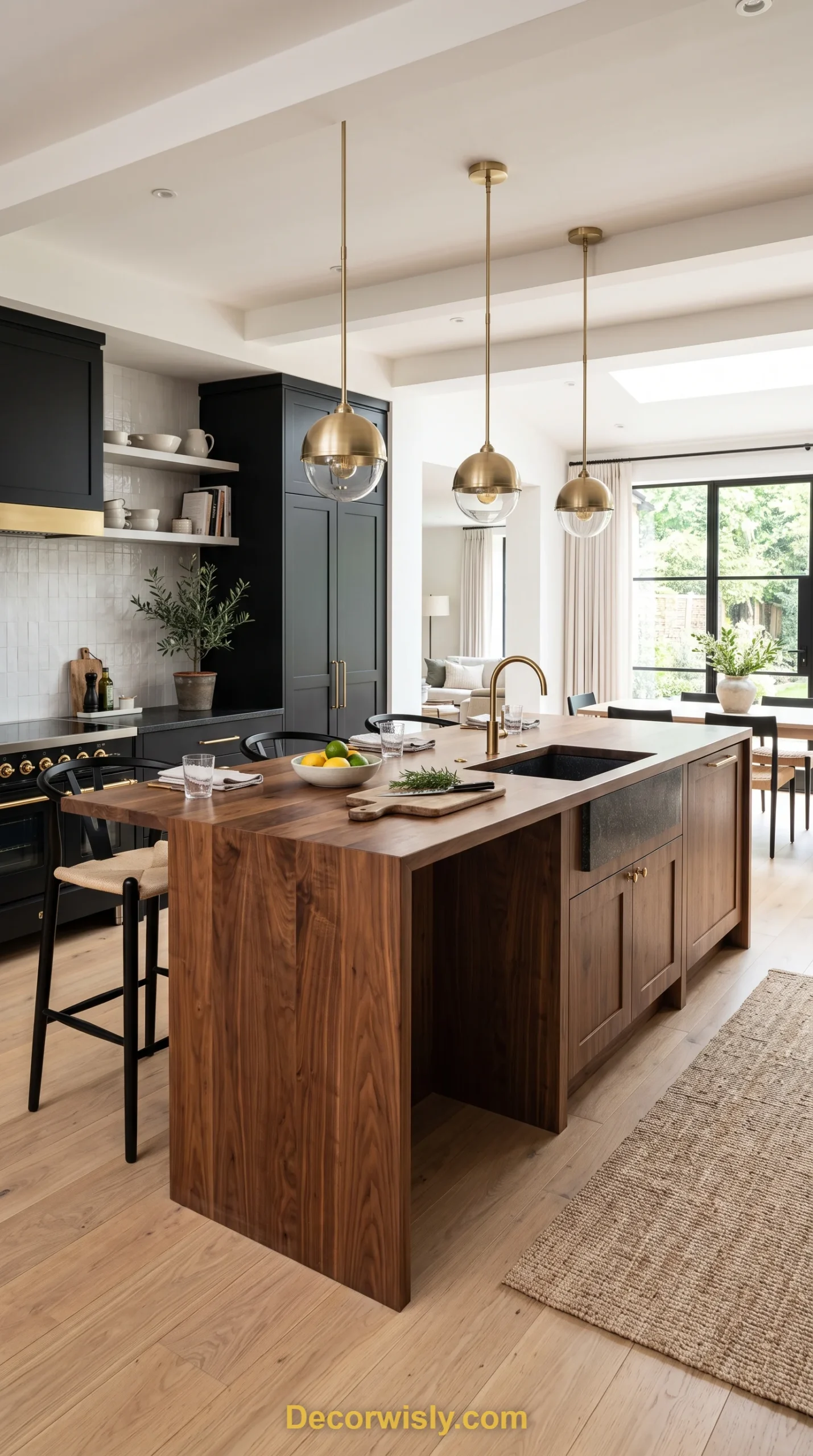
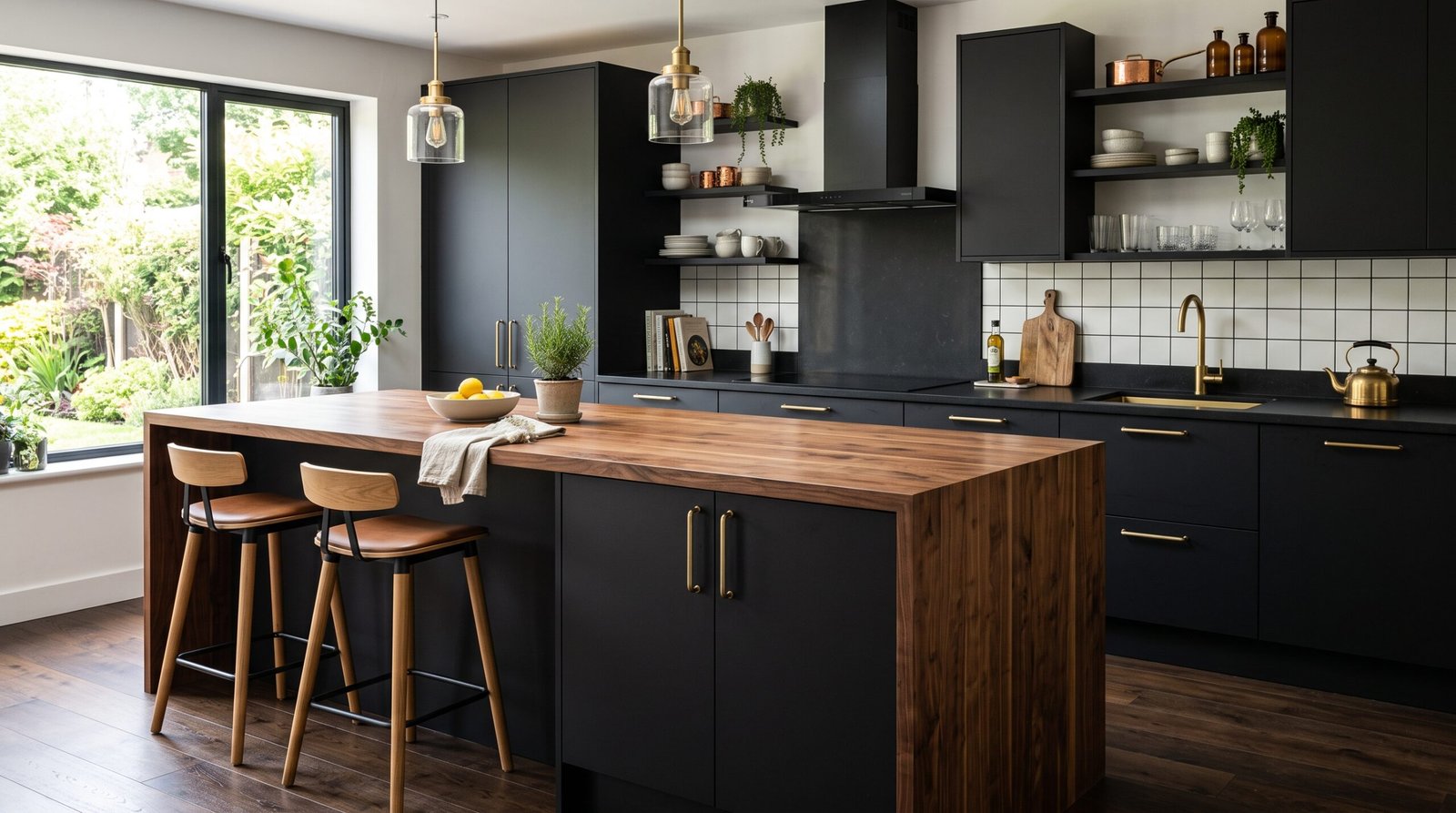
Running the wood countertop down the sides of an island in a waterfall edge, against black cabinetry on the perimeter, turns the island into the room’s clear focal point rather than just another work surface.
3. The Reclaimed Wood Counter
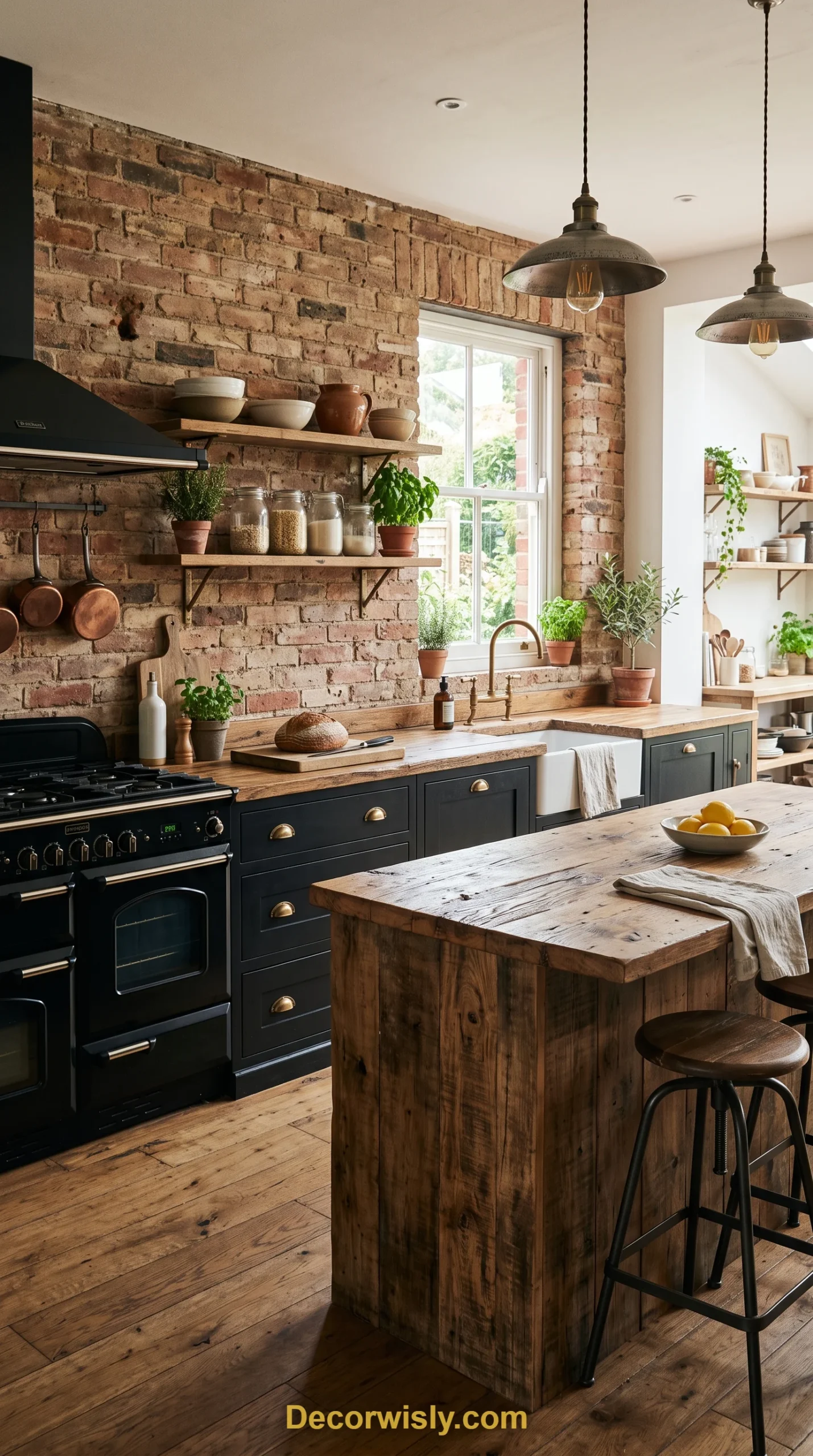
Reclaimed or salvaged wood, with visible knots, nail holes, and variation in tone, adds history and texture that new butcher block can’t replicate, and it pairs especially well with black cabinetry that has some texture of its own, like a matte or slightly distressed finish.
4. The Two-Tone Cabinet Split
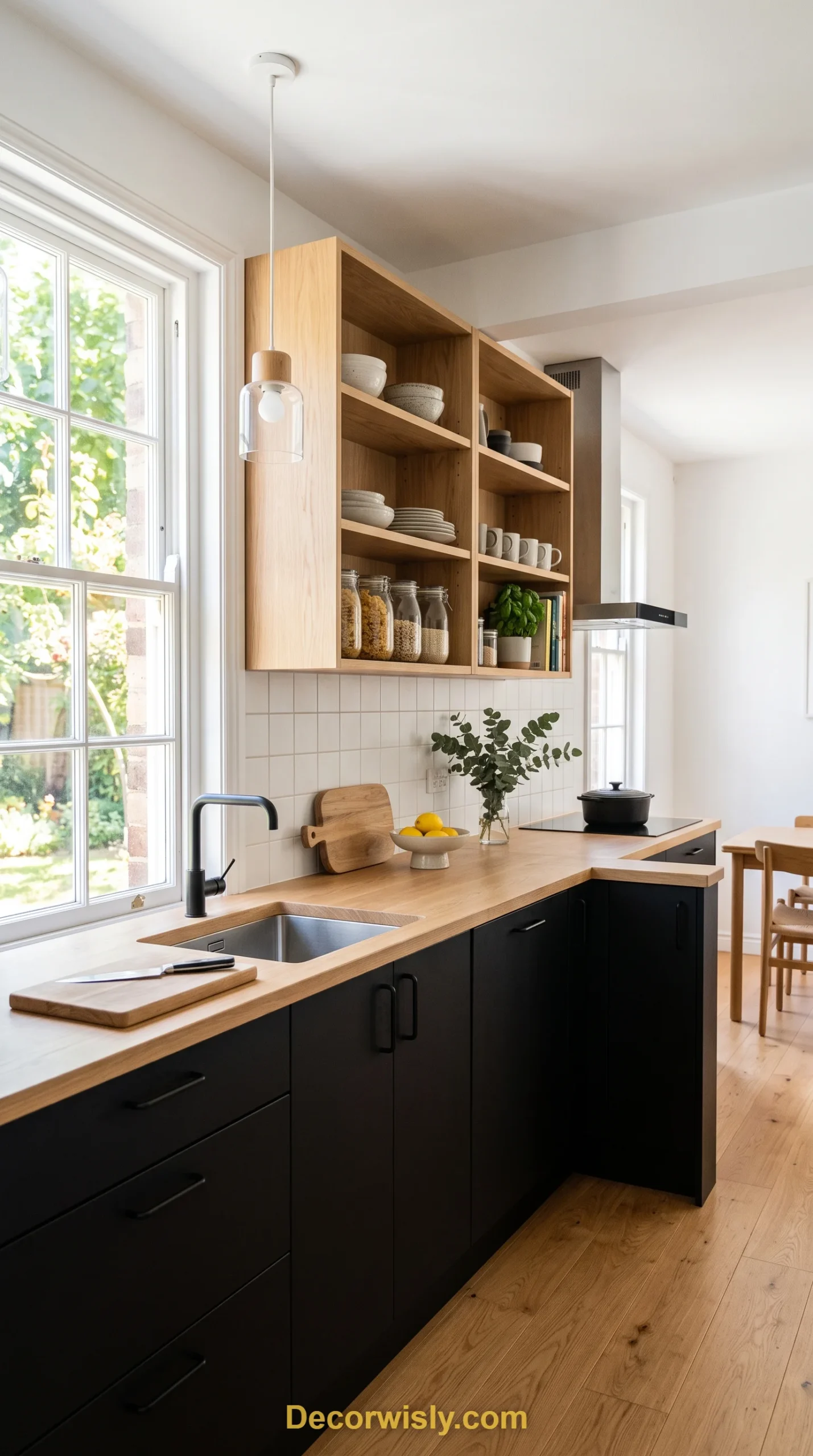
Rather than going fully black, some kitchens use black lower cabinetry with lighter upper cabinets or open shelving, keeping the wood countertop as the transition point between the two and preventing the room from feeling too heavy.
5. The Brass Hardware Finish
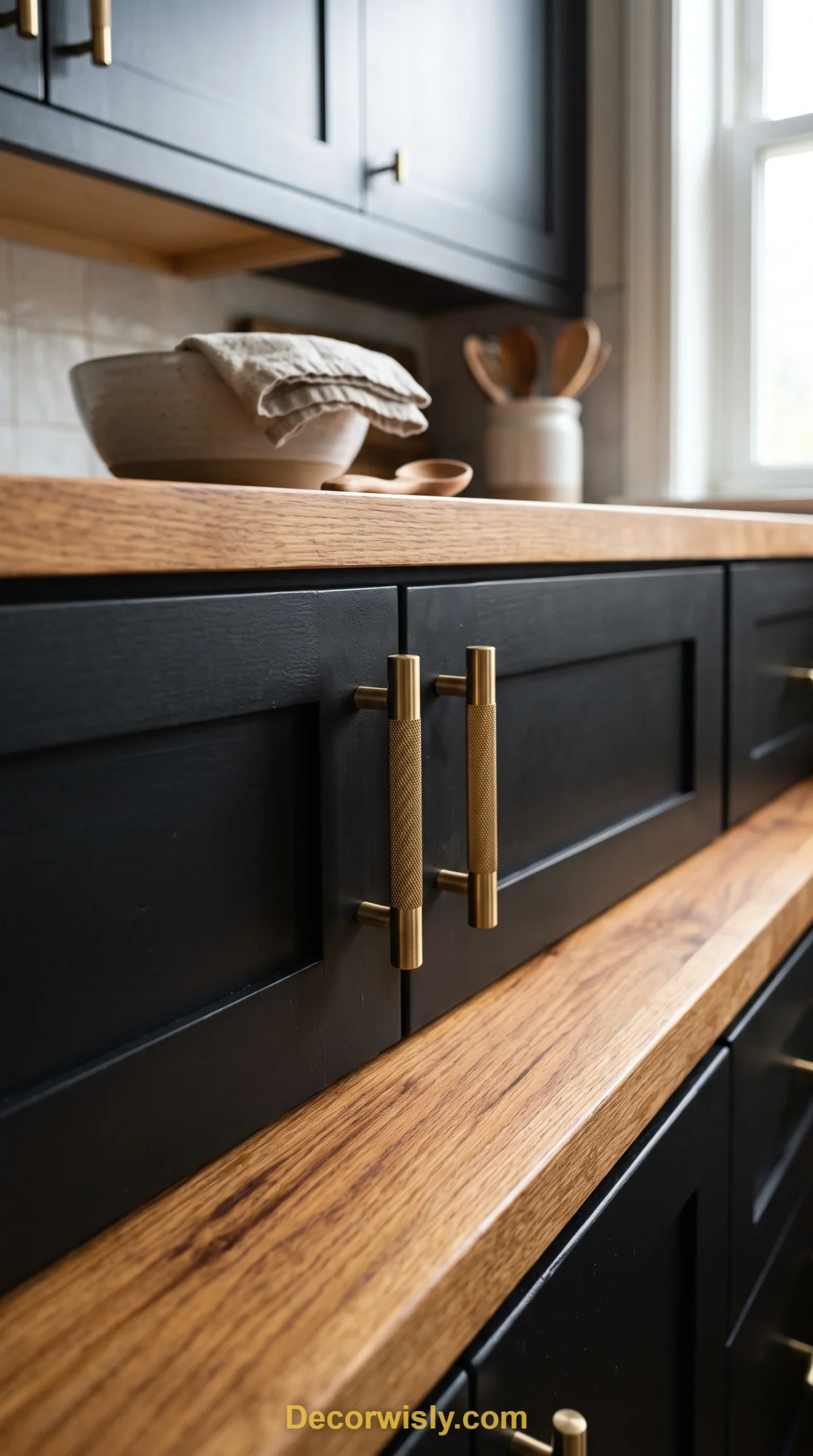
Brass or unlacquered bronze hardware against black cabinetry picks up the warm undertones already present in the wood countertop, tying the whole room together in a way that chrome or nickel hardware tends not to.
6. The Dark Wood Countertop Match
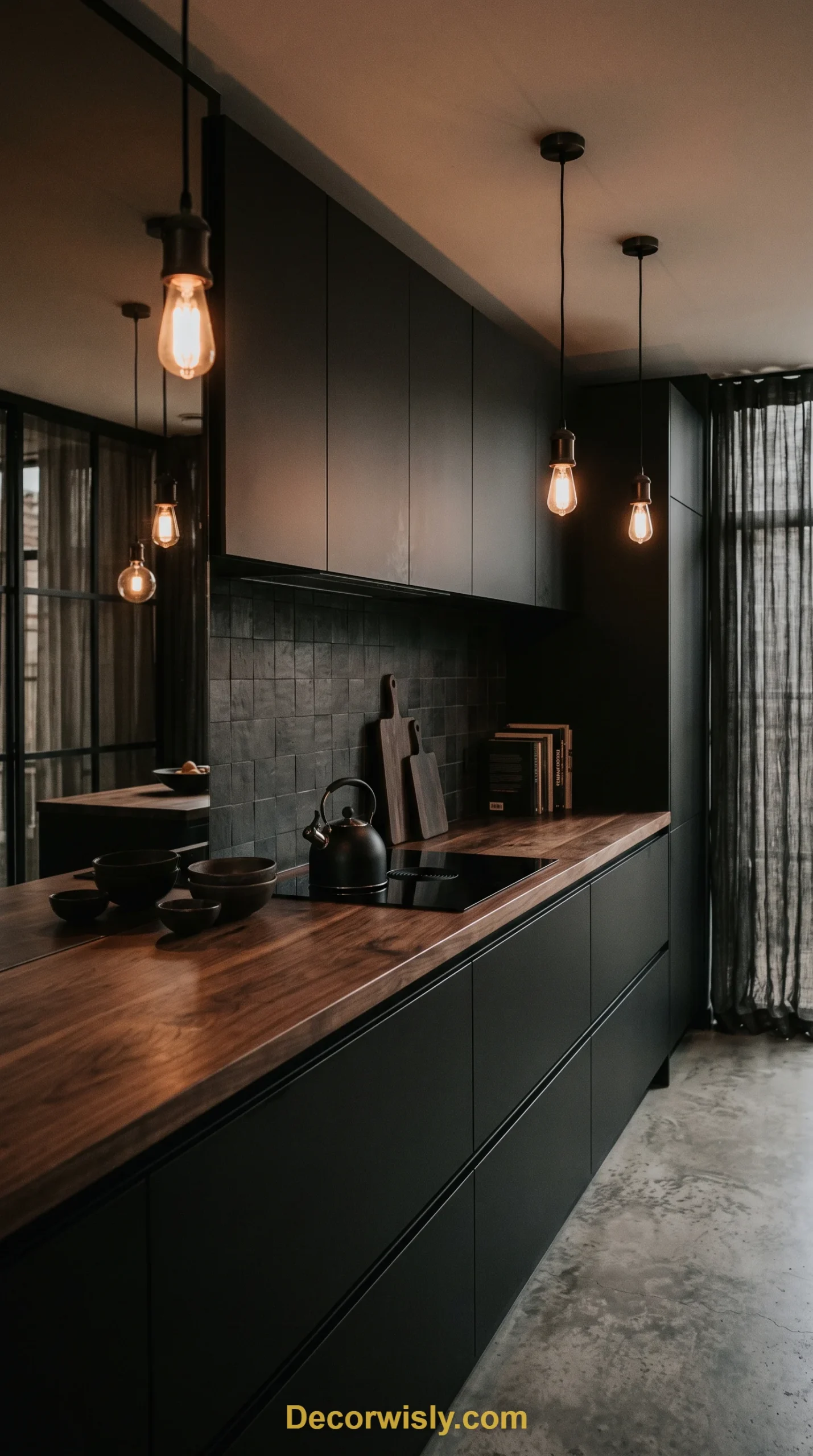
Instead of a light butcher block, staining the countertop a deeper walnut tone closer to the black cabinetry creates a more monochromatic, moodier version of the pairing — still warm, but with less contrast.
7. The White Backsplash Buffer
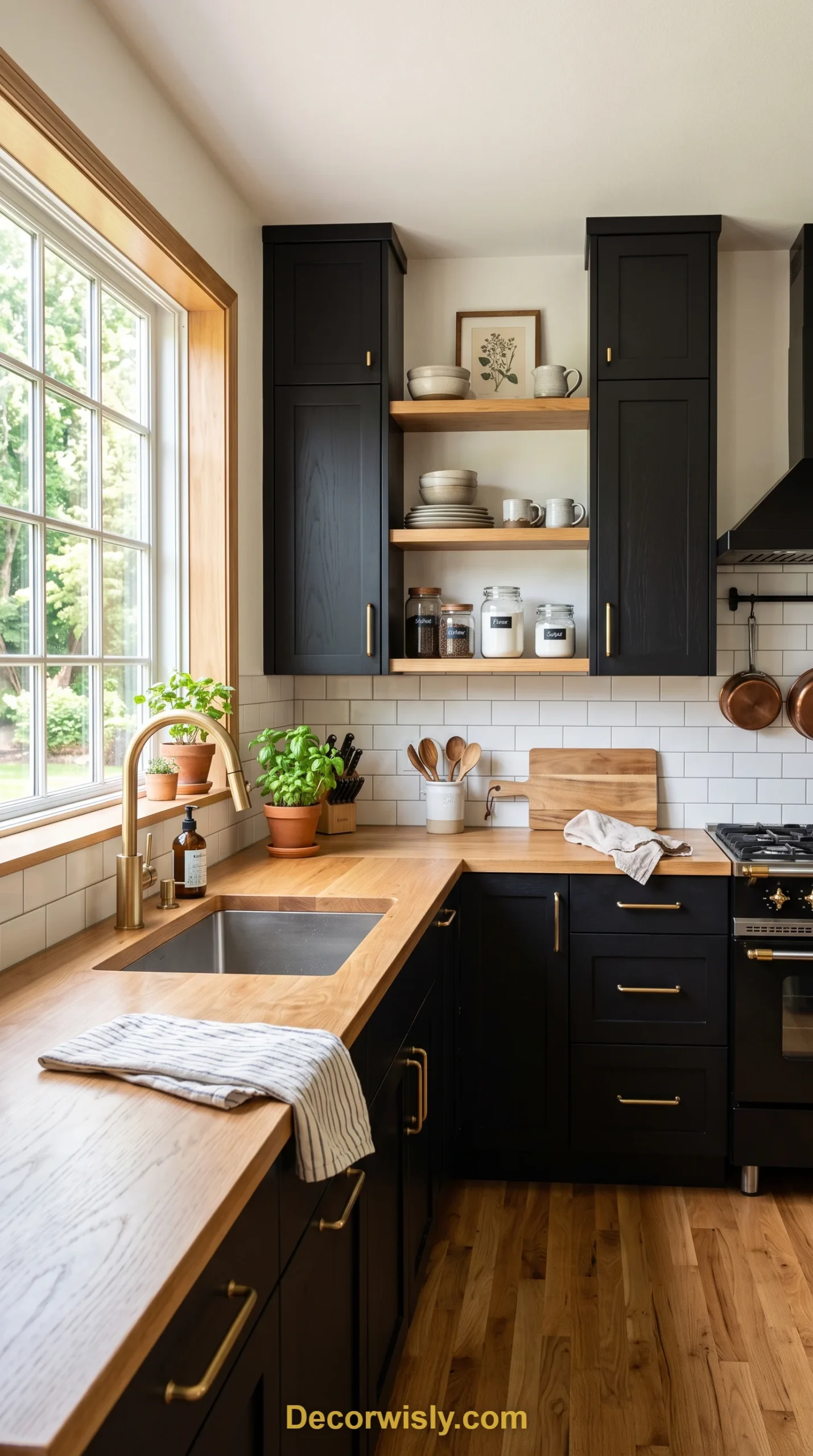
A simple white tile backsplash between black cabinetry and a wood countertop gives the eye a bright resting point, and keeps the black-and-wood pairing from reading as too dark overall, especially in a kitchen with limited natural light.
8. The Black Island, Wood Perimeter
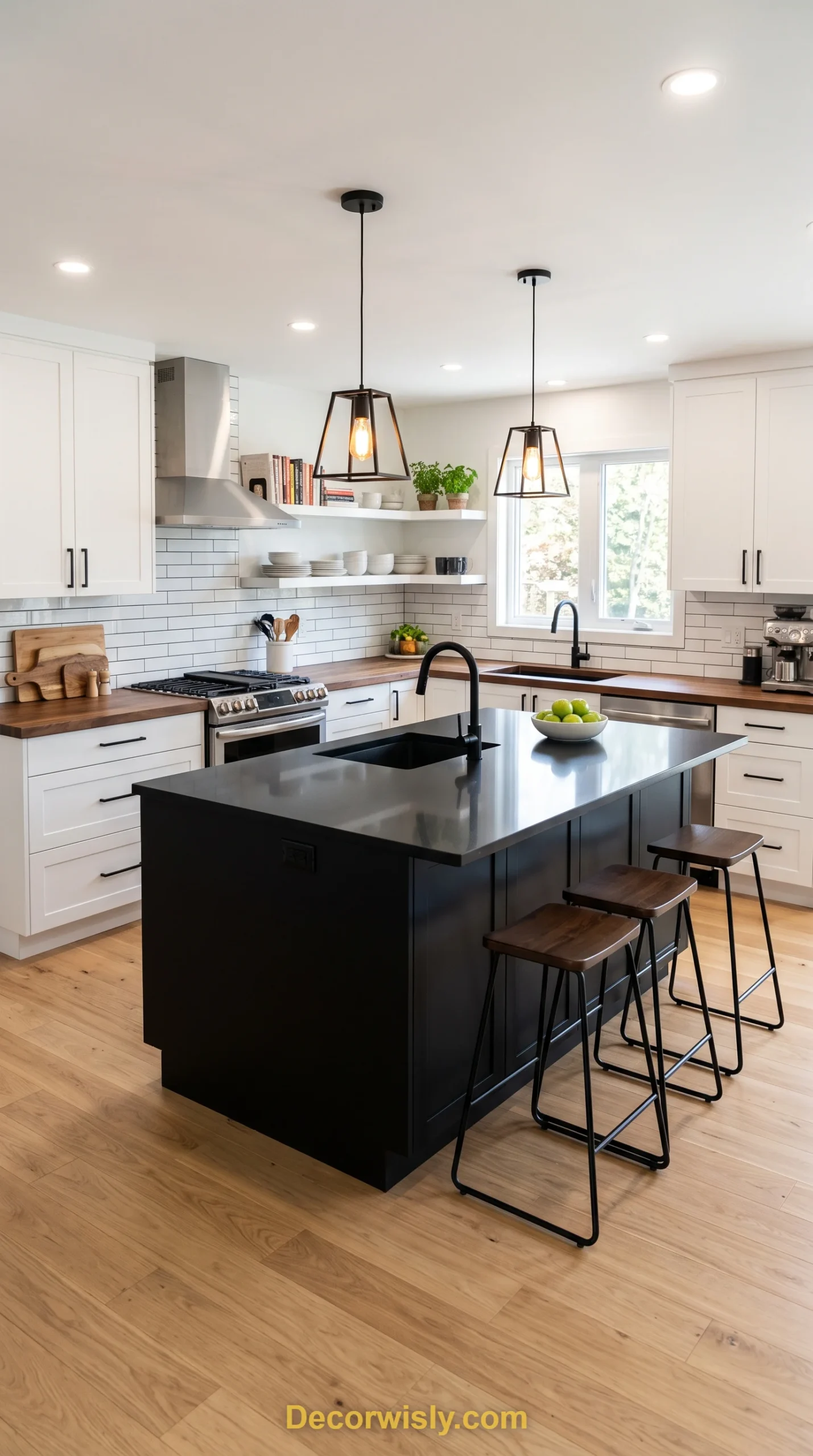
Flipping the usual layout, a fully black island (cabinetry and countertop both) surrounded by wood countertops on the perimeter cabinetry creates a bold central anchor without committing the whole kitchen to black.
9. The Open Wood Shelving Pairing
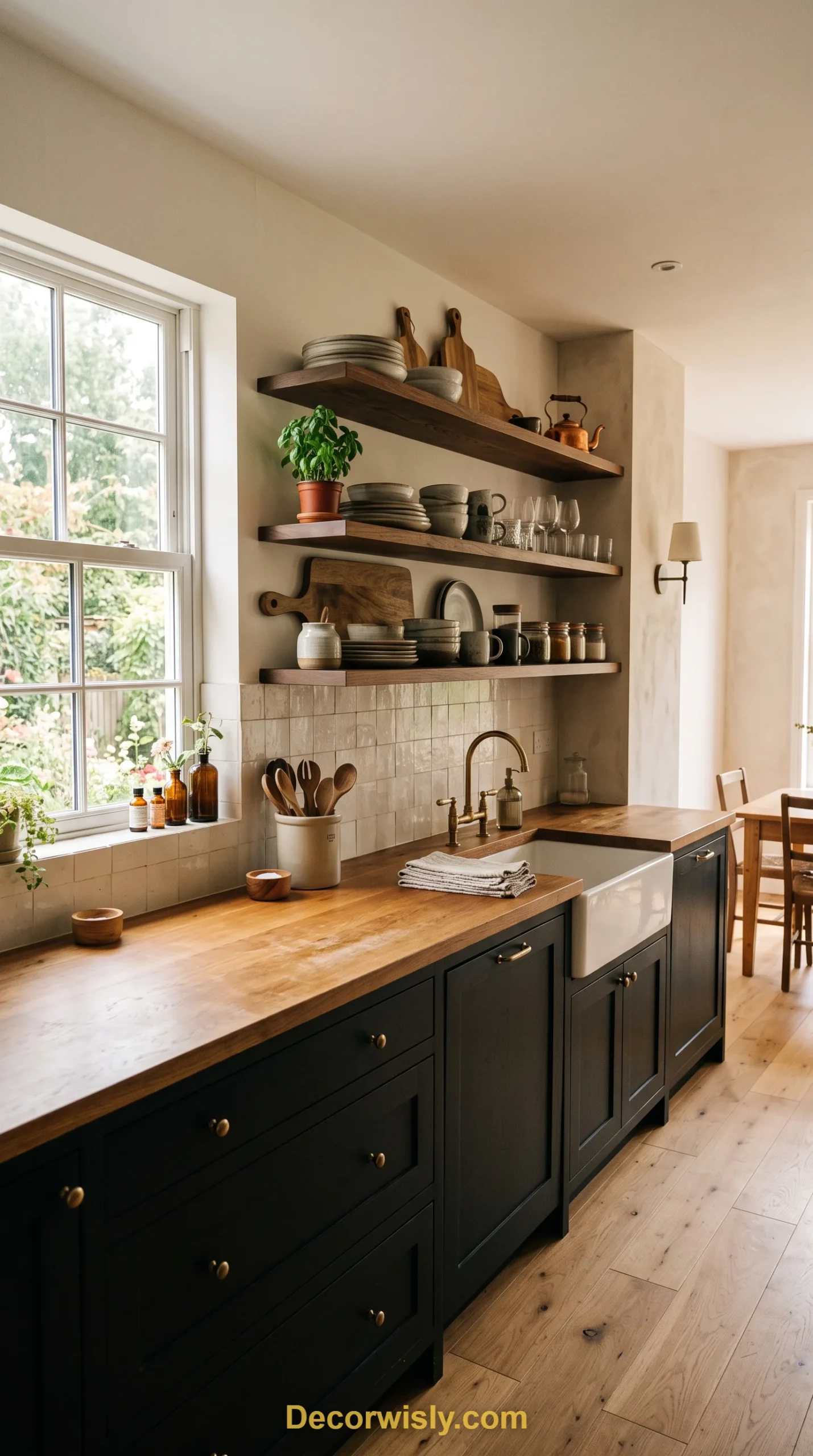
Swapping some black upper cabinetry for open wood shelving that matches the countertop tone ties the top and bottom of the kitchen together, and adds a display opportunity that solid black cabinetry doesn’t offer.
10. The Matte Black Range Statement
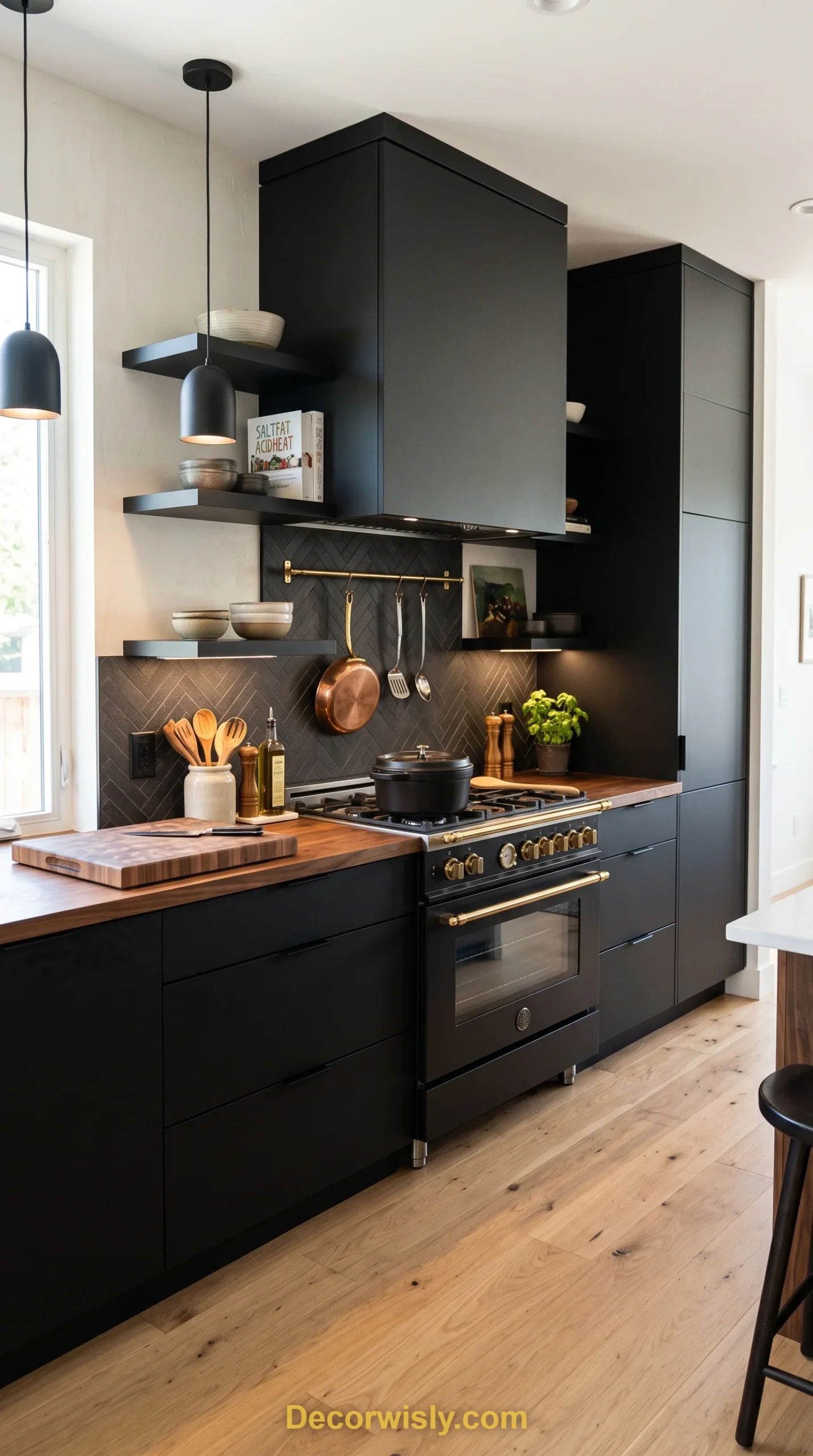
Pairing black cabinetry and a wood countertop with a matching matte black range creates a cohesive dark-and-warm palette across the whole cooking wall, rather than treating the appliances as a separate stainless-steel decision.
11. The Black Cabinet, Live-Edge Counter
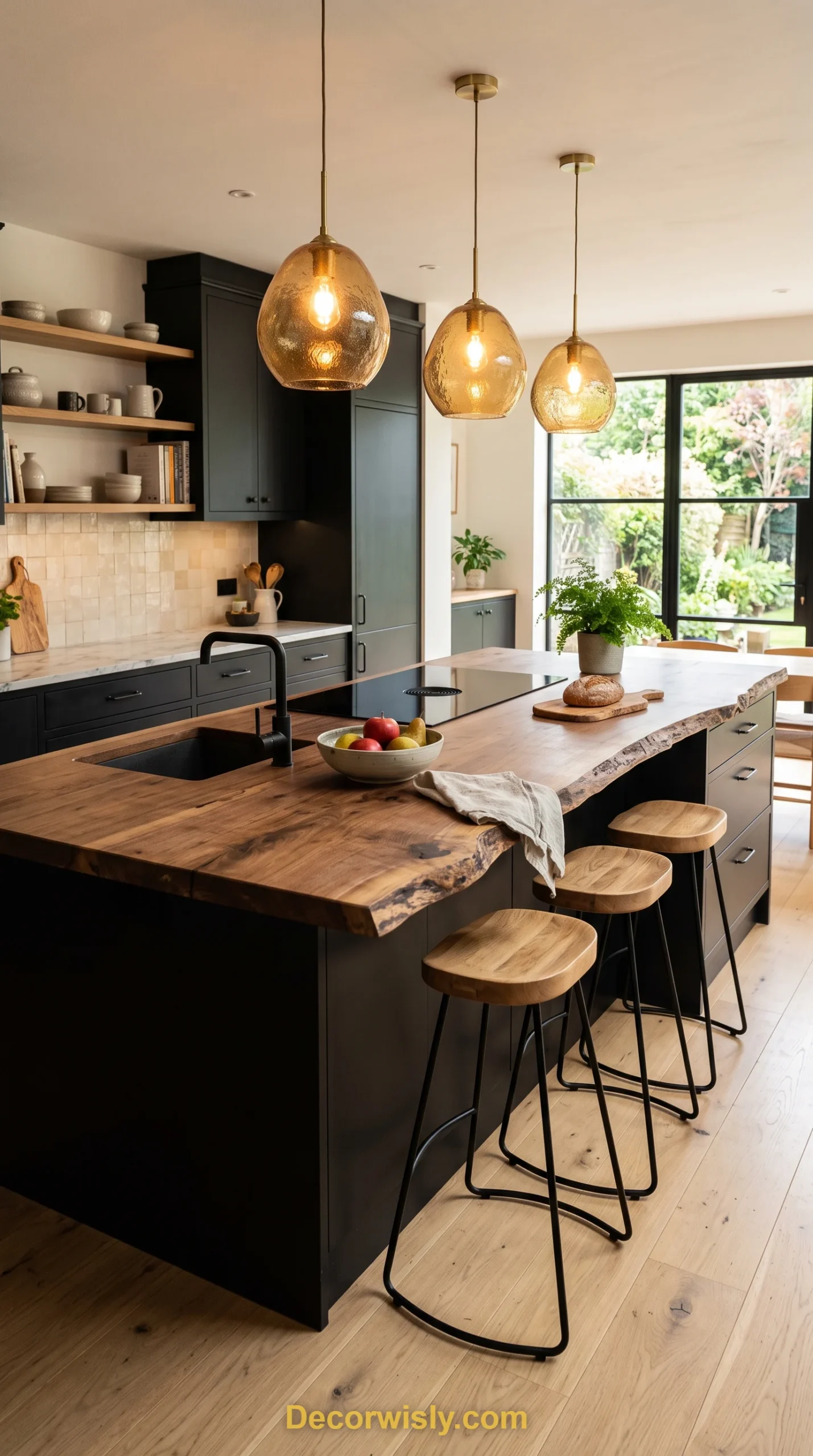
A live-edge wood slab countertop — keeping the natural, uneven outer edge of the tree — against black cabinetry pushes the pairing toward a more organic, one-of-a-kind statement than a straight-edged butcher block.
12. The Small Kitchen Version
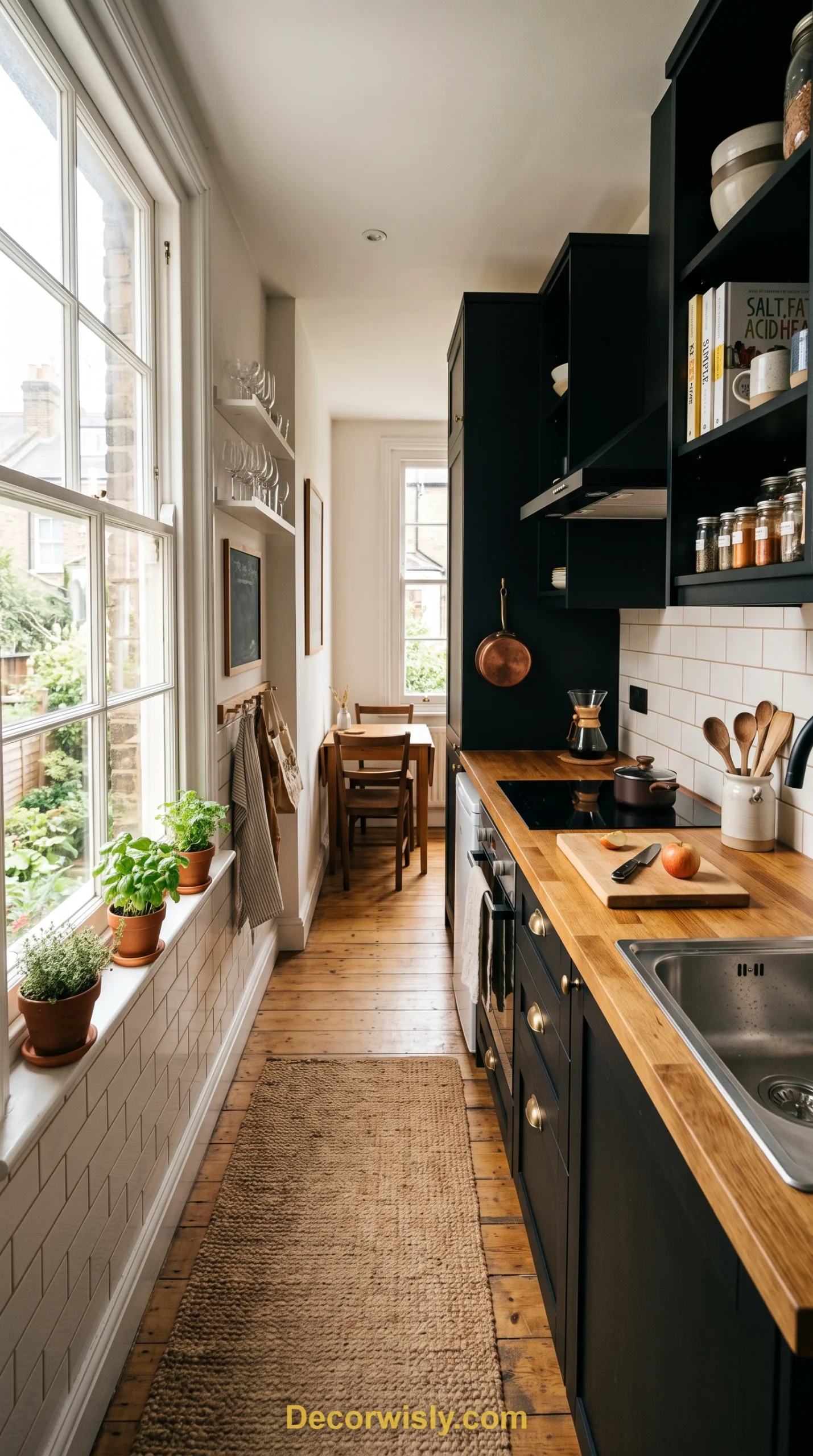
In smaller kitchens, this pairing works especially well because black cabinetry recedes visually more than people expect, and the warm wood countertop keeps the compact space from feeling cold or cave-like.