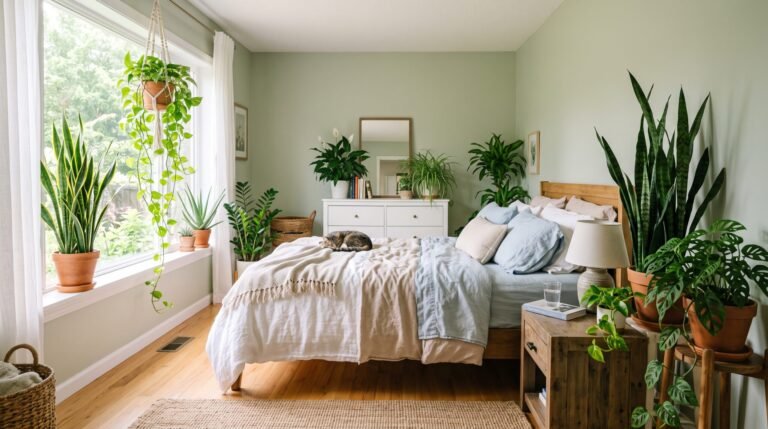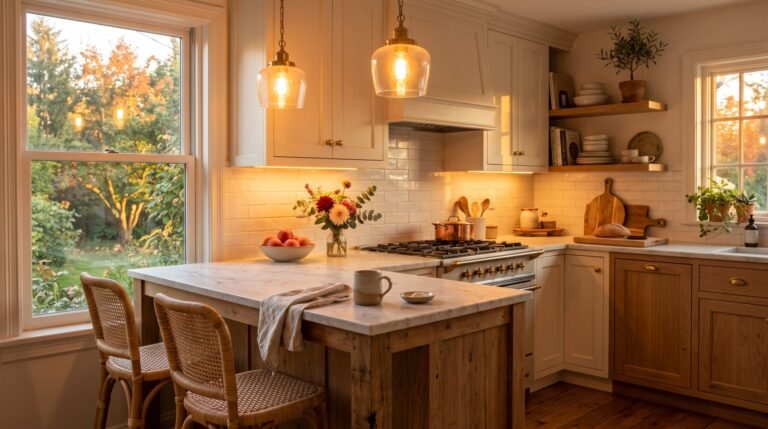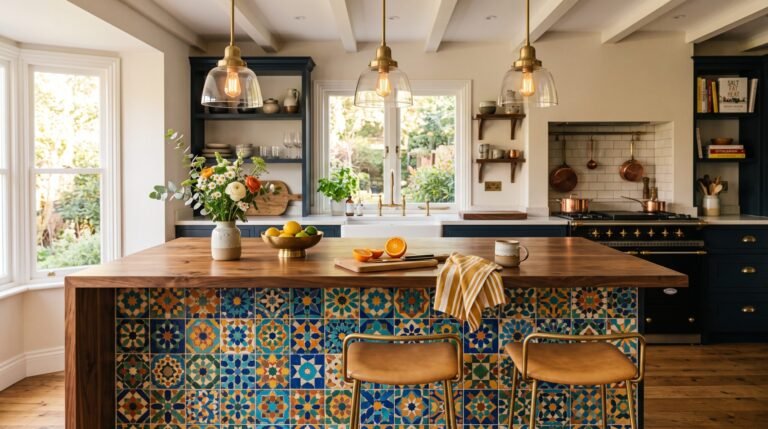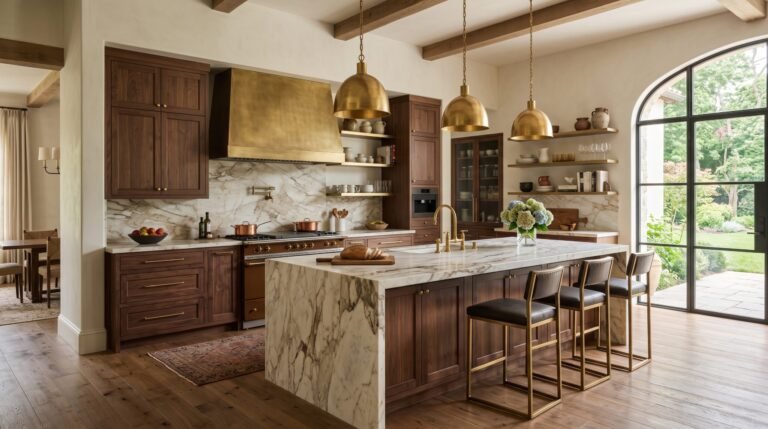
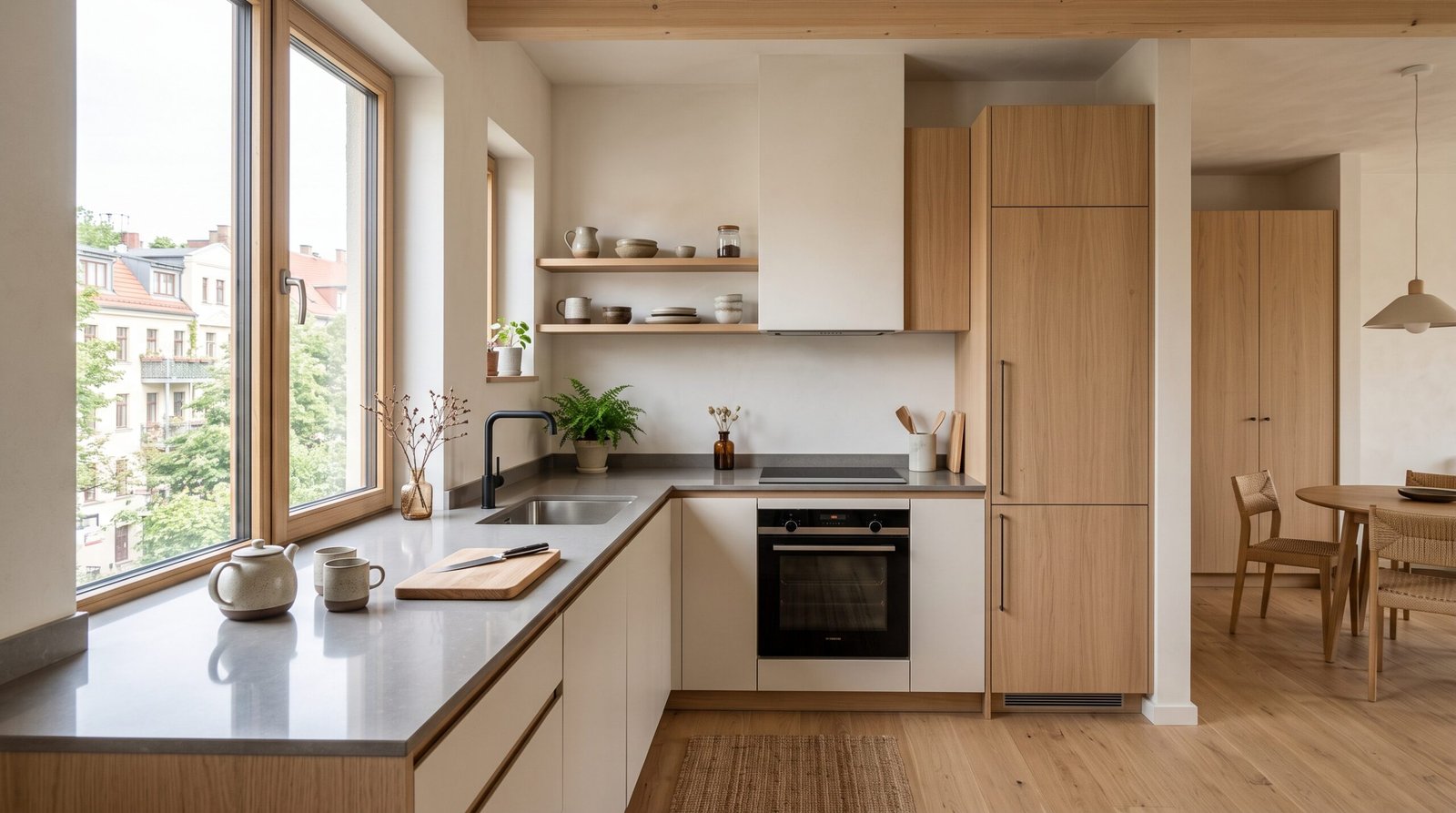
Japandi takes the best instincts of two design cultures — Japanese minimalism and Scandinavian warmth — and blends them into something that feels genuinely calm without turning cold or sparse. It’s a style built on intention: clean lines, natural materials, soft light, and almost nothing that doesn’t serve a real purpose. The result is a kitchen that feels tranquil and functional in equal measure, where every surface and object earns its place. The 22 ideas below cover layout, material, lighting, and decor, offering plenty of ways to bring this quiet, refined aesthetic into your own cooking space.
1. Minimalist Harmony in Layout

An inviting layout sets the stage for a tranquil Japandi kitchen that combines simplicity with precision. The open floor plan and uncluttered surfaces create an atmosphere of calm where every line and corner feels thoughtfully considered. Subtle Japanese influence meets Scandinavian efficiency through clean cabinetry, integrated storage, and natural lighting. This design eliminates visual noise while improving functionality, resulting in a kitchen where work and relaxation blend seamlessly into one balanced whole.
2. Natural Wood Elements and Earth Tones
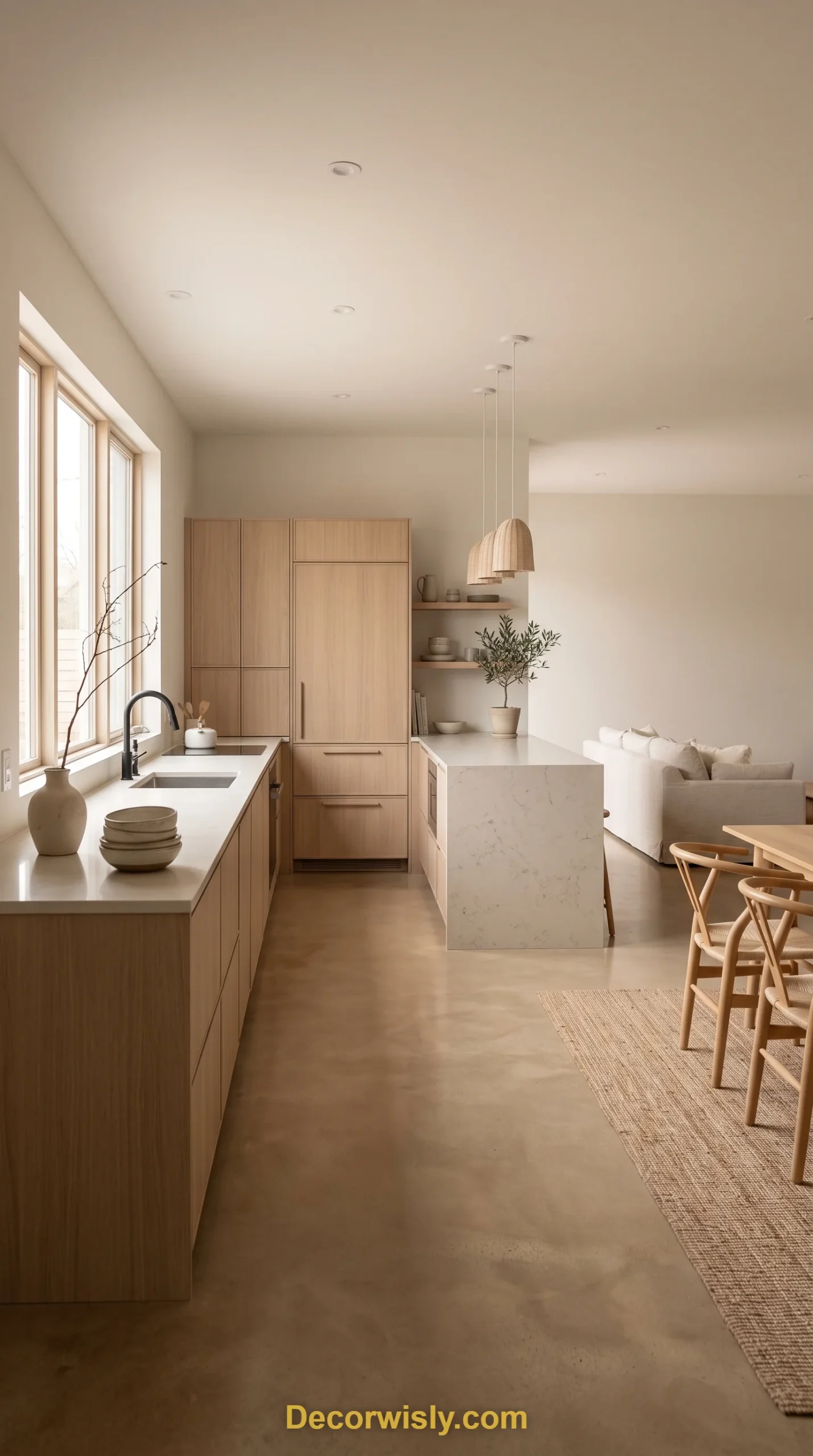
A warm embrace of natural wood and earthy hues infuses a Japandi kitchen with genuine organic charm. Rich wooden textures complement soft neutrals to create an inviting environment that feels both modern and grounded. The interplay of natural materials with minimalist design encourages a sense of balance and simplicity, where every surface tells a story of sustainability, exuding elegance while fostering a calm, timeless cooking space.
3. Open Shelving with Refined Display
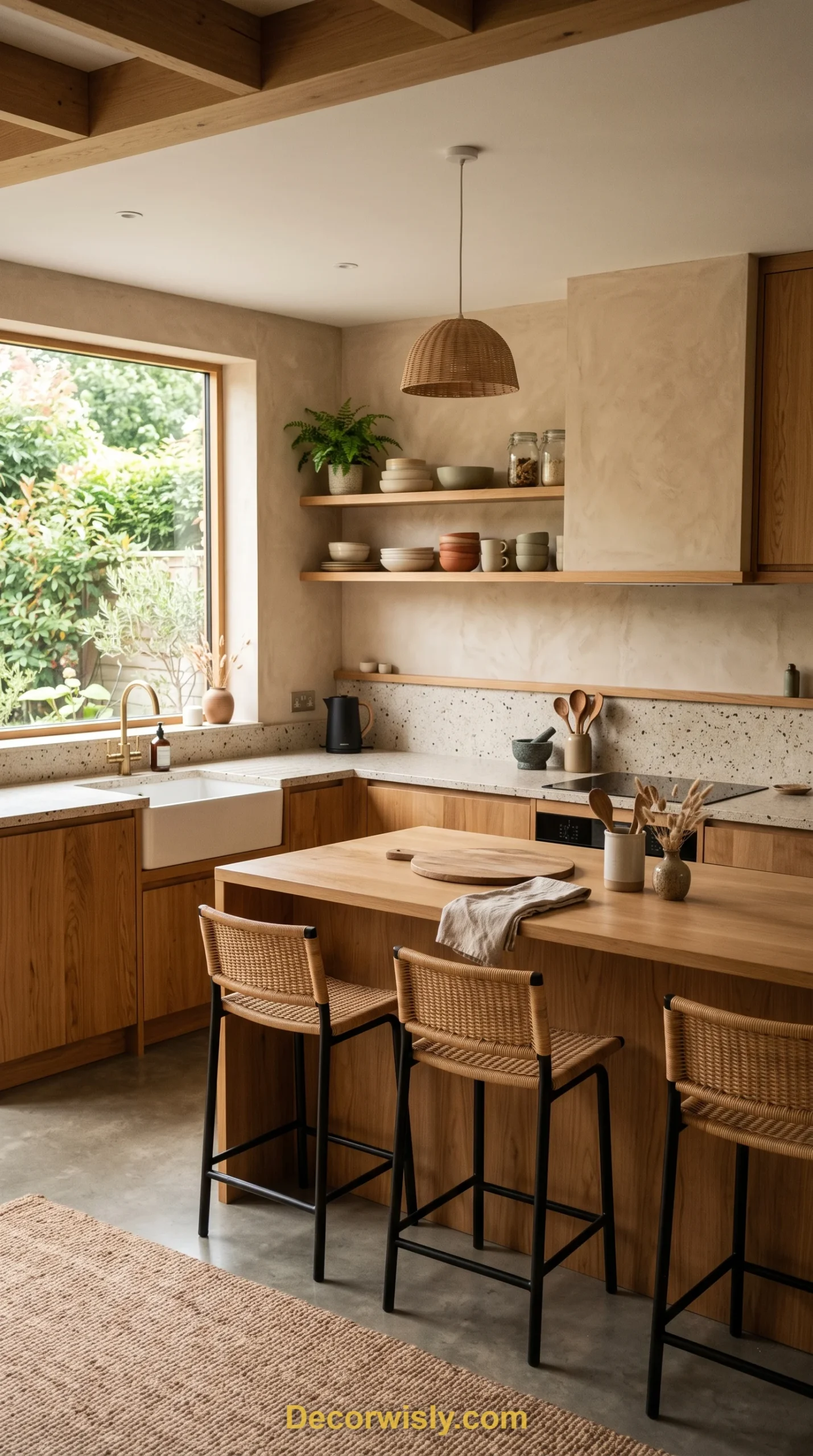
Open shelving in a Japandi kitchen emphasizes clear lines and functional display, letting you showcase carefully curated dishware and minimalist decor. Each item is intentionally placed, balancing aesthetics with practicality. Keeping items visible yet organized fosters an easy-to-clean environment that enhances the cooking experience, maximizing space while cultivating a sense of order that highlights each object’s subtle beauty and function.
4. Integrated Appliances for Seamless Design

Integrated appliances give a Japandi kitchen a sleek, cohesive appearance that minimizes visual clutter. Concealed technology harmonizes with custom cabinetry, reflecting the design philosophy of blending function and beauty. This approach reduces interruptions in design flow, letting natural textures and neutral tones take center stage while the appliances stay tucked away elegantly — a smooth, uninterrupted aesthetic that promotes calm, efficient cooking.
5. Zen Garden Accents for Tranquility
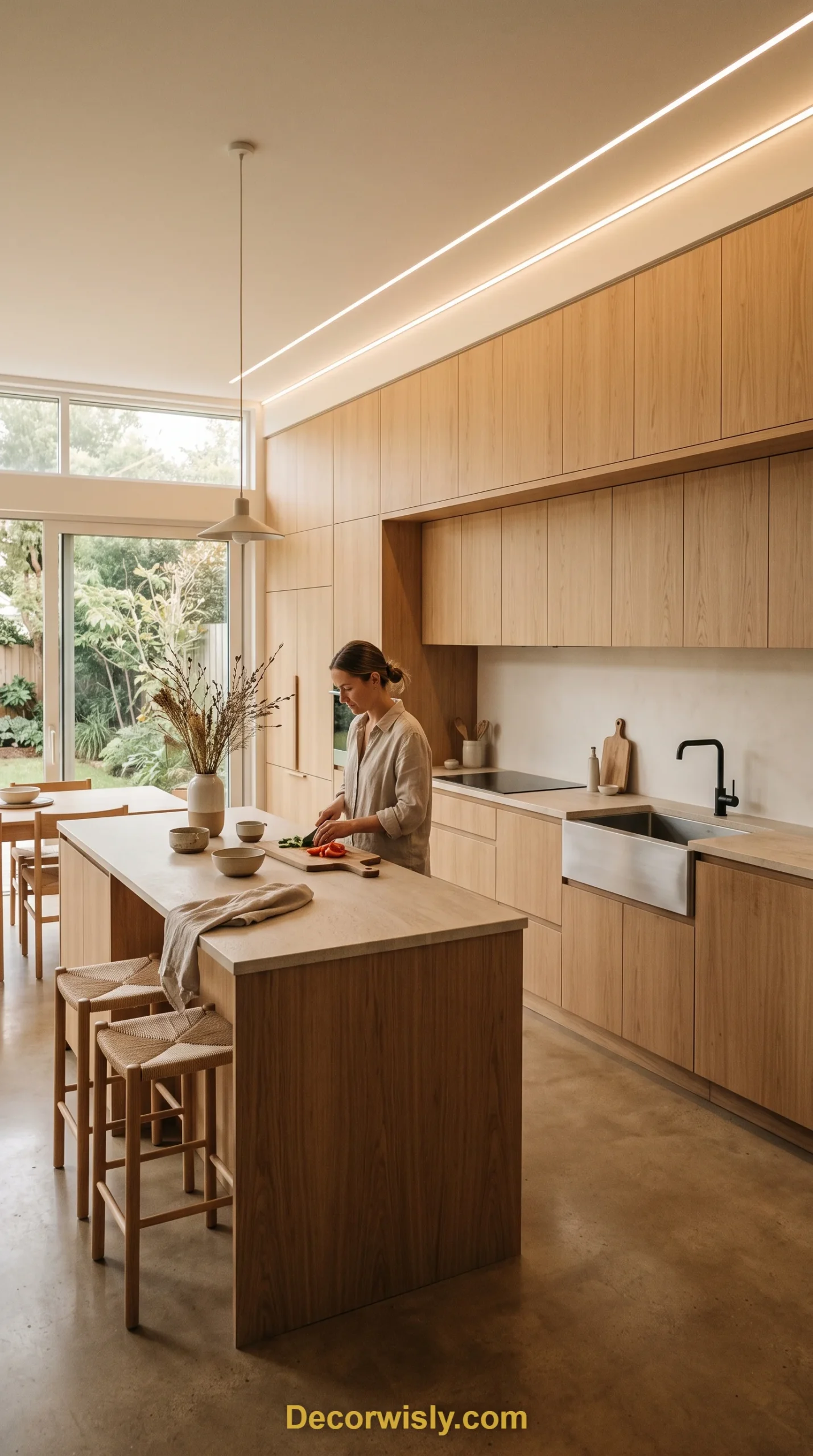
A touch of Zen right in the cooking space, a small indoor garden creates a peaceful focal point in a Japandi kitchen. Bonsai displays or minimal succulents reflect the style’s penchant for nature-inspired decor, with greenery and simple stone accents cultivating a serene atmosphere that calms the mind during meal prep. It’s a refreshing contrast to polished surfaces, turning the kitchen into a sanctuary that nurtures both creativity and relaxation.
6. Scandinavian Simplicity with Japanese Touches
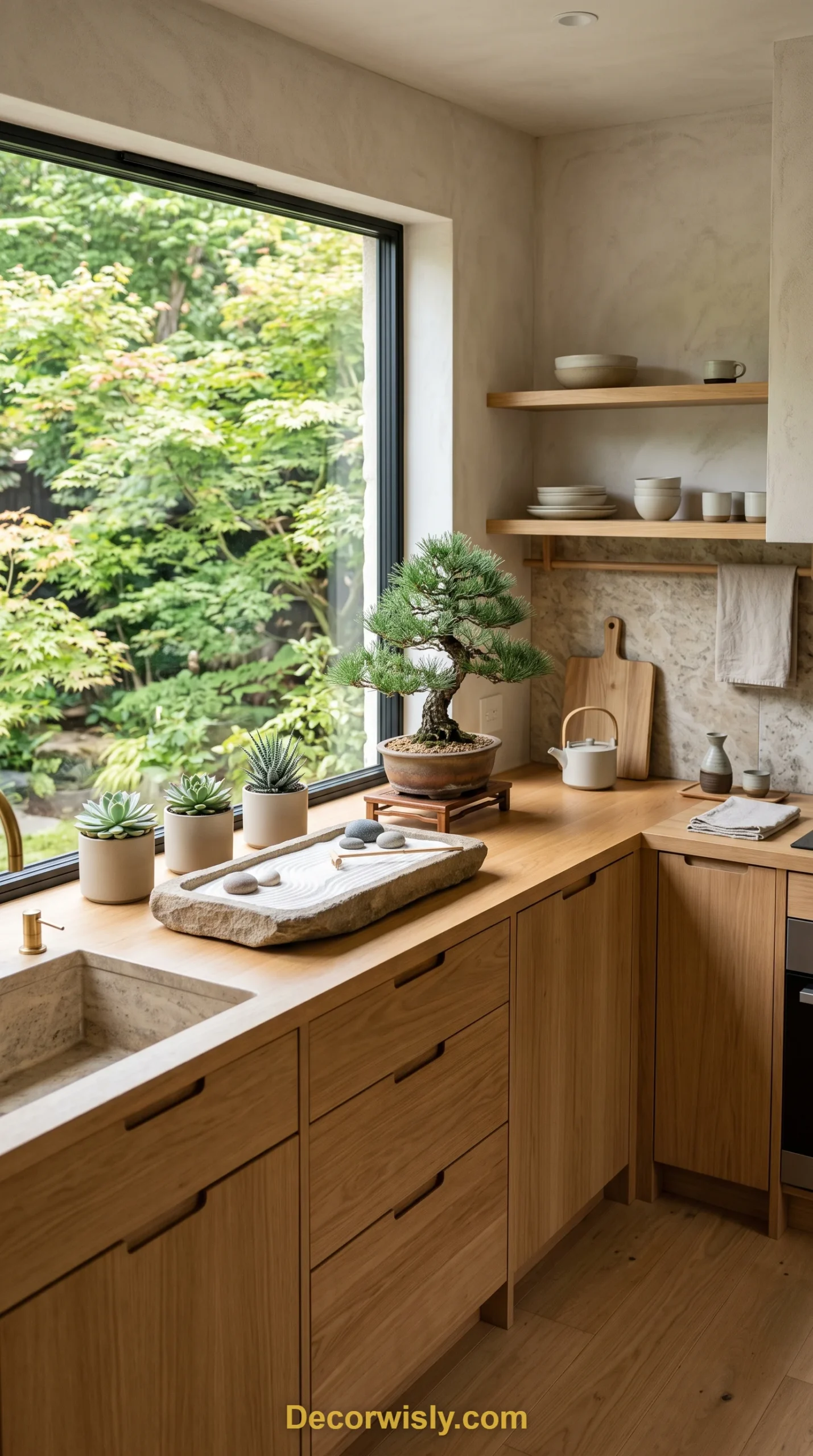
The blend of Scandinavian simplicity with subtle Japanese details creates an inviting duality in a kitchen. Crisp white surfaces, light wood, and understated patterns are harmoniously enriched with traditional Japanese elements like shoji screens or calligraphy art. This merge of two cultures provides an environment where practicality and tradition coexist effortlessly, emphasizing a clutter-free space that serves as both a functional cooking area and a peaceful retreat.
7. Muted Color Palette with Bold Highlights
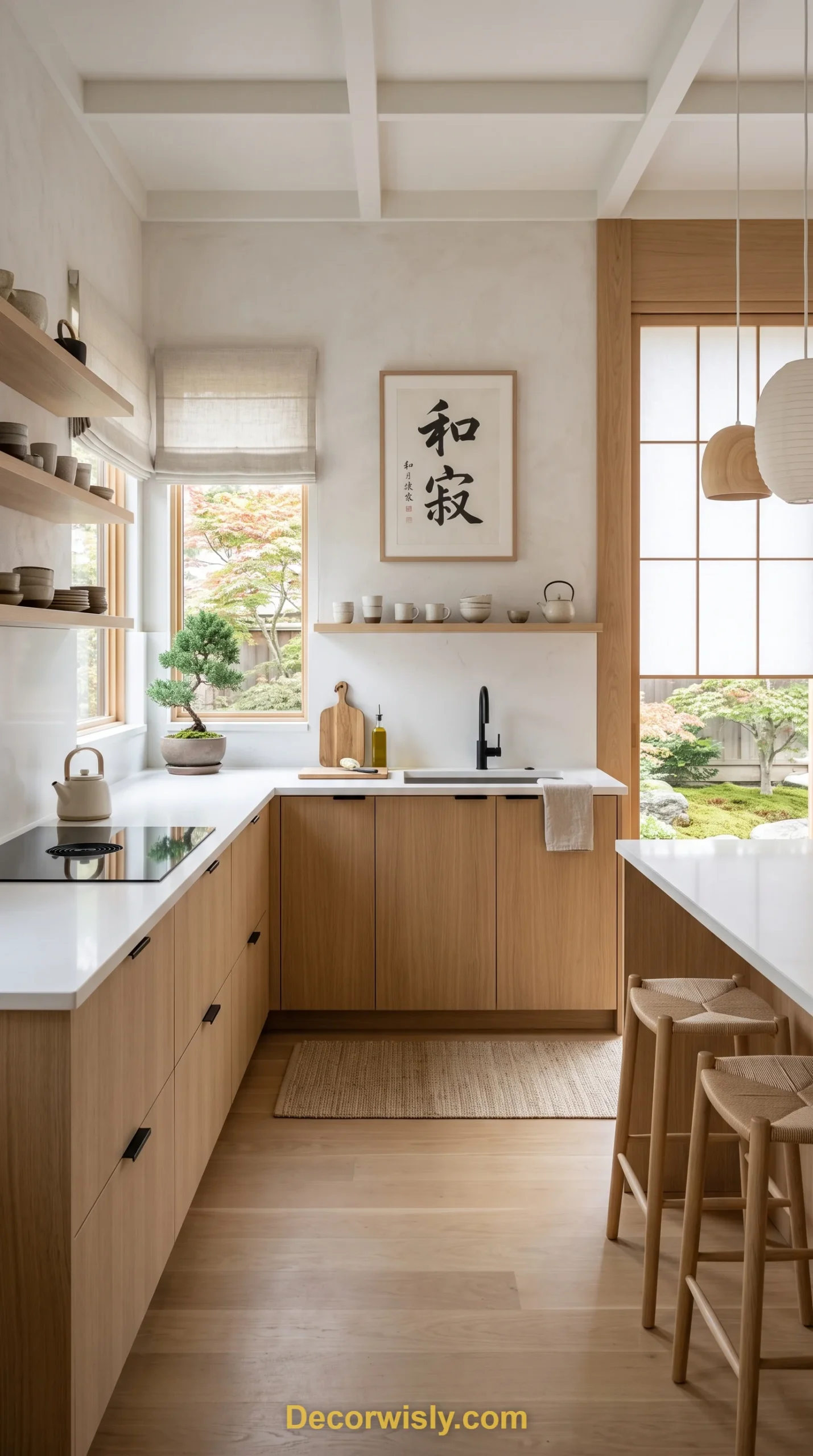
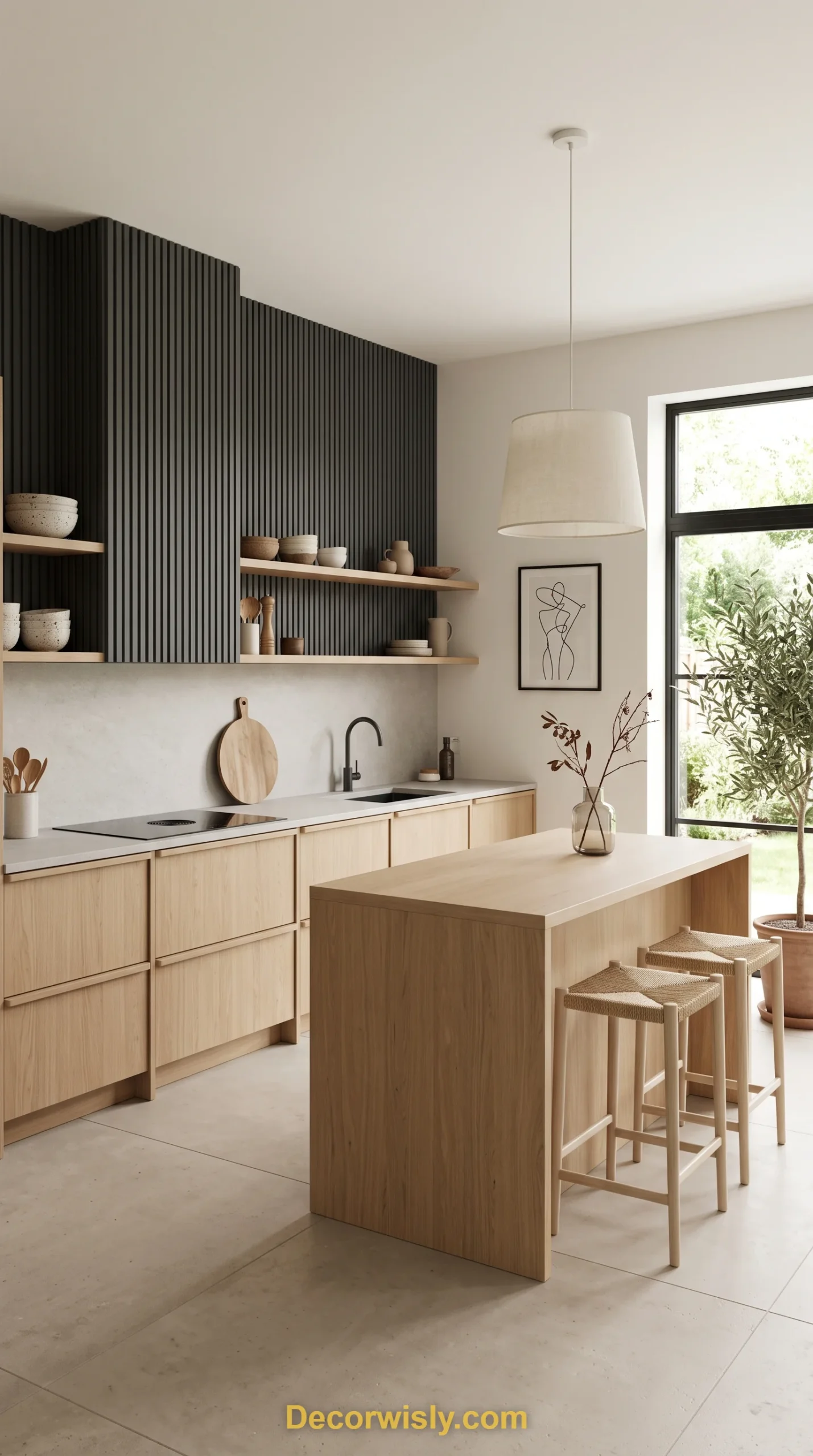
A striking yet understated color scheme sets a Japandi kitchen apart. Soft, muted neutrals dominate the space, allowing carefully chosen bold accents to stand out without overwhelming the senses. These pops of color, found in decorative accessories or a feature wall, add personality and serve as focal points amid calm surroundings, maintaining serenity while ensuring genuine visual interest throughout.
8. Textured Surfaces and Layered Lighting
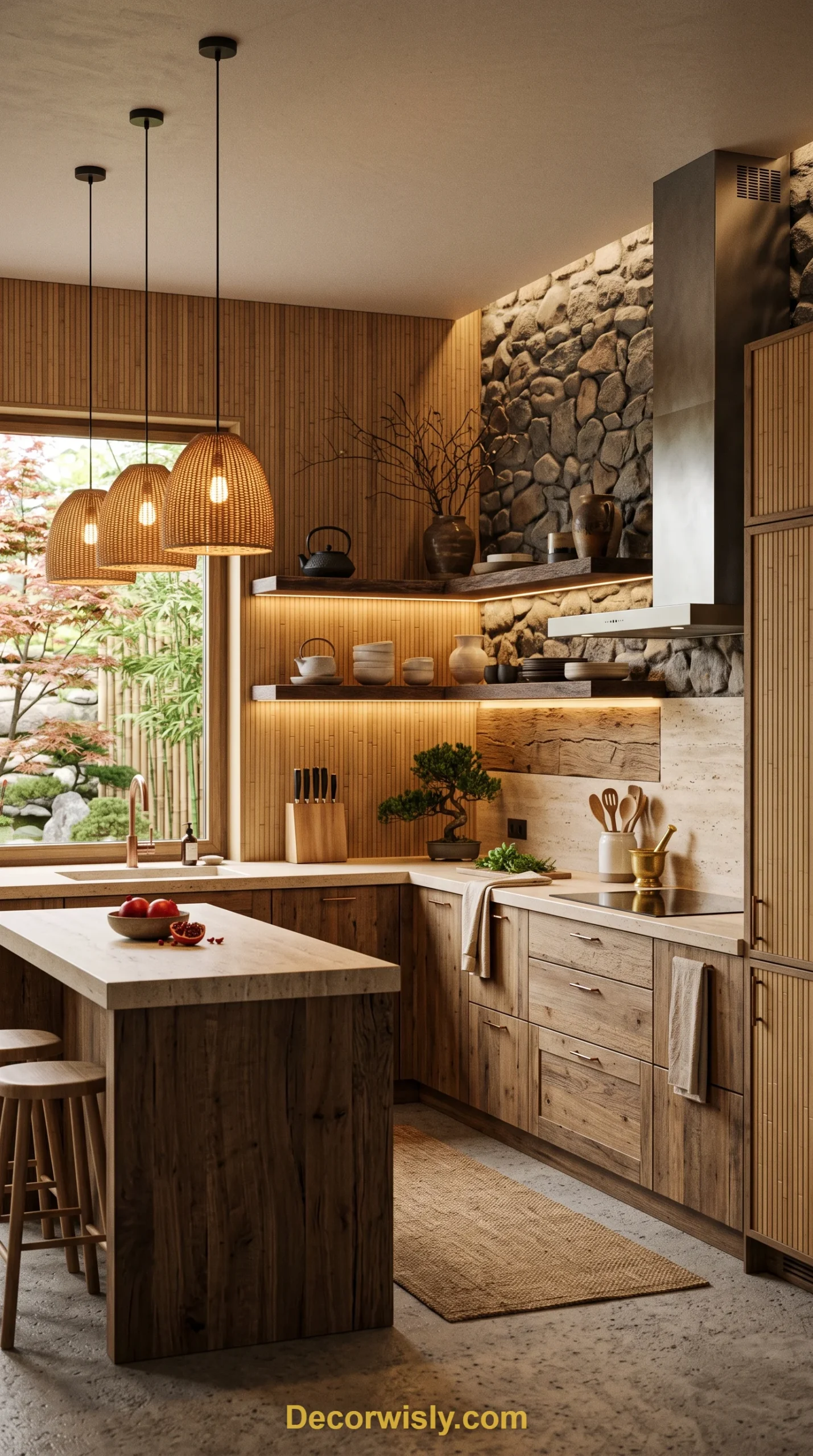
Bringing together varied textures and a symphony of layered lighting elevates a Japandi kitchen’s overall ambiance. Naturally textured surfaces like bamboo, reclaimed wood, and stone create a multi-dimensional feel that soothes the eye. Soft ambient lighting paired with strategic task lights ensures every corner feels both inviting and practical, with contrast between matte and smooth finishes adding real depth throughout.
9. Minimalist Storage Solutions for Clarity
Achieving a clutter-free environment through intelligent storage is core to Japandi style. Concealing kitchen supplies within sleek cabinetry or built-in units enhances the minimalist allure of the space, with every item finding a designated, hidden spot that emphasizes cleanliness and order. This transforms the kitchen into a serene retreat, reducing stress during meal prep and encouraging a clear, effortlessly organized mind.
10. Eco-Friendly Materials and Sustainable Style
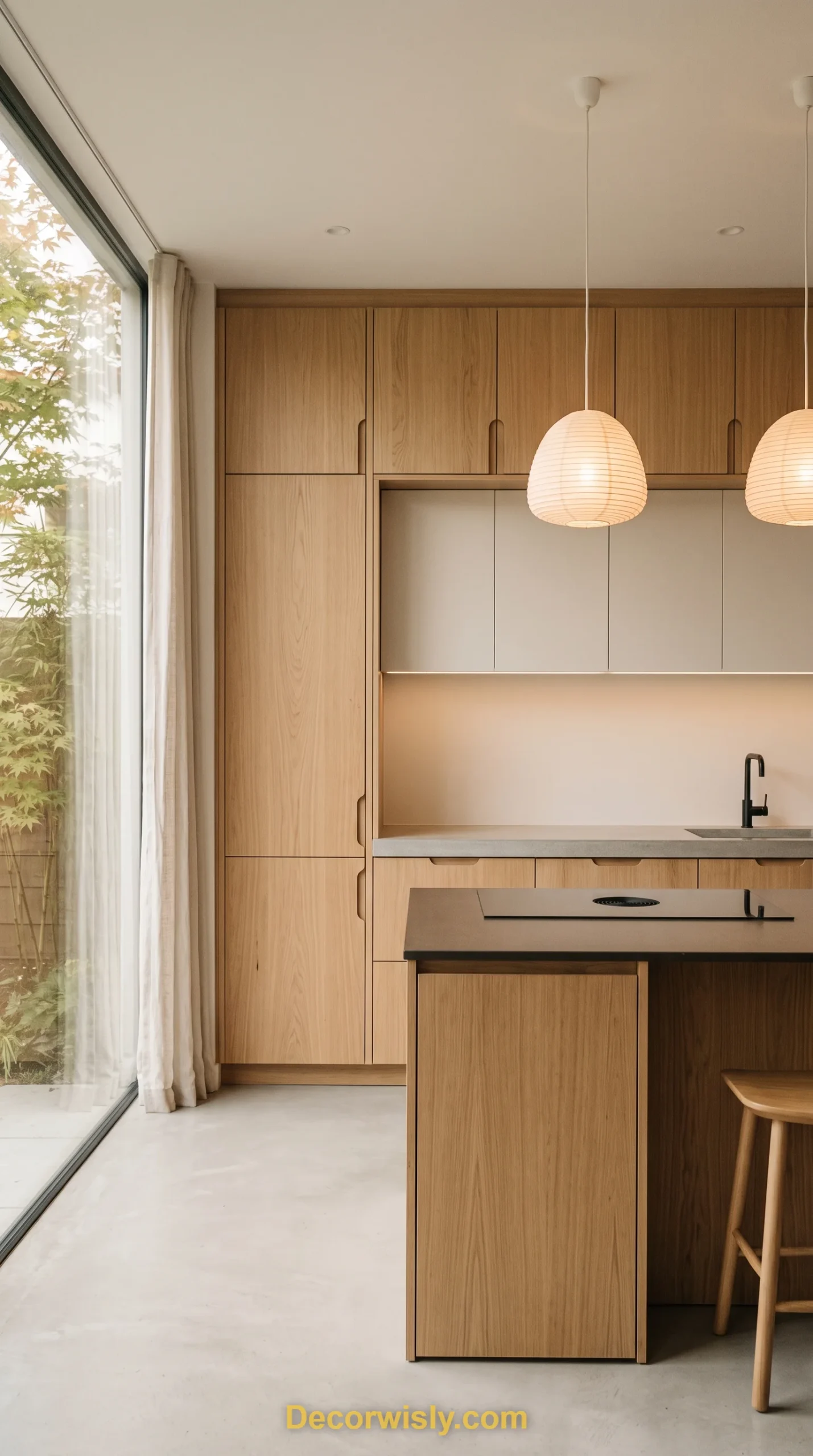
Embracing eco-friendly materials sits at the heart of Japandi design, promoting sustainability within a stylish framework. Reclaimed wood, natural stone, and non-toxic finishes conserve resources while enhancing the kitchen’s natural beauty, and every element is chosen to reduce waste while celebrating genuine aesthetics — a green-minded haven where modern design works hand-in-hand with environmental care.
11. Indoor-Outdoor Connectivity in Design
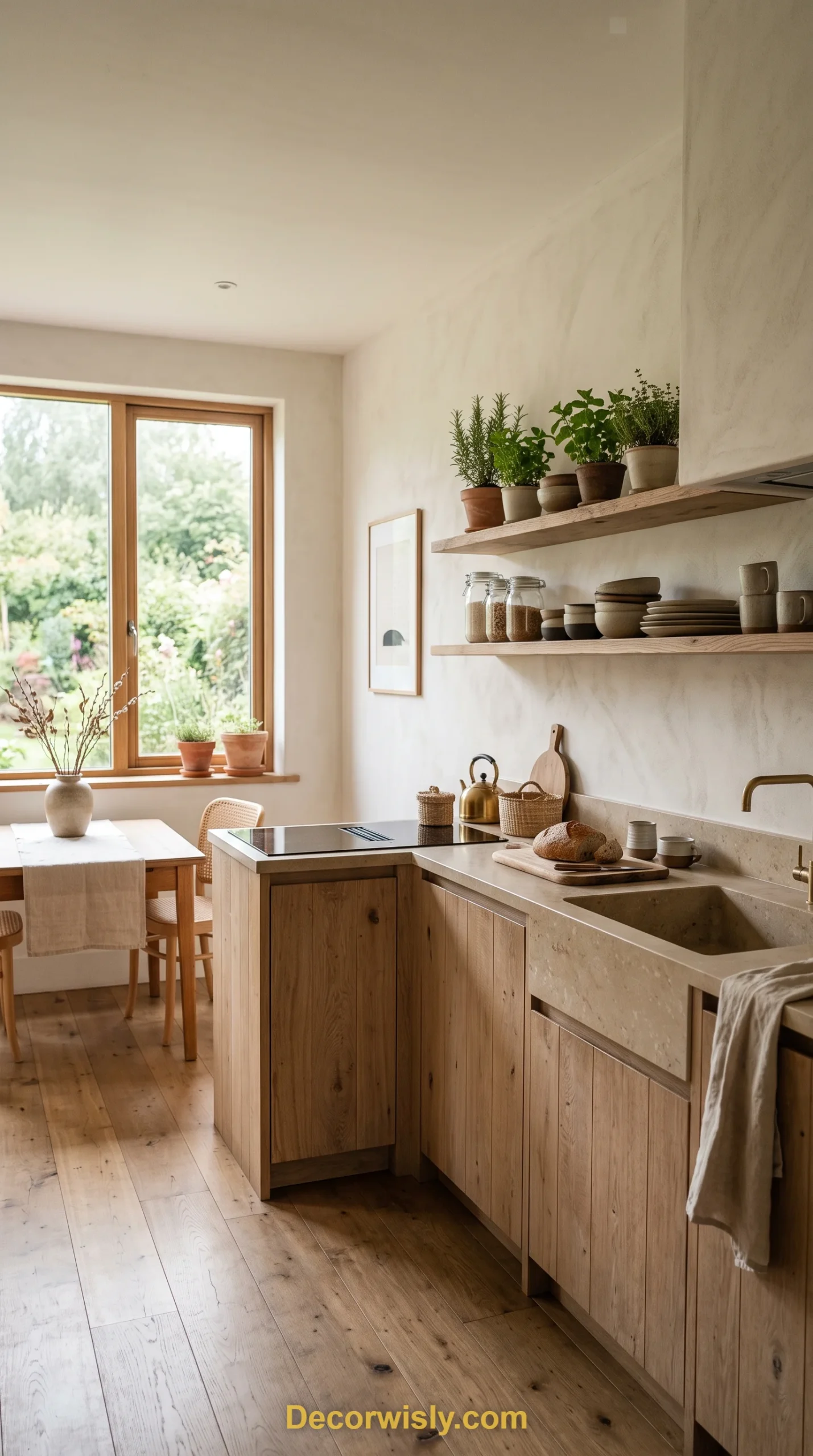
At the heart of a Japandi kitchen is the desire to blur the boundaries between indoors and outdoors. Expansive windows and sliding doors invite natural light and create a seamless transition to an outdoor space, promoting an airy ambiance that brings lush greenery and fresh air into the cooking area. Potted plants or garden views foster a sense of well-being, transforming the kitchen into a natural retreat that fuels creativity.
12. Understated Artistic Decor
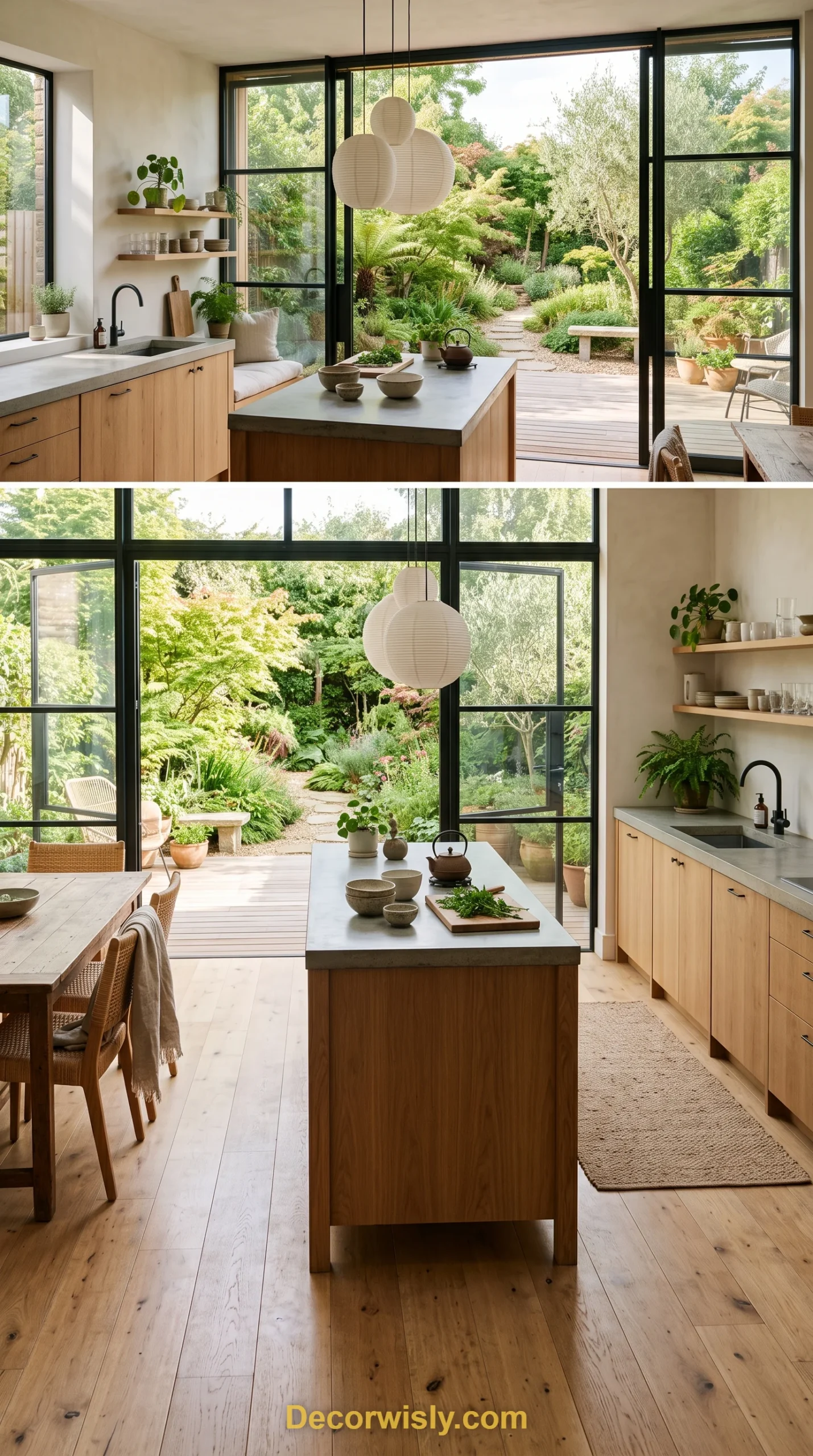
A kitchen can become a canvas for subtle artistic expression while remaining functional and refined. Carefully selected art pieces, delicate ceramics, or handcrafted pottery add unique personality without overwhelming the space, each chosen for its simplicity and elegance. The result is a visually balanced environment where art inspires creativity and complements everyday functionality, elevating the daily cooking experience.
13. Warm Metallic Finishes for Accents
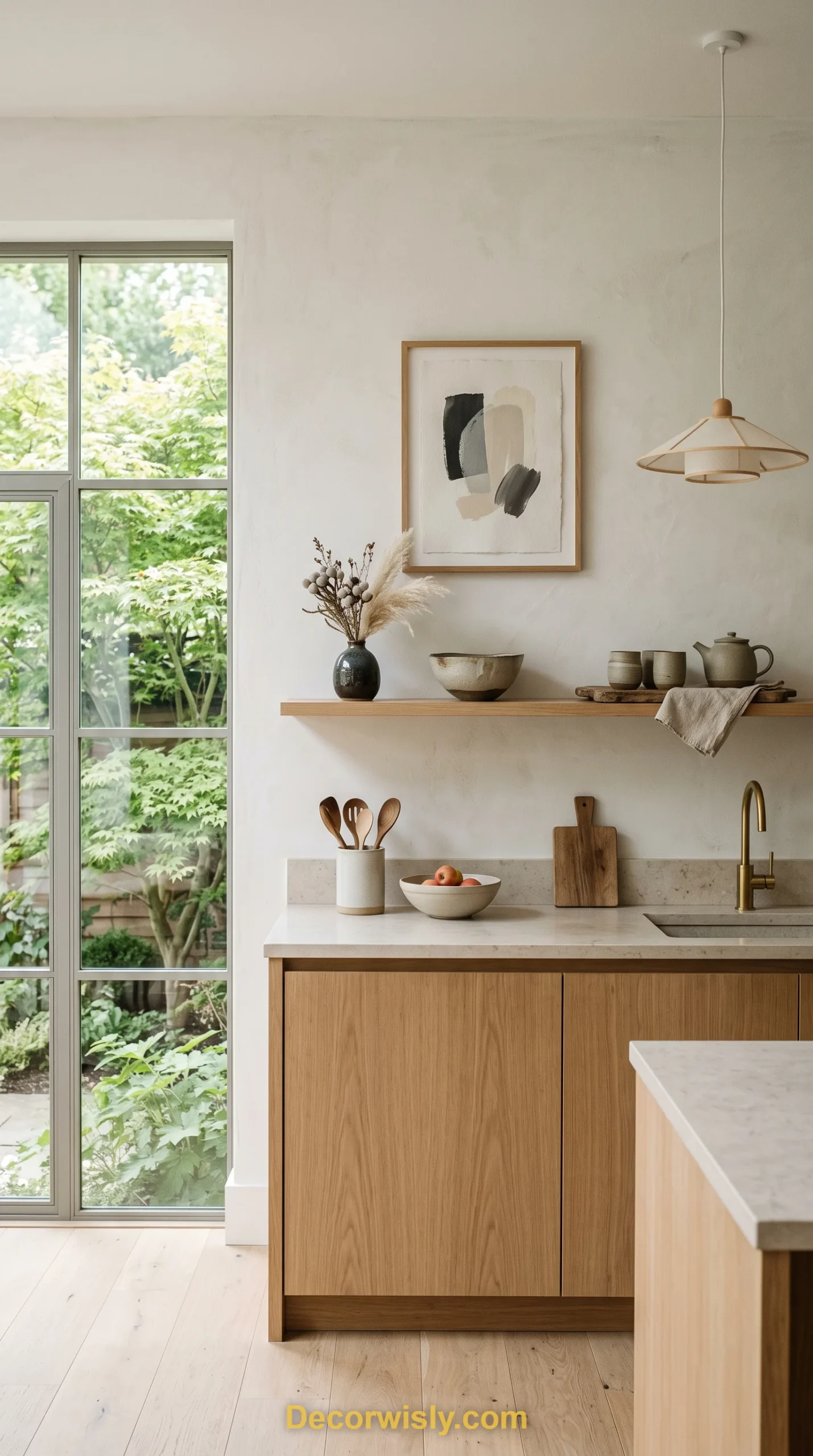
Warm metallic accents add a sophisticated glow to a Japandi kitchen. Subtle hints of brass, copper, or matte gold woven into fixtures or accents create a refined balance against the neutral backdrop, bringing warmth and visual interest that harmonizes with natural wood tones and soft lighting. This infusion of luxe detail keeps the design practical while remaining beautifully inviting.
14. Traditional Meets Modern Fixtures
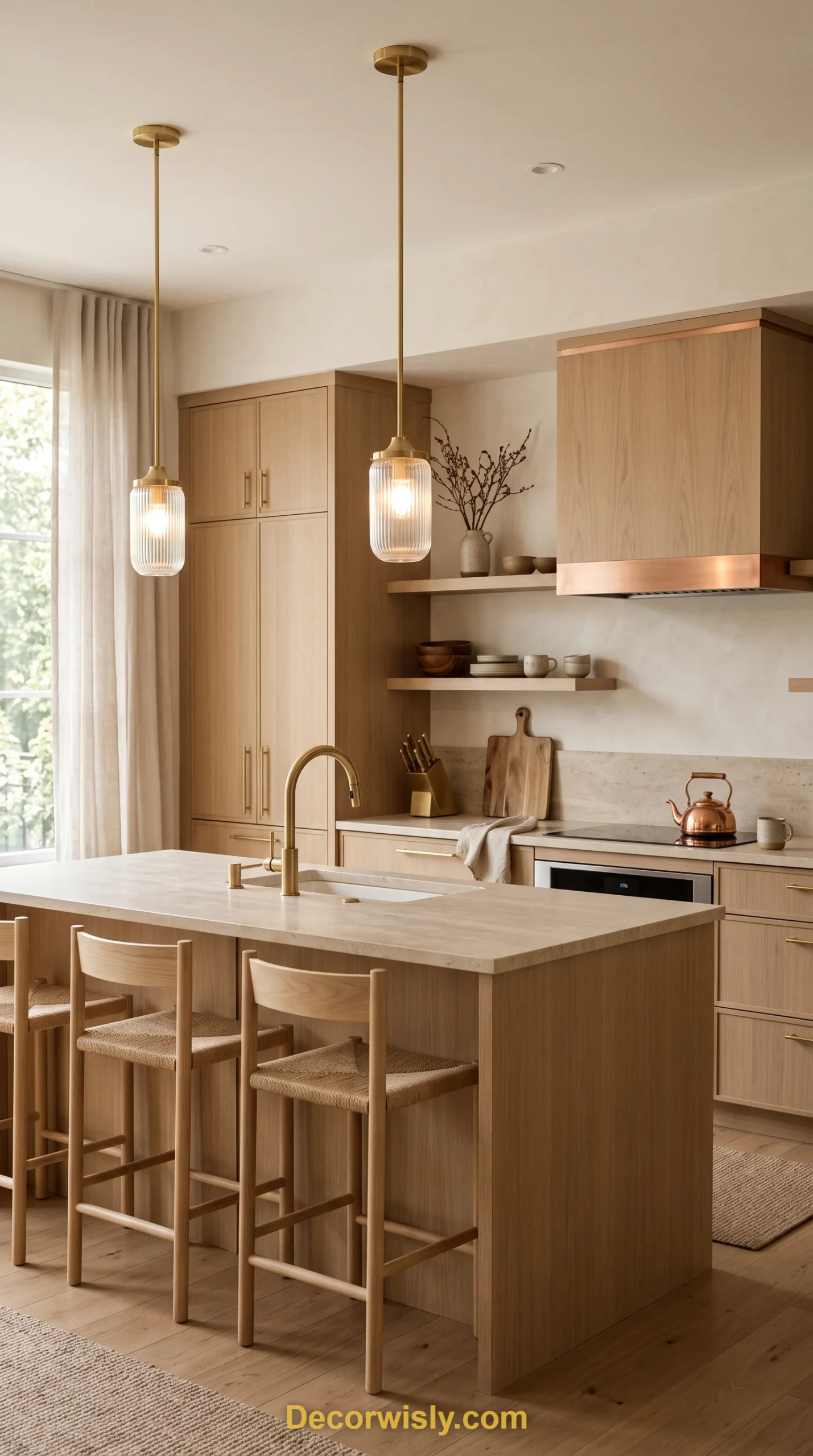
Merging old-world charm with contemporary design, this concept integrates traditional fixtures like classic faucets or vintage lighting with modern, streamlined cabinetry. The contrast creates a dynamic environment where heritage and innovation coexist, with the timeless quality of traditional elements balanced by modern details — a fusion that reflects Japandi’s inherent respect for history while embracing the future of design.
15. Nature-Inspired Kitchen Island
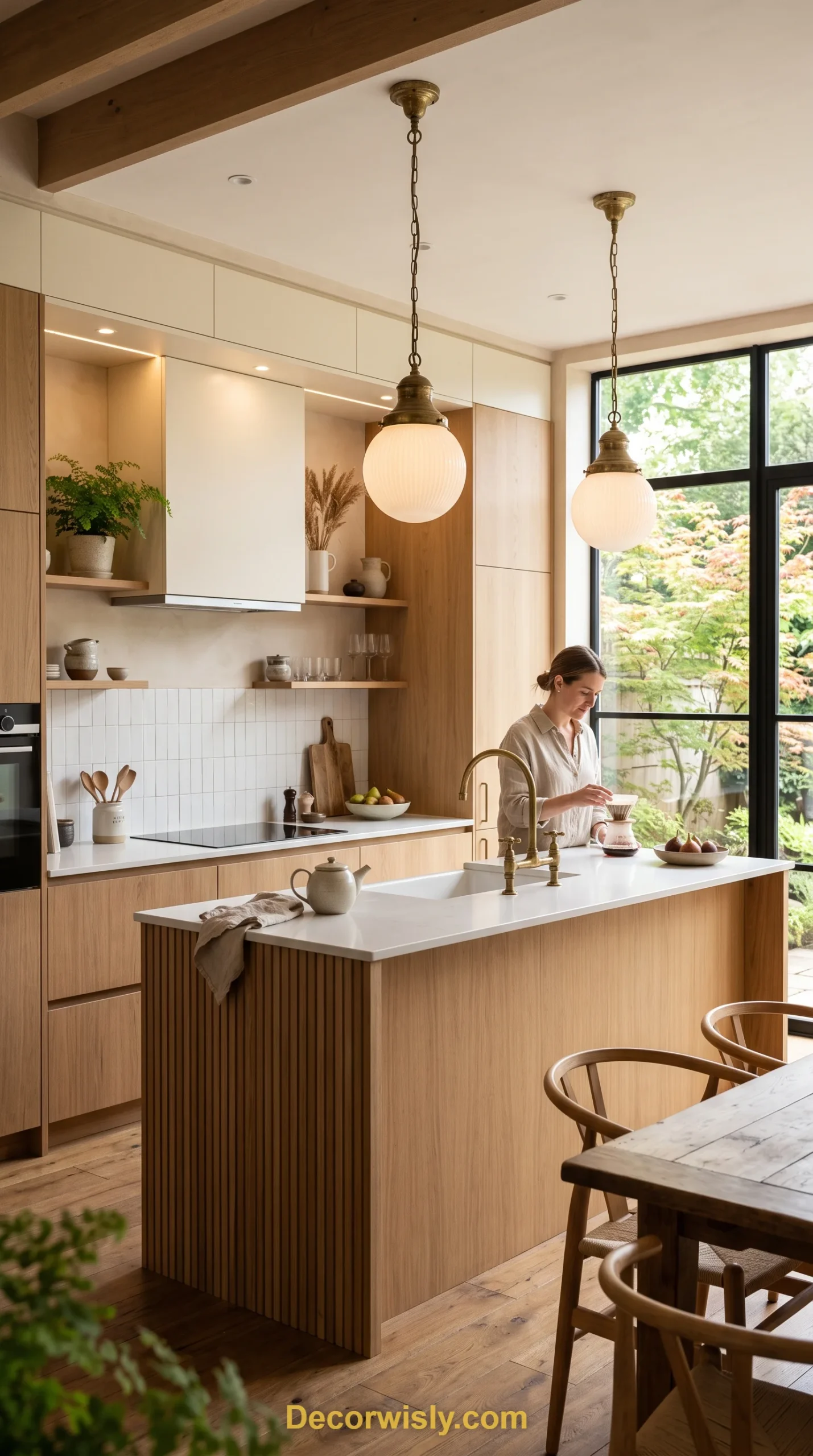
A statement kitchen island transforms the heart of a Japandi kitchen into a work of art. Inspired by nature, this island features raw wooden surfaces, stone countertops, and subtle sculptural lines drawn from organic forms, serving as both a functional workspace and a visual anchor. The natural textures and earthy finishes evoke a sense of calm and balance, inviting thoughtful interaction and conversation.
16. Soft, Ambient Lighting for Calm
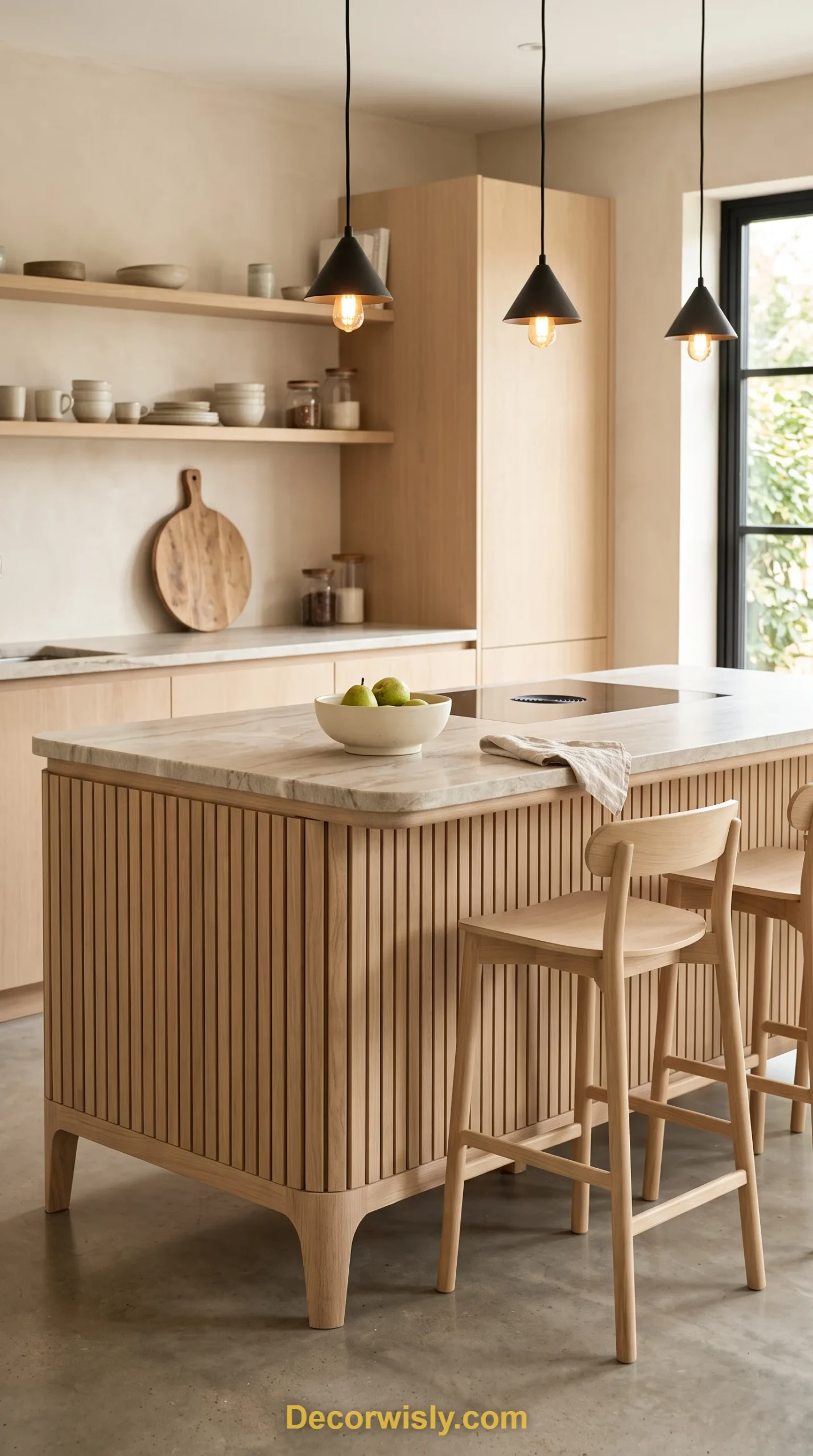
Soft, ambient lighting is essential to creating the soothing atmosphere of a Japandi kitchen. Carefully positioned fixtures and under-cabinet lights bathe each corner in a gentle glow that complements the minimal decor, enhancing natural textures and unifying the space with a warm, inviting feel. Layered lighting improves functionality during meal prep while accentuating the delicate balance of every design element.
17. Zen-Inspired Tea and Meditation Nook
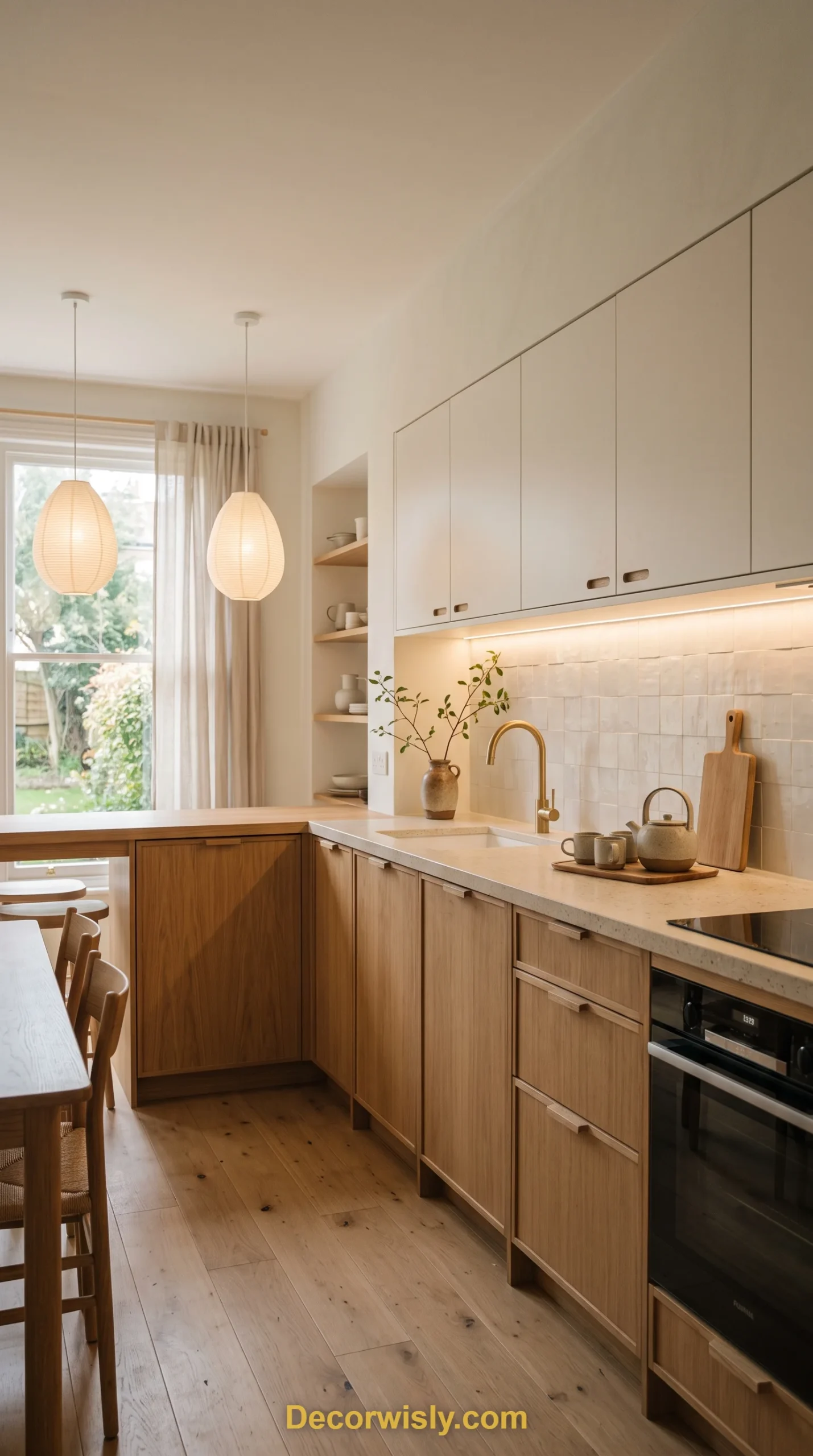
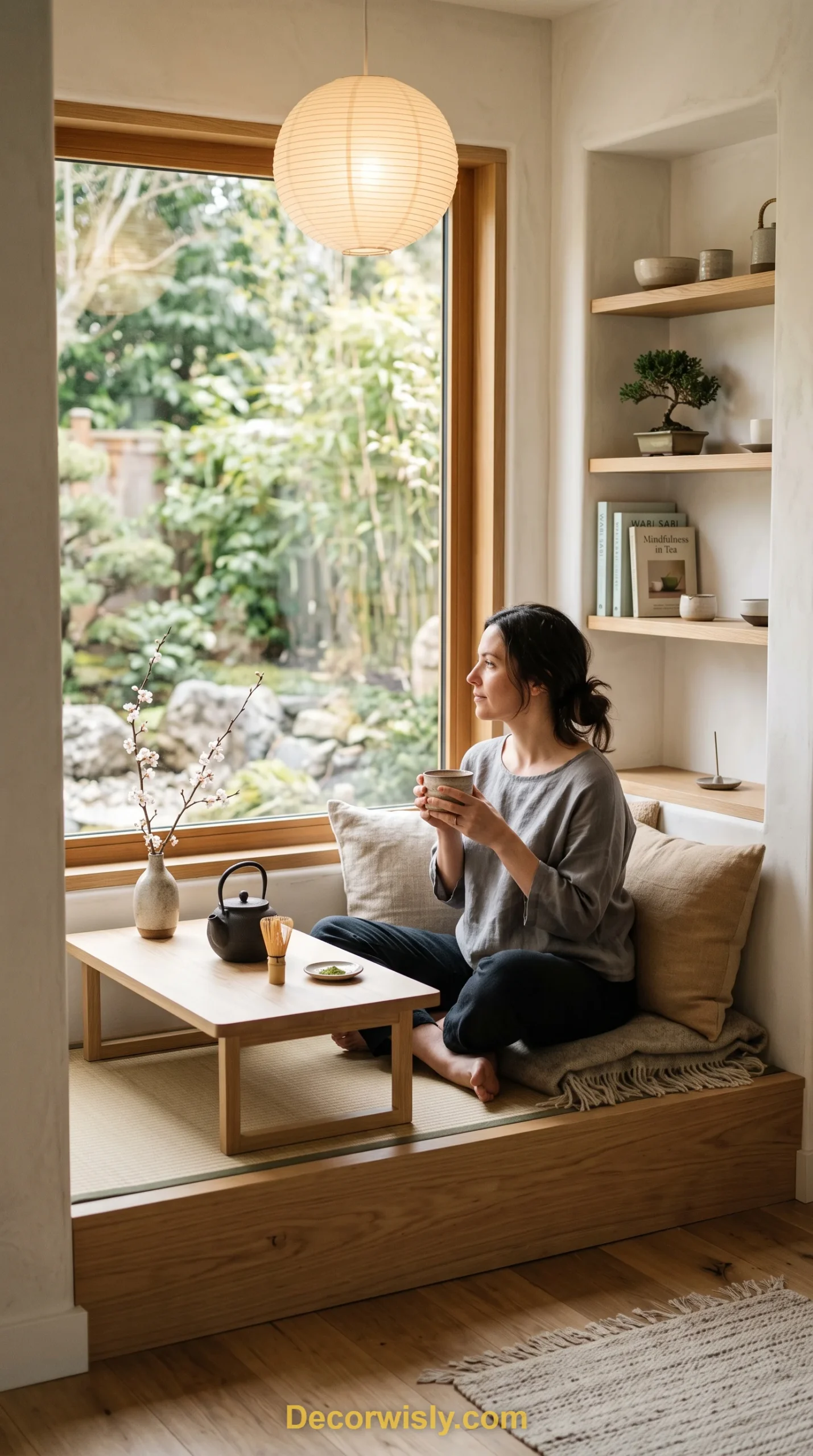
A dedicated nook for meditation and tea can genuinely elevate a kitchen’s overall experience. Designing a small Zen-inspired corner within the kitchen offers a quiet retreat for mindful breaks, with minimal decor, soft seating, and natural elements coming together to create an intimate space for reflection and tea ceremonies. The area complements the broader Japandi aesthetic with clean lines and uncluttered simplicity.
18. Vintage Japandi Fusion Designs
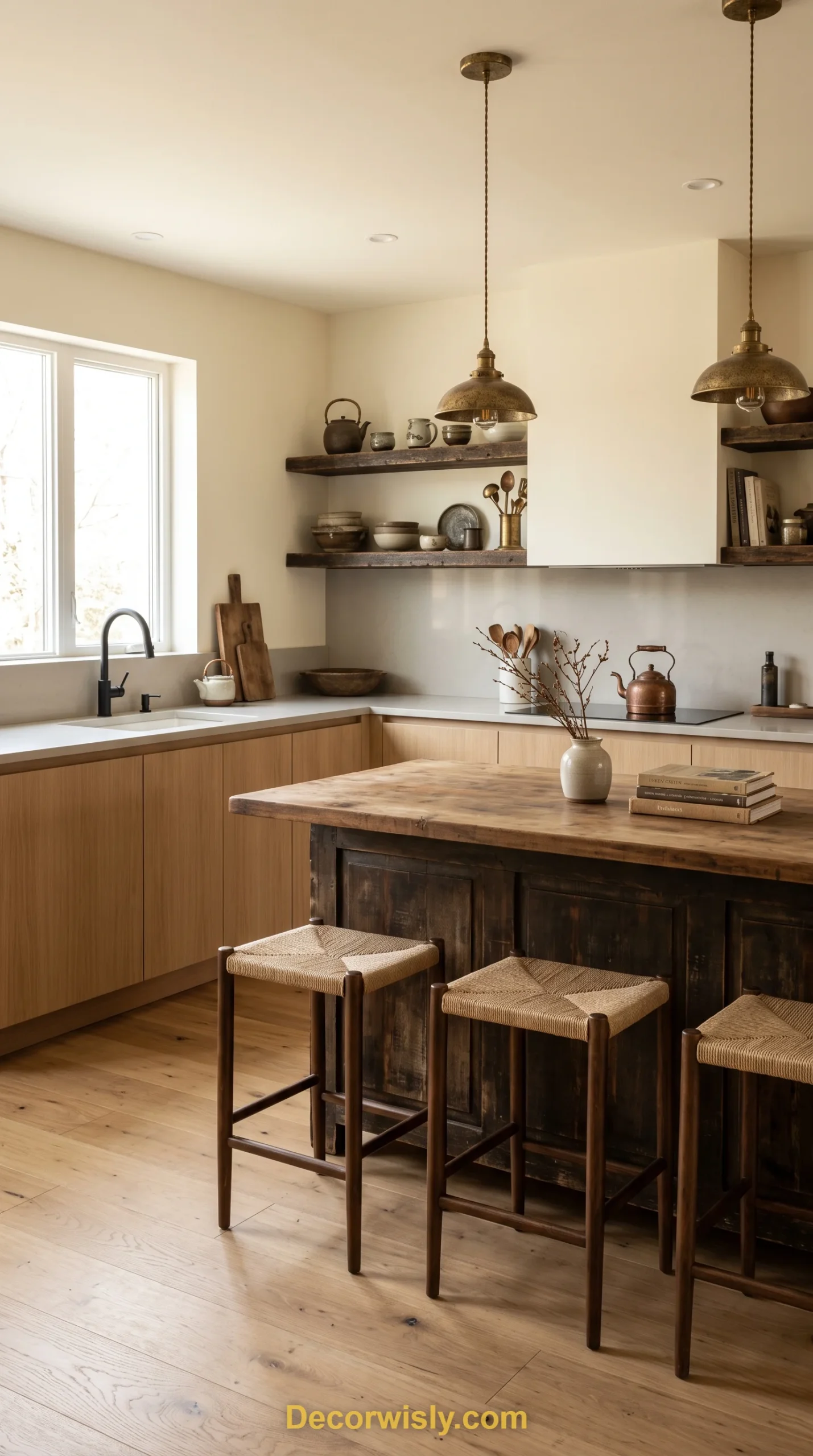
Blending vintage charm with Japandi modernity, this style incorporates antique accessories, retro lighting, and time-worn textures with sleek, contemporary lines. The result is a space where history and modern sensibilities intersect gracefully, with distressed wood elements and classic hardware carefully combined with minimalist surfaces to create a layered, storied atmosphere that stays thoughtfully balanced throughout.
19. Compact Urban Japandi Kitchen
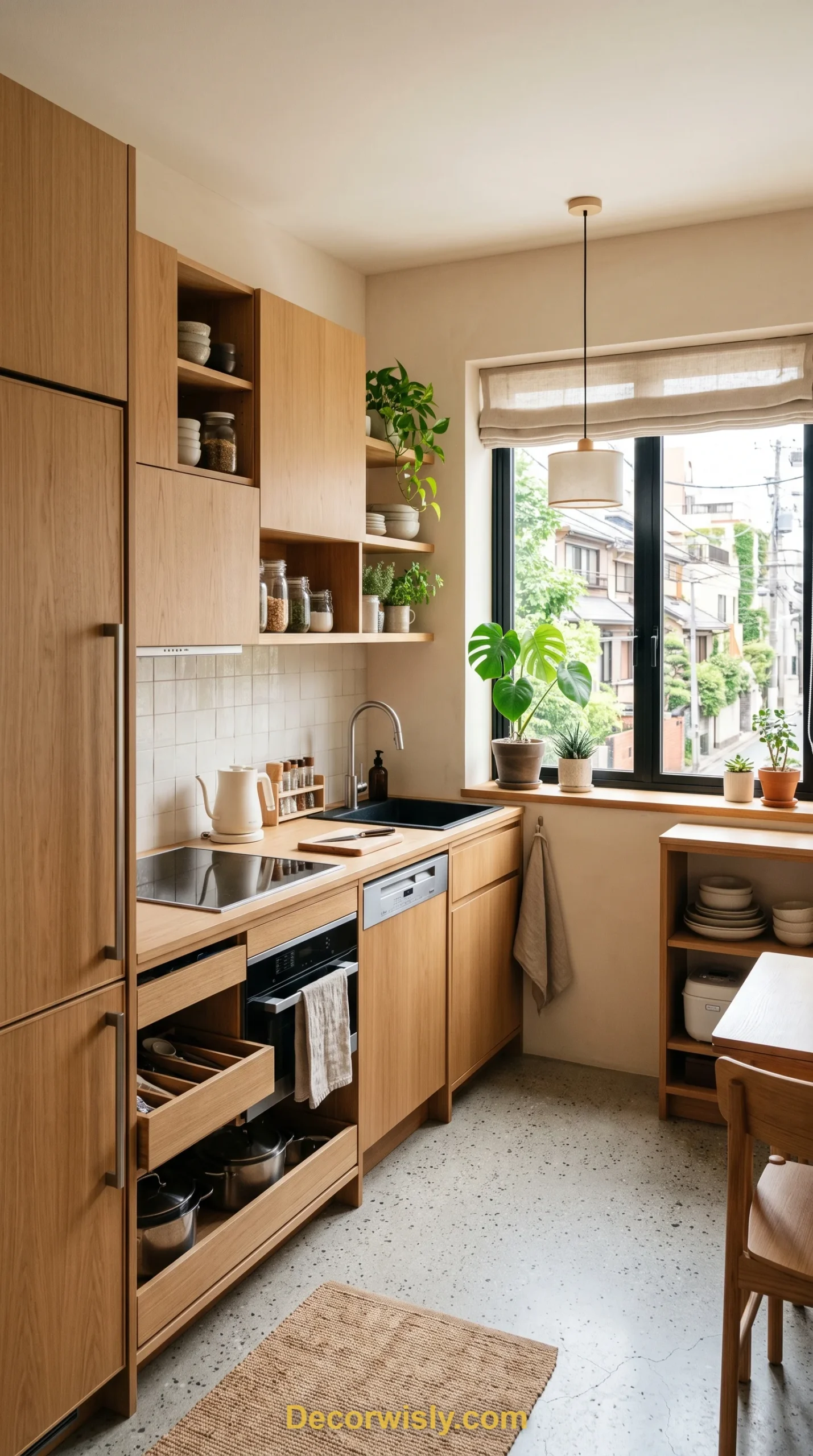
For urban dwellers, a compact Japandi kitchen offers a smart blend of style and functionality in limited spaces. Clever design strategies maximize every inch, from multi-functional storage to seamlessly integrated appliances, while natural light and airy decor create a sense of spaciousness despite the scale. Clean lines and uncluttered surfaces prove that even smaller spaces can be transformed into a serene, highly functional kitchen.
20. Seamless Open-Concept Dining Integration
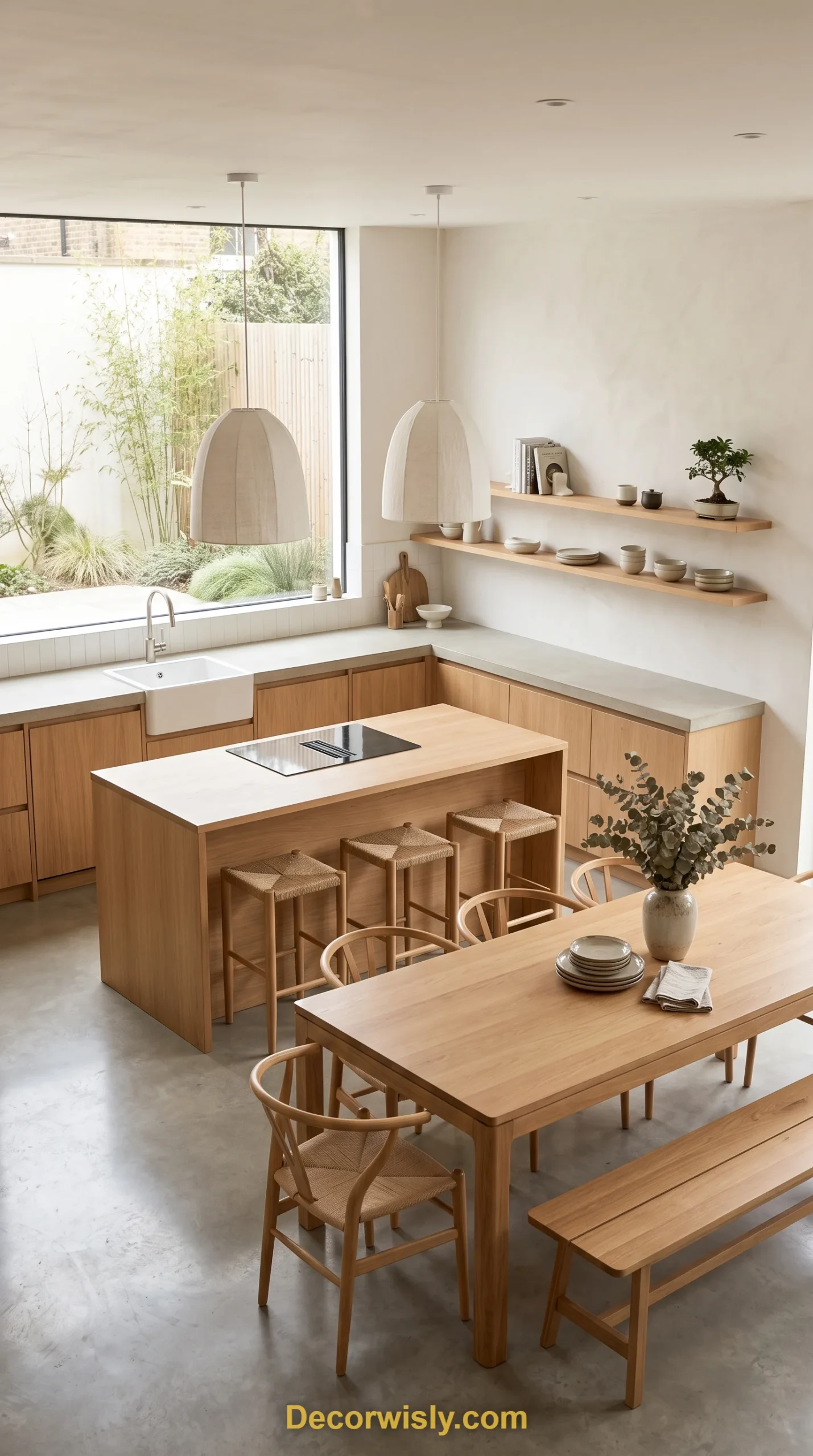
With an emphasis on continuity, this Japandi kitchen features a seamless integration of dining and cooking areas that promotes effortless flow. The open-concept design bridges culinary and dining zones through clean lines, uniform materials, and natural hues, encouraging interaction and multipurpose use while ensuring the aesthetic remains calm and unified — inviting shared meals and conversation in equal measure.
21. Bespoke Crafted Details for Personal Touch
Incorporating bespoke crafted details can elevate a Japandi kitchen from ordinary to extraordinary. Handcrafted cabinetry, artisanal lighting, and custom tile work add unique character and personalization to the space, with the emphasis on craftsmanship paying tribute to timeless techniques that blend seamlessly with modern minimalism — a kitchen that feels both functional and genuinely personal.
22. Bohemian Japandi Twist for Eclectic Flair

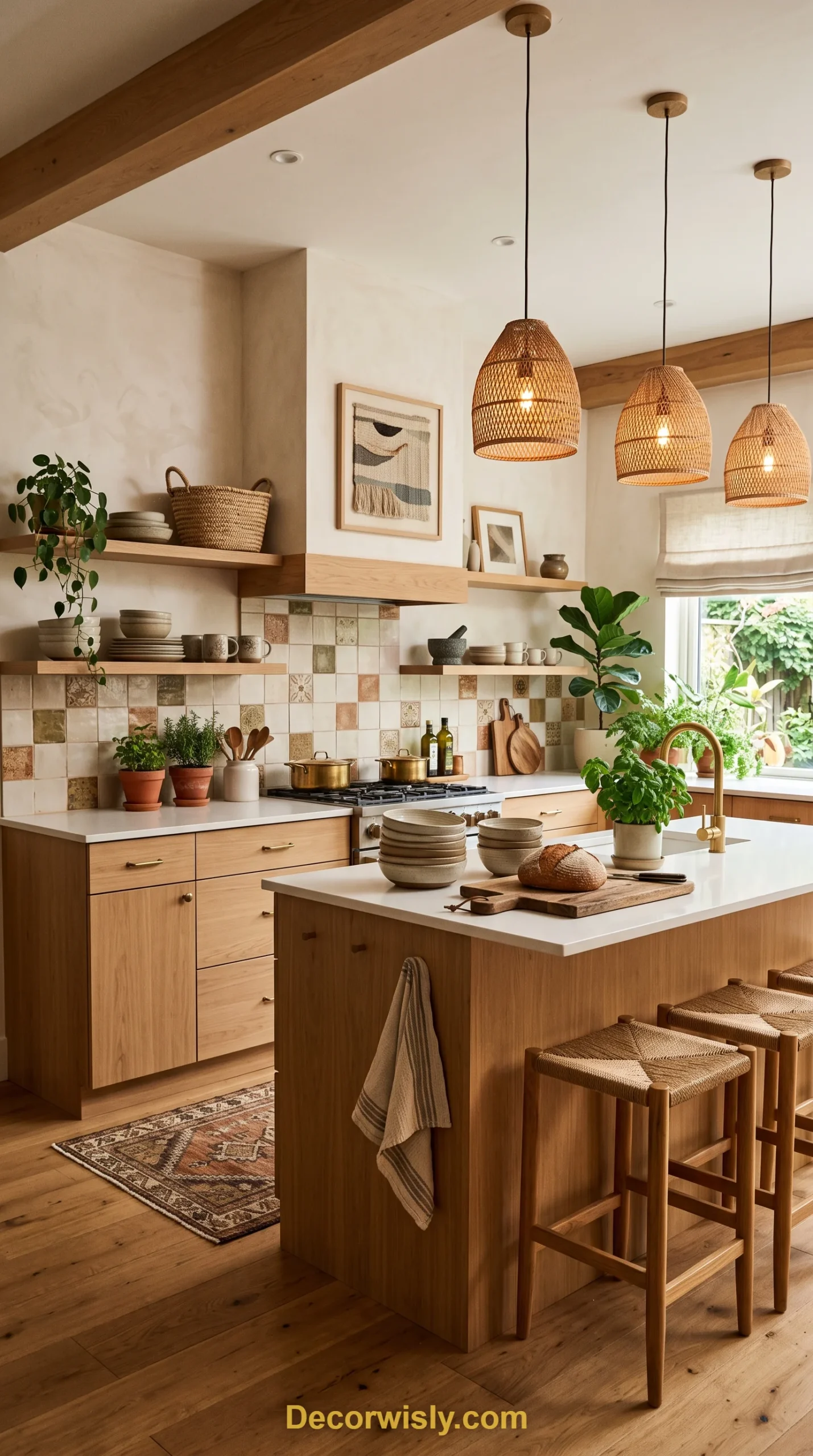
A playful bohemian twist on traditional Japandi style introduces a hint of eclectic charm without compromising minimalism. Subtle layers of texture, unexpected patterned textiles, and handcrafted decor merge with smooth surfaces and natural wood tones, resulting in a dynamic yet serene kitchen space that celebrates creativity and individuality while still honoring the calming principles of Japandi design.
Final Thoughts
Japandi succeeds because it borrows the discipline of Japanese minimalism and softens it with Scandinavian warmth, resulting in a kitchen that feels calm without ever feeling bare. Some of these ideas, like integrated appliances or minimalist storage, are about removing friction from daily routines; others, like a Zen tea nook or bespoke crafted details, are about adding a bit of quiet ritual back in. Combined thoughtfully, they create a kitchen that supports both efficient cooking and genuine mindfulness — a rare balance that’s exactly the point of the style.