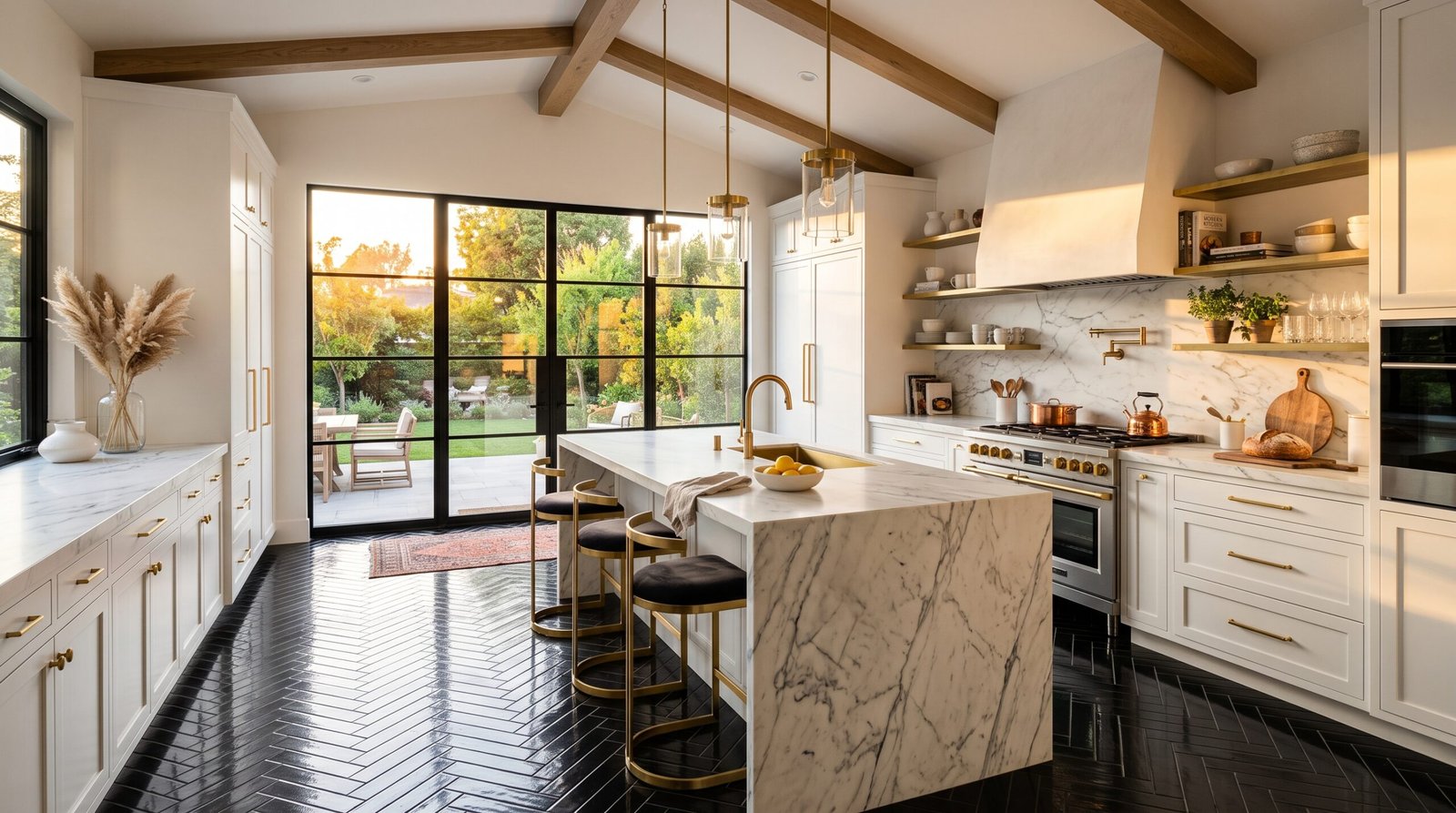
Black flooring has a way of making a kitchen feel instantly more grounded and intentional. It absorbs light instead of bouncing it, which gives the whole room a sense of depth you just don’t get from lighter finishes — and it pairs with nearly every cabinet color, countertop material, and design era you can think of. Whether you’re after glossy drama or a quiet matte finish, here are 25 ways to bring black flooring into your kitchen without making the space feel heavy or closed-in.
1. Go Glossy With Polished Black Tile
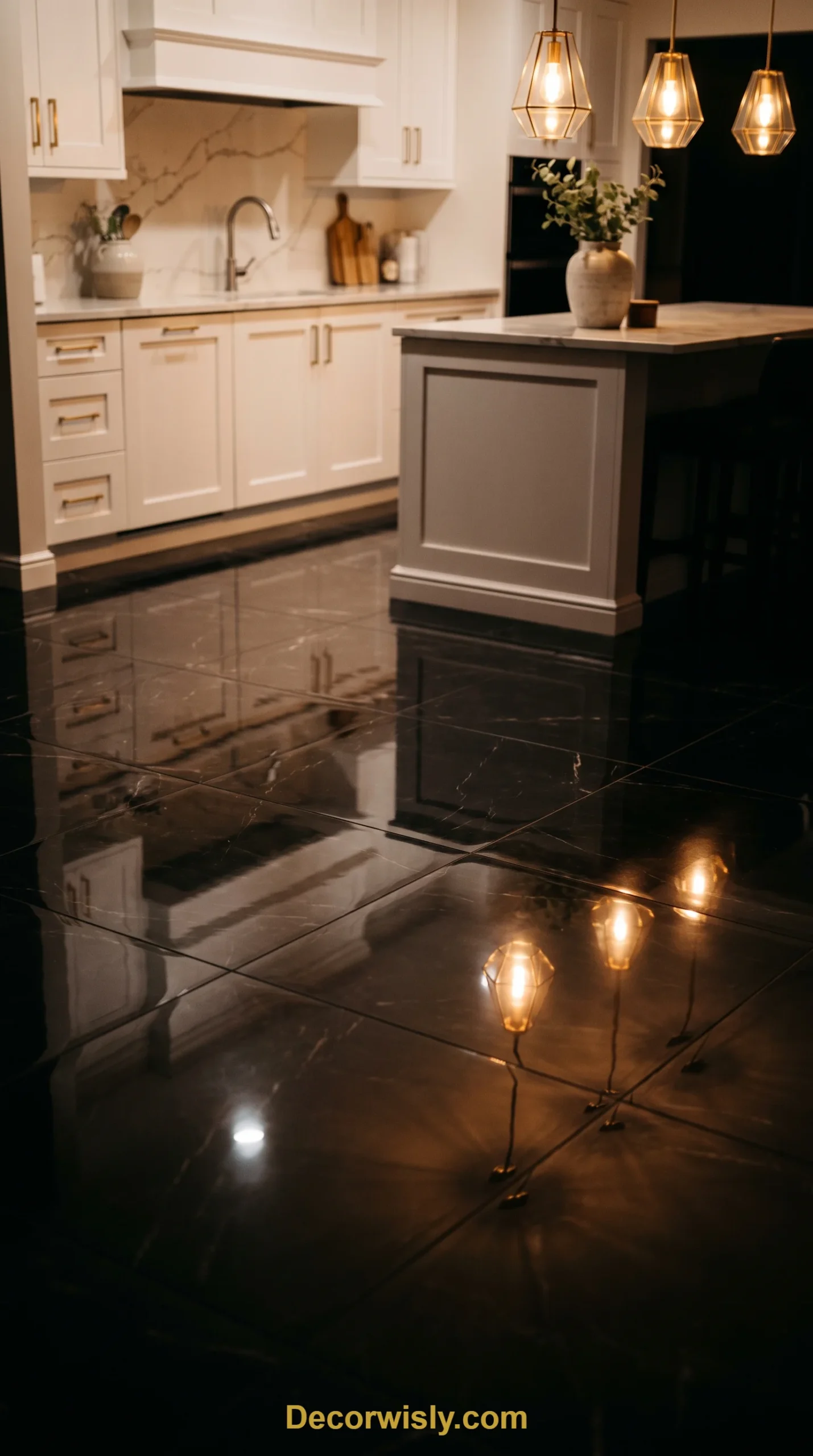
A high-shine polished black tile turns your floor into a light-catching surface that adds real drama underfoot. The reflective finish plays beautifully off pendant lighting and pale cabinetry, creating a push-pull of light and shadow that feels genuinely upscale. It’s also one of the easier finishes to keep looking sharp — a quick mop restores the shine in seconds.
2. Try a Soft Matte Black Finish
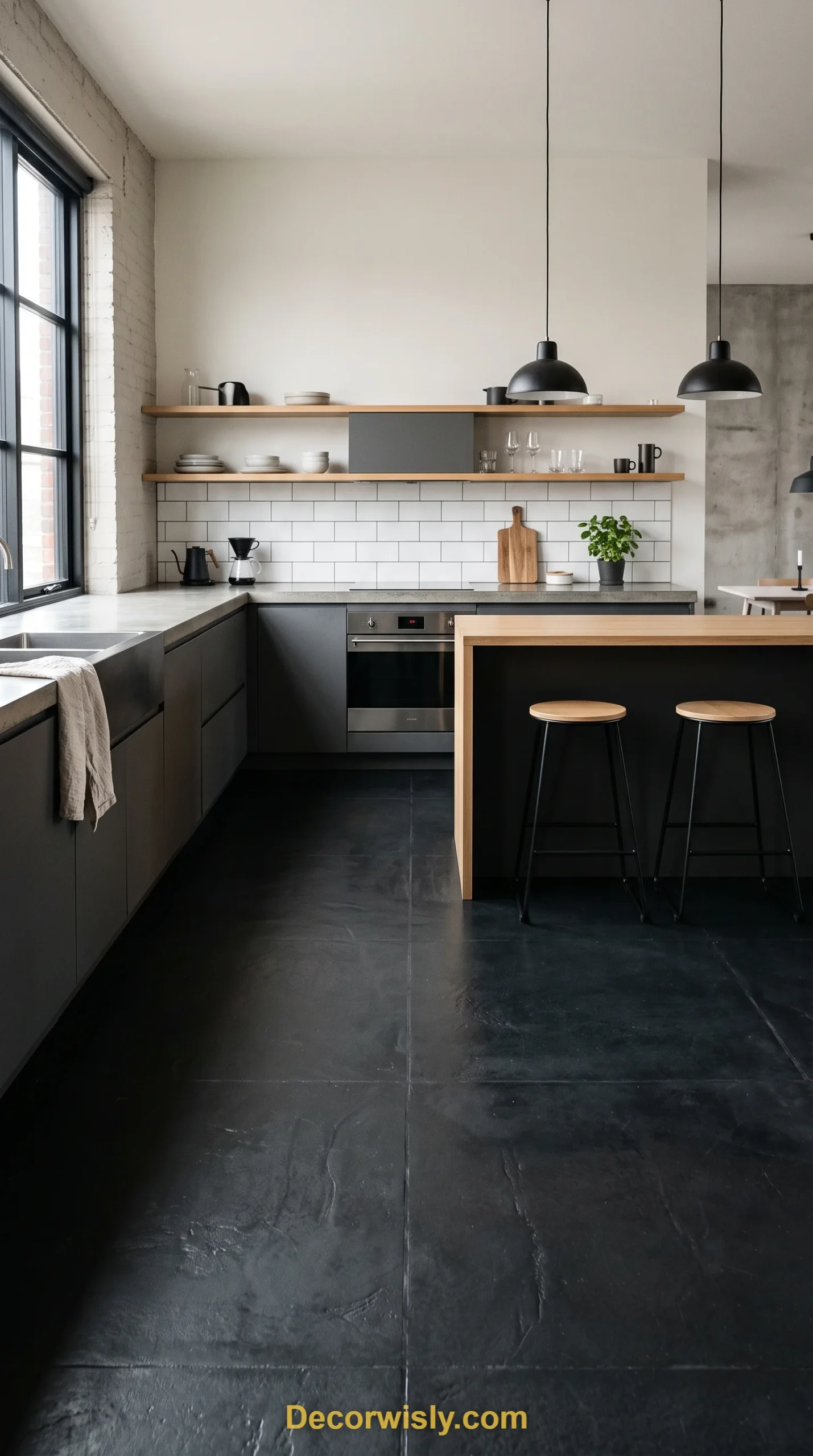
If glossy feels like too much, a matte black floor gives you the same bold color with a quieter, more grounded presence. Matte finishes are forgiving of scuffs, footprints, and everyday wear, which makes them a smart pick for a kitchen that actually gets used. The low-sheen surface also tends to feel warmer underfoot than its glossy counterpart.
3. Play Up Black-and-White Contrast
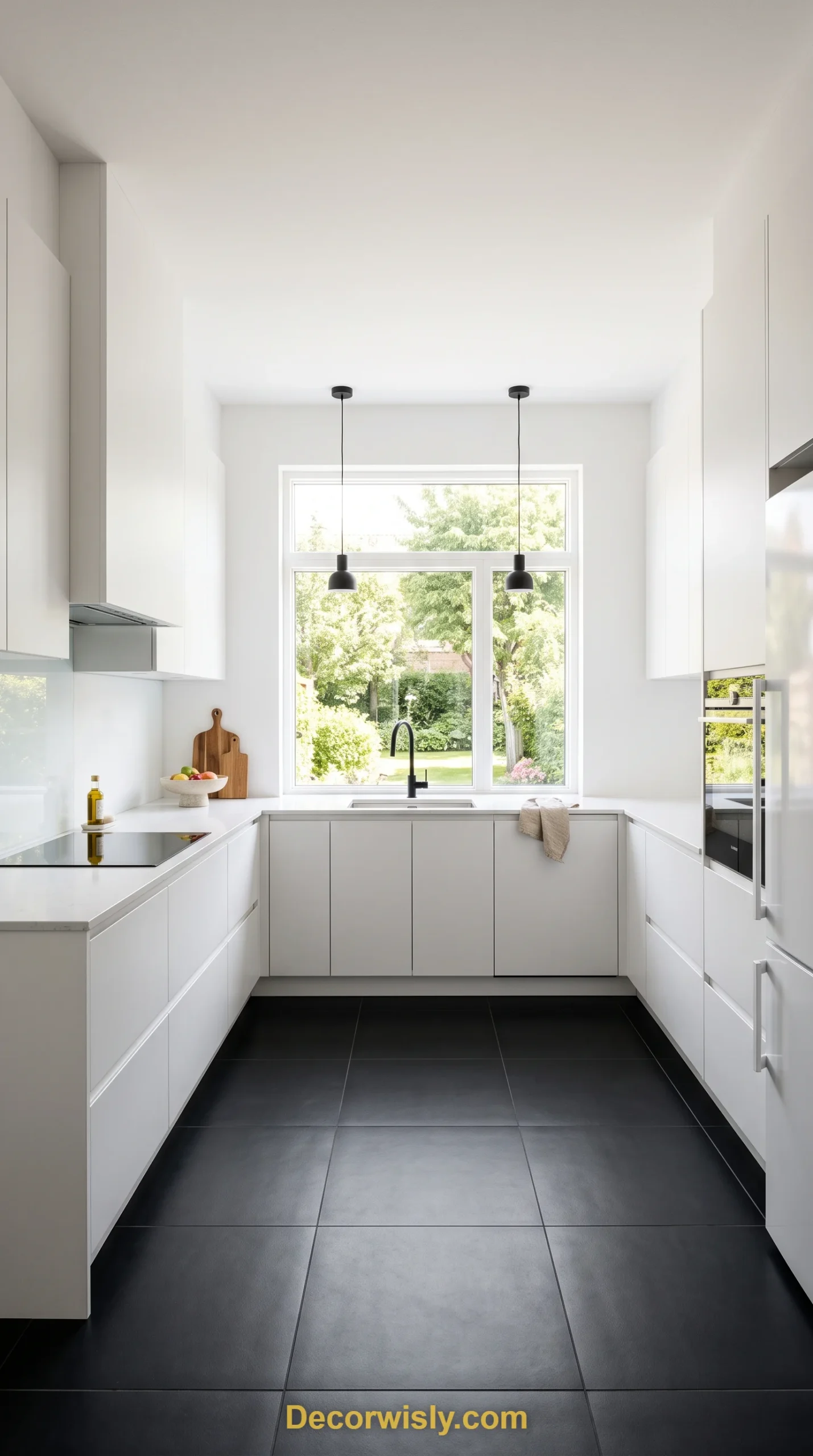
Pairing a black floor with crisp white cabinetry is one of the most reliable combinations in kitchen design — it reads clean, classic, and a little bit graphic all at once. The contrast draws a sharp visual line that makes the room feel organized, and it gives you a neutral enough backdrop that any accent color you add on top will pop.
4. Add an Intricate Patterned Floor
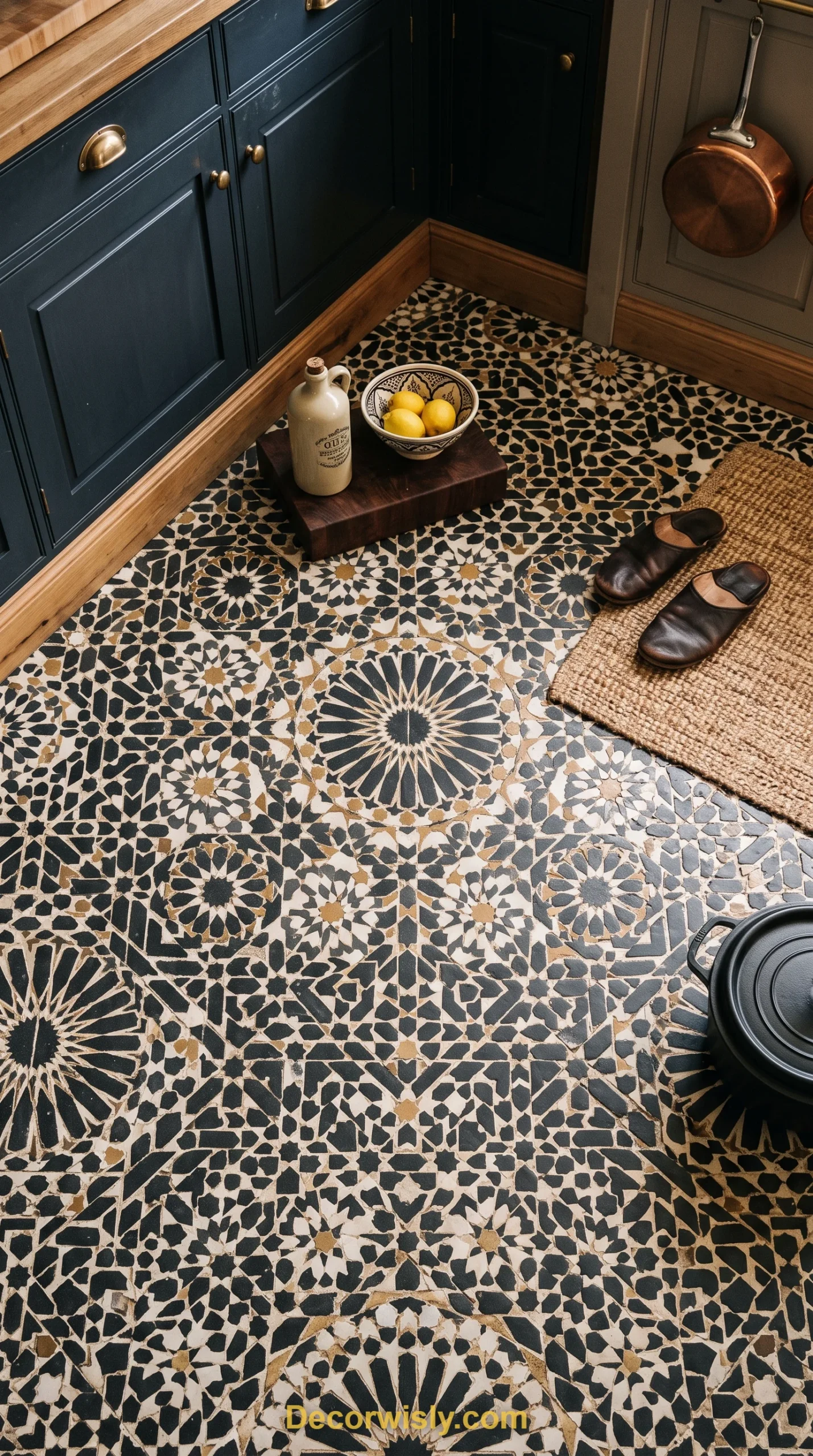
A detailed patterned black floor — think Moroccan-inspired motifs or layered geometric shapes — turns the ground beneath your feet into an actual design feature. It’s a great option if your cabinetry and countertops are otherwise simple, since the floor can carry all the visual interest on its own without the room feeling busy.
5. Lay Out Bold Geometric Tile
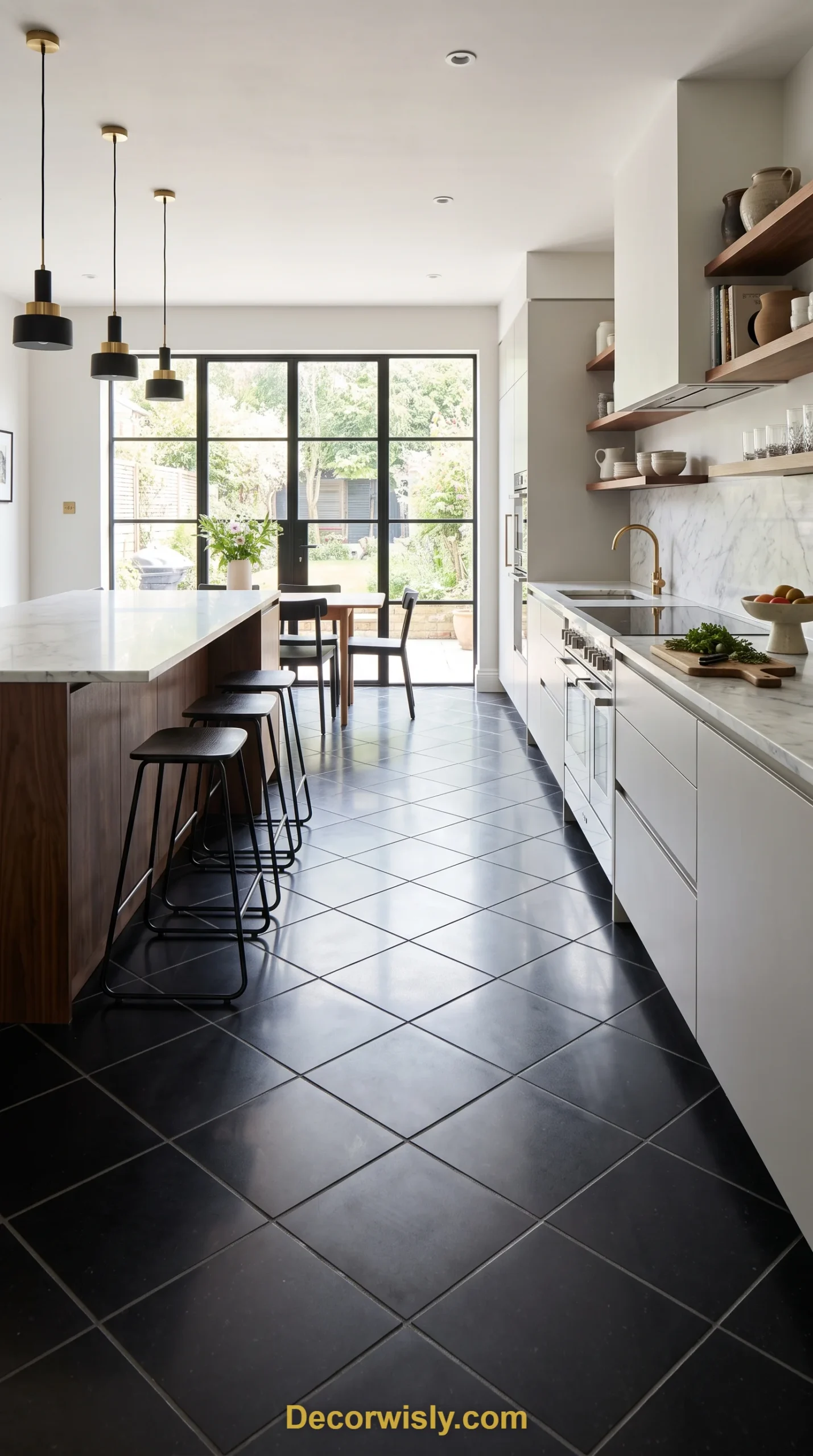
Arranging black tile in a deliberate geometric layout — chevron, diamond, or angled grid — adds motion to a floor that might otherwise sit flat. The structured lines create a sense of rhythm as you move through the room, and the strong geometry pairs especially well with modern, minimalist cabinetry.
6. Choose Large-Format Black Tile
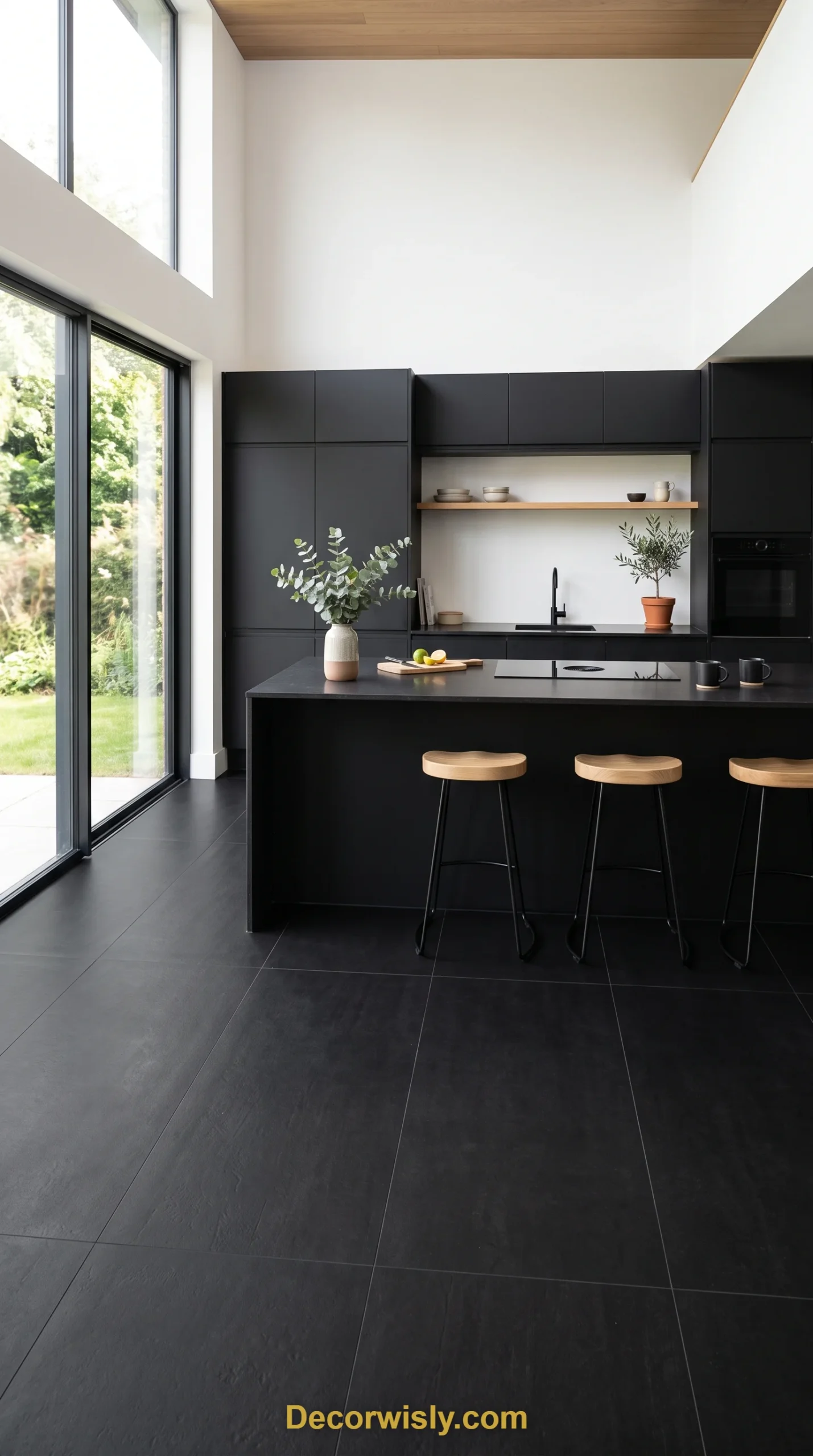
Fewer grout lines mean a cleaner, more expansive look, and large-format black tile delivers exactly that. The oversized panels read as one continuous dark plane, which makes even a modest kitchen feel bigger and more streamlined. It’s a favorite for anyone chasing a sleek, minimal aesthetic without visual clutter at floor level.
7. Bring in Textured Black Stone
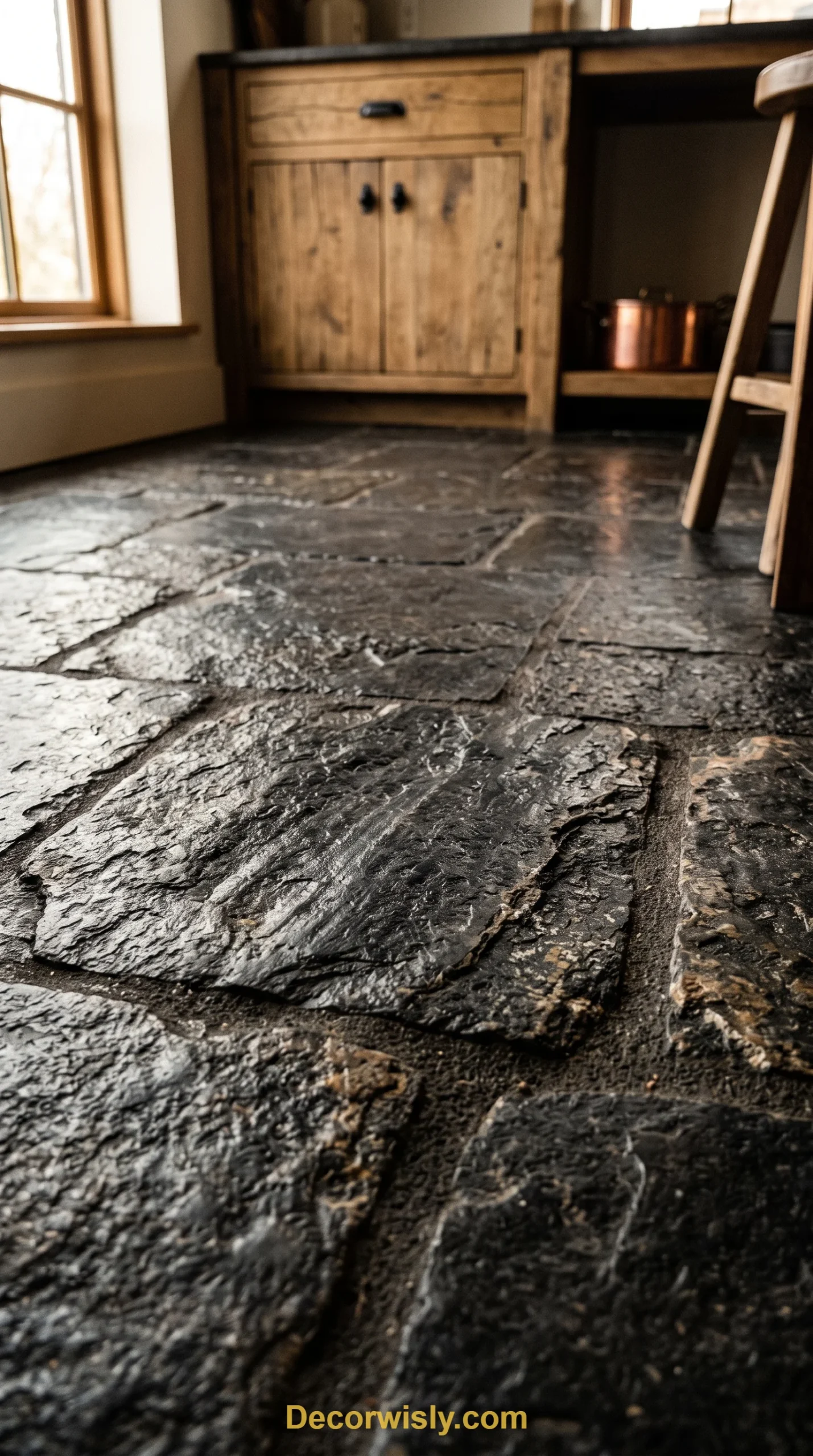
Natural black stone — slate, basalt, or soapstone — adds subtle texture and organic variation that manufactured tile can’t quite replicate. Every slab is a little different, so the floor carries a one-of-a-kind character alongside serious durability. It’s a great way to add warmth to an otherwise sleek, dark palette.
8. Design a Black Mosaic Floor
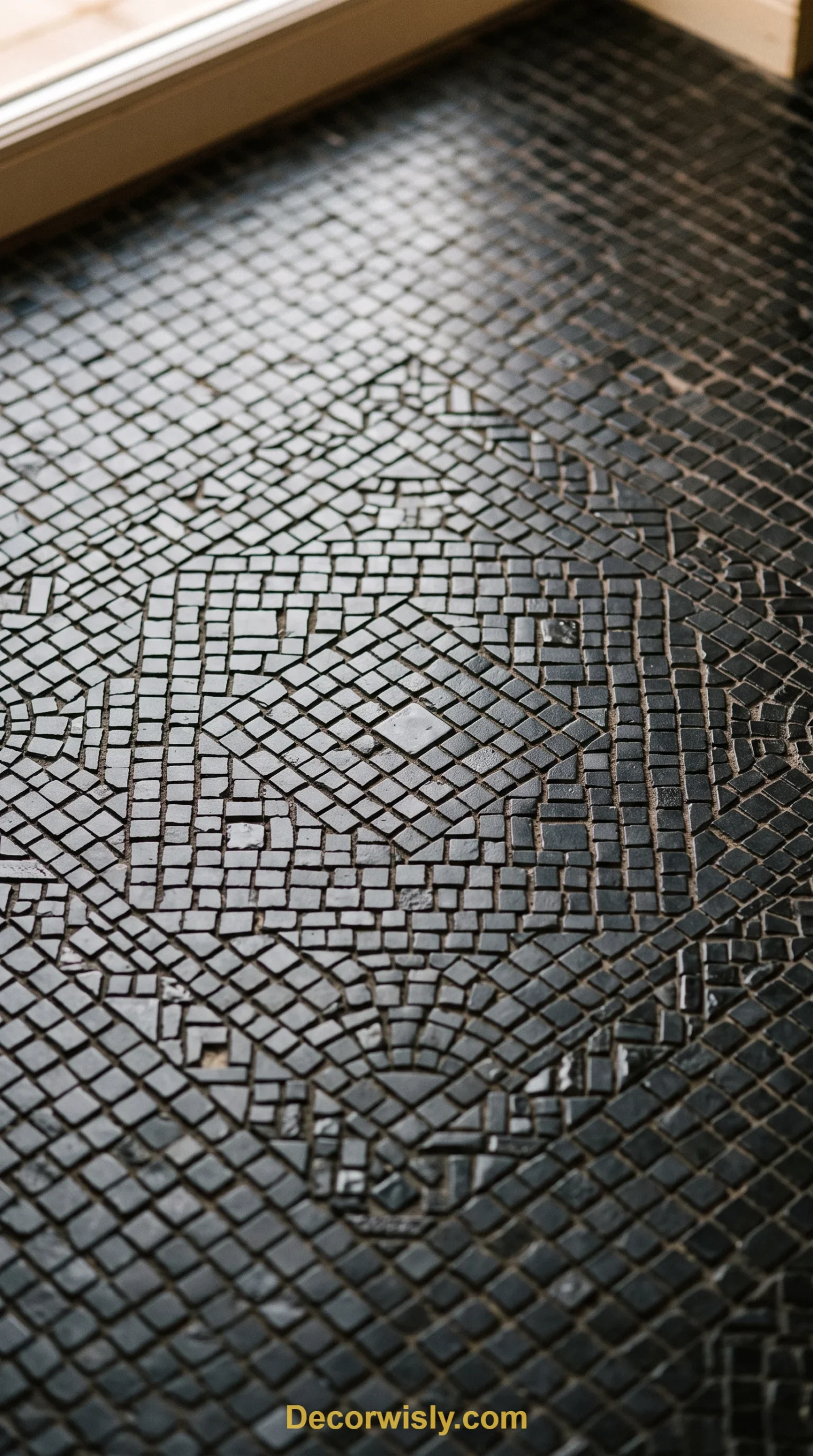
Small-format black mosaic tile lets you build a floor with real handmade character — tiny pieces arranged into a pattern that feels custom rather than off-the-shelf. It’s especially striking in a breakfast nook or a smaller kitchen footprint where the intricate detail can really be appreciated underfoot.
9. Try a Herringbone Layout
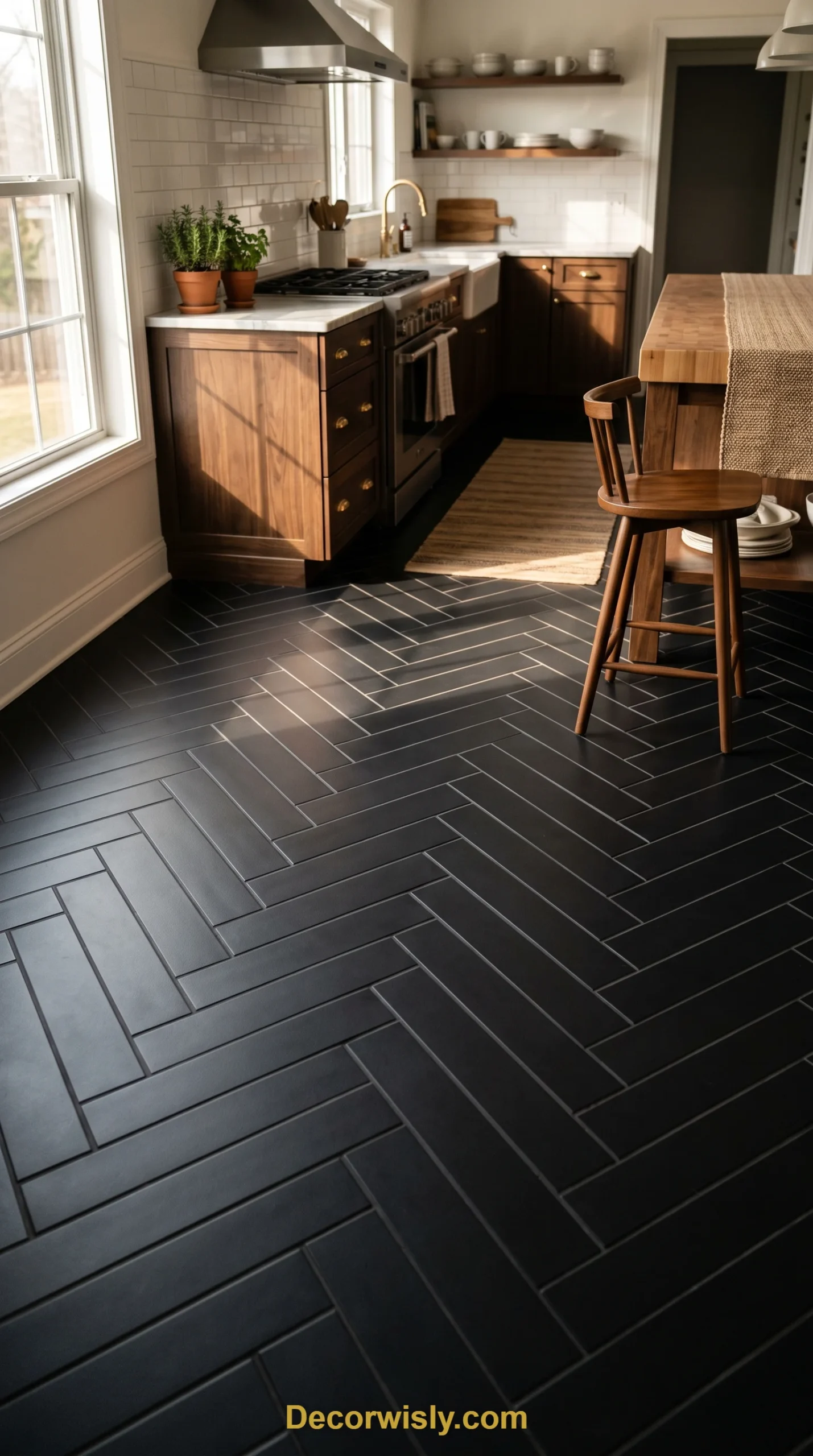
The herringbone pattern is one of those layouts that never goes out of fashion, and in black it takes on a sharper, more contemporary edge than the classic wood version. The diagonal zigzag adds visual movement and makes even a straightforward tile feel like a considered design choice.
10. Go Industrial With Black Concrete
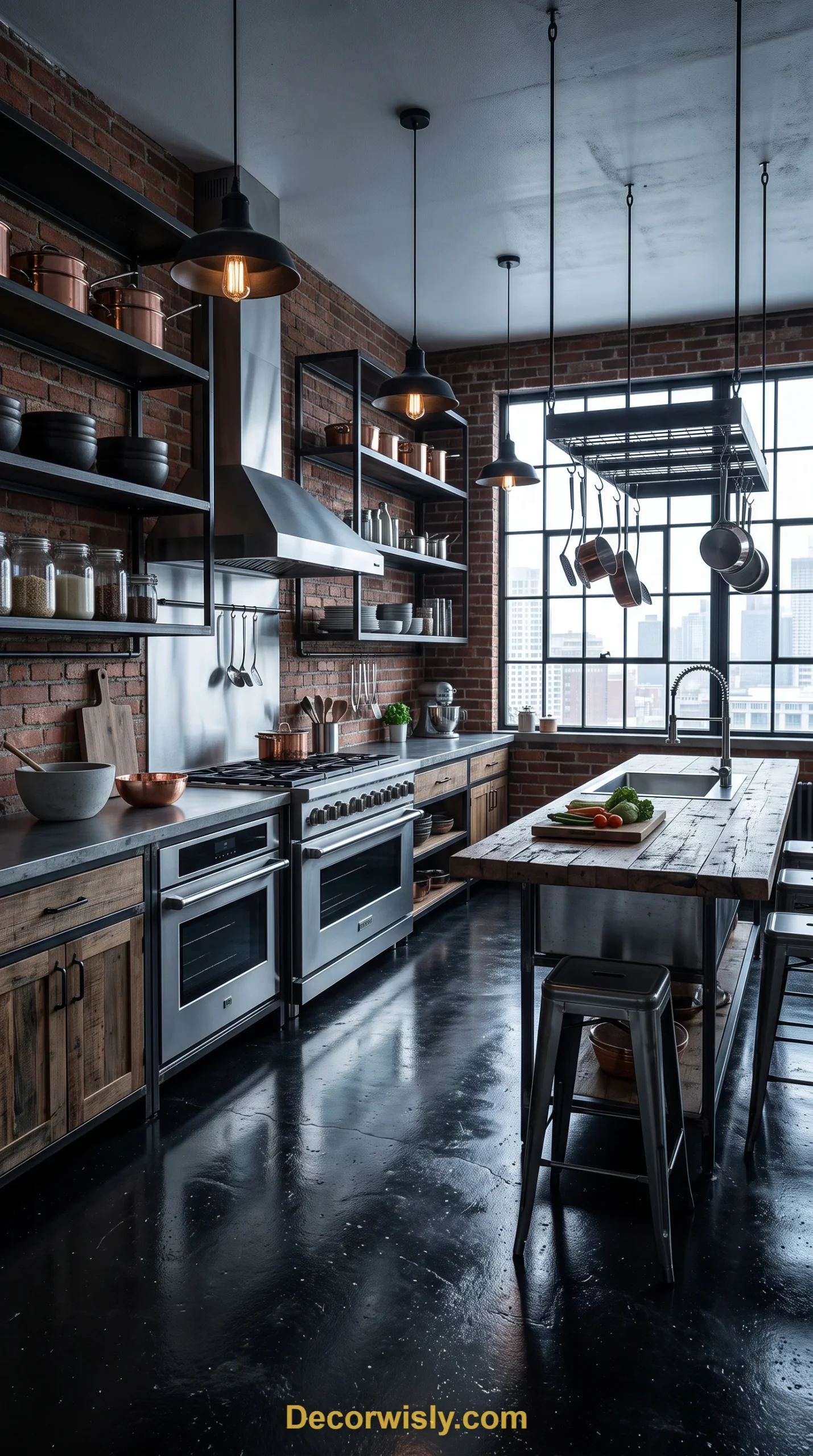
Polished black concrete brings a raw, urban edge to a kitchen while staying completely practical — it’s tough, seamless, and shrugs off daily traffic. Paired with open shelving and metal fixtures, it anchors an industrial-leaning space without needing much else to make a statement.
11. Try Distressed Black Wood-Look Planks
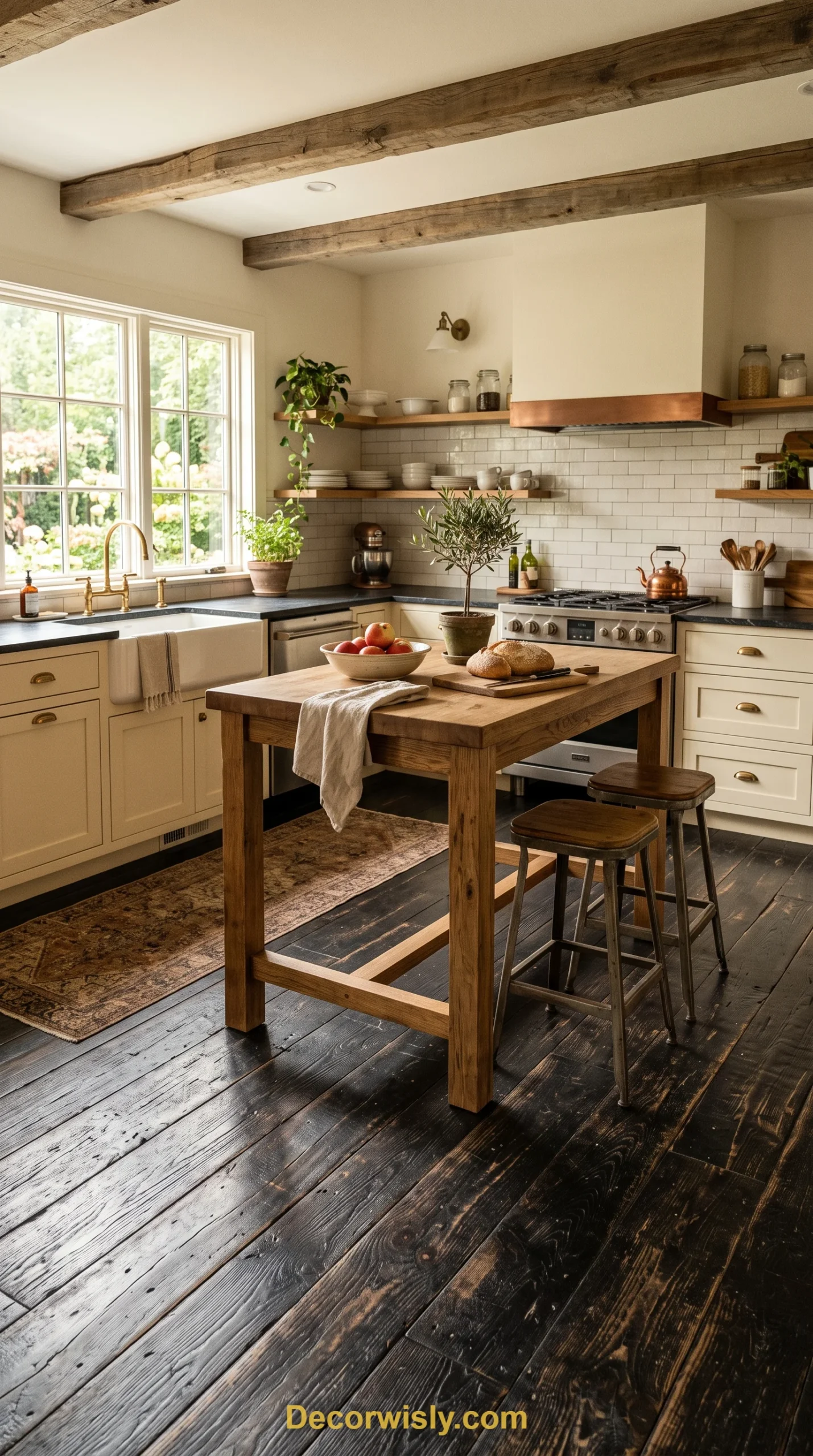
If you love the warmth of wood but want the drama of black, distressed wood-look planks split the difference. The weathered texture and visible grain bring in a lived-in character, while the color keeps things bold rather than rustic-cottage. It’s an easy way to soften a dark palette without losing the impact.
12. Add Movement With Black Terrazzo
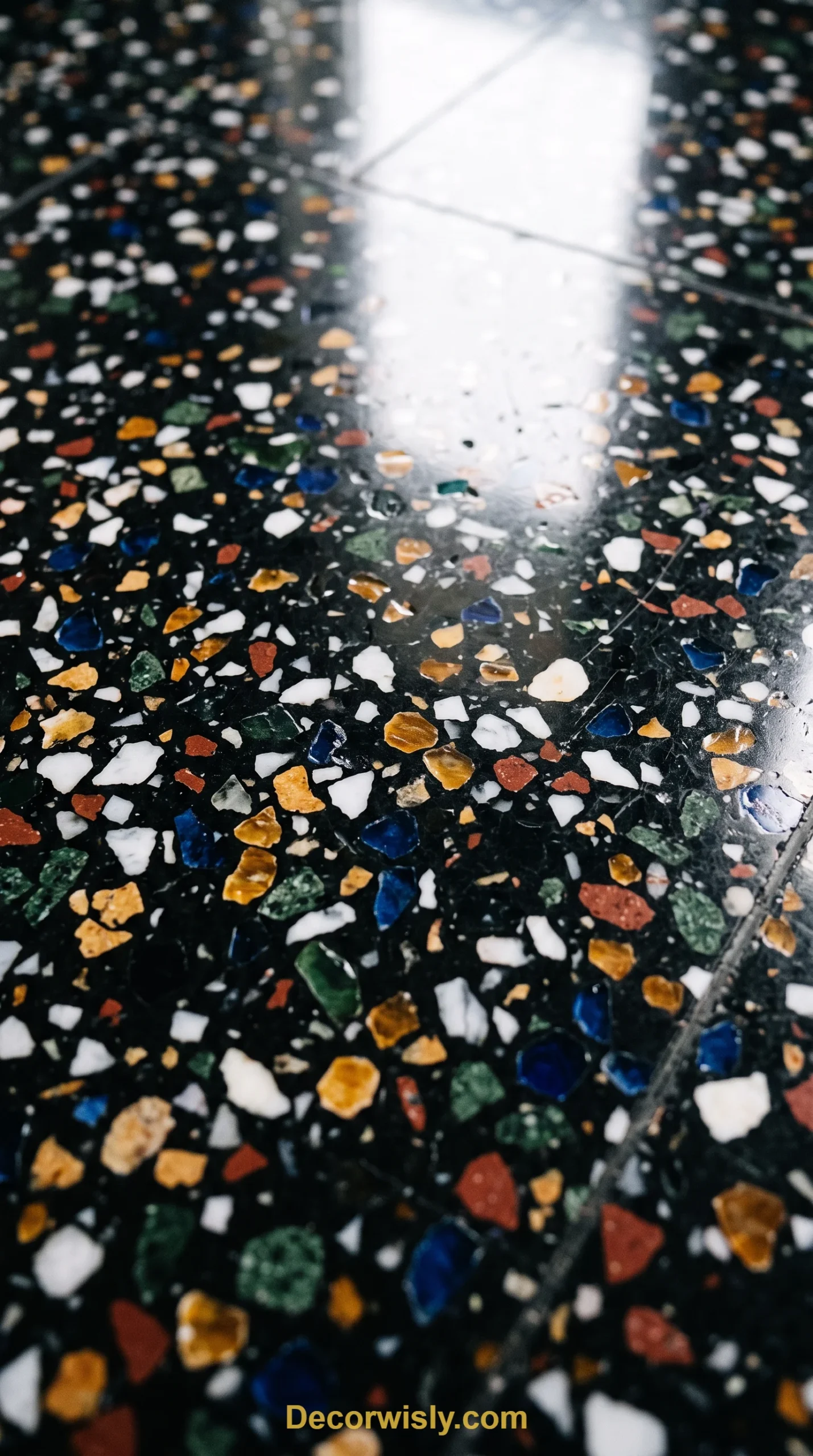
Terrazzo speckled through with flecks of white, grey, or brass gives a black floor a playful, artistic quality. It’s a material with real personality — no two sections look quite the same — and it works just as well in a sleek modern kitchen as it does in a retro-leaning one.
13. Use Varnished Black Engineered Stone
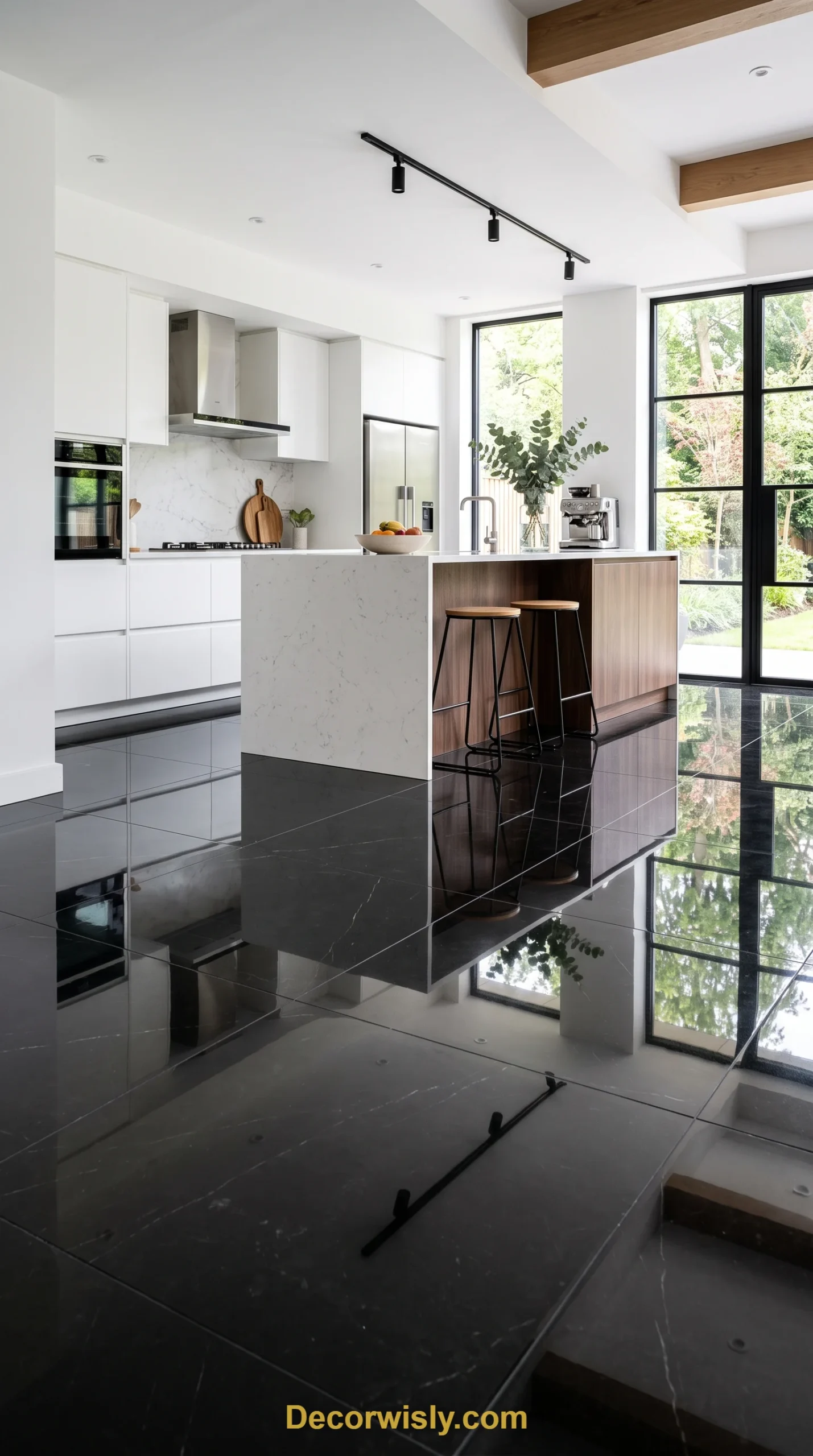
Engineered stone gives you the polished, high-end look of natural stone with more consistency and easier upkeep. In a deep black finish, it creates a smooth, almost liquid surface that reflects light evenly across the whole room — a strong choice for a kitchen that wants to feel sleek and current.
14. Keep It Practical With Glossy Black Vinyl
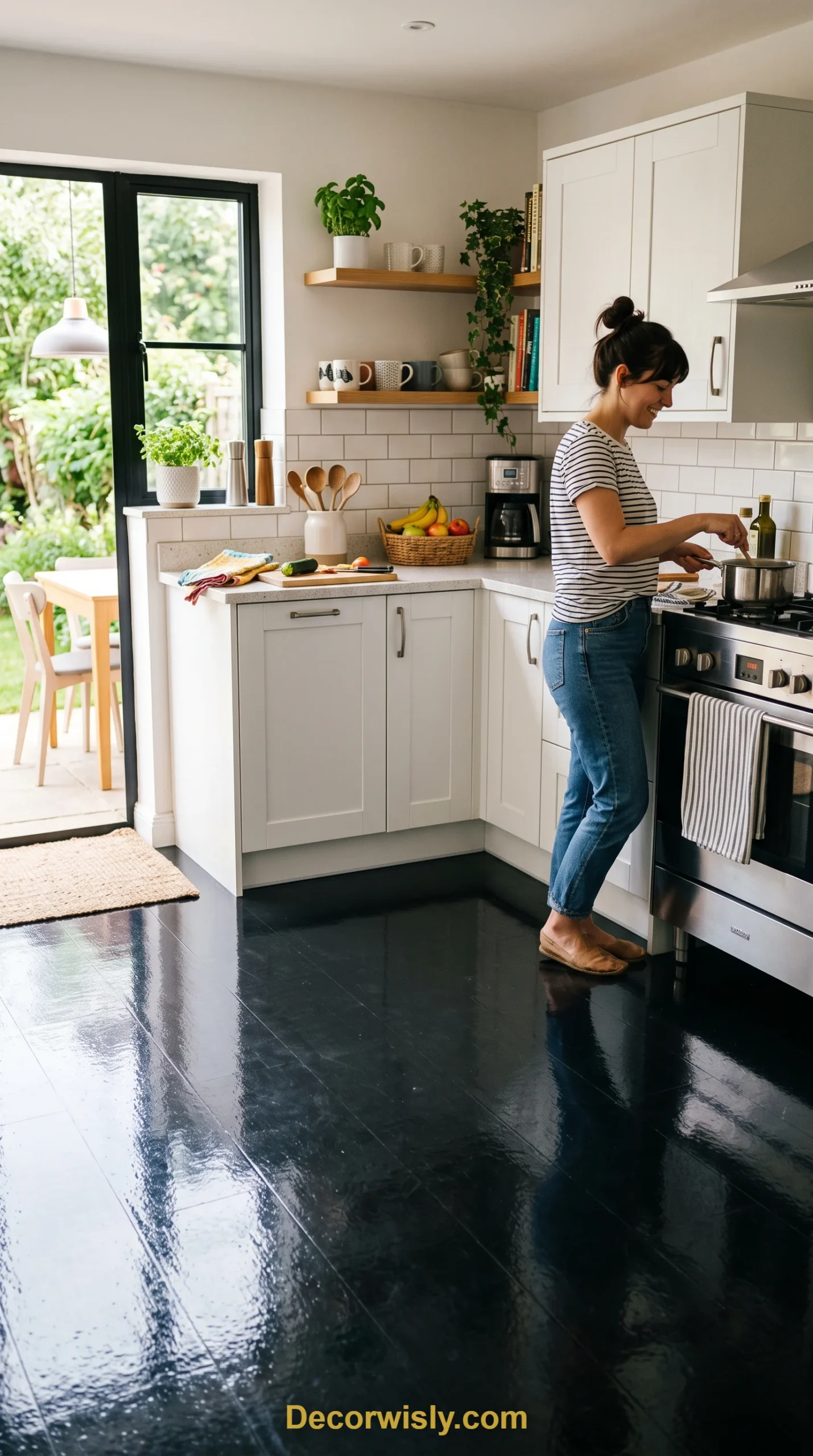
Vinyl flooring has come a long way, and a glossy black option now delivers real style at a fraction of the cost and installation effort of tile or stone. It’s soft underfoot, easy to clean, and holds up well in high-traffic kitchens — a smart pick if you want the look without the bigger investment.
15. Add Custom Black Inlay Details
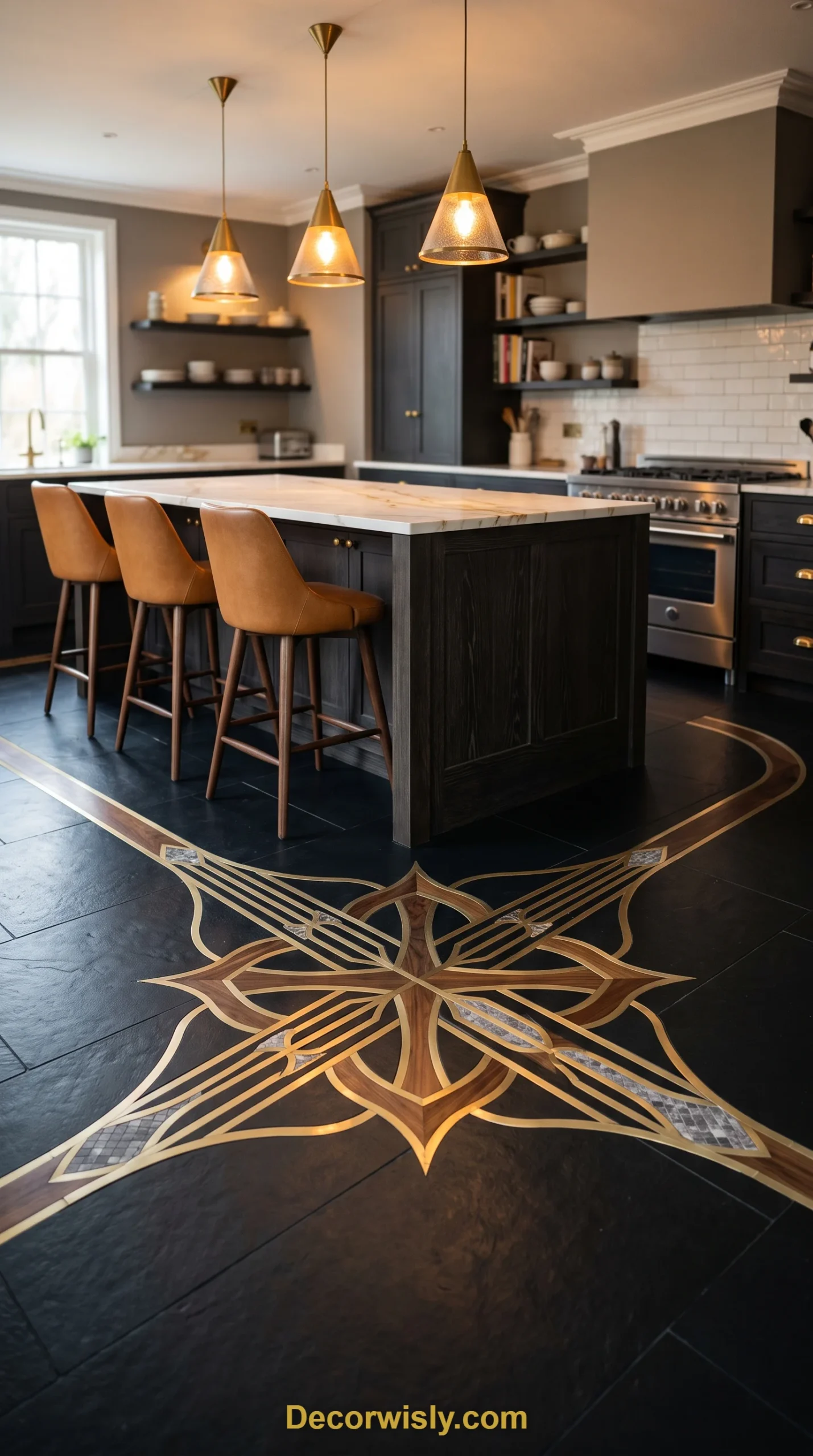
Inlaid patterns — a contrasting border, a medallion under the island, or a decorative strip along the walkway — turn a black floor into a bespoke design feature. It’s a subtle way to add craftsmanship and a sense of intention to the space without overhauling the whole floor.
16. Consider Black Pebble Flooring
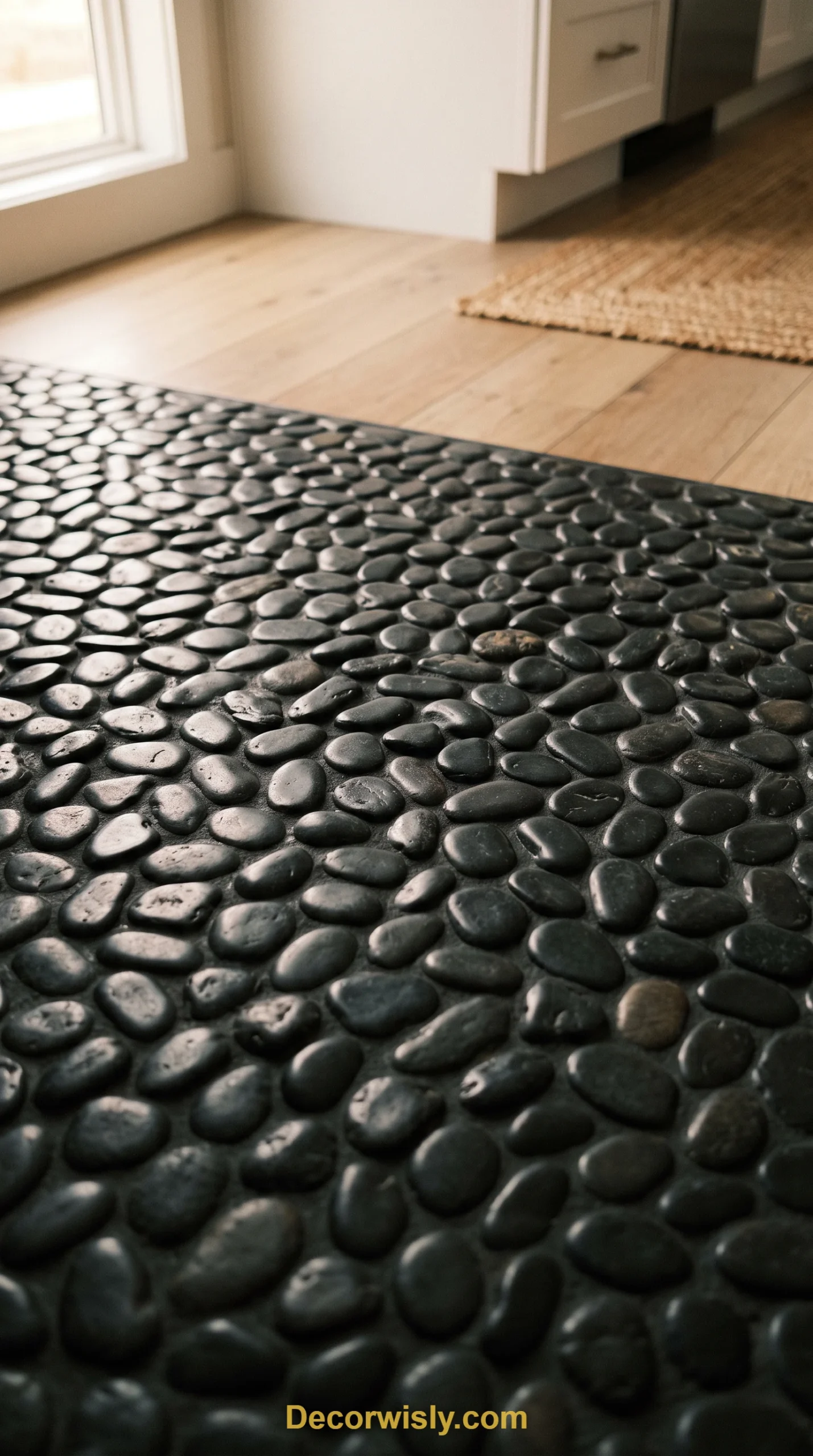
Smooth, rounded pebbles set in a dark matrix bring an unexpected organic texture into the kitchen. It’s tactile, visually interesting, and adds a spa-like, nature-inspired quality that most standard flooring options can’t match — best used in smaller zones like an entry or a bar nook.
17. Let Black Grout Do the Work
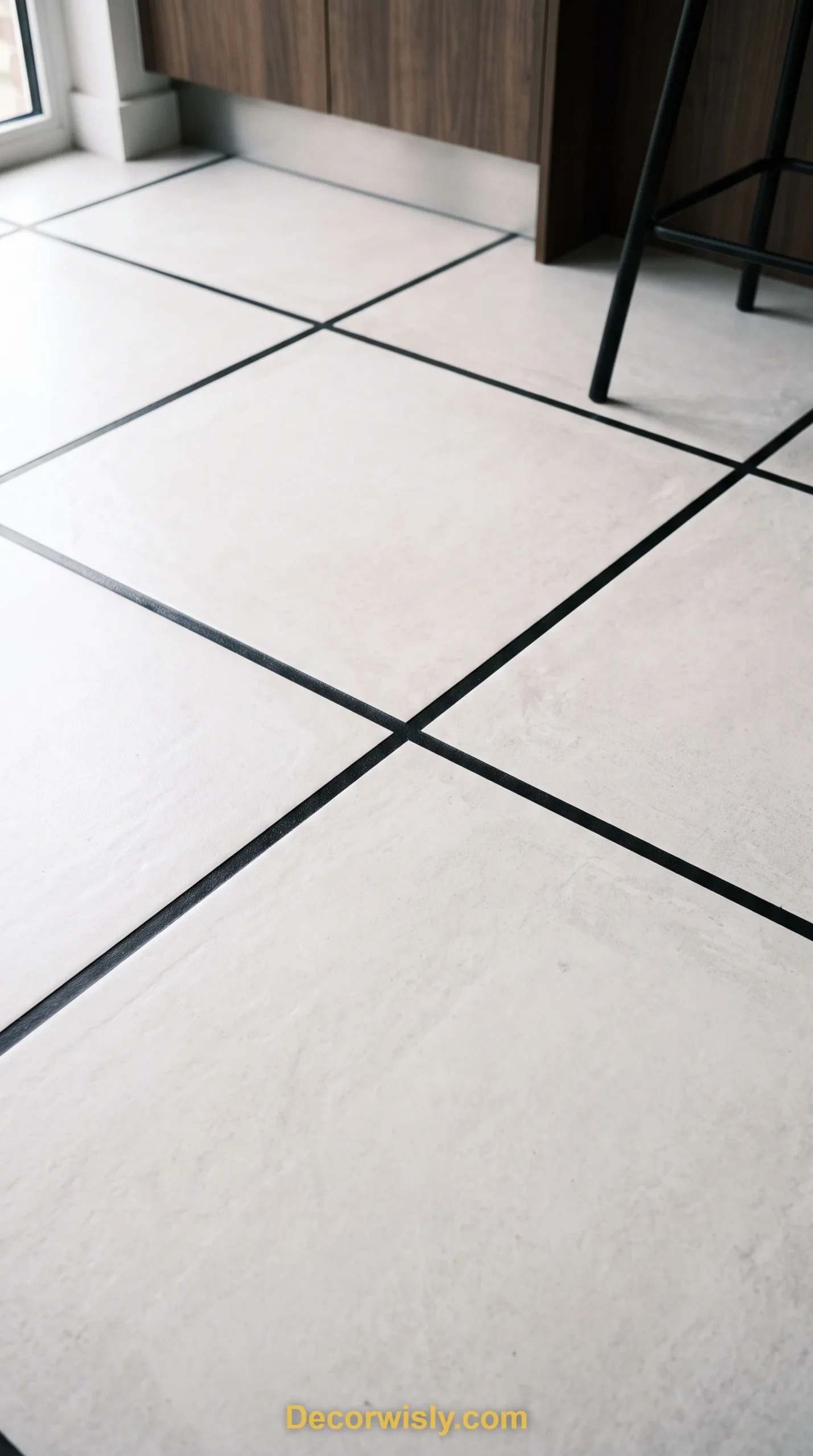
Sometimes the boldest move is a small one — swapping standard grout for black grout between lighter tiles creates crisp, graphic lines without committing to an all-black floor. It sharpens the geometry of any tile pattern and adds definition that’s easy to overlook until you see it done well.
18. Commission Hand-Painted Floor Art
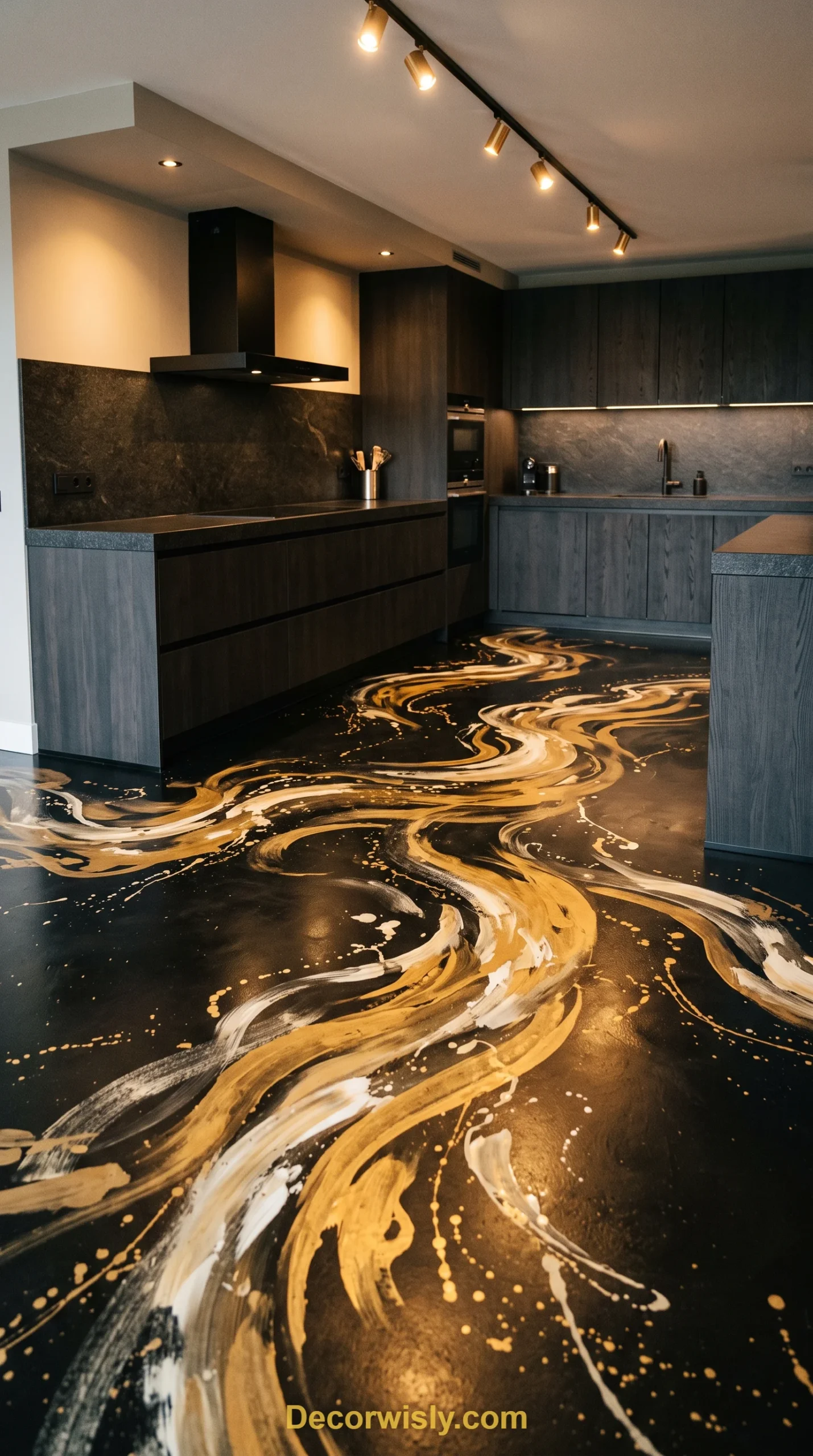
For a truly one-of-a-kind kitchen, a hand-painted design on a black base turns the floor into a genuine art piece. Whether it’s an abstract pattern or a detailed motif, this approach brings a level of personality that manufactured flooring simply can’t replicate.
19. Try Bold Black Patterned Brick
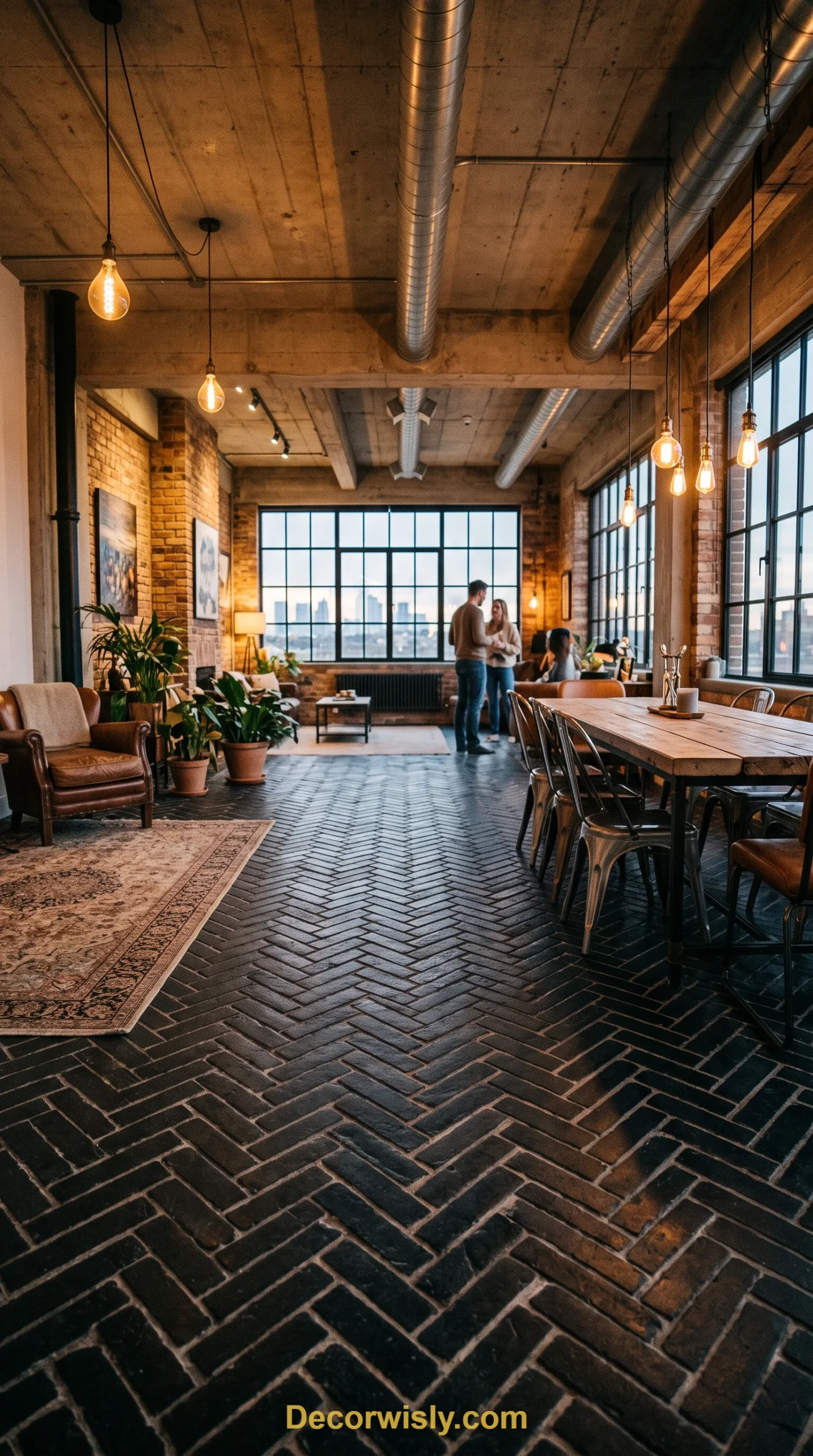
Brick-look flooring in black, laid in a herringbone or basketweave pattern, brings texture and old-world charm into an otherwise modern kitchen. It’s a great middle ground between rustic warmth and contemporary boldness, especially in kitchens that already lean toward exposed brick or reclaimed materials.
20. Choose High-Shine Black Ceramic
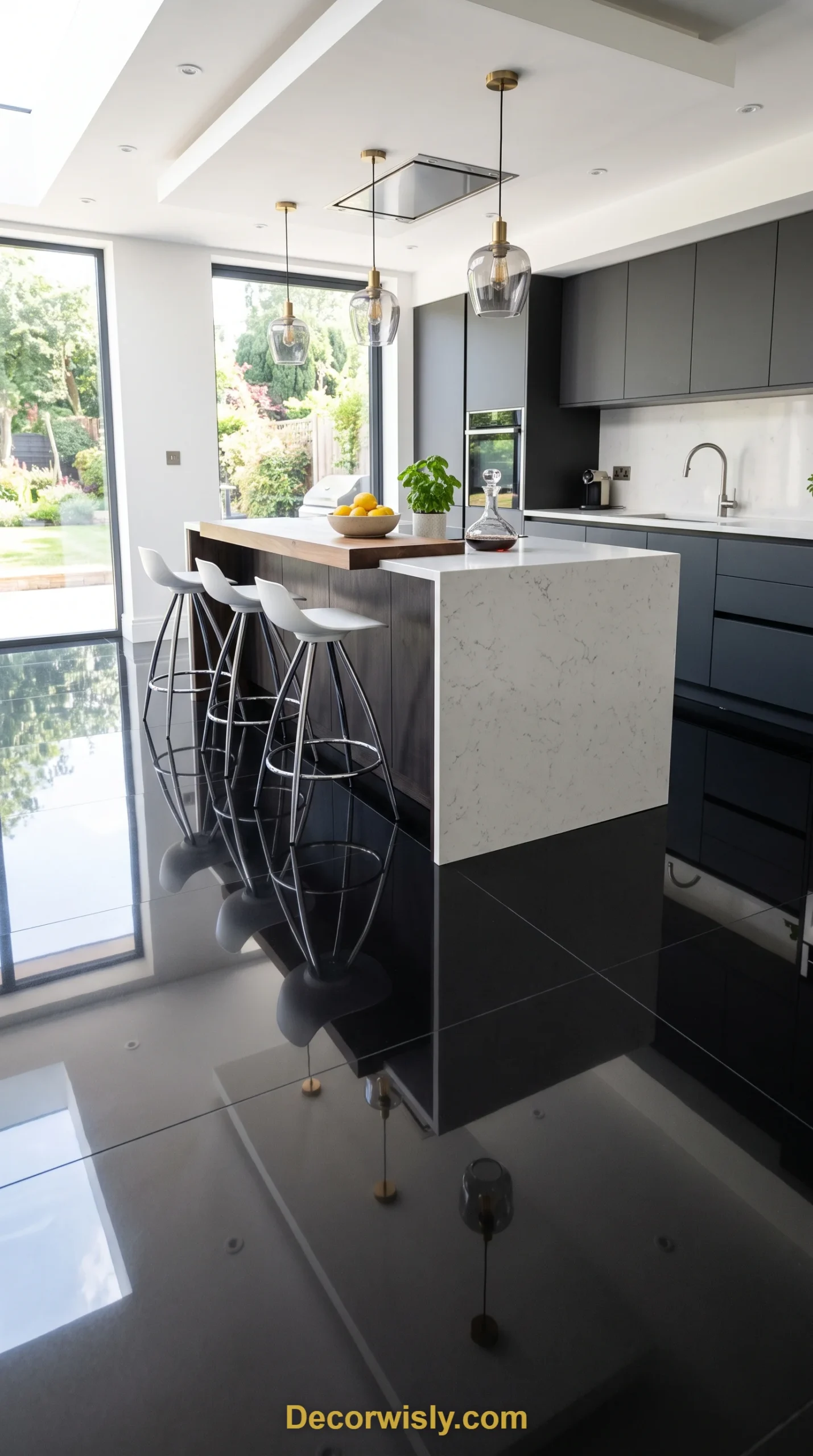
Ceramic tile with a mirror-like glaze pushes reflectivity even further than standard polished tile, bouncing ambient light around the room and making the space feel larger than it is. It’s an easy-care, budget-conscious option for anyone chasing a luxe, glossy look.
21. Bring in Natural Black Slate
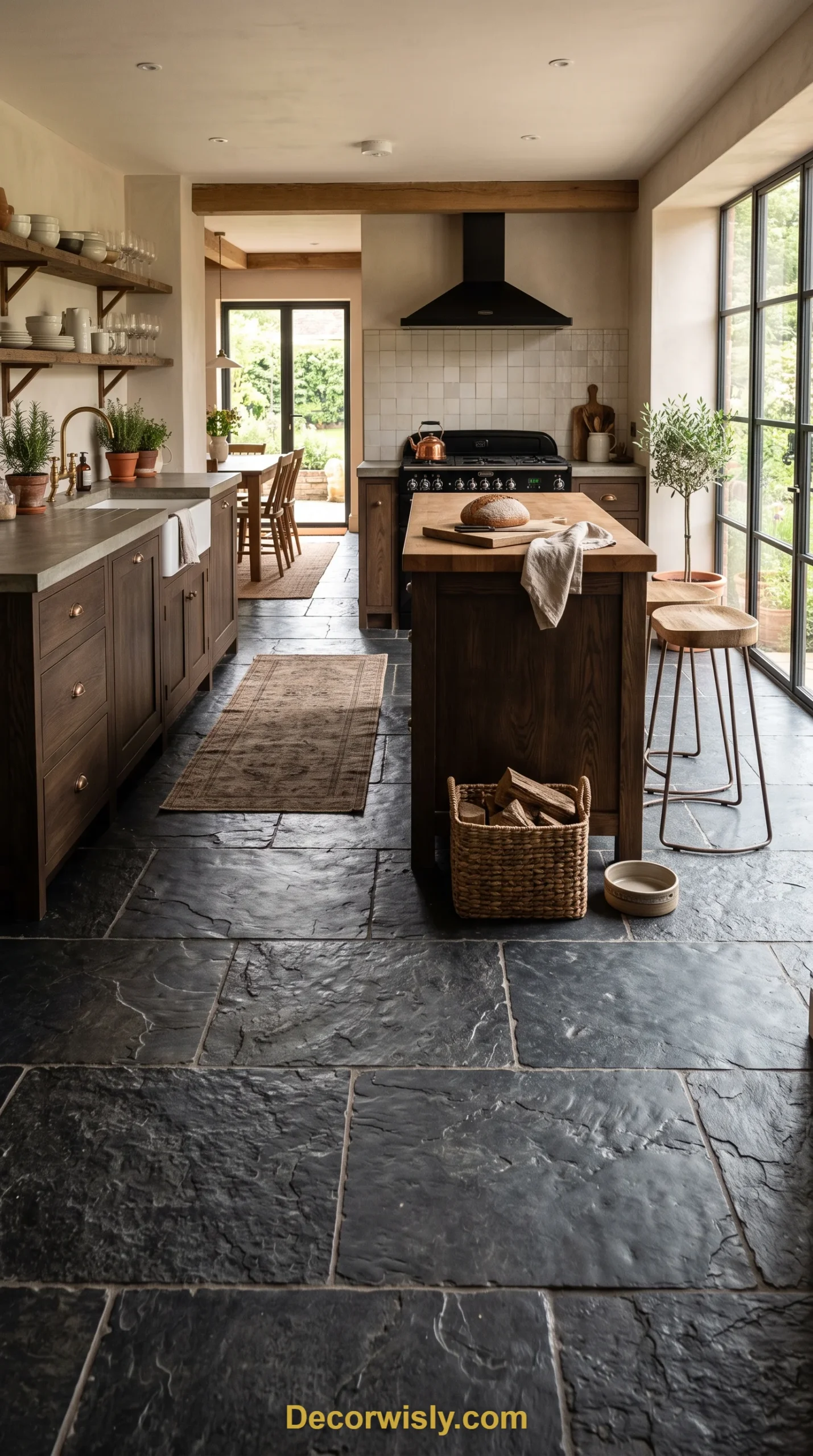
Slate’s natural cleft texture and subtle tonal variation give a black floor an earthy, organic quality that pairs beautifully with both rustic and contemporary kitchens. It’s naturally slip-resistant too, which makes it a genuinely practical choice for a busy cooking space, not just a good-looking one.
22. Go Classic With Black Checkerboard
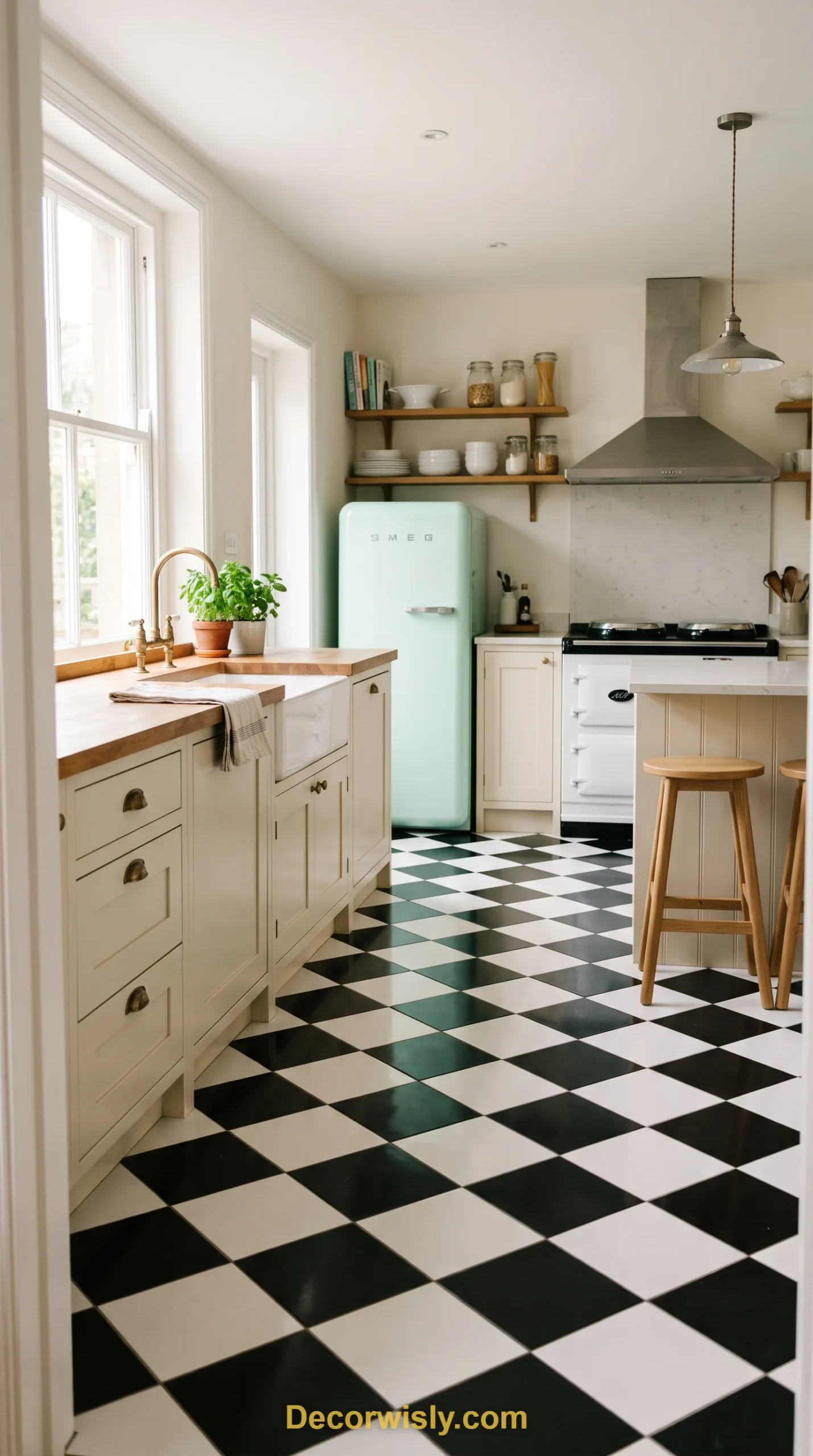
A black-and-white checkerboard floor is one of the most enduring patterns in kitchen design, bridging vintage charm and modern minimalism with equal ease. The strong graphic rhythm anchors the room and works in nearly any style of kitchen you build around it.
23. Try Black Encaustic Cement Tile
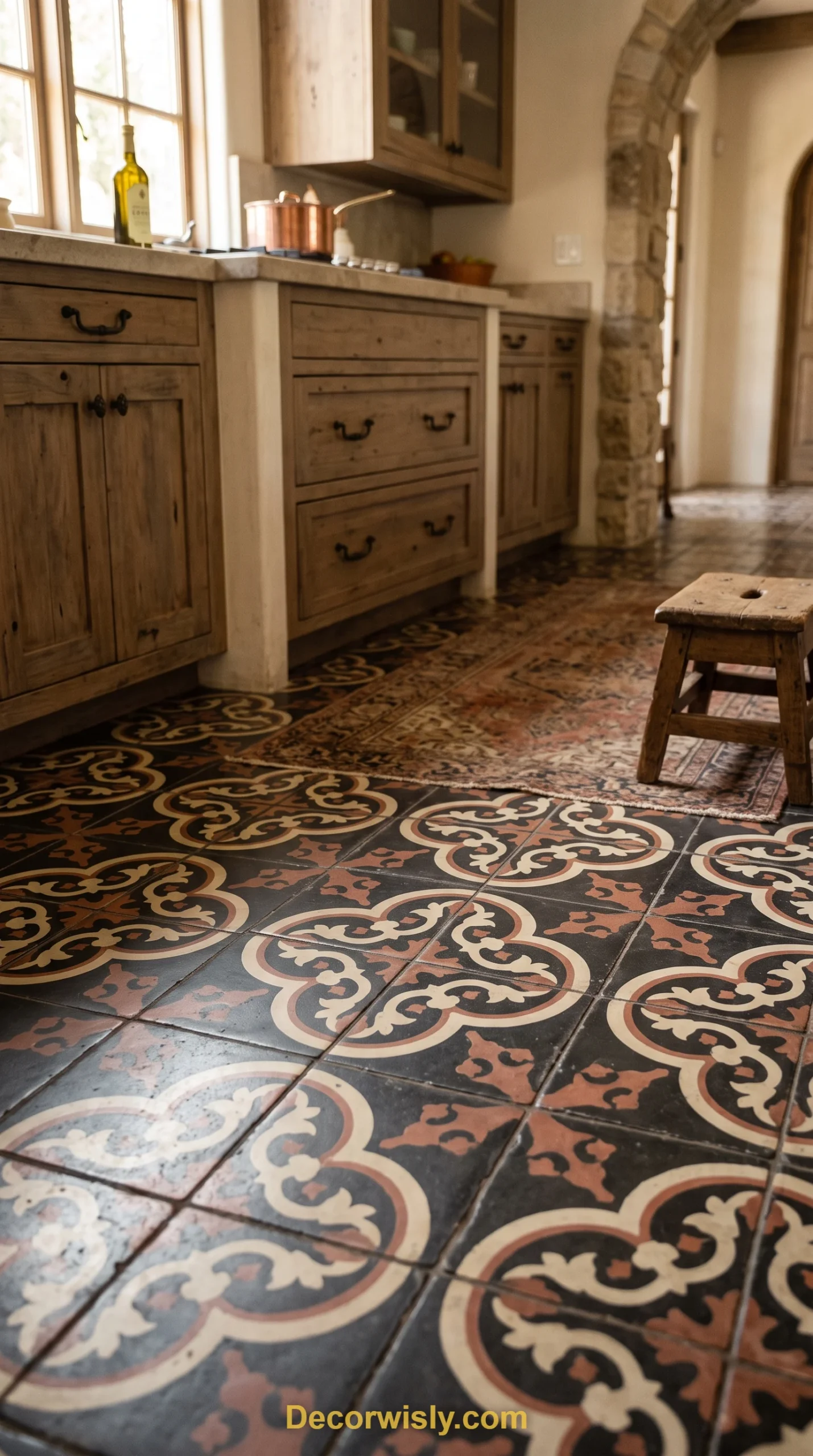
Encaustic cement tiles bring hand-poured pattern and pigment straight through the material, so the design never wears away even after years of foot traffic. In black, paired with a contrasting motif, these tiles add old-world character with a genuinely artisanal feel that mass-produced tile can’t match.
24. Add Depth With Veined Black Marble
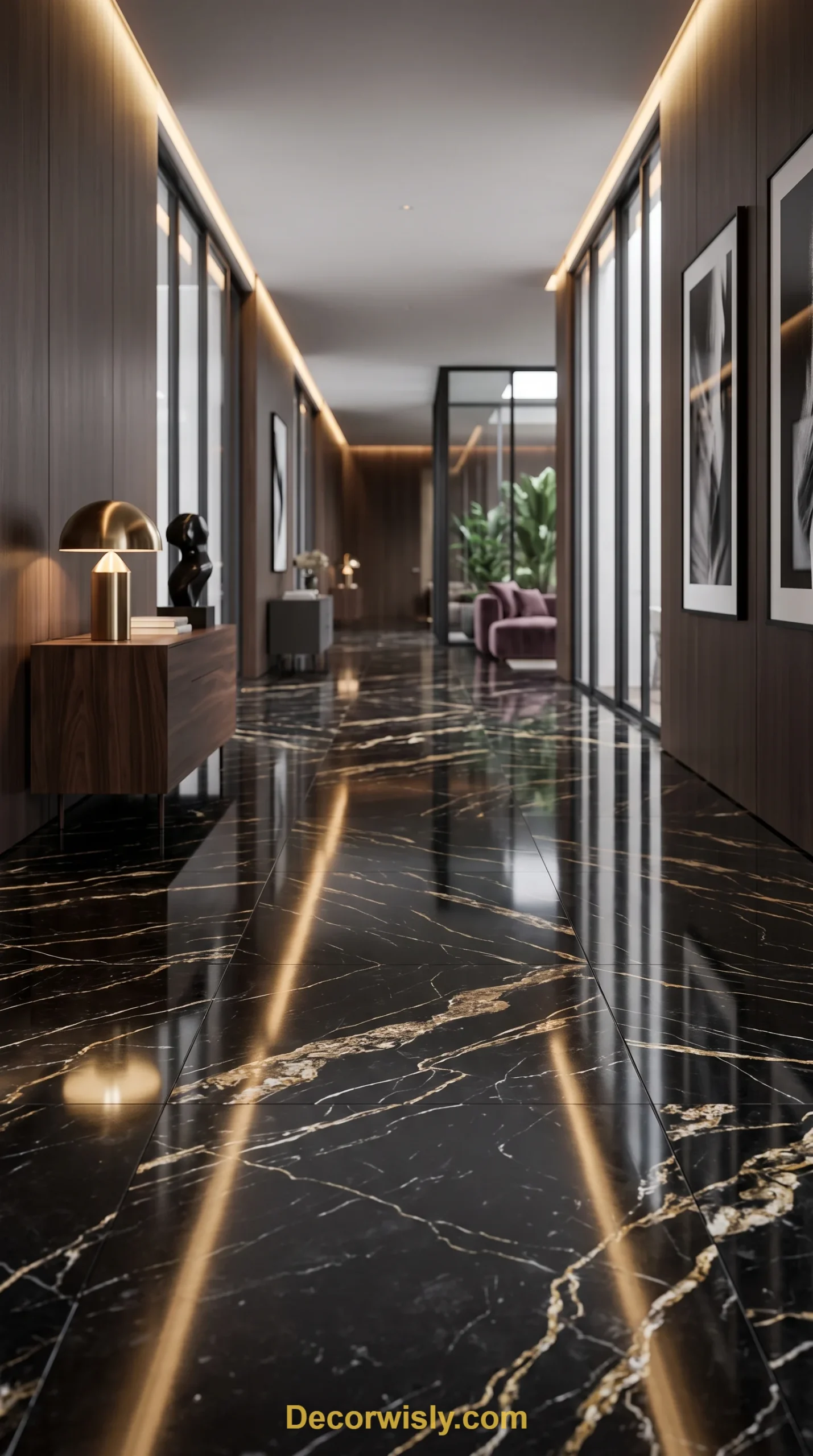
Black marble with dramatic white or gold veining turns the floor into a genuine showpiece. It’s a higher-investment option, but the natural movement in the stone gives the kitchen a sense of quiet luxury that’s hard to replicate with any manufactured material.
25. Consider Eco-Friendly Black Cork or Rubber
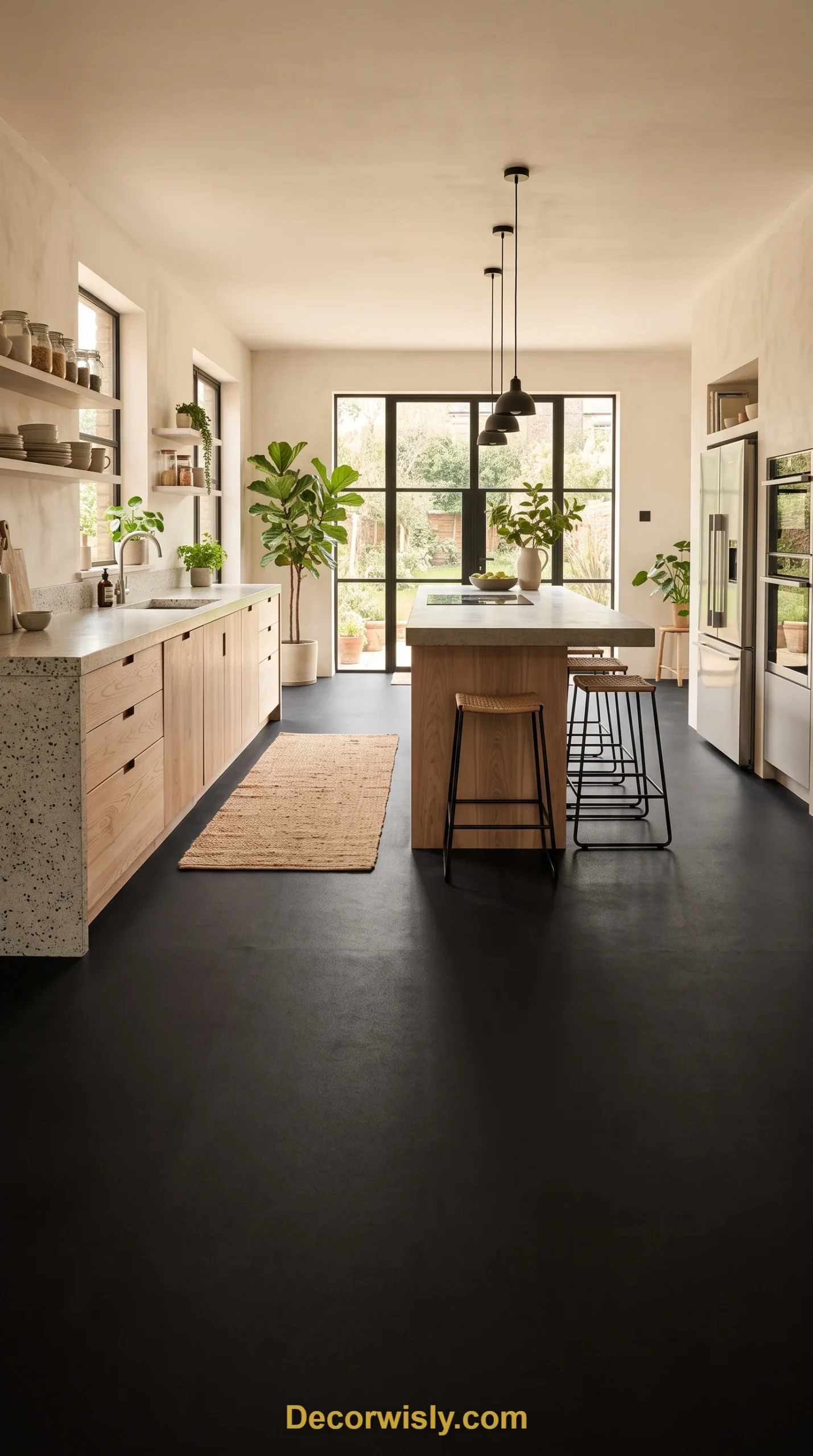
For a softer, more sustainable option, black cork or rubber flooring offers cushioned comfort underfoot along with genuine sound dampening — a nice practical upgrade for a kitchen where you’re standing for long stretches. Modern finishes look far sleeker than older rubber flooring, with a smooth matte surface that still reads as intentional and current.
Final Thoughts
Black flooring is one of the most flexible design choices you can make in a kitchen — it works as a bold, graphic statement or as a quiet, grounding backdrop, depending on the finish and pattern you choose. Whether you go glossy and dramatic or matte and understated, a dark floor adds depth, contrast, and a sense of permanence that lighter finishes rarely achieve. Pick the material that fits your daily life first, then let the pattern and finish bring in the personality.