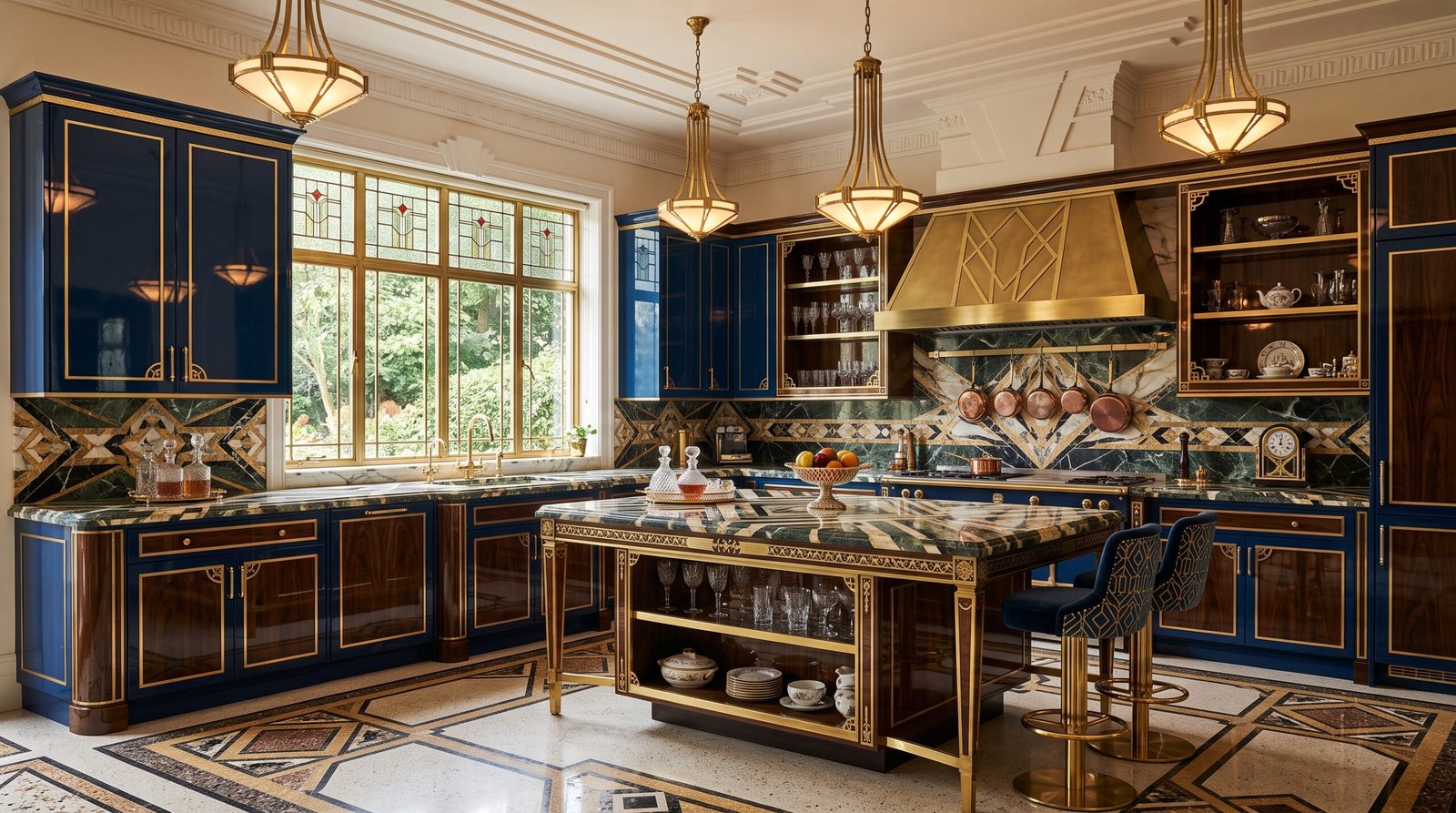
Art Deco has a way of making a kitchen feel like it belongs somewhere between a grand hotel and a design museum, and that’s exactly its appeal. Drawing on the geometric precision and rich materials of the 1920s and 30s, this style leans hard into glamour without giving up on function. The following 22 ideas cover everything from bold pattern work to lighting, hardware, and layout — plenty of ways to bring a bit of that old-world sophistication into a genuinely modern kitchen.
1. Bold Geometric Patterns
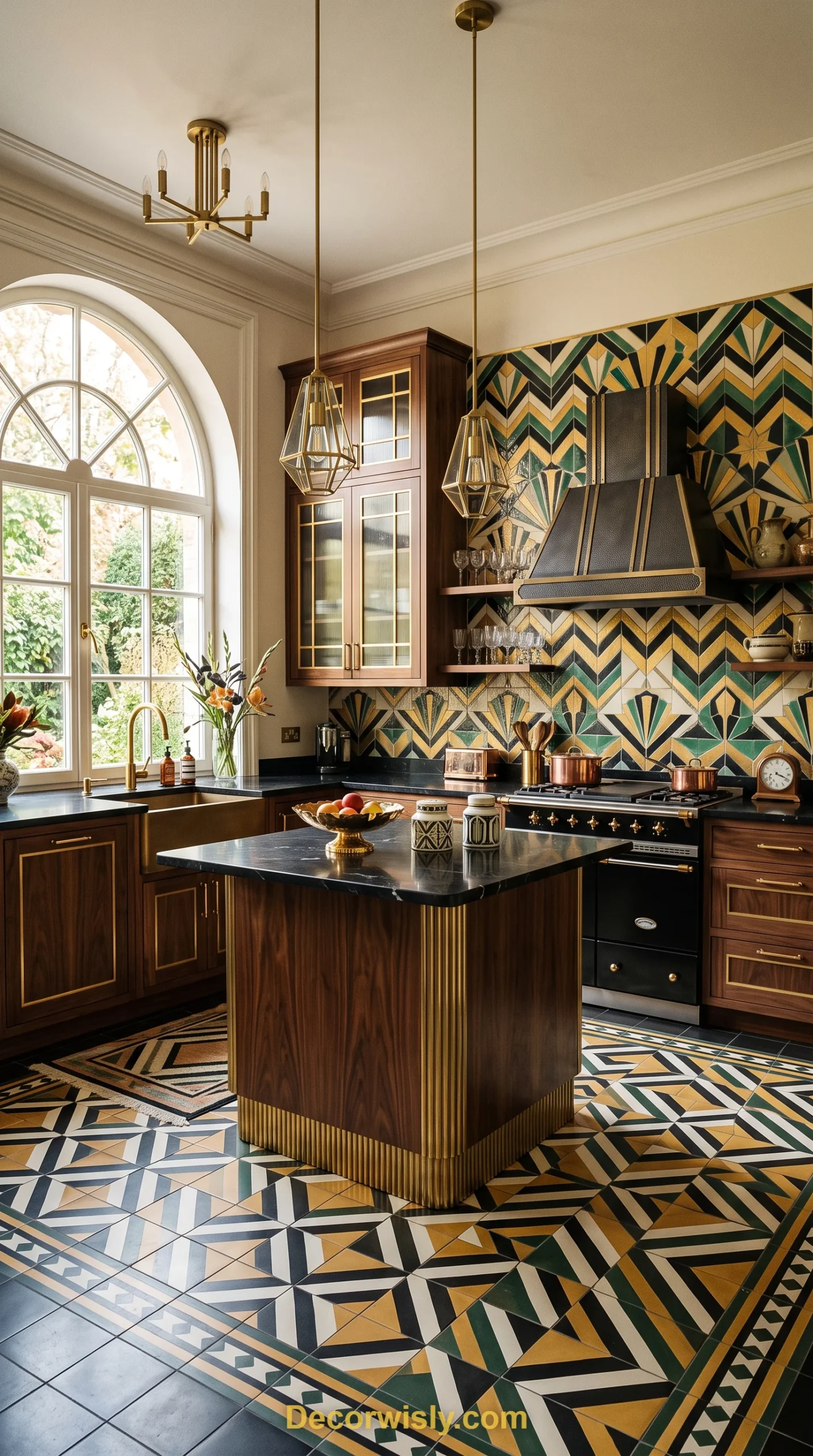
Angular, repeating shapes are at the heart of what makes a kitchen read as genuinely Art Deco. Applied to walls, backsplashes, or floor tiles, bold geometric patterns add real rhythm and structure while still keeping the room functional. Playing with different scales and color combinations turns an otherwise ordinary surface into a dramatic design statement — a foundational move for anyone building the style from the ground up.
2. Streamlined Shapes and Clean Lines
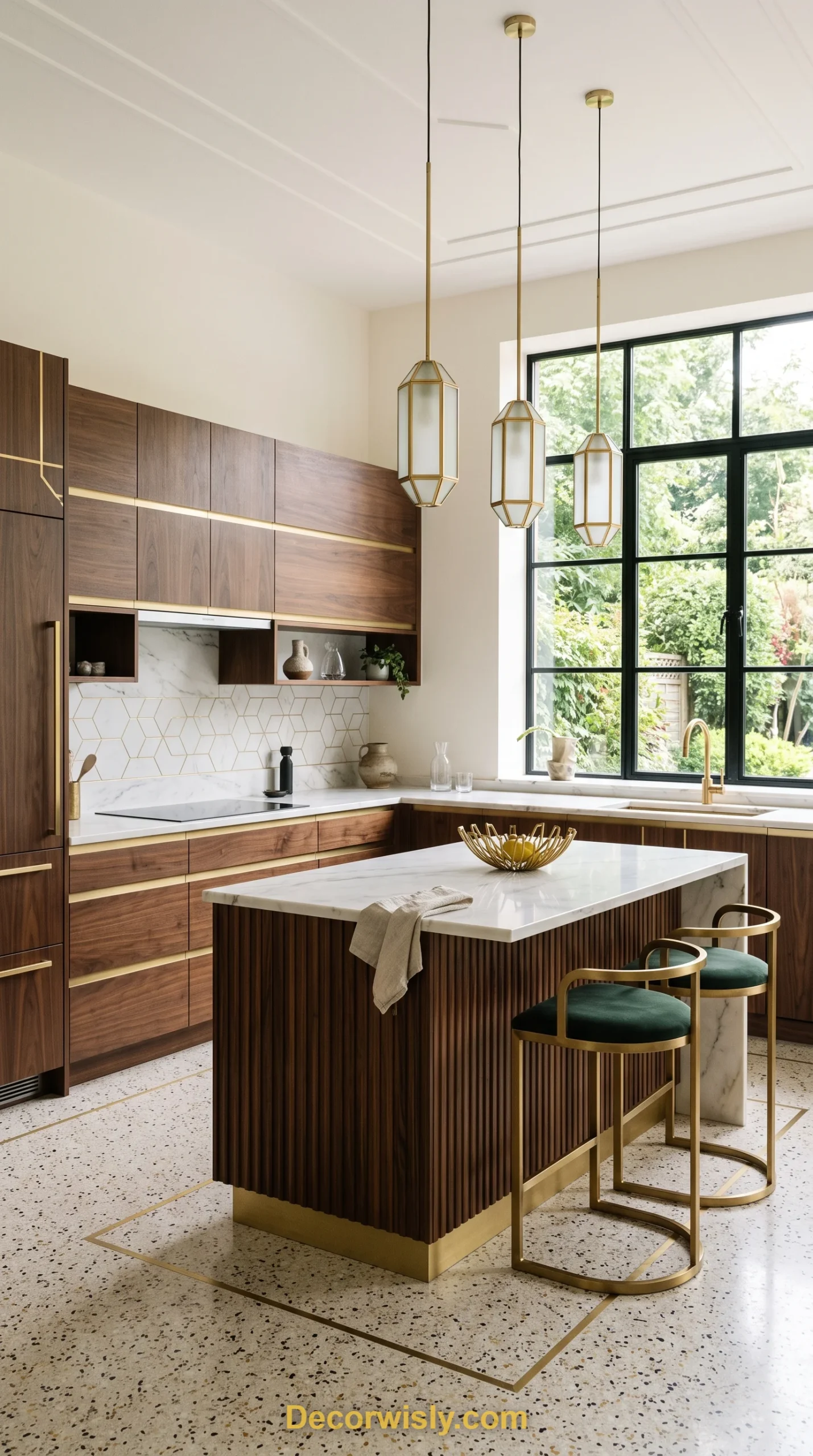
Not every Art Deco detail has to be loud. Streamlined shapes and clean lines bring a quieter side of the style, favoring smooth, unadorned surfaces that let light move freely through the room. Sleek cabinetry and subtle contours keep the layout efficient as well as visually pleasing — a good reminder that the era was as much about restraint as it was about ornamentation.
3. Luxurious Materials and Textures
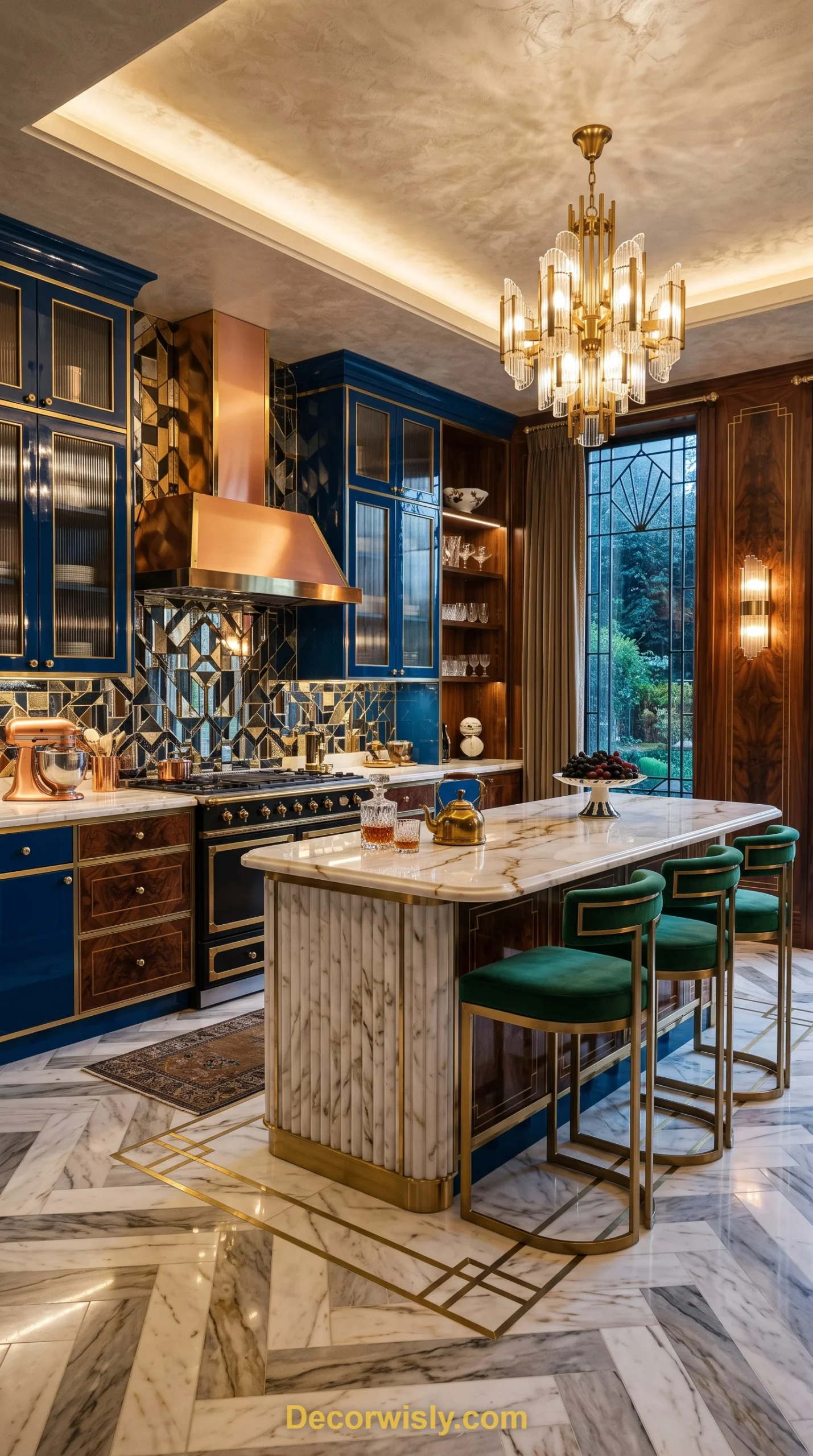
Marble, glossy lacquer, and rich wood together create a genuinely sumptuous feel, softening what could otherwise be a cold, overly modern space. Mixing tactile surfaces — polished countertops against finely grained cabinetry — adds visual depth while keeping the room feeling elegant and inviting. It’s a material-first approach that channels the upscale comfort the Art Deco era was known for.
4. Metallic Accents and Finishes
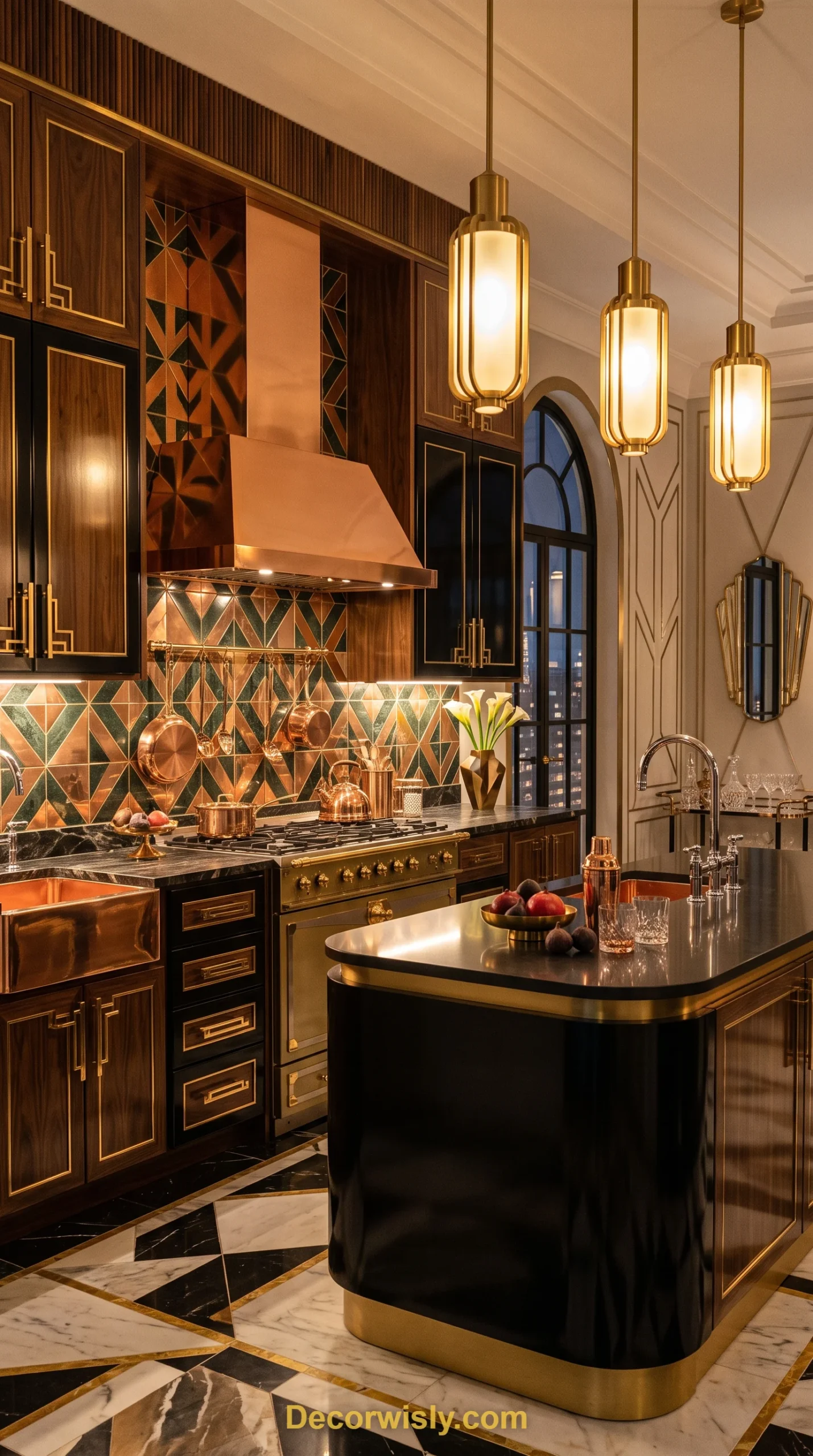
Chrome, brass, and copper details bring a reflective sparkle that instantly reads as period-appropriate glamour. Used on fixtures, cabinet handles, or small decorative objects, metallic finishes create eye-catching highlights throughout the room. The interplay of shine against structure gives the kitchen dynamic focal points, adding a layer of sleek sophistication to even the most everyday tasks.
5. Vintage and Decorative Lighting
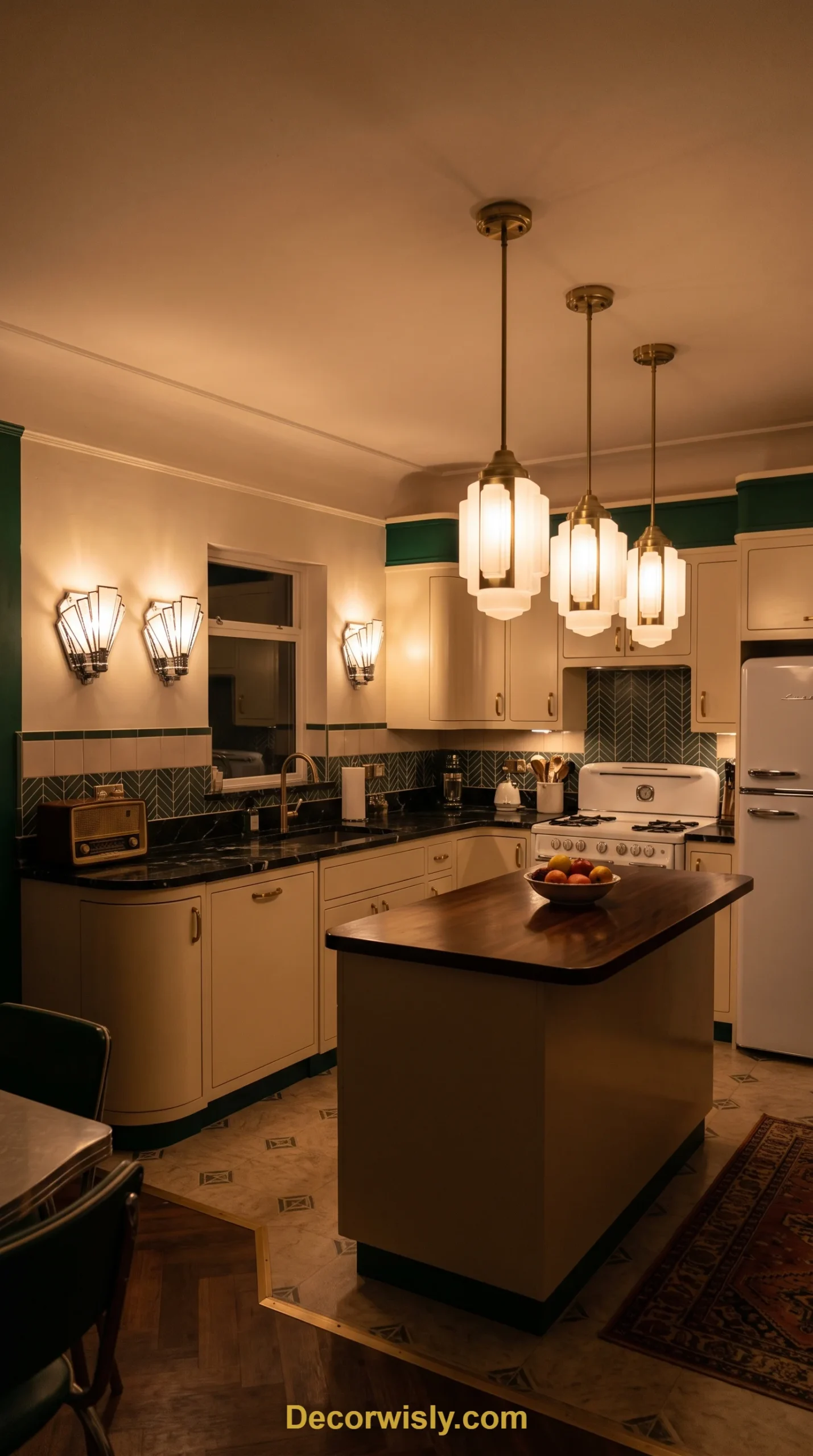
Vintage-style pendant lights and sconces bring both character and mood to an Art Deco kitchen. Beyond simple illumination, these fixtures act as design elements in their own right, accentuating islands and dining nooks with a warm, inviting glow. Experimenting with different light intensities and vintage-inspired designs highlights architectural details while keeping the whole space feeling cozy rather than clinical.
6. Contrasting Black and White Themes
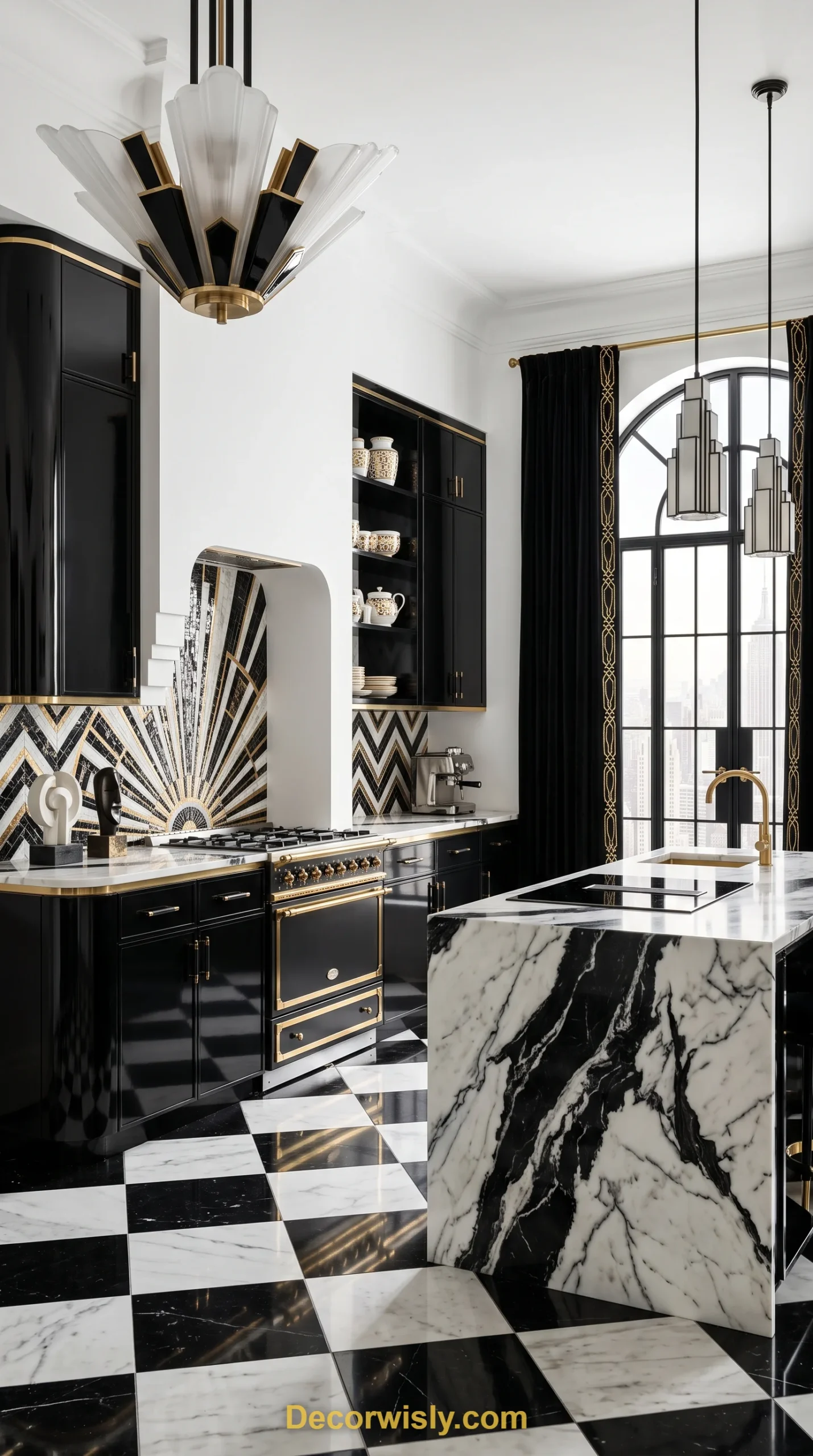
Black and white is one of the most reliably dramatic combinations in Art Deco design, using the contrast to make architectural details genuinely pop. Whether through glossy black cabinetry against white walls or intricate mosaic tile work, this palette celebrates simplicity while still delivering high visual impact. Varying textures and finishes within the monochrome scheme keeps it from feeling flat.
7. Symmetrical Layouts for Balance
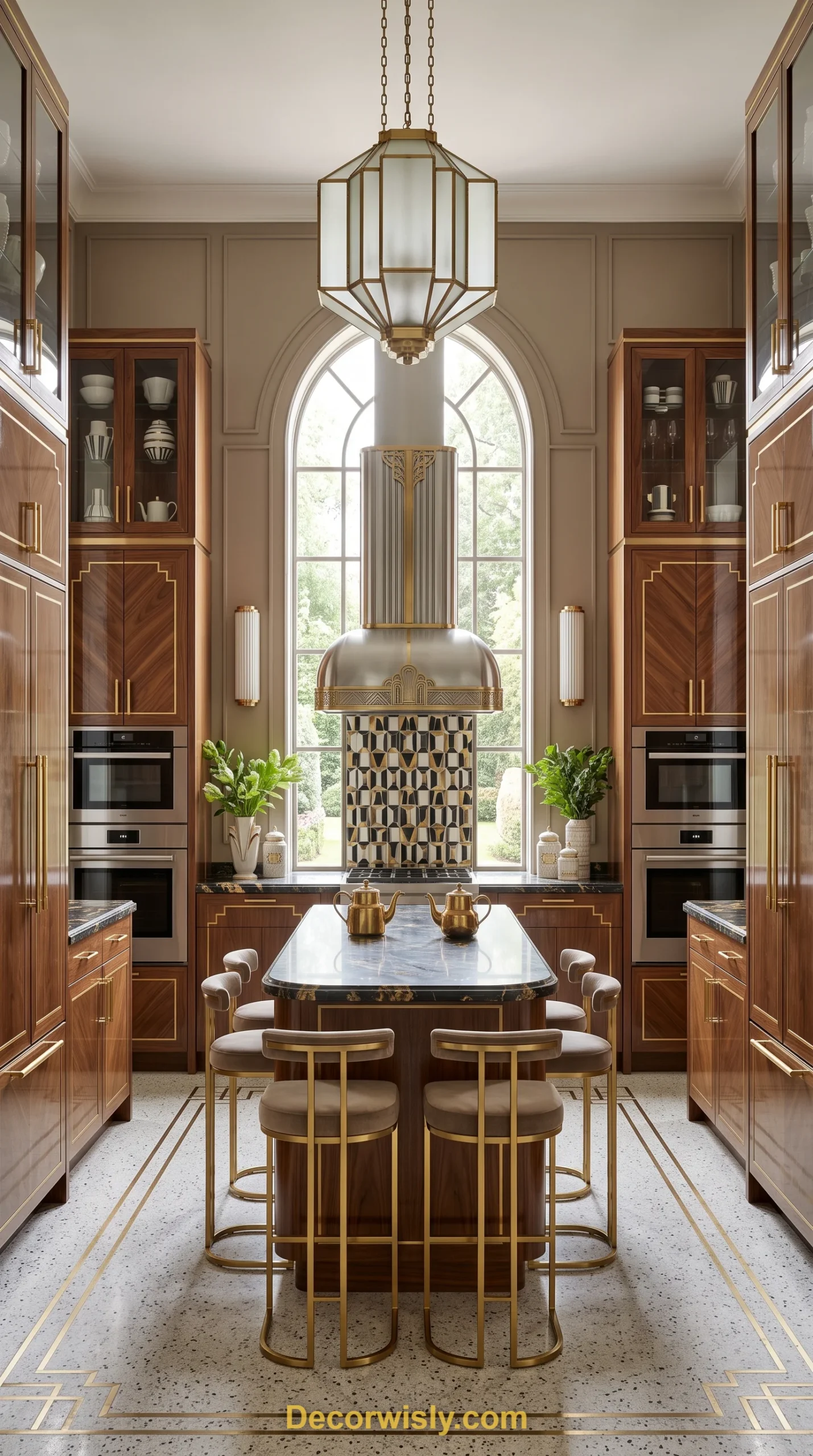
Symmetry brings a real sense of order to Art Deco kitchens, mirroring cabinetry, appliances, and decorative elements to create visual stability. Beyond looking polished, a well-balanced layout tends to function more efficiently during actual cooking and gatherings. Careful proportion and equal distribution of design elements echo the geometric perfection the era is known for.
8. Mixed Materials and Unexpected Pairings
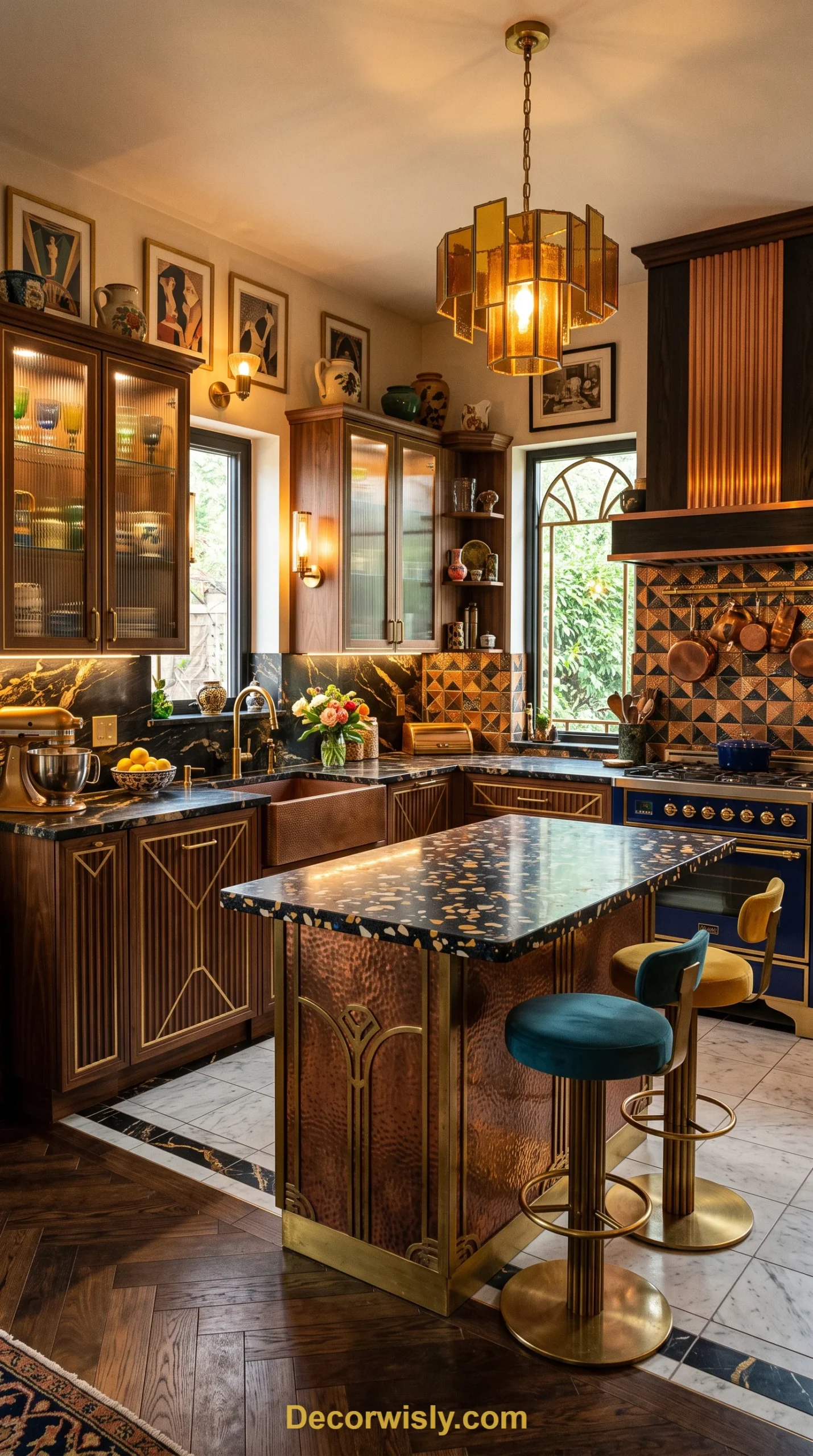
Combining wood, metal, glass, and stone in one space creates a layered aesthetic that keeps the kitchen feeling genuinely custom. This kind of material mixing pushes creative boundaries while still honoring Art Deco’s core elegance, juxtaposing textures and finishes for real visual depth. It’s an approach that rewards a bit of experimentation, blending modern innovation with vintage charm.
9. Statement Backsplashes and Mosaics
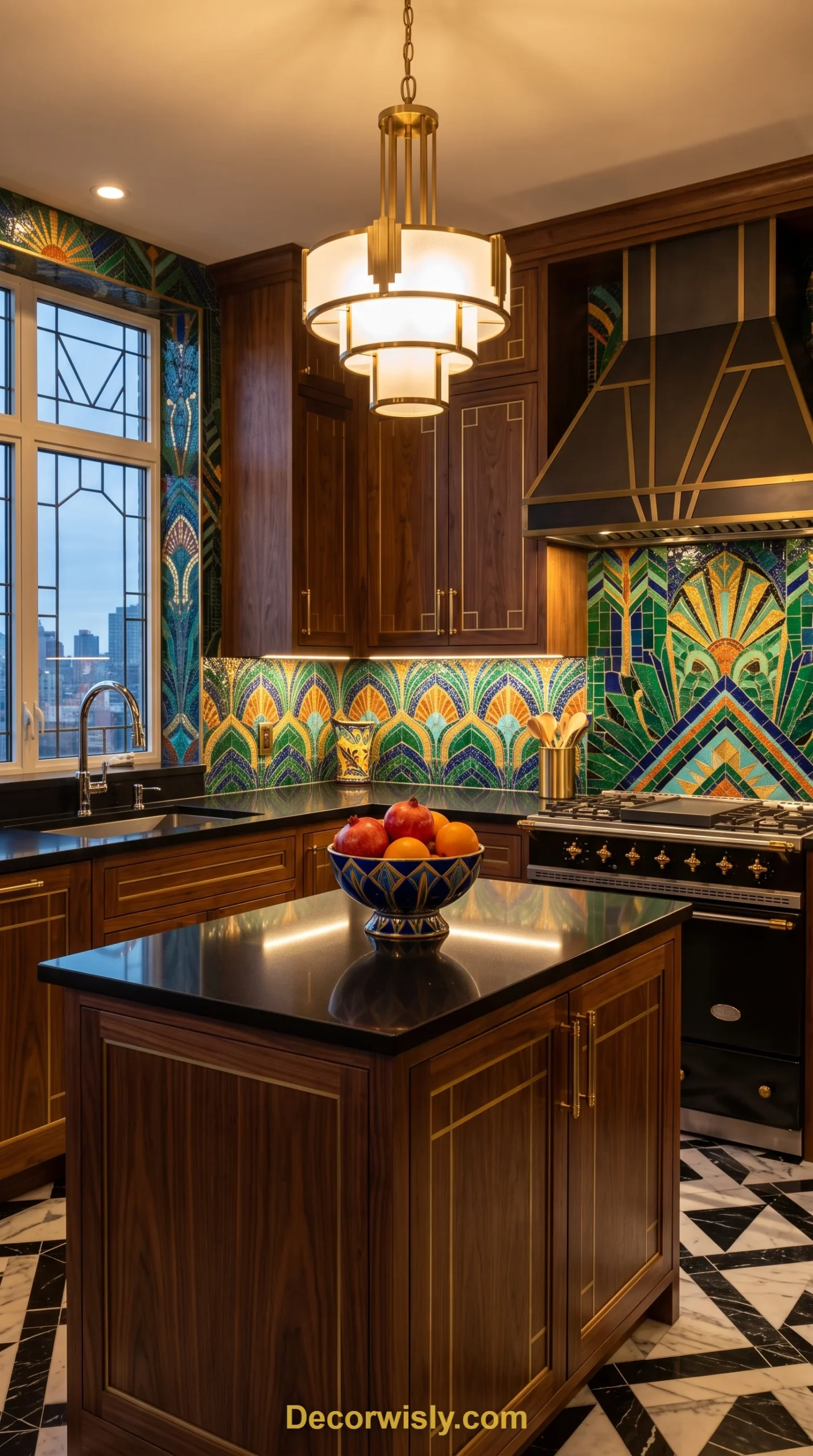
A backsplash doesn’t have to be an afterthought — vibrant, intricately patterned mosaics can act as the true visual centerpiece of an Art Deco kitchen. Beyond looking striking, these panels remain practical and easy to clean, protecting the cooking area while drawing the eye. Bold handcrafted tiles reflect the opulent creativity that defines the style at its best.
10. Retro Appliances with a Modern Twist
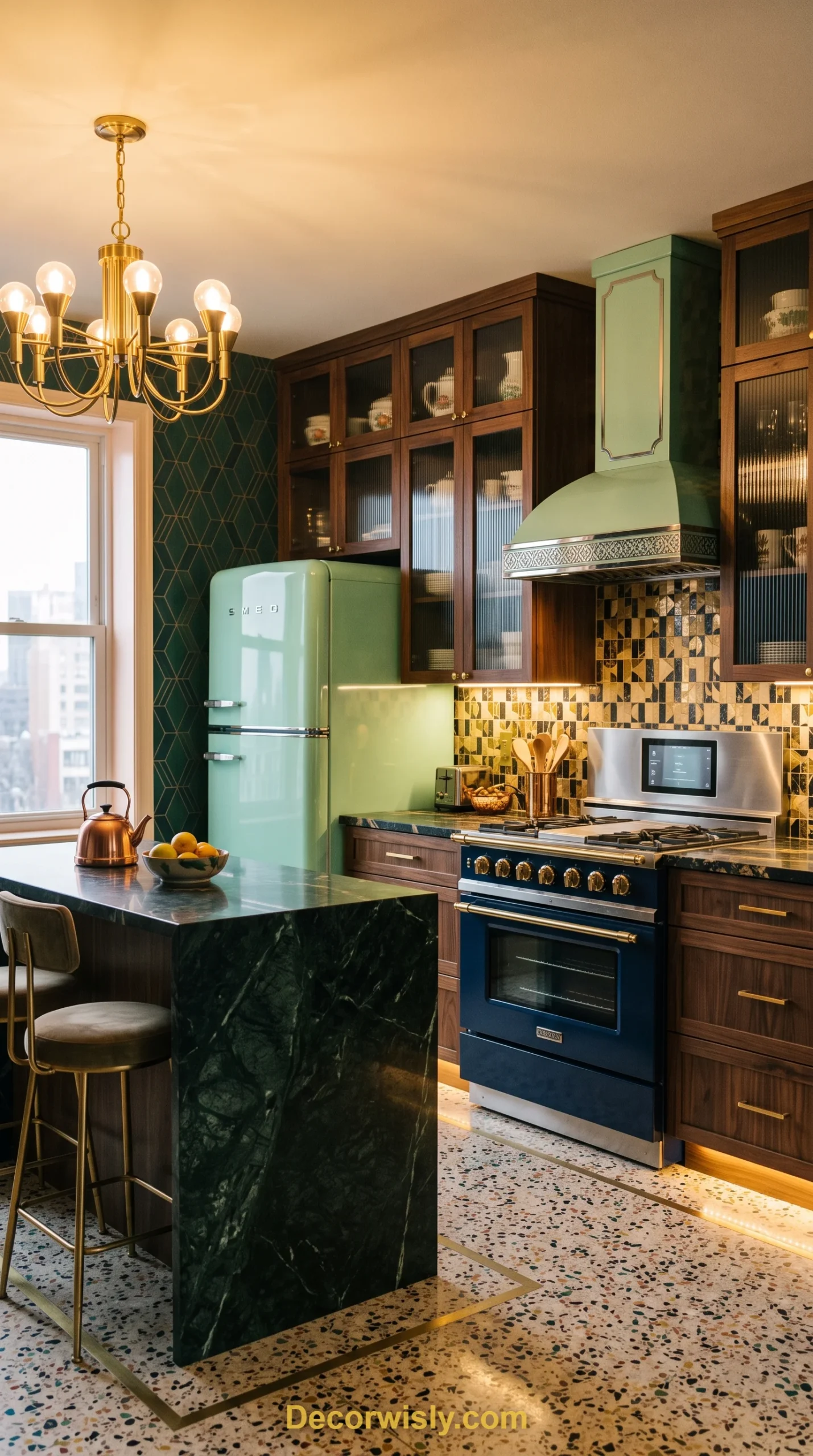
Reimagined vintage appliances bring classic aesthetics together with genuinely modern efficiency. A retro-style refrigerator or an elegantly shaped stove adds character and sophistication without sacrificing practicality — a fusion that lets nostalgia and innovation coexist rather than compete. It’s a detail that adds real personality to daily cooking routines.
11. Glossy and High-Shine Surfaces
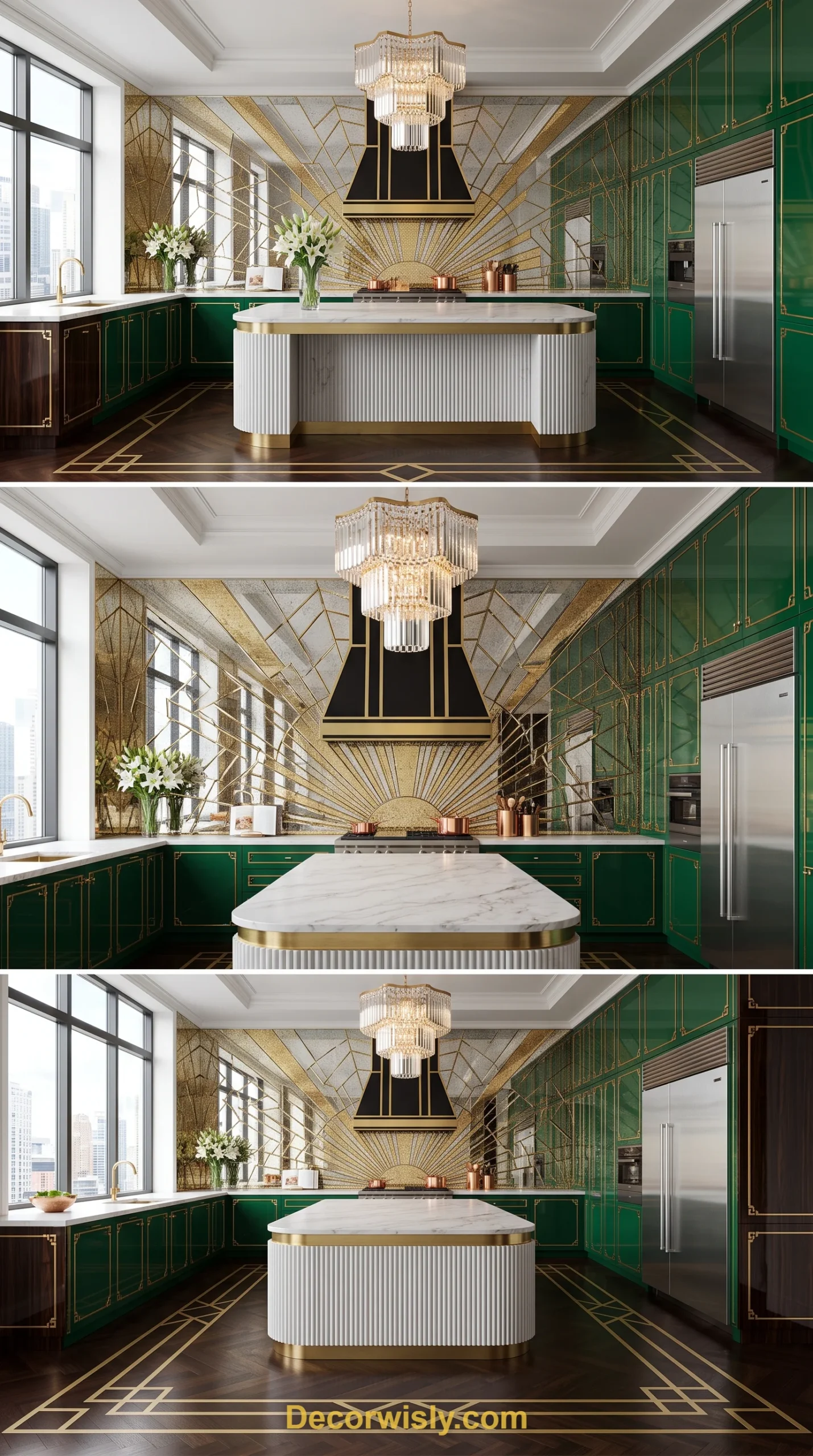
Glossy, high-shine surfaces enhance both light and the sense of space in a kitchen, giving even smaller rooms a more expansive, airy feel. High-gloss cabinetry, countertops, and backsplashes work together for a polished look that also makes cleaning easier — a genuinely practical benefit alongside the visual sophistication. The result channels Art Deco’s love of luminous, reflective materials.
12. Intricate Inlaid Details
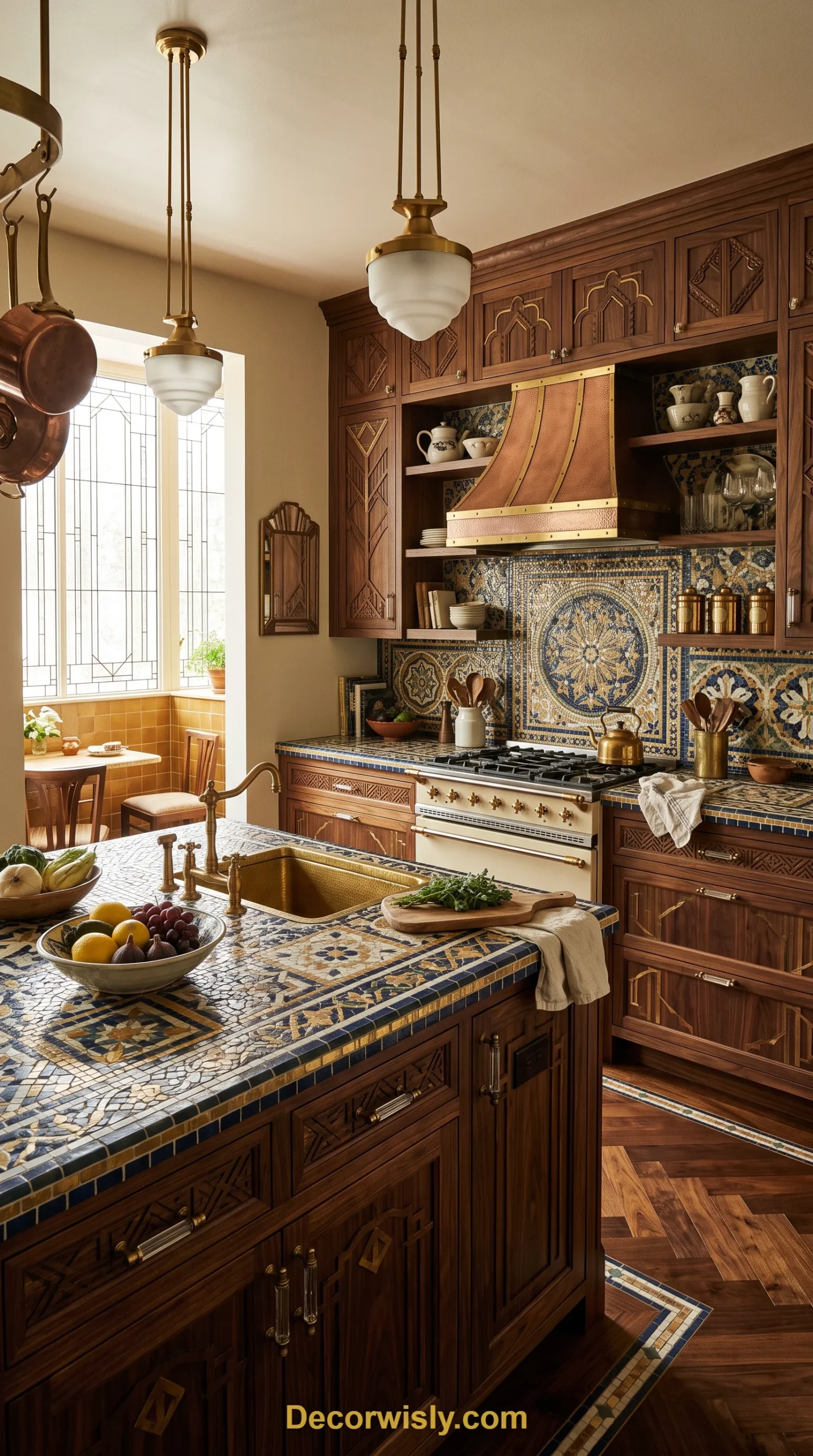
Mosaic inlays and decorative patterns worked into countertops or cabinetry add a genuine sense of craftsmanship to an Art Deco kitchen. These subtle embellishments enhance visual texture while nodding to the era’s more ornate traditions. The interplay of different materials arranged in precise patterns offers both a tactile and visual richness that turns everyday surfaces into something closer to fine detail work.
13. Decorative Cabinetry and Storage
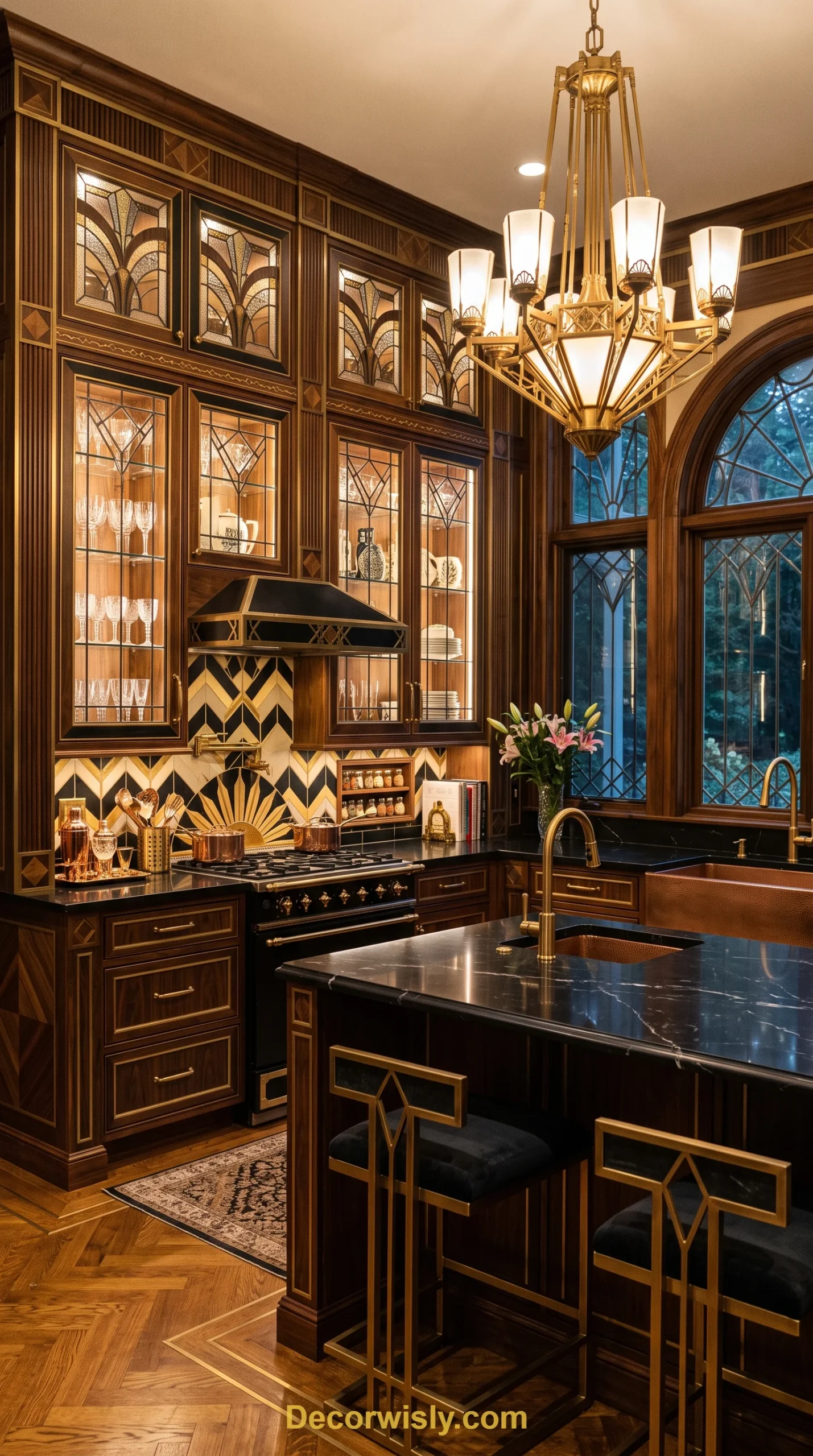
Cabinetry can double as art when it’s given the right detailing — glass-front doors, intricate paneling, ornate hardware. These custom pieces showcase real craftsmanship while still providing everyday storage, making organization itself a pleasing visual element rather than an afterthought. It’s a hallmark of the style: form and function working in tandem rather than one sacrificed for the other.
14. Designer Countertops and Islands
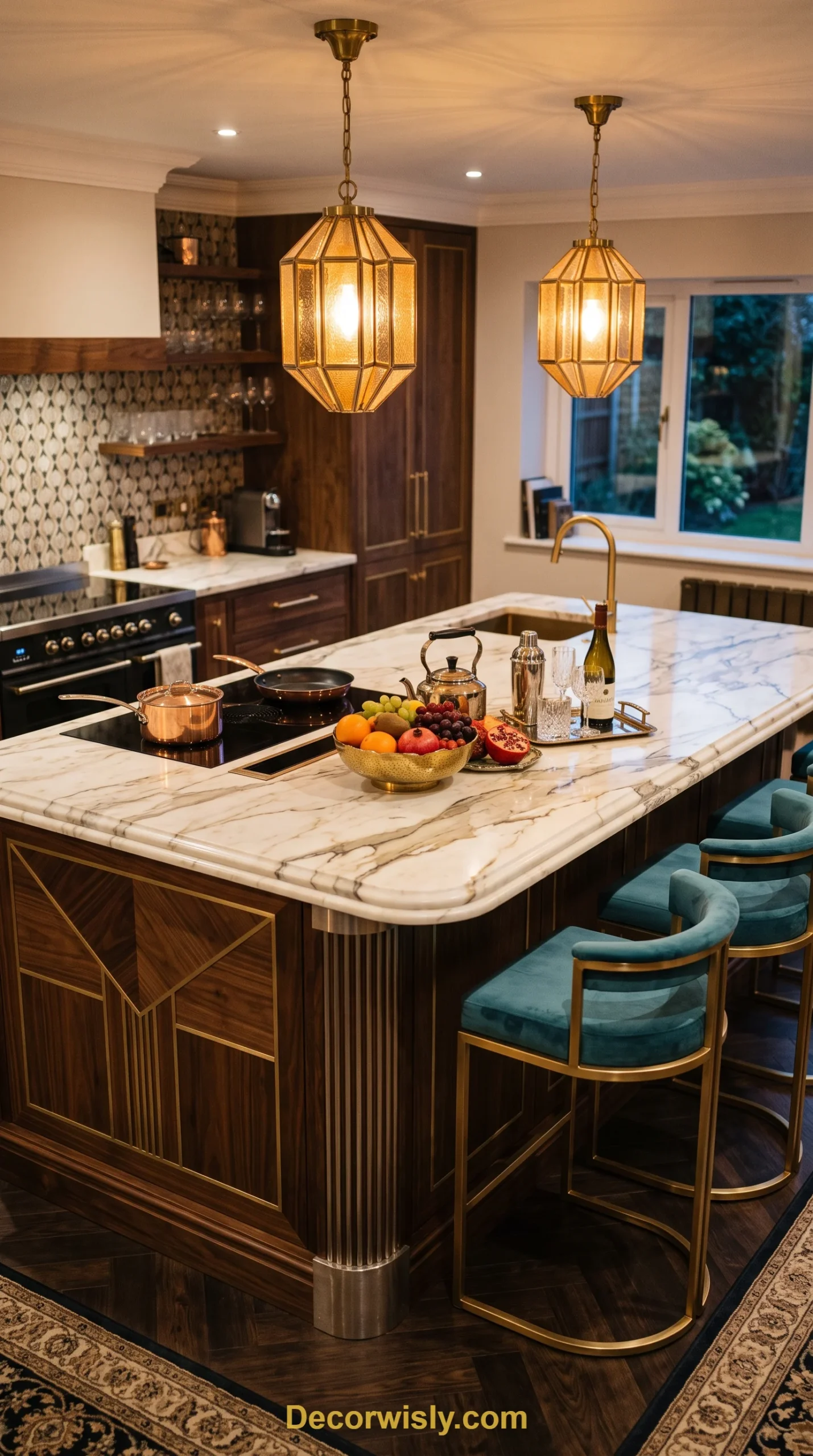
A well-designed countertop or island functions as both workspace and artistic focal point. Polished stone, quartz, or marble surfaces bring vibrant texture and a refined touch, while a properly sized island adds room for cooking, dining, or entertaining all at once. It’s a piece of furniture that ties practicality directly to the sumptuous appeal Art Deco is known for.
15. Glamorous Flooring Options
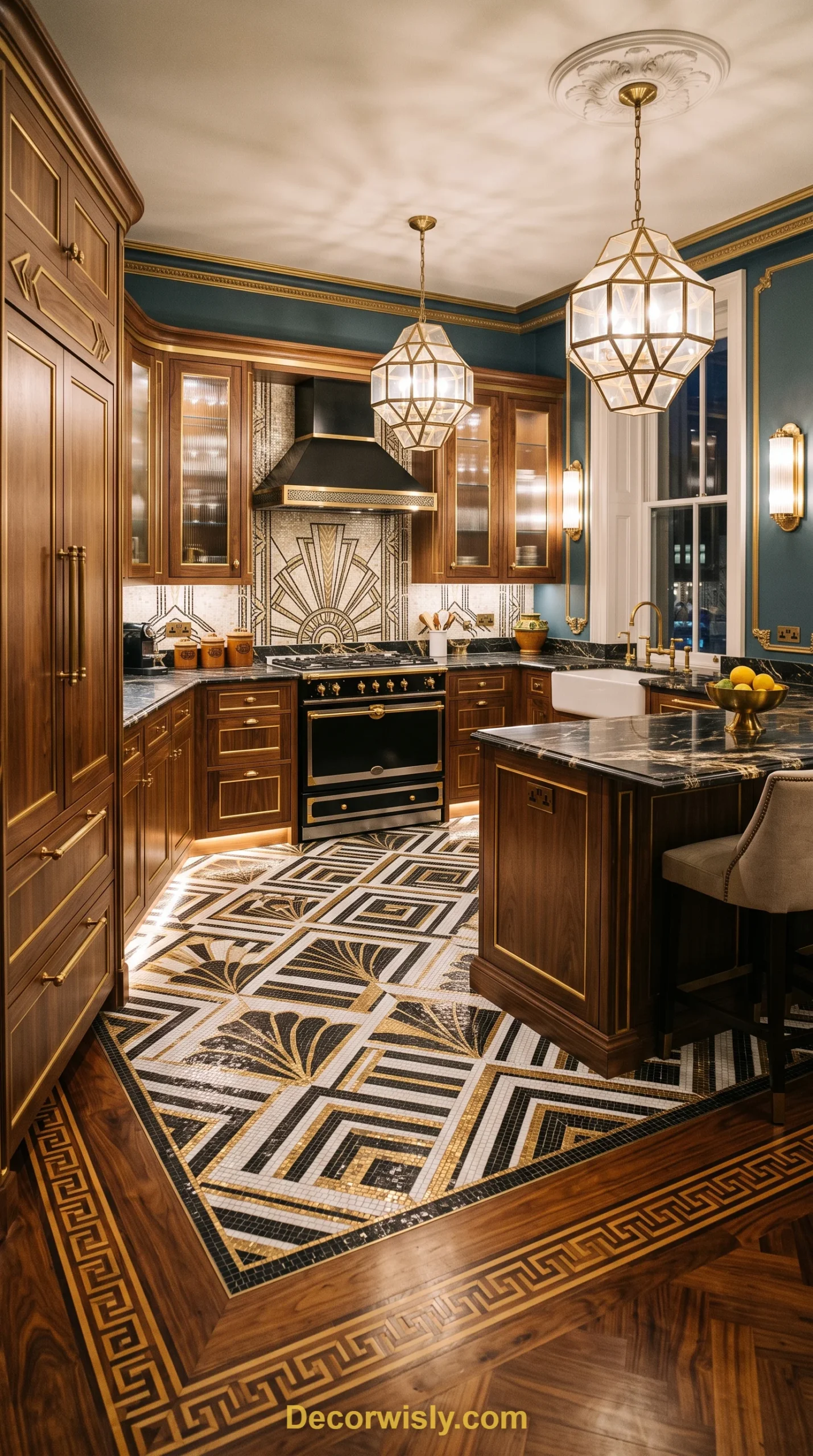
Flooring sets the tone for a kitchen just as much as the walls or cabinetry, and intricately patterned tiles or polished concrete with decorative inlays bring understated luxury underfoot. Beyond visual appeal, these floors need to hold up to daily activity, and the better options balance durability with striking design. It’s a foundational detail that ties the whole aesthetic together from the ground up.
16. Rich, Deep Color Palettes
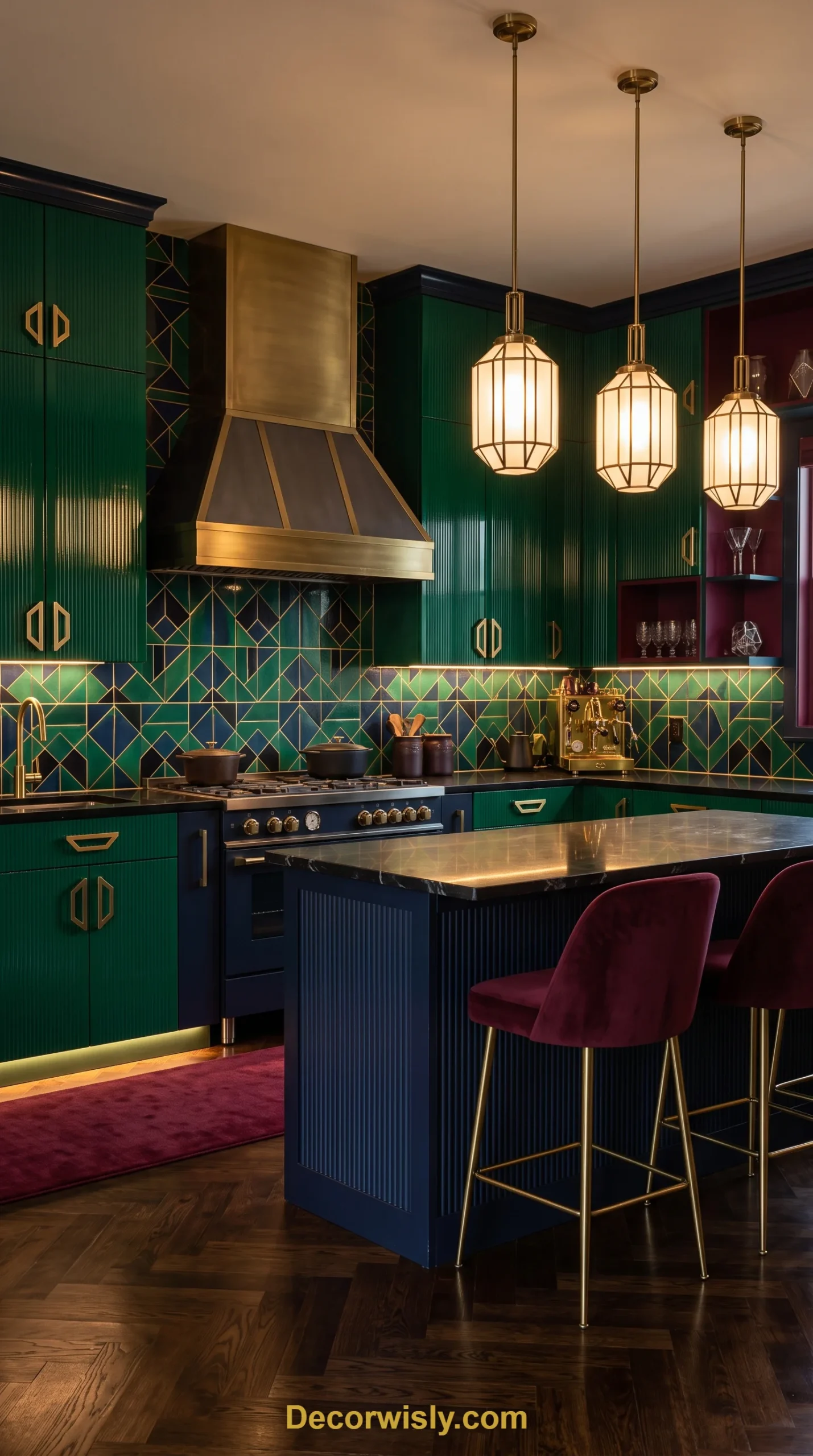
Deep, saturated colors — emerald green, navy blue, deep burgundy — bring genuine drama and warmth to an Art Deco kitchen. These tones work well on walls, cabinetry, and accents alike, creating an immersive environment that echoes the era’s opulence. Paired with metallic or glossy finishes, darker colors provide a striking contrast that builds real depth and personality into the design.
17. Ornate Hardware and Fixtures
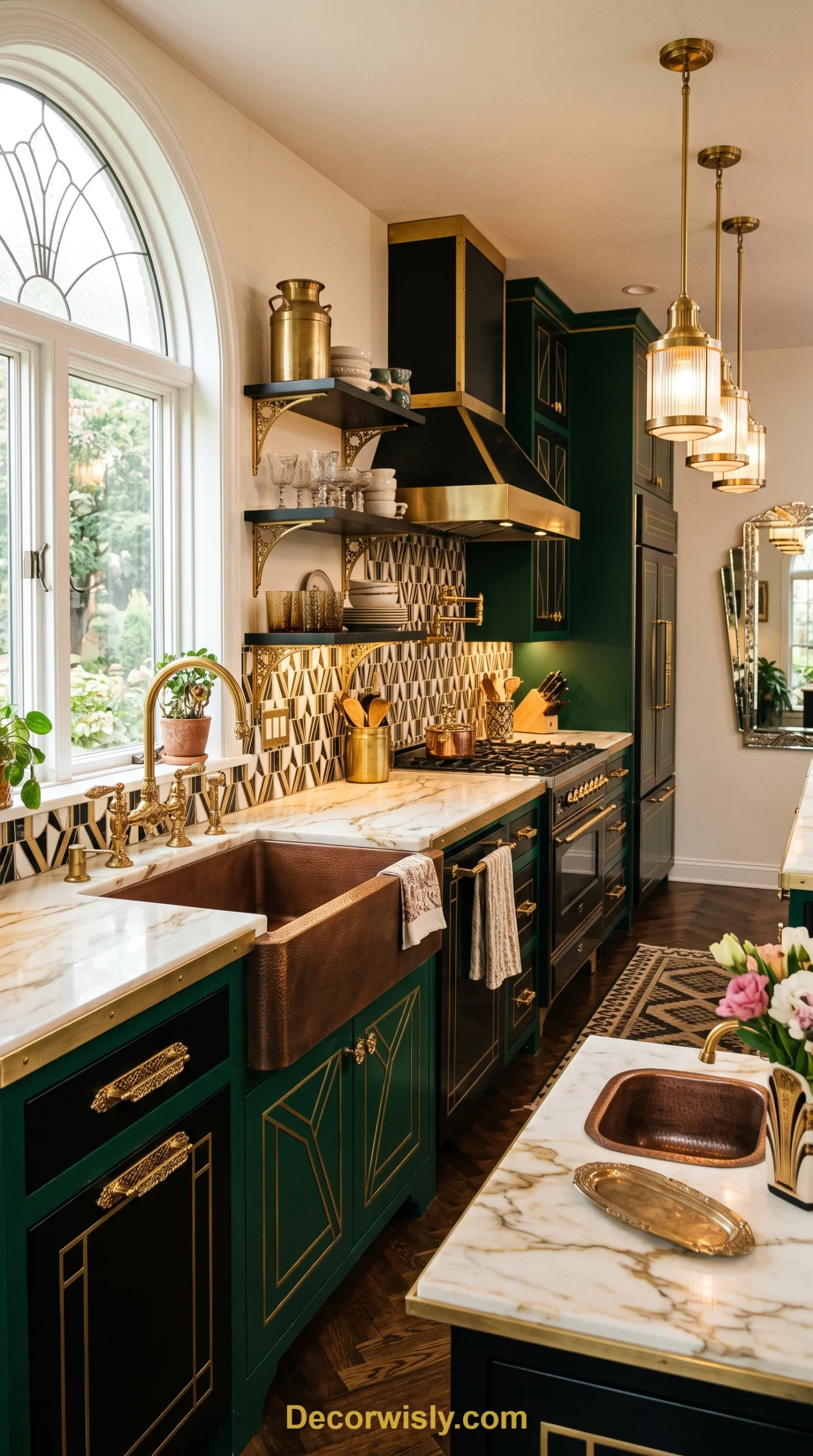
Hardware is often the detail that ties an entire Art Deco kitchen together. Carefully chosen handles, knobs, and faucets with vintage-inspired motifs add refined artistry while still serving a practical purpose. These small touches create a seamless connection between modern convenience and old-world craftsmanship, elevating even the most functional parts of the kitchen.
18. Art Deco Inspired Murals and Paneling
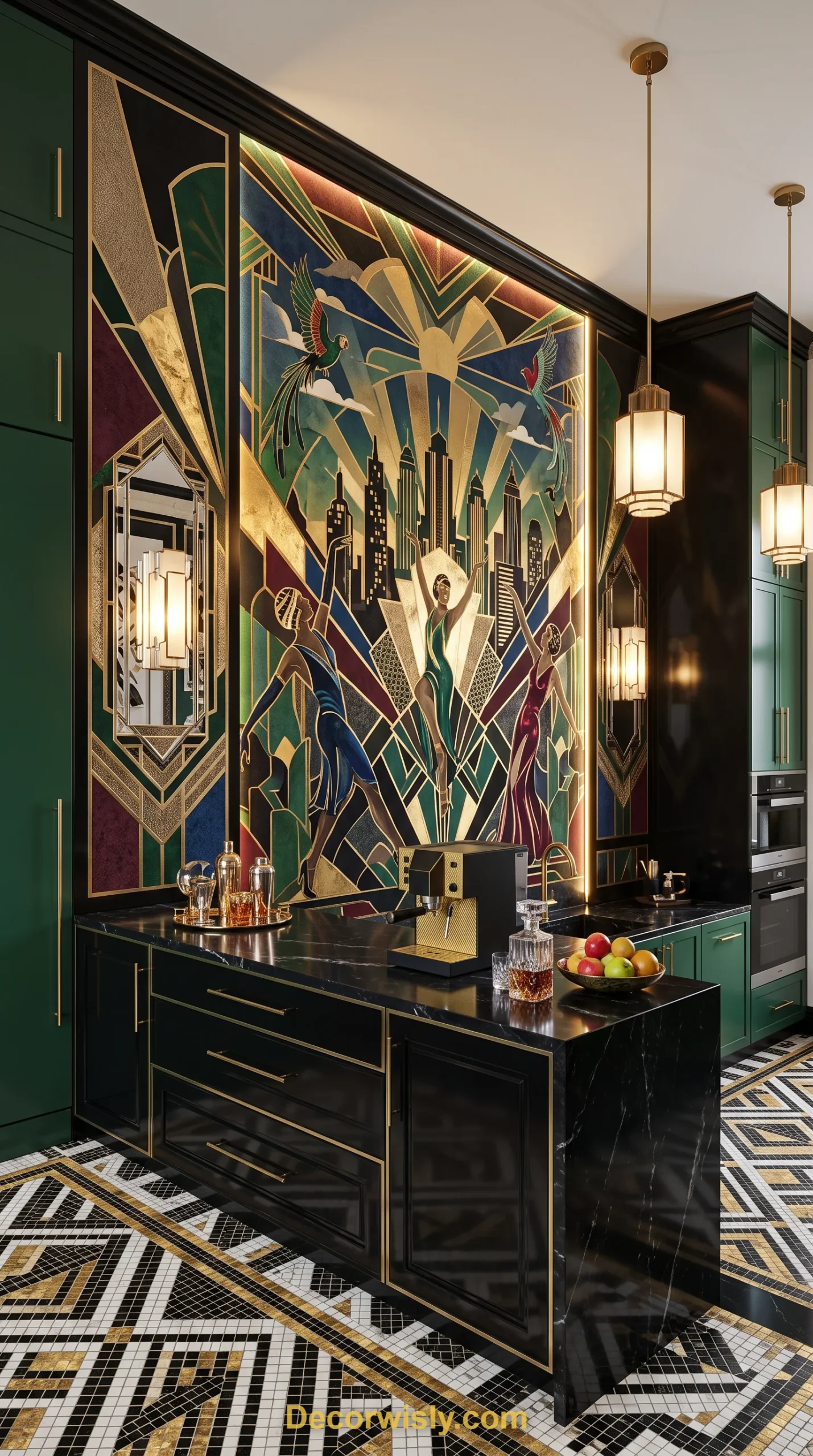
Bold, patterned murals or decorative wall paneling bring artistic storytelling directly into the kitchen, capturing the glamour of the era on a single accent wall or throughout the whole space. These touches add personality and a sense of drama, giving the room an unmistakable signature. It’s a design choice that invites conversation while celebrating genuine craftsmanship.
19. Floating Shelves and Display Accents
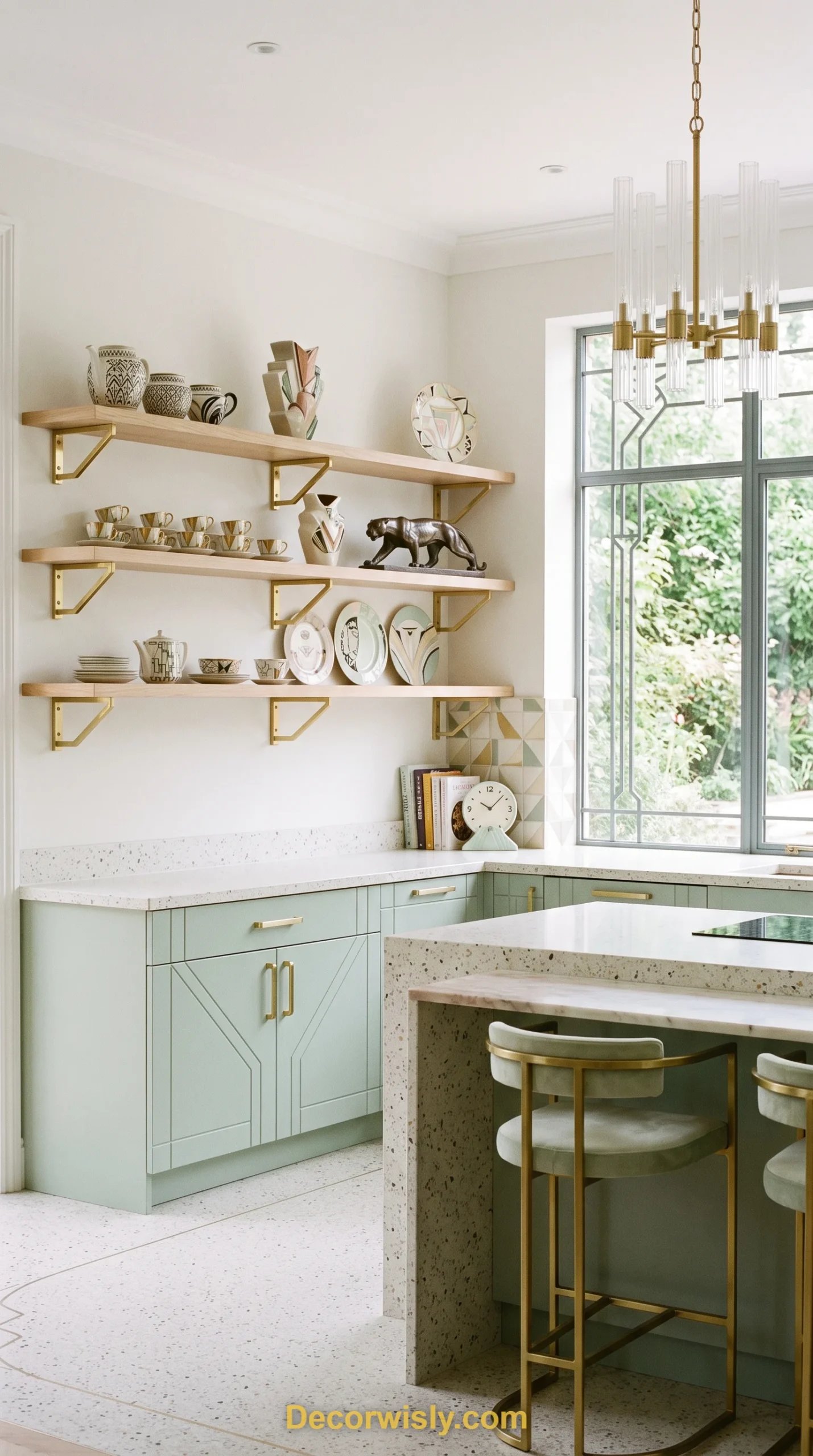
Floating shelves and curated display accents keep an Art Deco kitchen feeling airy while giving decorative dishware, art objects, or collectibles a proper stage. Strategic placement provides easy access to daily essentials while highlighting the more unique pieces in a collection. Clean lines and minimalist supports keep focus on what’s displayed rather than the shelving itself.
20. Integrated Entertainment Spaces
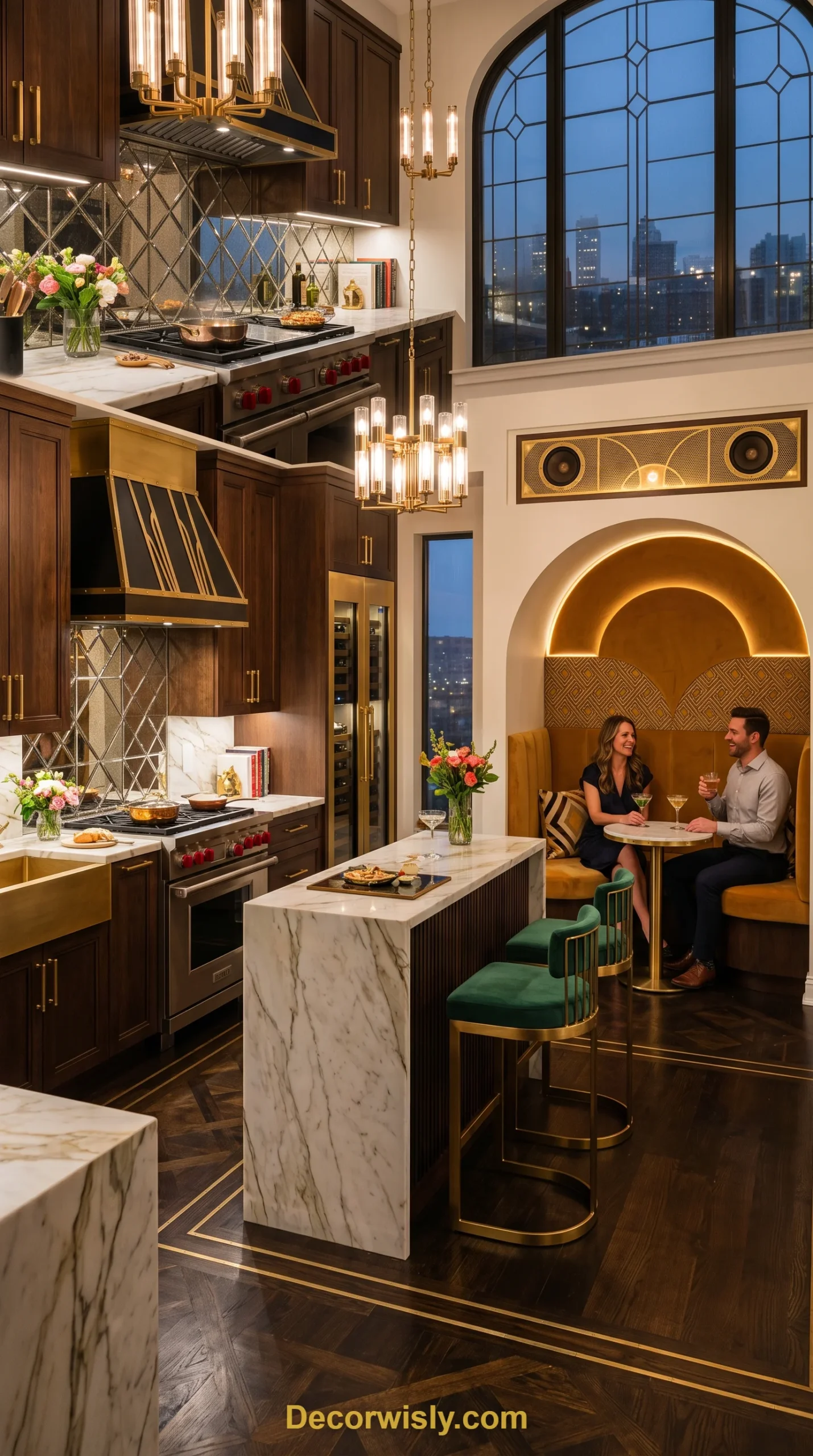
Expanding a kitchen’s design to include entertainment features — a built-in sound system, a smart display, a cozy seating nook — lets the space flow naturally from meal prep into leisure. Thoughtful zoning keeps these additions in line with the overall Art Deco aesthetic while adding real modern convenience. It’s a way of turning the kitchen into a genuine hub for both cooking and conversation.
21. Custom Bar Areas and Wine Displays
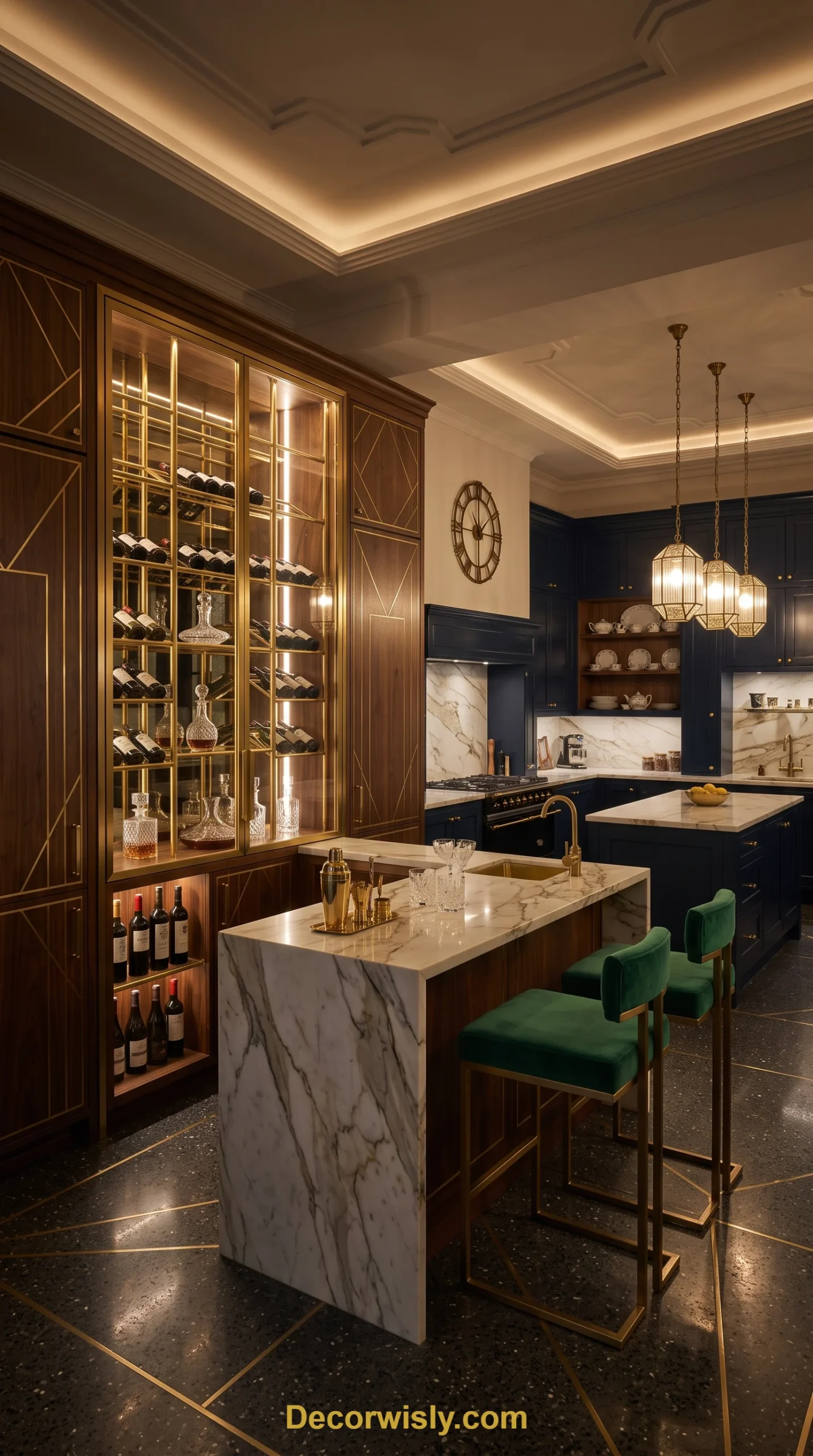
A dedicated bar area or wine display adds a layer of sophistication built specifically for entertaining. Rich materials, intricate lighting, and refined finishes turn this corner of the kitchen into a genuine focal point for social gatherings. Combining storage and display in one space celebrates a vintage-inspired charm while boosting the kitchen’s overall hosting capability.
22. Innovative Lighting Integration
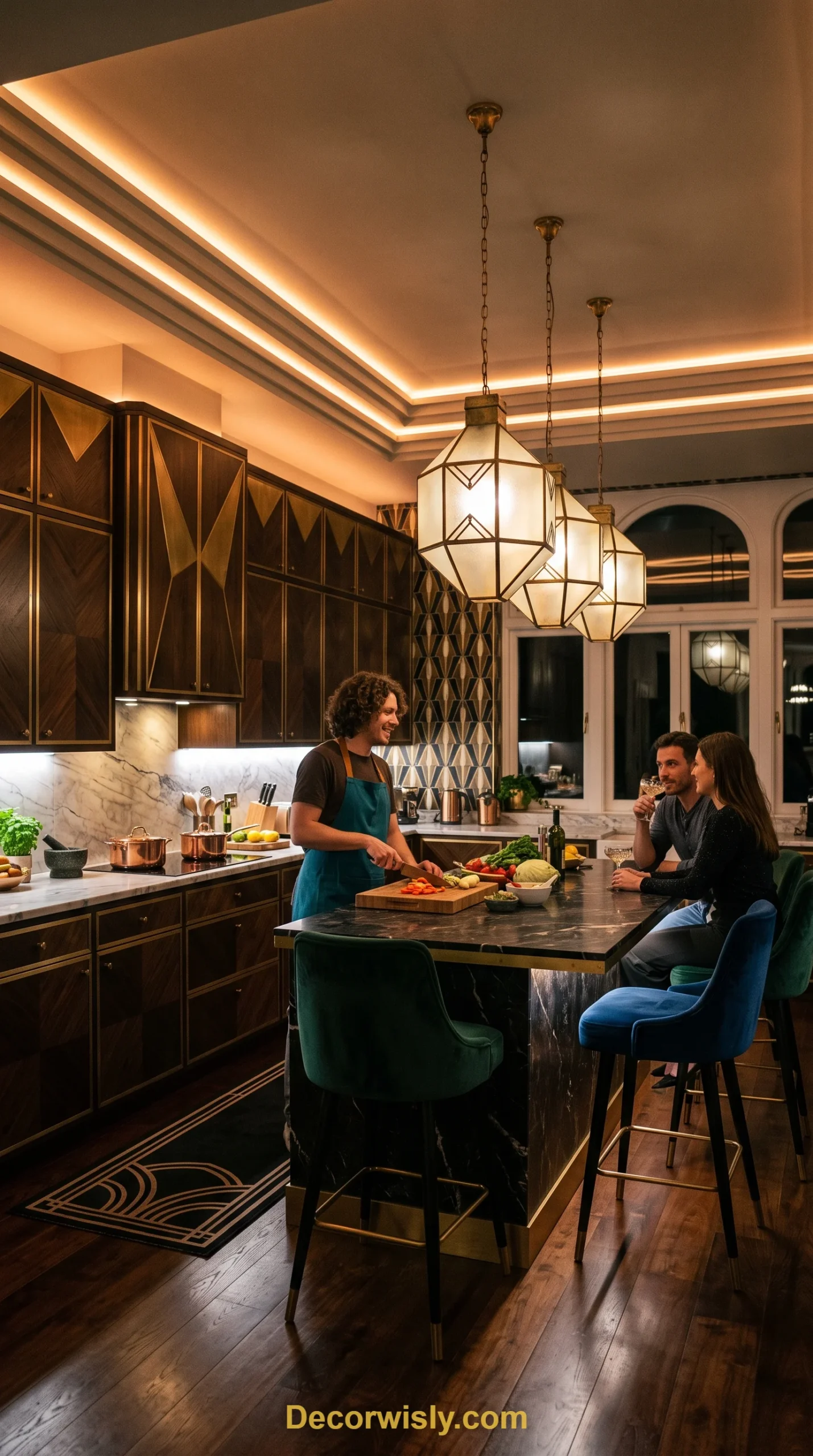
Strategic lighting placement can transform a kitchen from ordinary to genuinely striking, accentuating architectural features and creating a dynamic interplay of light and shadow. Embedded LED strips, under-cabinet lighting, and dramatic pendant fixtures all serve function and atmosphere at once. It’s a detail that amplifies the luxurious feel of Art Deco design while keeping the space fully practical for everyday cooking.
Final Thoughts
Art Deco works so well in a kitchen because it never really chooses between beauty and usability — the geometric patterns, the rich materials, the metallic accents, they’re all built to hold up under daily use while still looking genuinely glamorous. Whether you commit to a full transformation or just borrow a few signature details, like ornate hardware or a statement backsplash, the result is a kitchen that feels considered rather than assembled. Pick the elements that resonate most, and let them anchor a space that honors the past while still working perfectly well for how you actually cook and live today.