Lighting does more heavy lifting in a small kitchen than almost any other design choice. The right layers of light can make a tight footprint feel open, highlight the details worth showing off, and make everyday cooking easier on the eyes. Here are 25 ways to rethink the lighting in a compact kitchen, from the purely functional to the purely atmospheric.
1. Under-Cabinet LED Strips

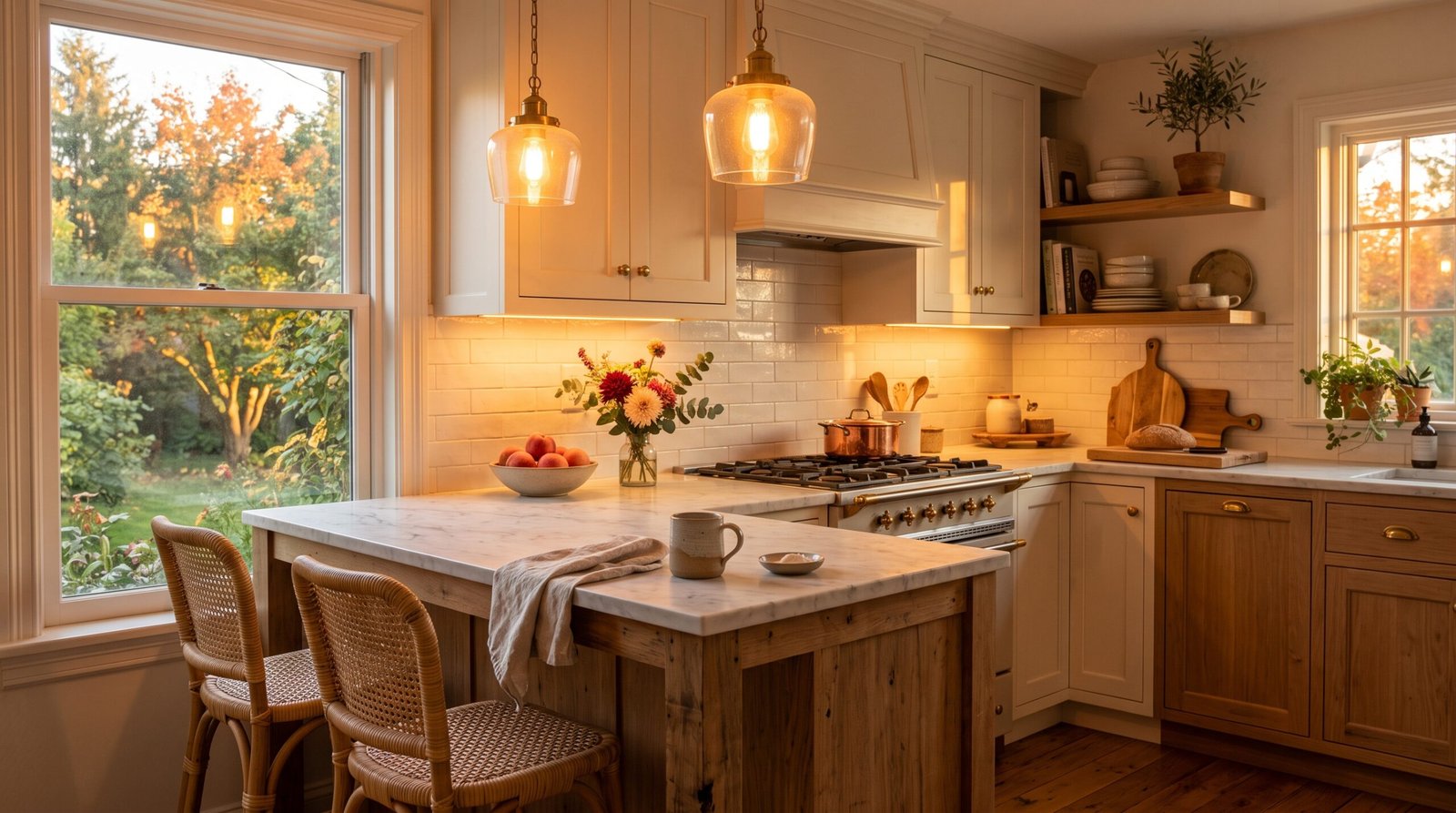
Tucked beneath upper cabinets, LED strips throw light exactly onto the countertop where prep work actually happens. They’re unobtrusive during the day and become a soft glow at night, and because they’re low-profile, they don’t compete visually with anything else in a tight kitchen. It’s one of the easiest upgrades to retrofit into an existing space.
2. A Single Pendant Over the Prep Zone

Even in a kitchen too small for a full island, one well-placed pendant over the sink or main counter adds focused task light and a bit of personality overhead. It draws the eye upward, which helps a low-ceilinged room feel less boxed in, while giving the cook a dedicated pool of light to work under.
3. Recessed Spotlights for General Coverage

Recessed fixtures disappear into the ceiling, which is exactly why they work so well in small rooms — they add real brightness without adding visual clutter overhead. Positioned over the stove and sink, they cover the two spots that need the most light while keeping sightlines clean everywhere else.
4. Adjustable Track Lighting

A track system lets you redirect individual heads toward whatever needs light that day — a task counter now, a shelf of dishware later. That flexibility is especially useful in a small kitchen where the same few feet of space might serve several different jobs throughout the day.
5. Dimmers for Mood Control
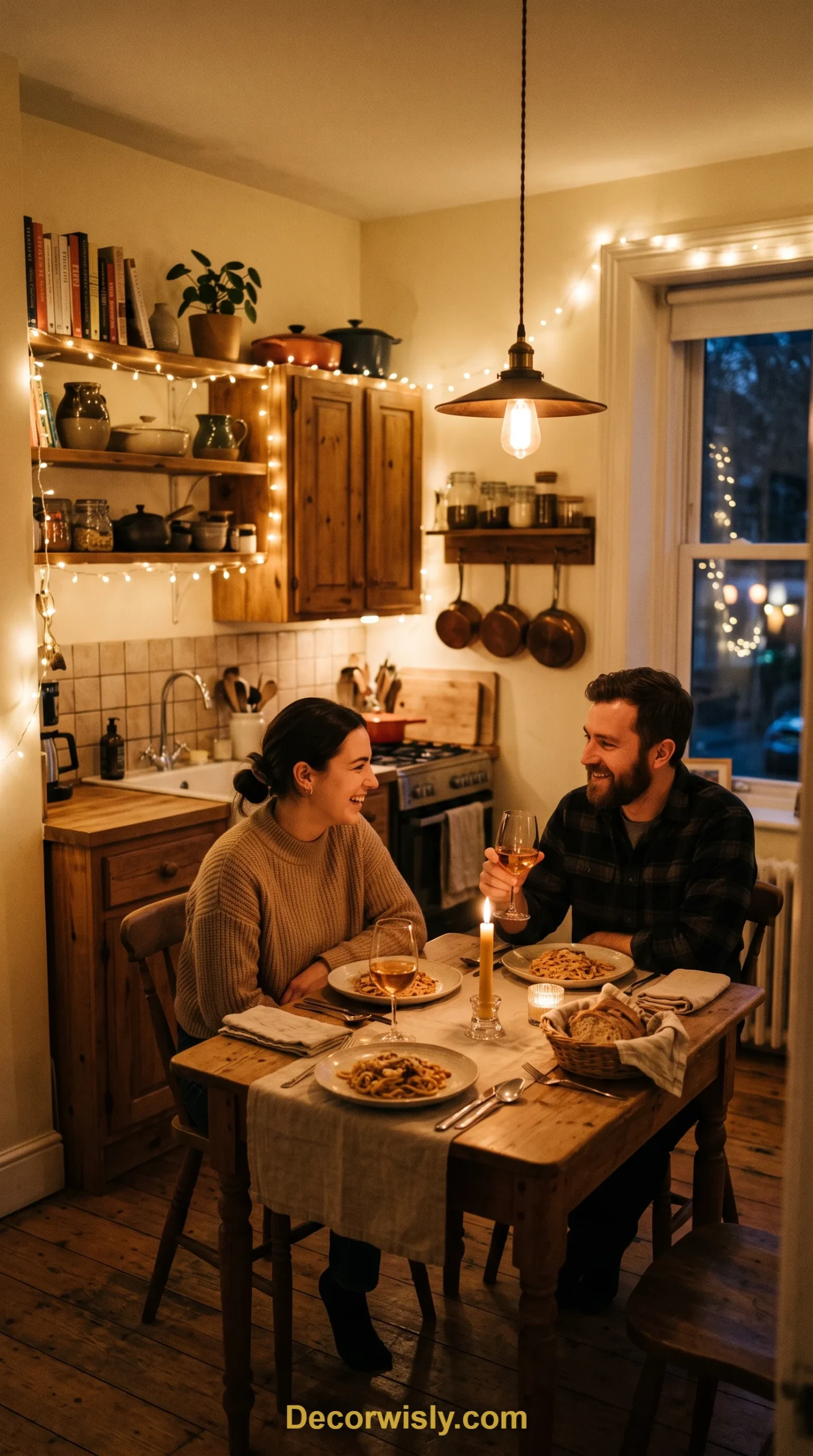
A dimmer switch turns one fixture into two: bright and functional for cooking, low and warm for a quiet dinner. It’s a small hardware change with an outsized effect on how a compact kitchen feels depending on the time of day.
6. A Petite Statement Chandelier
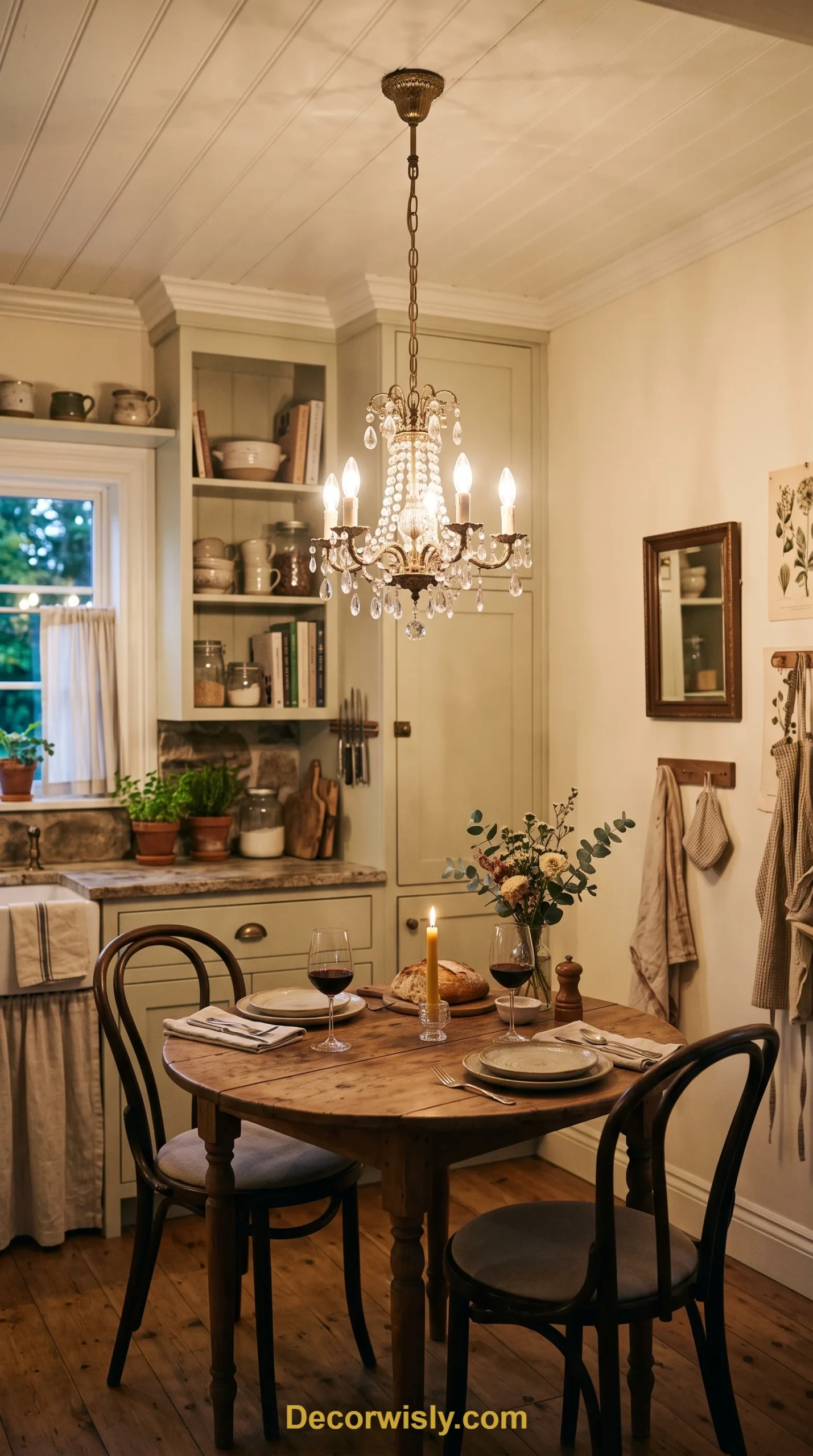
A scaled-down chandelier over a breakfast table or small island adds a little drama without overwhelming the room the way a full-size fixture would. It works best as the one ornamental piece in an otherwise simple lighting plan, letting it stand out rather than compete.
7. Wall Sconces to Free Up Counter Space
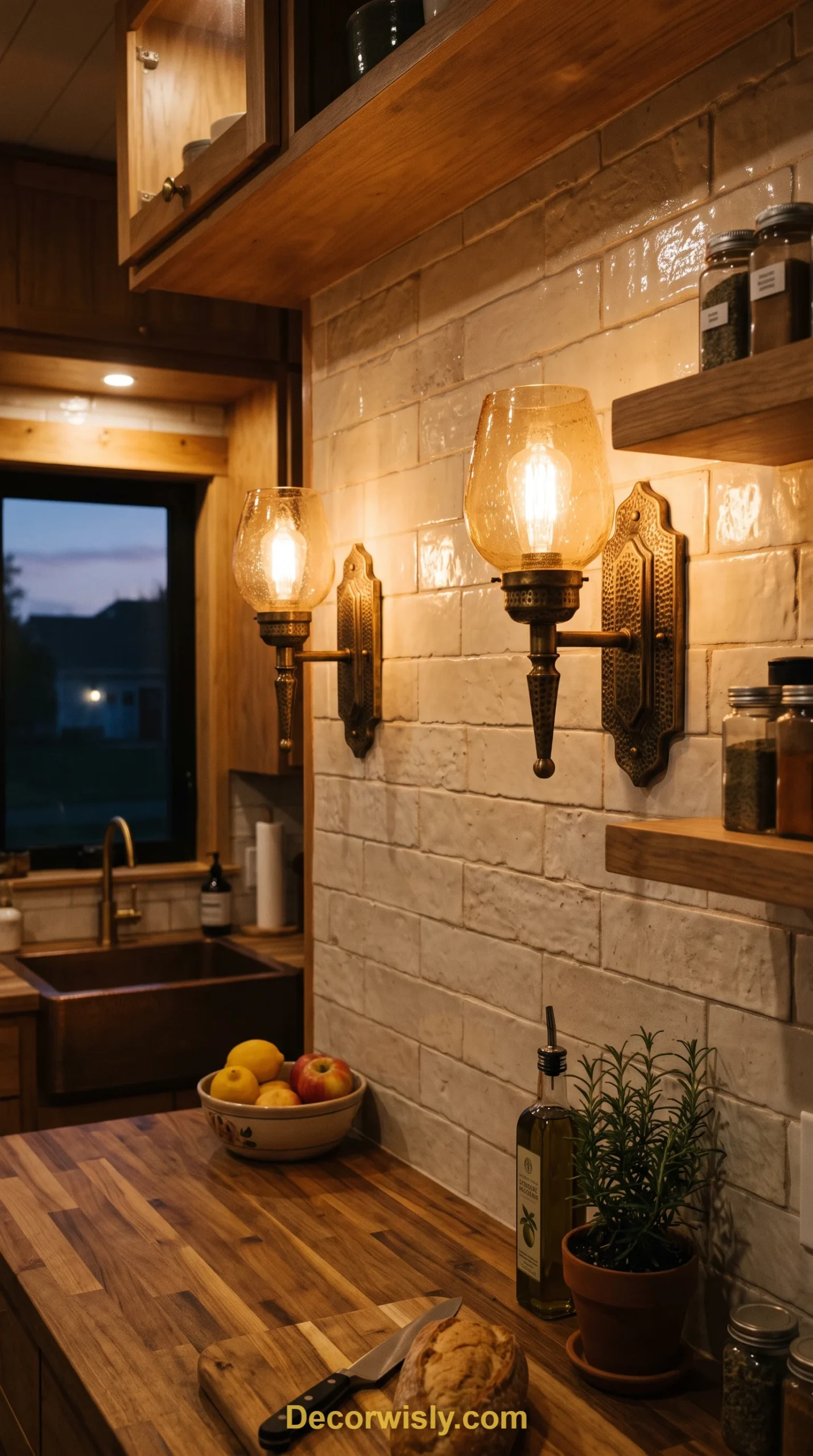
Mounted on the wall rather than sitting on a surface, sconces add light and visual interest without eating into limited counter real estate. They’re particularly useful flanking a window or backsplash, where they can highlight texture without needing floor or counter space at all.
8. Lit Interiors for Open Cabinetry

Adding small LED strips inside glass-front or open cabinets turns storage into a lit display, which adds depth to a room that doesn’t have much of it to spare. It’s a subtle trick that makes a small kitchen look considered rather than just tidy.
9. High-Efficiency LED Bulbs Throughout

Swapping every fixture to LED keeps energy use down and heat output low, which matters more in a small kitchen where a warm bulb can make an already tight space feel stuffy. It’s an easy, inexpensive change that pays off in both comfort and the electric bill.
10. Ambient Light Behind Open Shelves
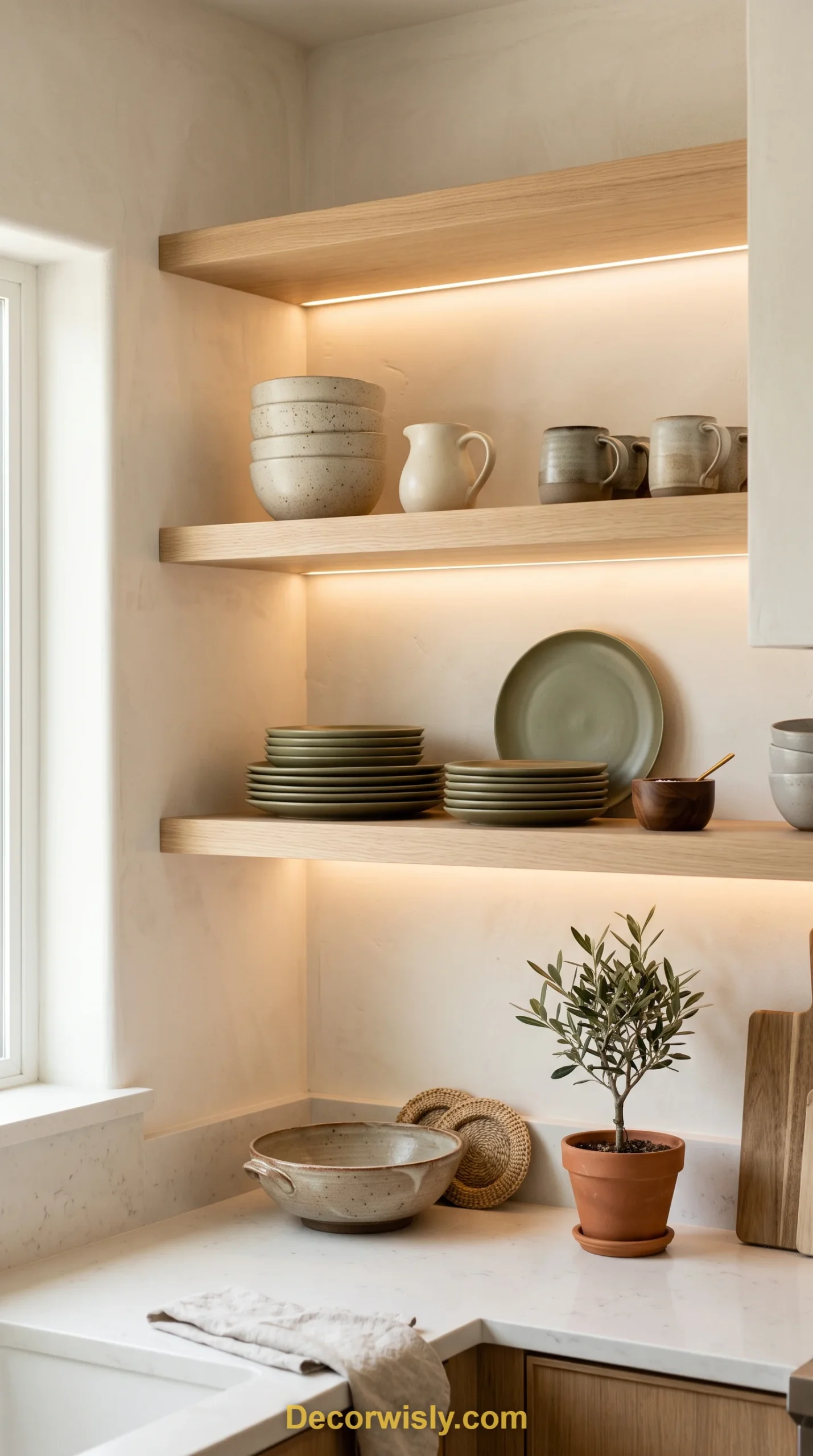
A soft light source behind or above open shelving gives everyday dishware a bit of a spotlight, which makes a small kitchen’s storage feel intentional rather than exposed. It’s a simple way to add warmth to a wall that would otherwise just be functional.
11. Spotlighting for Artwork or Decor
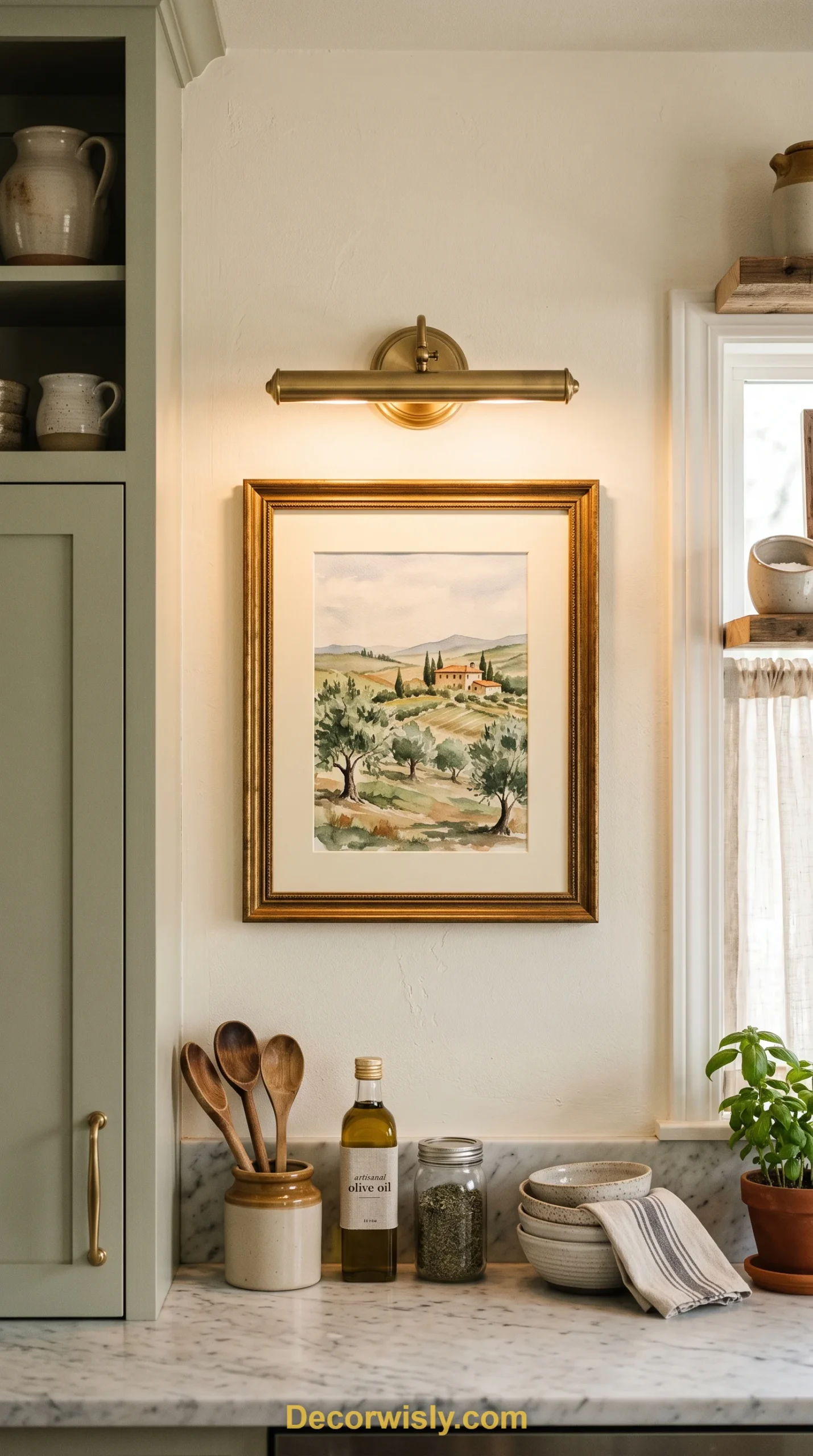
A small picture light or angled spotlight aimed at a piece of art or a favorite object adds a gallery-like touch to a kitchen wall. It’s a detail that makes a compact space feel curated instead of just efficient.
12. A Clean, Minimalist Overhead Fixture
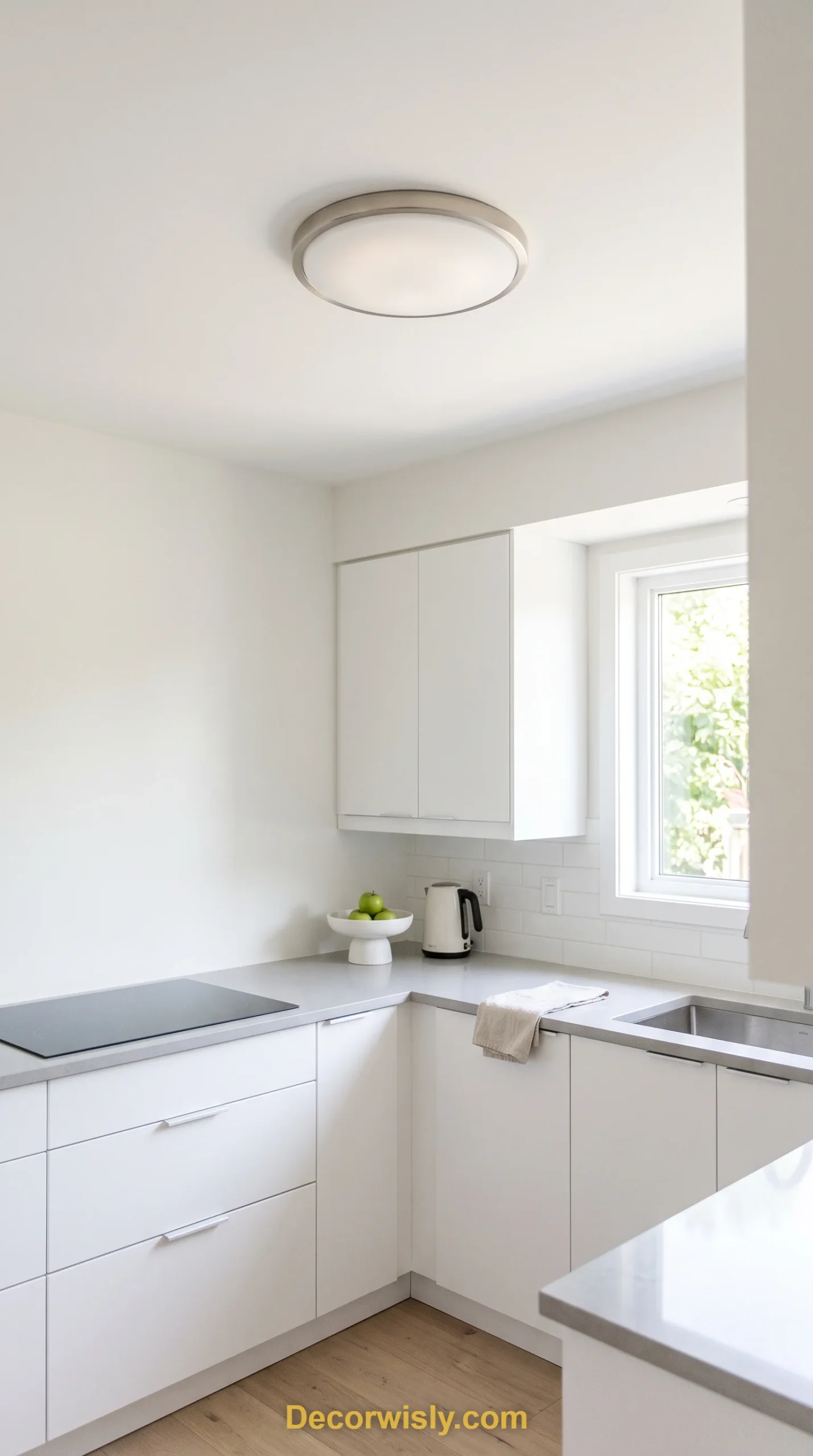
One simple flush-mount or semi-flush fixture can do the job of general lighting without pulling focus from anything else in the room. In a small kitchen, restraint at the ceiling often reads better than a statement piece competing with everything below it.
13. Adjustable-Arm Task Lighting

A swing-arm or gooseneck fixture lets you point light exactly where a task needs it, whether that’s a cutting board or a recipe propped open on the counter. It’s a practical solution for a kitchen too small to fit a full bank of dedicated task lighting.
14. Small Fixtures for Dark Corners
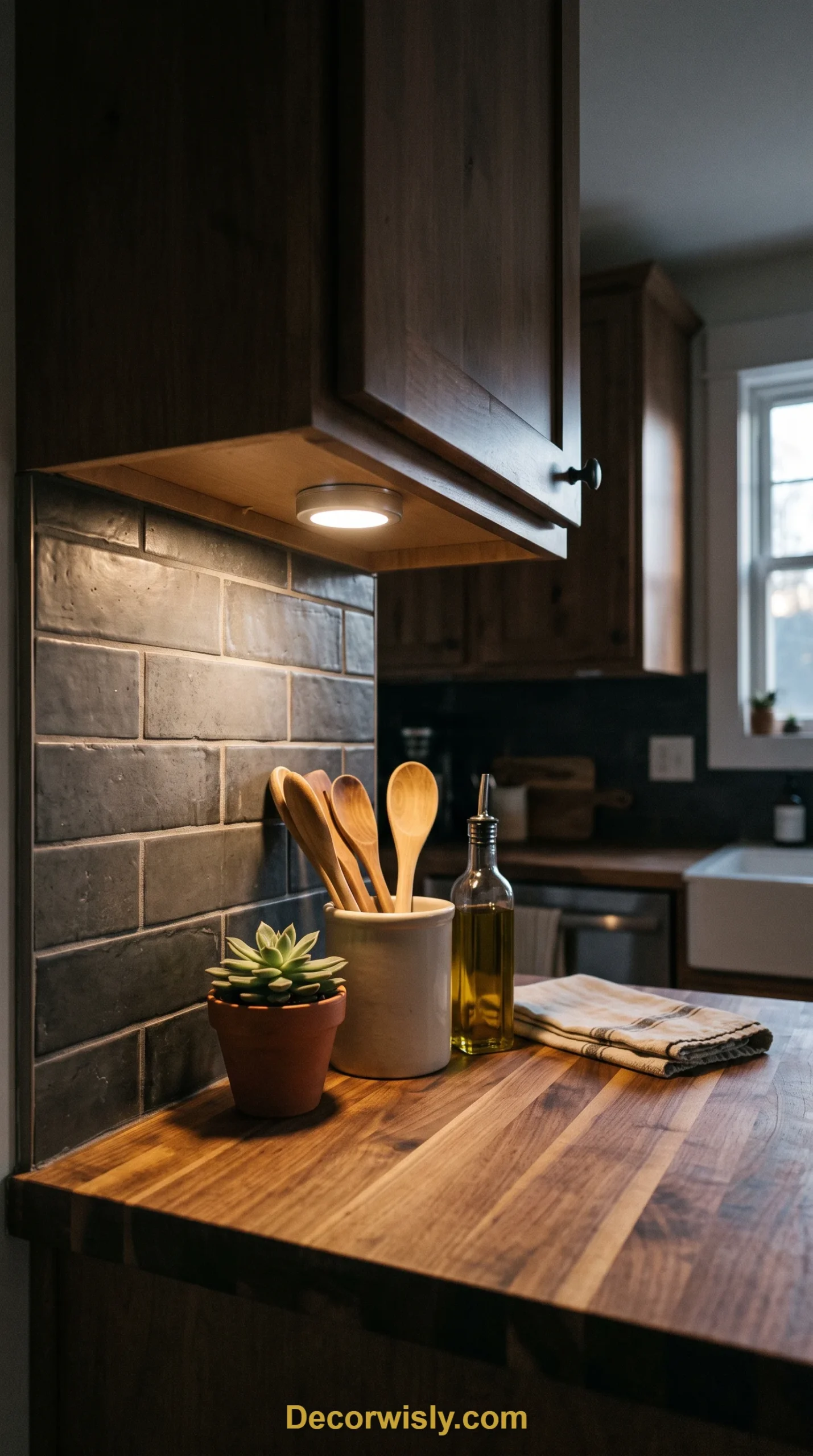
Every small kitchen has a corner that never quite gets enough light. A compact puck light or LED strip tucked into that spot removes the shadow and, in the process, makes the whole room read as brighter and larger than it is.
15. App-Controlled Smart Lighting
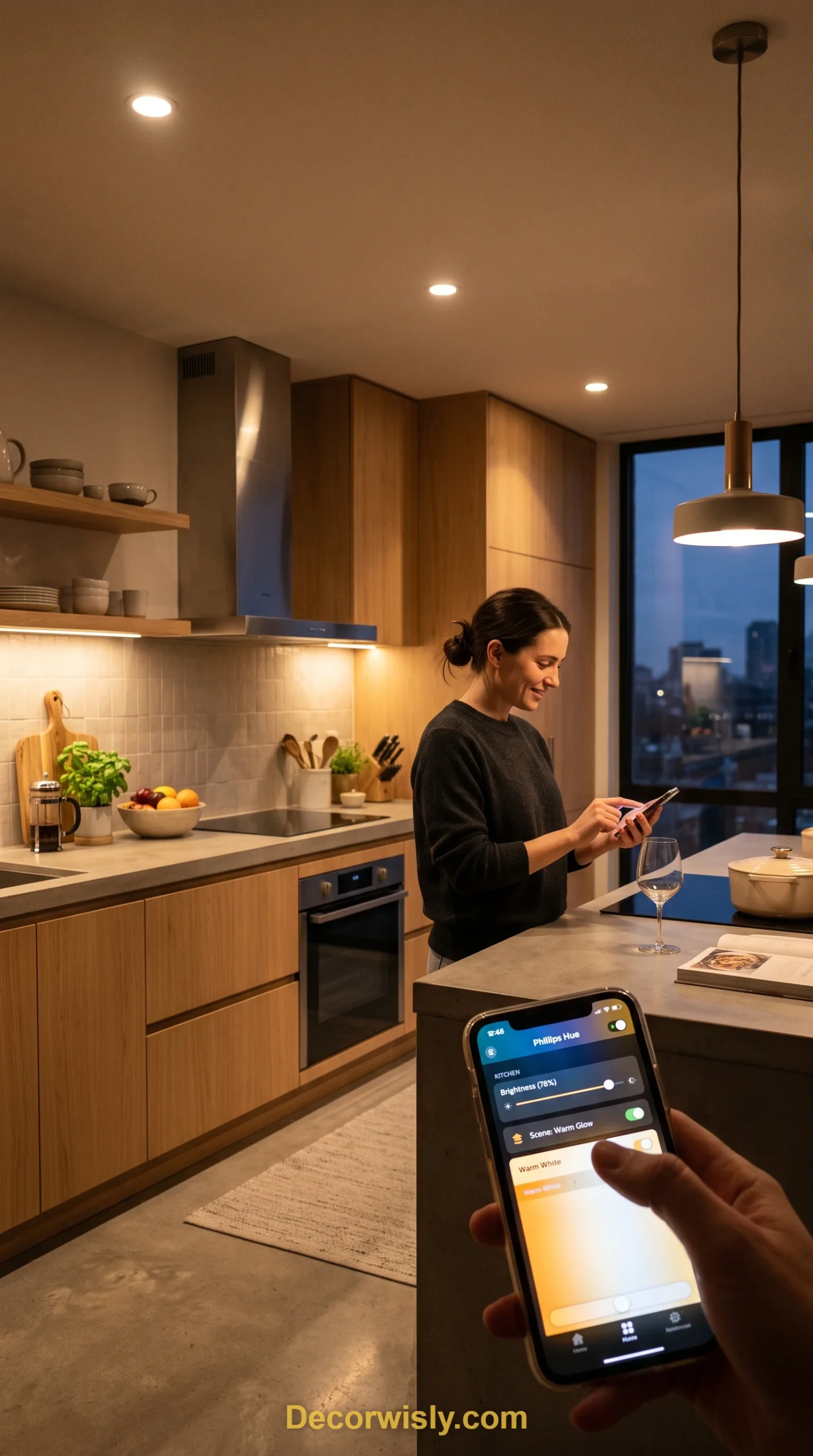
Smart bulbs let you shift color temperature and brightness from a phone, which is a convenient way to switch a small kitchen from bright task mode to a warmer evening setting without installing a single new fixture. It’s an easy upgrade for anyone not ready to rewire.
16. A Skylight for Free Daytime Light
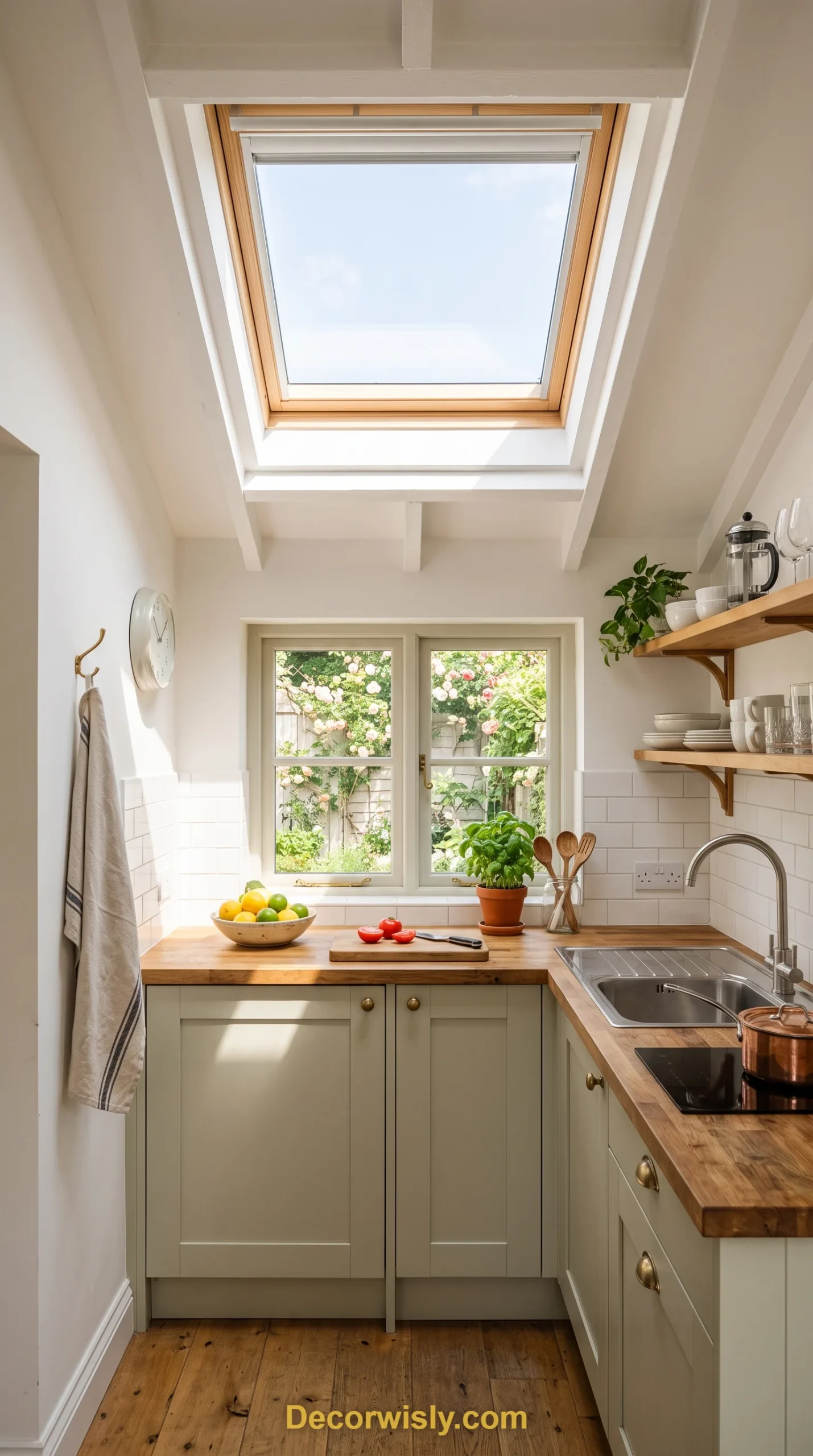
Where the roofline allows it, a skylight brings in daylight that no fixture can fully replace, cutting down on artificial lighting during the day and making a small kitchen feel noticeably more open. It’s a bigger investment than a light fixture, but the payoff in both mood and energy savings is real.
17. Retro Fixtures for Personality

A vintage-style pendant or sconce brings warmth and character to a small kitchen without requiring a full design overhaul. Paired with modern LED bulbs, these fixtures get the best of both worlds — nostalgic shape, efficient performance.
18. Exposed Pipe or Industrial Fixtures
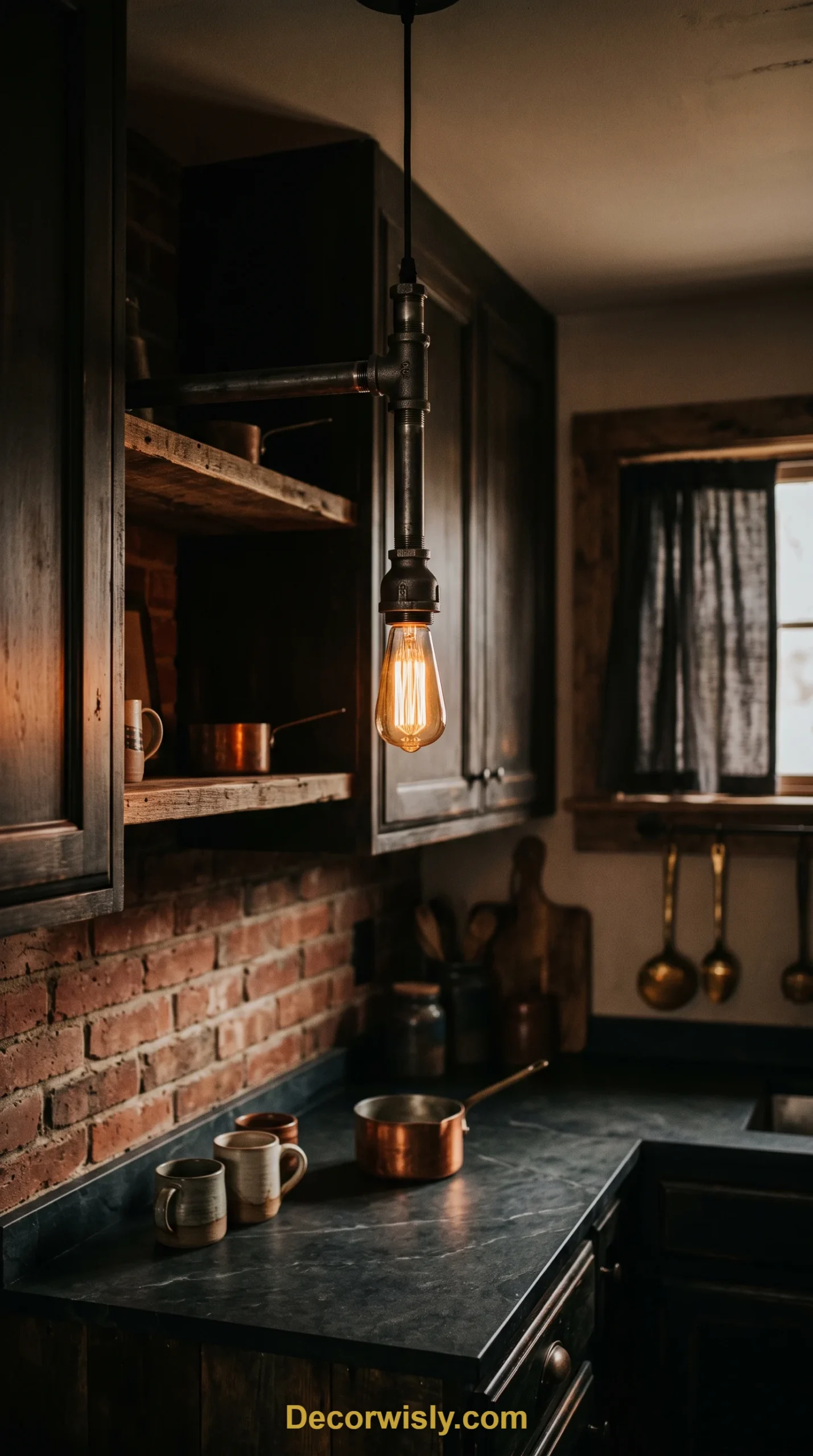
For a kitchen leaning toward an industrial or loft aesthetic, an exposed-bulb or pipe-style fixture adds edge and still throws plenty of usable light. It works especially well as a single accent piece rather than the room’s only light source.
19. Color-Changing LEDs for Flexibility

Color-changing bulbs let the same fixture shift from bright white for cooking to a warm amber for entertaining, all with the same hardware. In a small kitchen where you can’t install a dozen different fixtures, that flexibility does a lot of work.
20. Layering Multiple Light Sources

Combining overhead, task, and accent lighting — rather than relying on one central fixture — creates depth and avoids the flat, over-bright look a single source tends to produce. In a small kitchen, this layering is what actually makes the room feel designed rather than just lit.
21. Hidden Cove Lighting Along the Ceiling Line
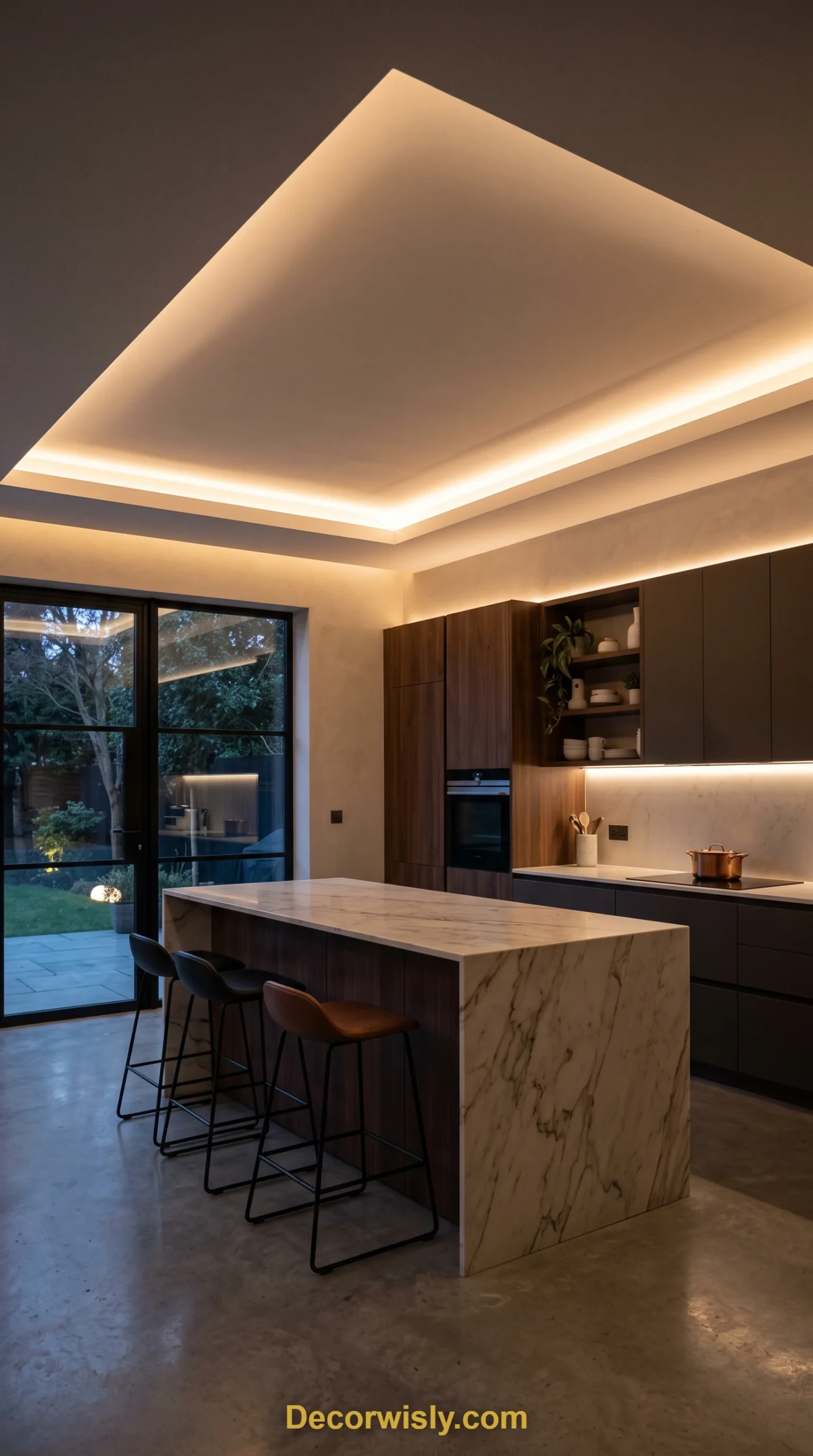
A recessed channel of light along a ceiling perimeter or soffit washes the upper walls in a soft indirect glow, which tricks the eye into reading the ceiling as taller and the room as larger. It’s a subtle architectural detail that pays off more in a small space than a big one.
22. Zoned Lighting for Distinct Areas
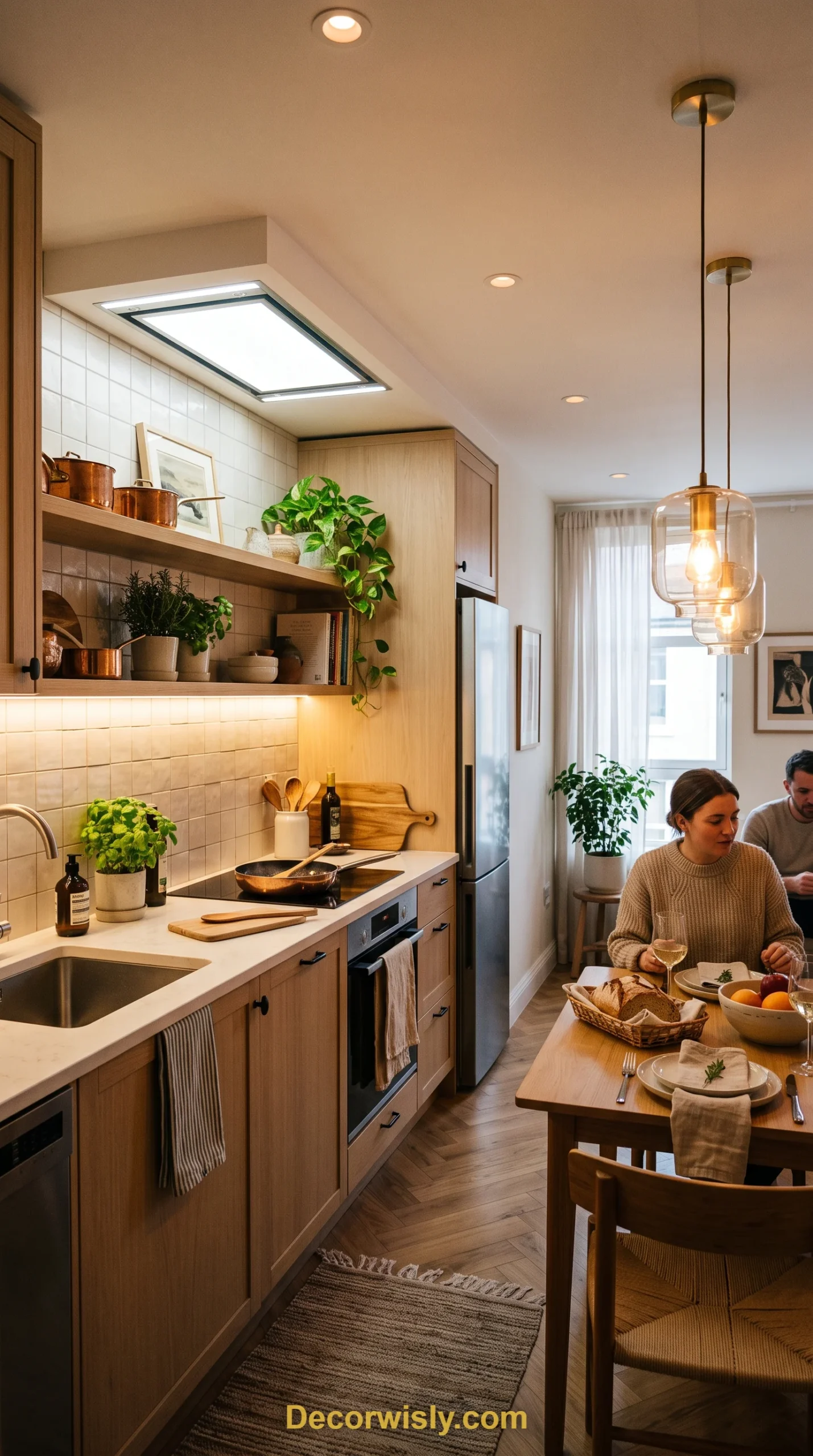
Splitting the kitchen into separately controlled lighting zones — prep, cooking, dining — lets you light only what’s in use, which keeps a small space from feeling flatly over-lit all at once. It also gives you more control over mood without redoing any fixtures.
23. Mirrored or Reflective Backsplash to Bounce Light
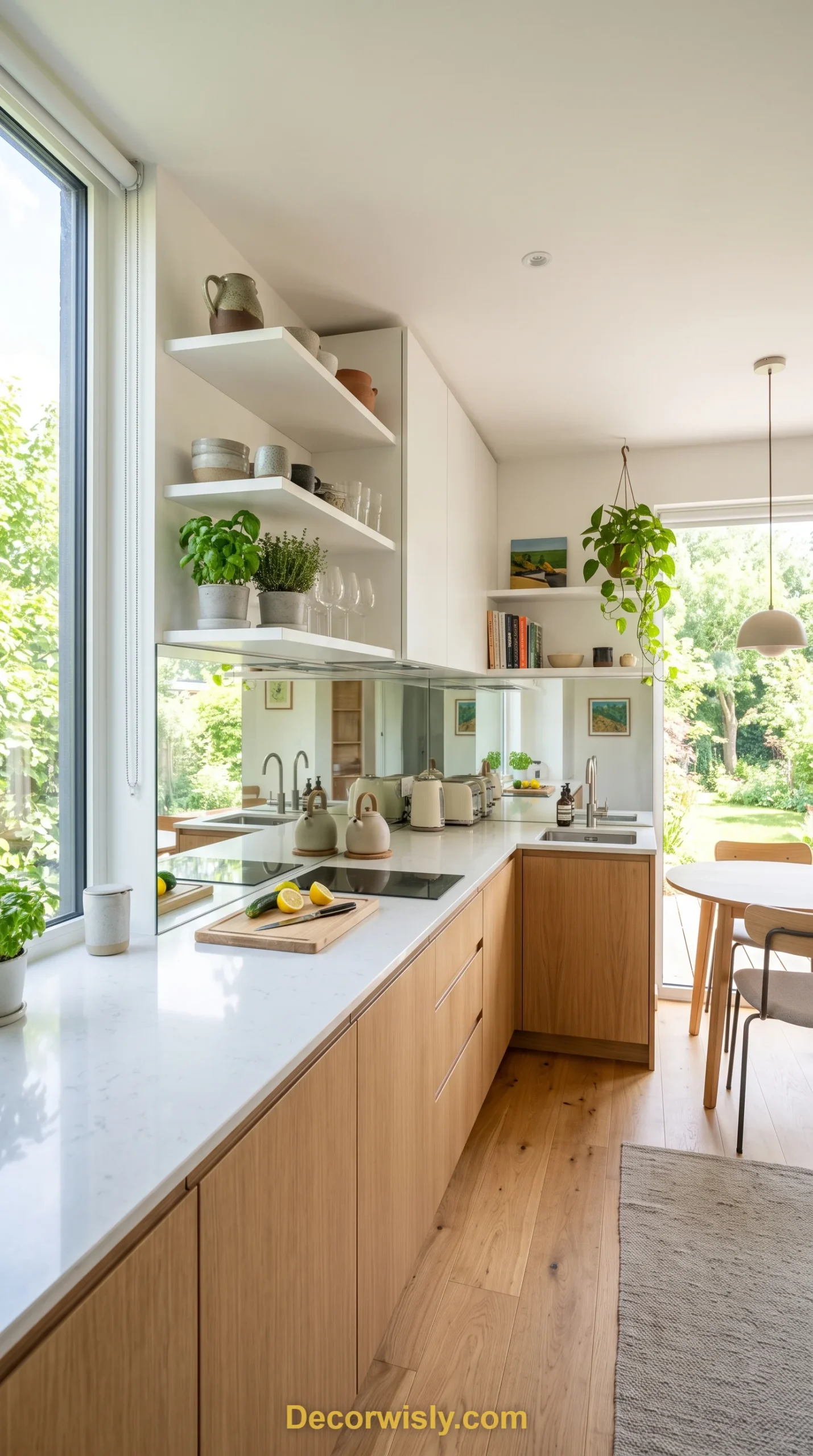
A glossy tile, glass, or mirrored backsplash behind the stove reflects whatever light is already in the room, effectively doubling its reach without adding a single new fixture. It’s a finish choice that does double duty as a lighting strategy in a kitchen too small for extra hardware.
24. Toe-Kick LED Lighting for a Floating Effect

A thin LED strip tucked into the toe-kick beneath lower cabinets creates a soft glow along the floor that makes cabinetry look like it’s floating. Beyond the visual trick, it also doubles as gentle nighttime wayfinding light without needing to flip on anything overhead.
25. Mixing Warm and Cool Tones by Zone

Using a slightly cooler light temperature over the prep and cooking zone and a warmer tone near the dining area lets one small kitchen serve two different moods without any extra square footage. It’s a lighting-only way to define zones that a wall or partition never could in a compact layout.
Final Thoughts
A small kitchen doesn’t need more square footage to feel brighter, warmer, or more finished — it needs the right combination of light sources working together. Mix a few functional choices, like under-cabinet LEDs and recessed spotlighting, with one or two personality pieces, like a retro pendant or a petite chandelier, and even the tightest kitchen can feel considered and well-lit at every hour of the day.