
There’s a reason mud kitchens have become the backyard project every parent seems to be talking about right now. Give a kid a bucket of water, a patch of dirt, and a few old pots, and you’ll get hours of quiet, focused play — no batteries required. Mud kitchens aren’t just messy fun, either. They build fine motor skills, spark early science thinking (what happens when you add more water?), and give kids a real outlet for pretend cooking, market-day role play, and just plain digging around.
Below are 25 mud kitchen ideas, from simple weekend builds to full-blown backyard bistros, that you can adapt no matter how much space or budget you’re working with.
1. The Classic Outdoor Cook Station

This is the mud kitchen most people picture first: a sturdy wood frame with a built-in mud “sink,” a few open shelves, and hooks for hanging old pots and ladles. Keep it simple with a plank countertop and a shallow tub sunk into the surface for mixing. It’s the easiest starting point if this is your family’s first mud kitchen, and it scales well — you can always bolt on a shelf or a second basin later.
2. Built Entirely From Upcycled Finds
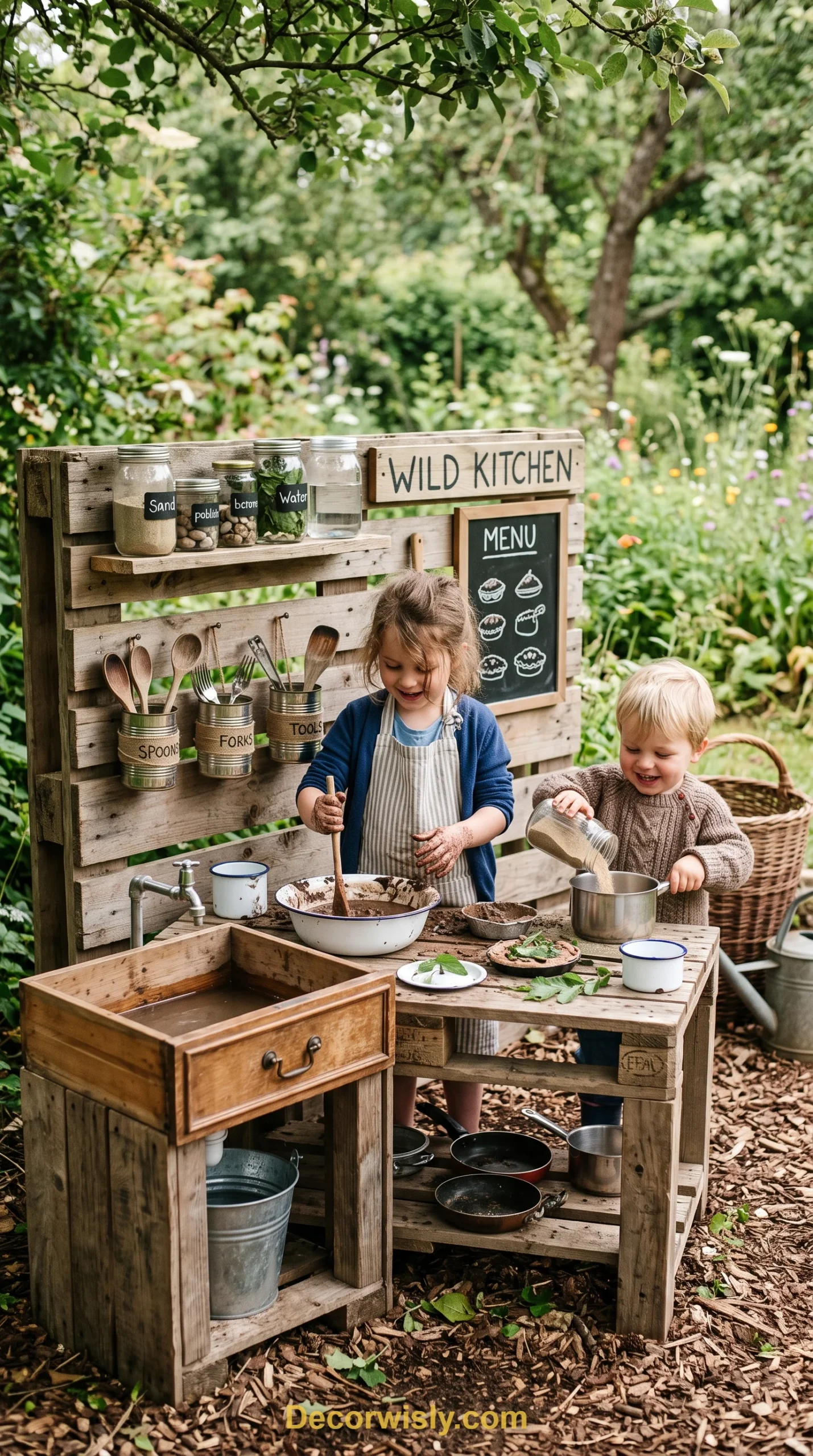
Skip the hardware store and raid the garage instead. An old dresser drawer becomes a sink basin, a discarded pallet becomes the counter, and mismatched tin cans turn into utensil holders. This version costs almost nothing and quietly teaches kids that “trash” can become something useful — a good first lesson in sustainability that doesn’t feel like a lecture.
3. A Clay Oven for Pretend Baking

Add a rounded clay “oven” beside the main counter, built up from packed mud and straw over a simple dome frame. Kids can slide in mud pies and pull out imaginary loaves, which adds a whole new layer of role play beyond stirring and mixing. It also looks genuinely charming once it dries and weathers a bit.
4. A Dig-In Water and Mud Sink

Dig a shallow basin directly into the ground, line it with smooth pebbles, and let it double as both a sink and a mixing bowl. Running a short length of old garden hose to it turns “washing up” into its own activity. It’s one of the simplest additions that gets used the most.
5. A Sturdy Shared Work Table

For siblings or a group of friends, a wide, low table beats a narrow counter every time. Reinforce a simple mud-and-timber base with recycled beams so it can take some weight, and leave enough room on top for two or three kids to work side by side without elbowing each other.
6. A Weathered Rustic Counter
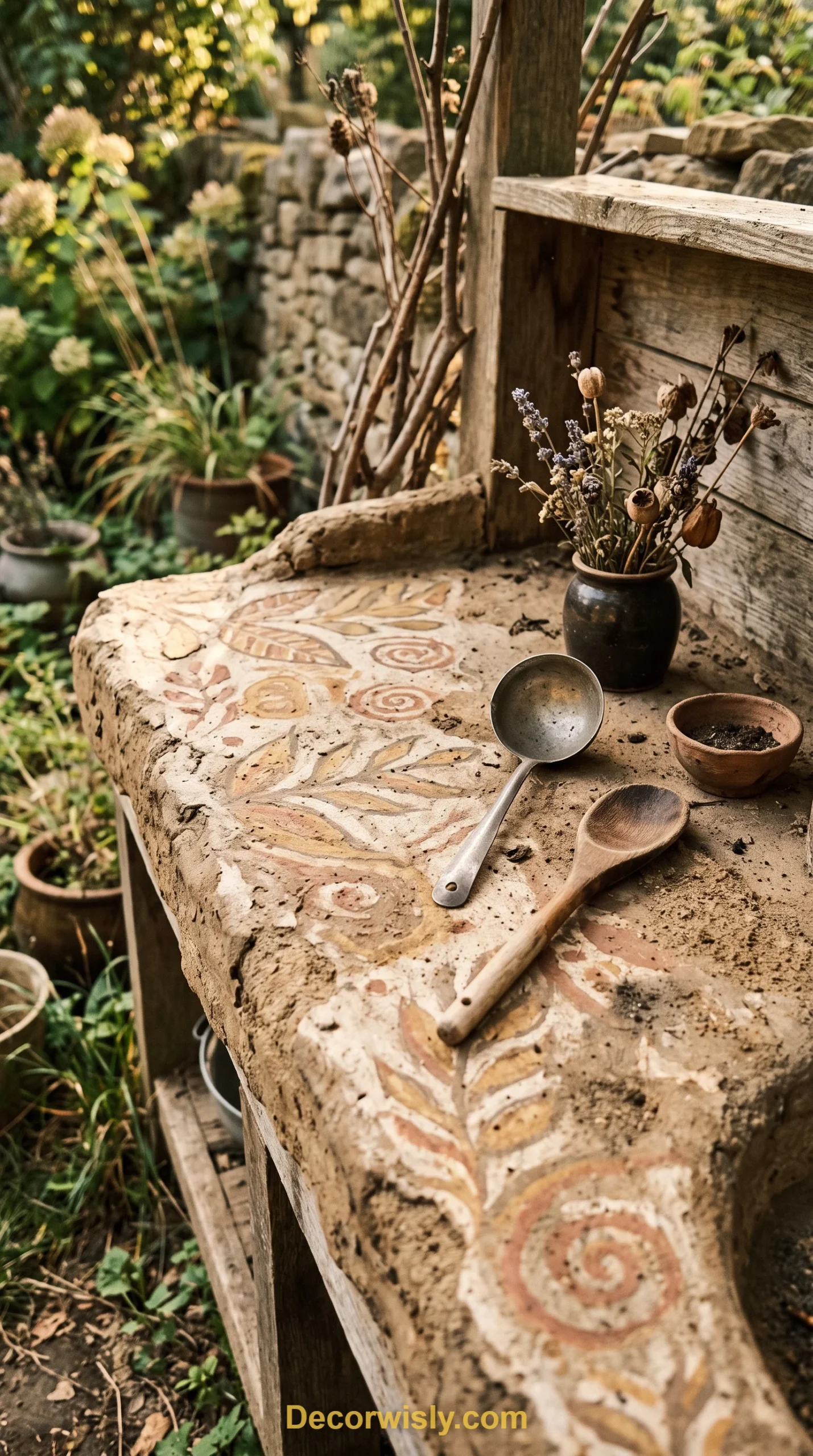
Mix clay with sand for a counter that holds its shape and develops a nice weathered texture over a season outdoors. A coat of natural mineral paint in earthy patterns adds character without looking fussy. This one ages well and only gets more charming the longer it sits outside.
7. Tucked Into a Garden Corner
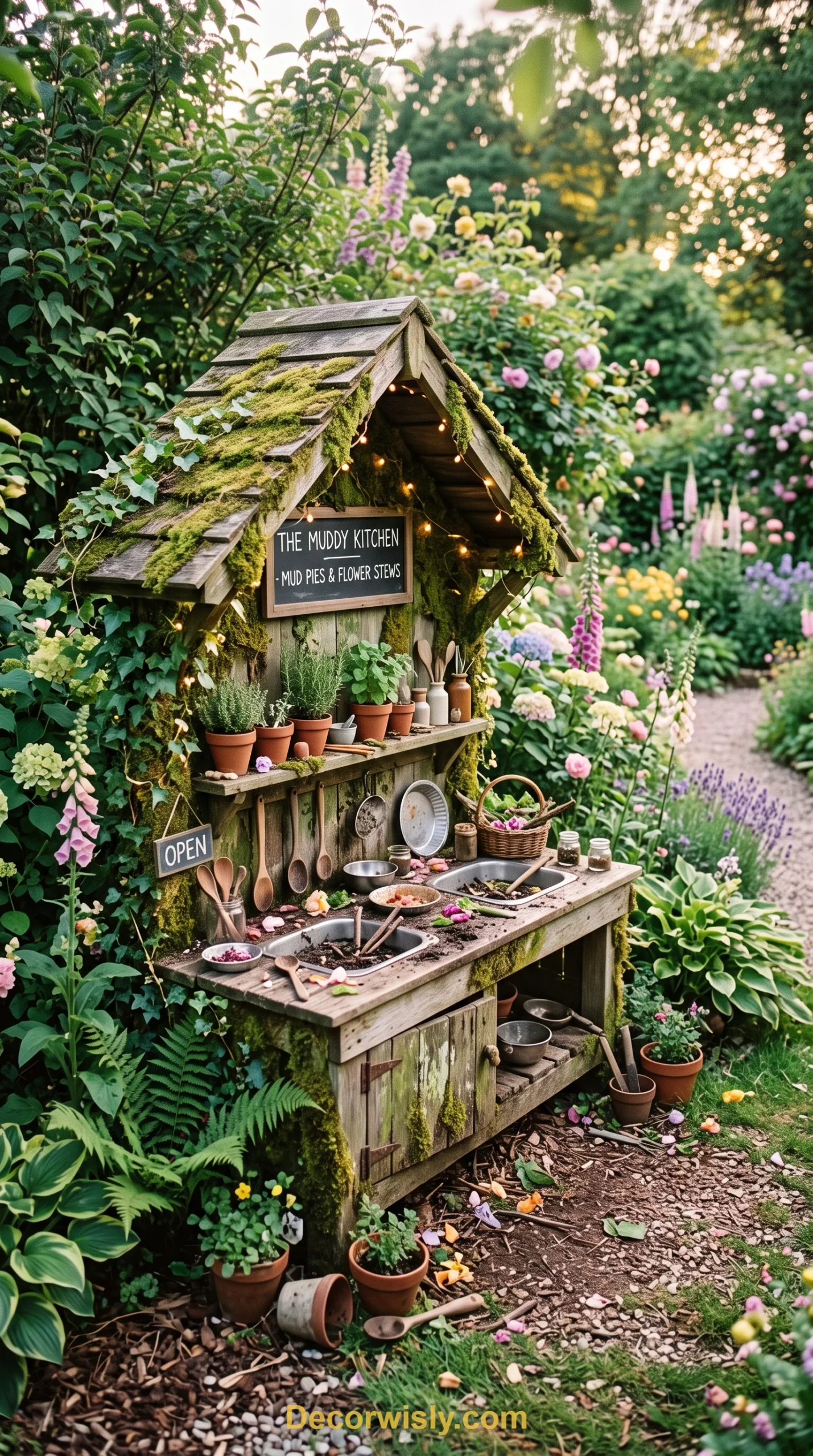
Build the kitchen right into a flower bed so herbs and low shrubs frame the whole setup. A small moss patch on the roof or shelf adds a fairy-tale touch, and having real herbs within reach means kids can “cook” with actual rosemary and mint instead of pretending.
8. A Mini Pottery Corner
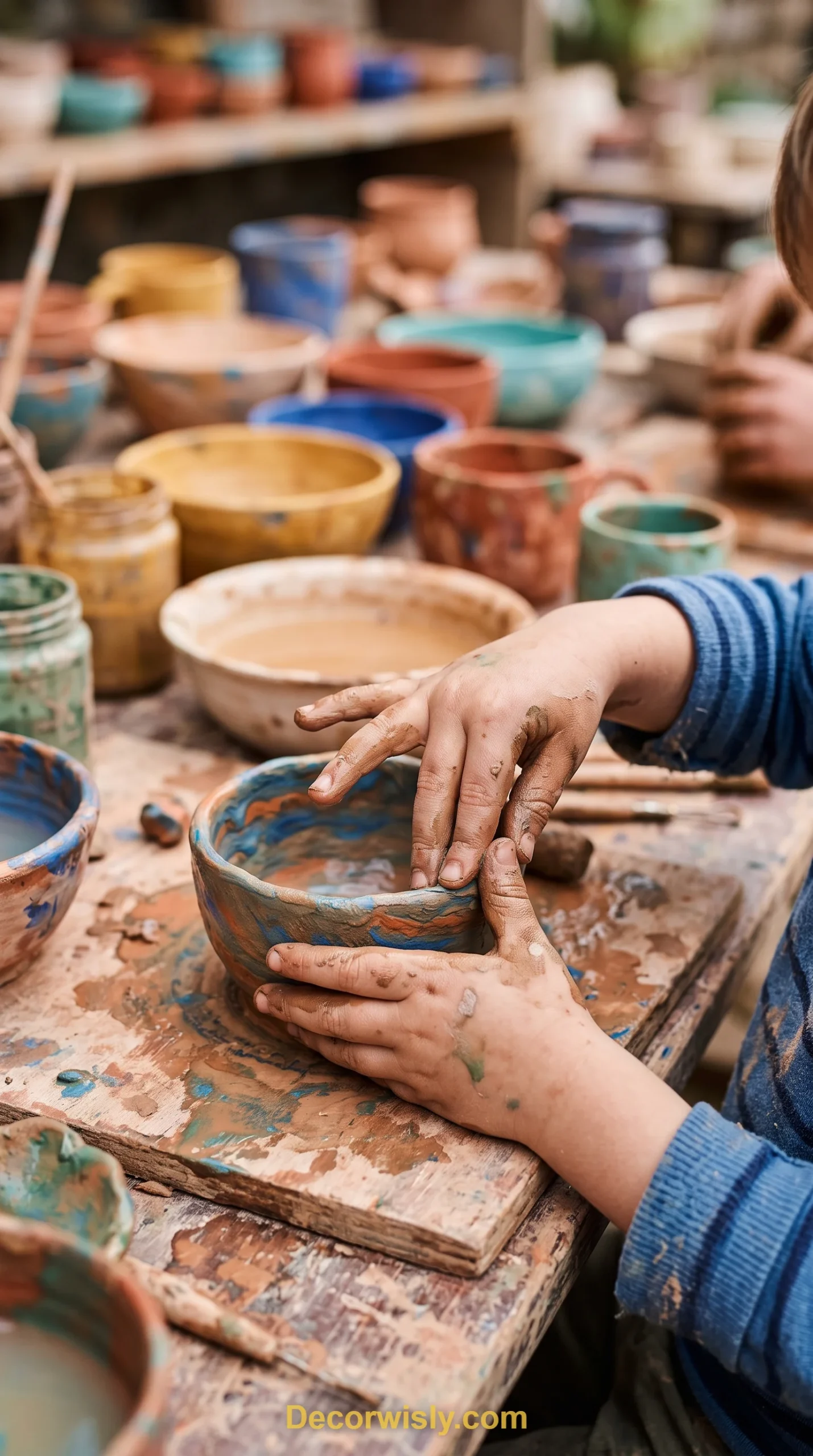
Set aside one section of the counter just for shaping mud into bowls, cups, and “plates.” A few natural pigments — crushed berries, turmeric, beetroot — let kids tint their creations without any harsh chemicals. It’s messier than the rest of the kitchen, so plan for that.
9. Kitted Out With Old Kitchenware
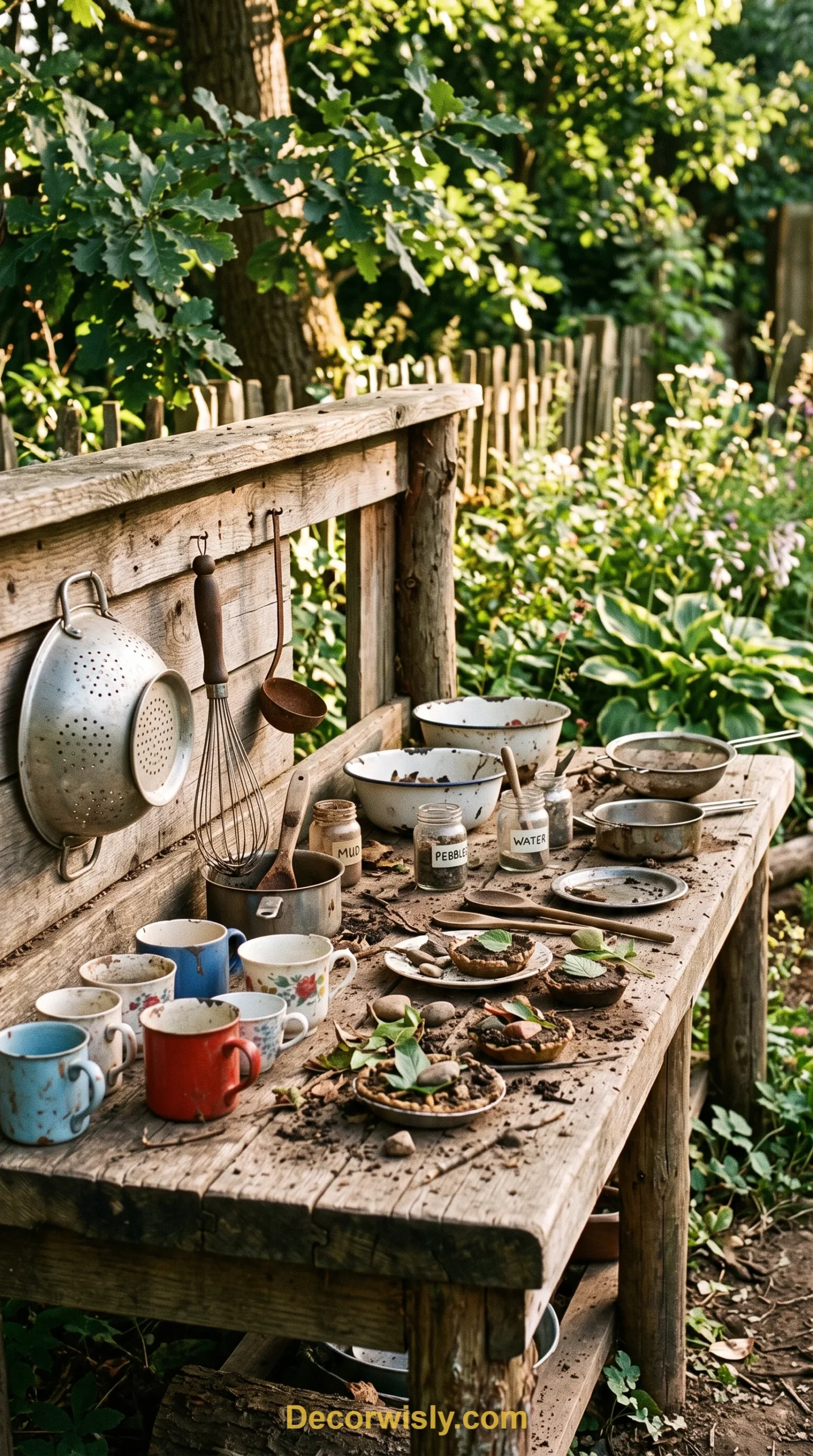
Old tins, chipped mugs, a dented colander, a whisk with a bent handle — this is where kitchen items go for a second life. A mud kitchen stocked with real (if retired) cookware feels more authentic to kids than plastic toy sets ever will.
10. A Low Bench for Little Ones
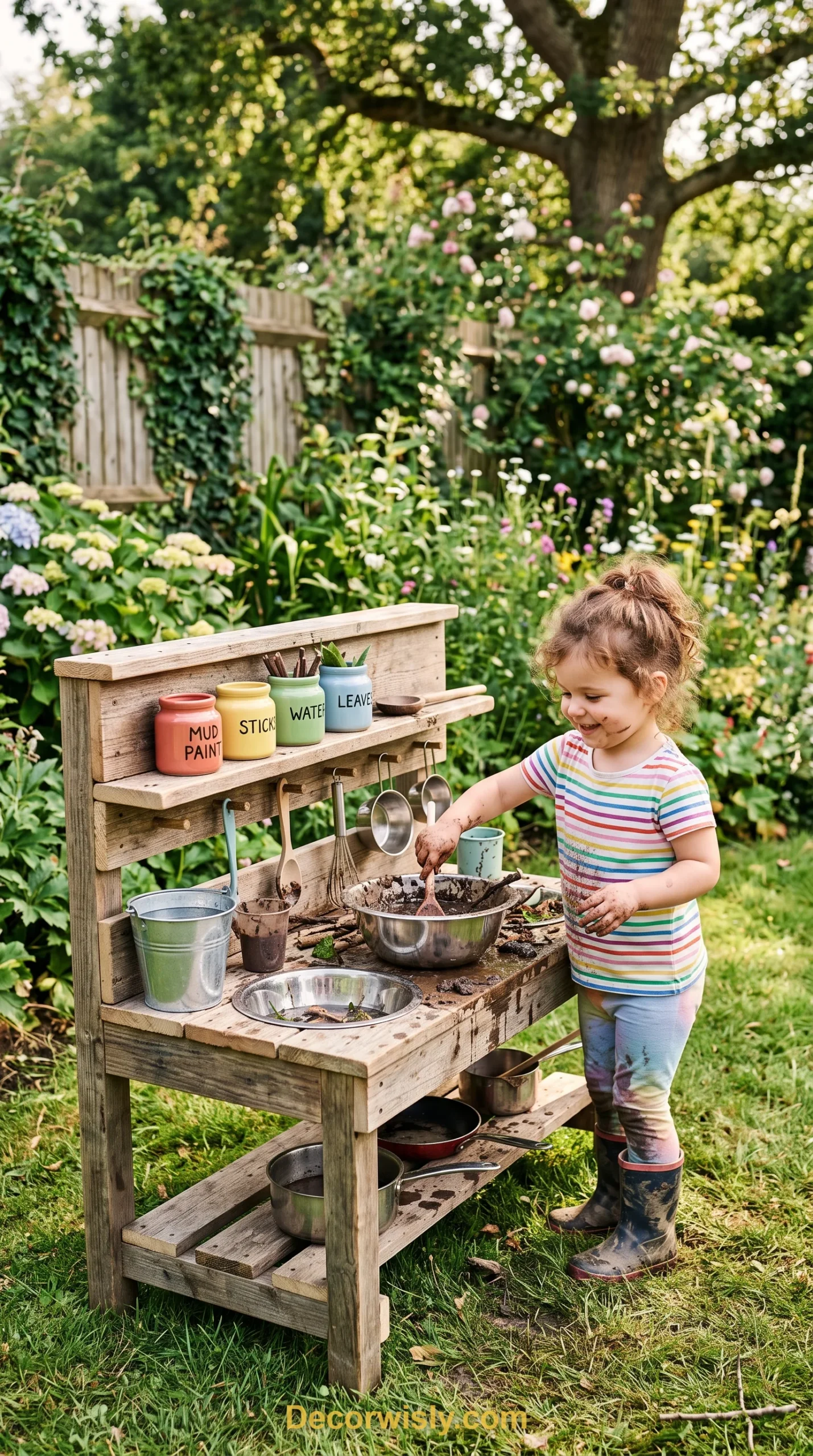
For toddlers and younger kids, a low bench-style setup at their exact height makes independent play possible without a grown-up lifting them up every five minutes. Keep the surface simple — one basin, one shelf — so it doesn’t overwhelm smaller hands.
11. A Flat-Top Mud Griddle
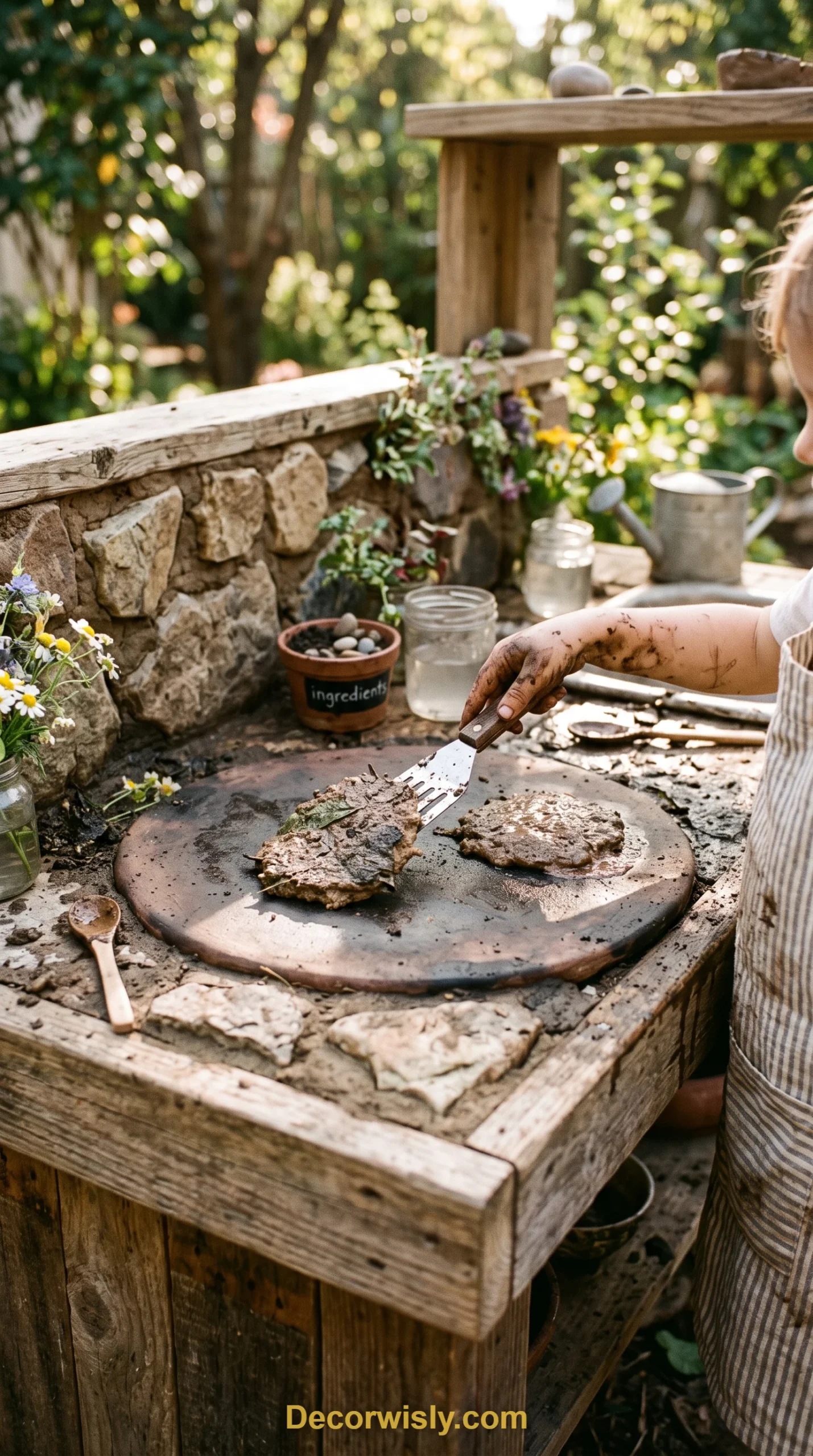
A smooth, flat slab of pressed clay set into the counter becomes a “griddle” for flipping mud pancakes. It’s a small addition, but the flat surface opens up a whole new category of pretend cooking that a basin alone doesn’t cover.
12. Set Deep in a Woodland Nook
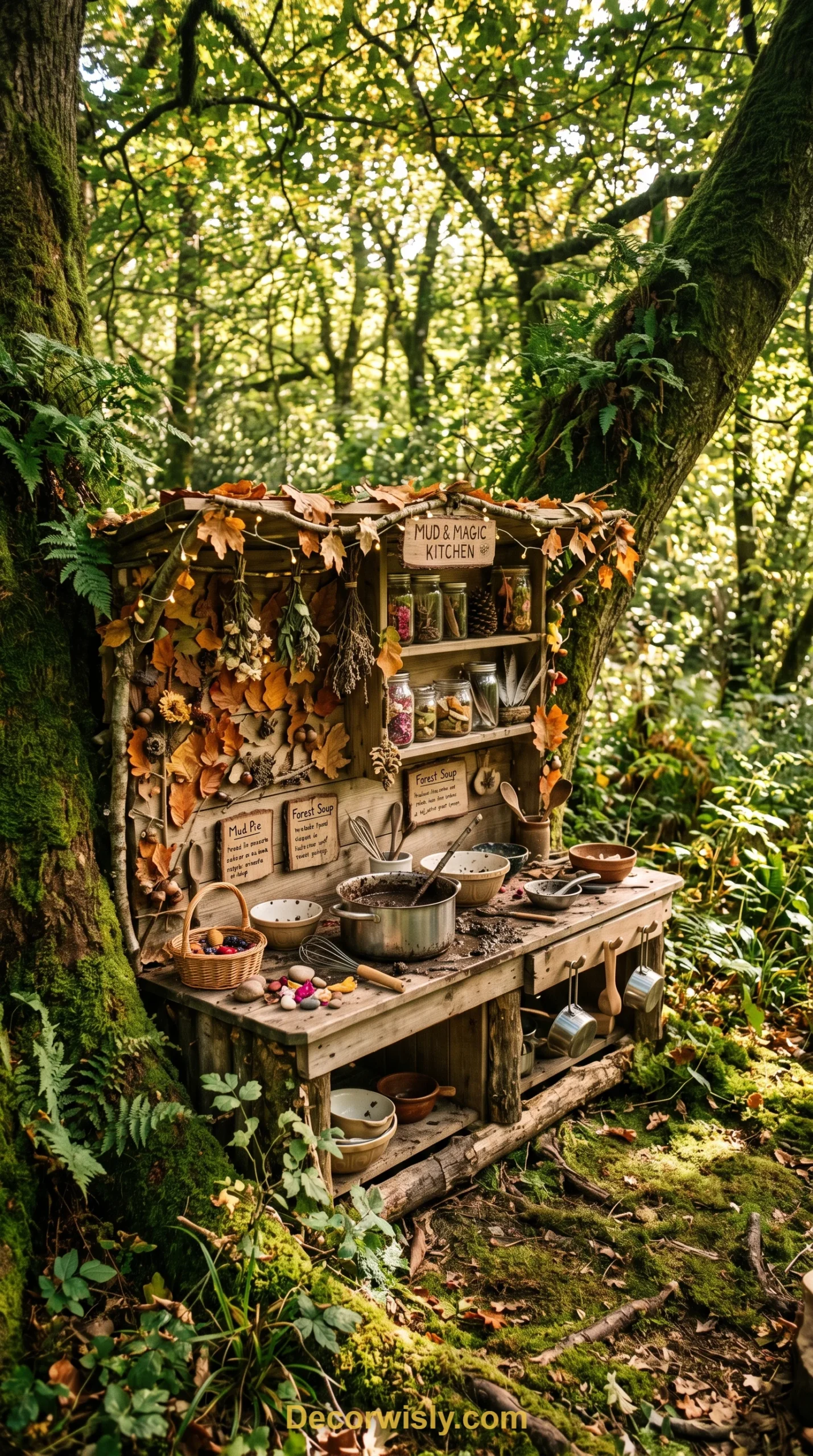
If you’ve got a shaded, tree-covered corner of the yard, use it. Mud walls dressed up with fallen leaves, twigs, and bark scraps turn the whole area into an enchanted-forest scene, and the natural shade keeps things cooler for long play sessions.
13. Mixed Mud and Stone Textures
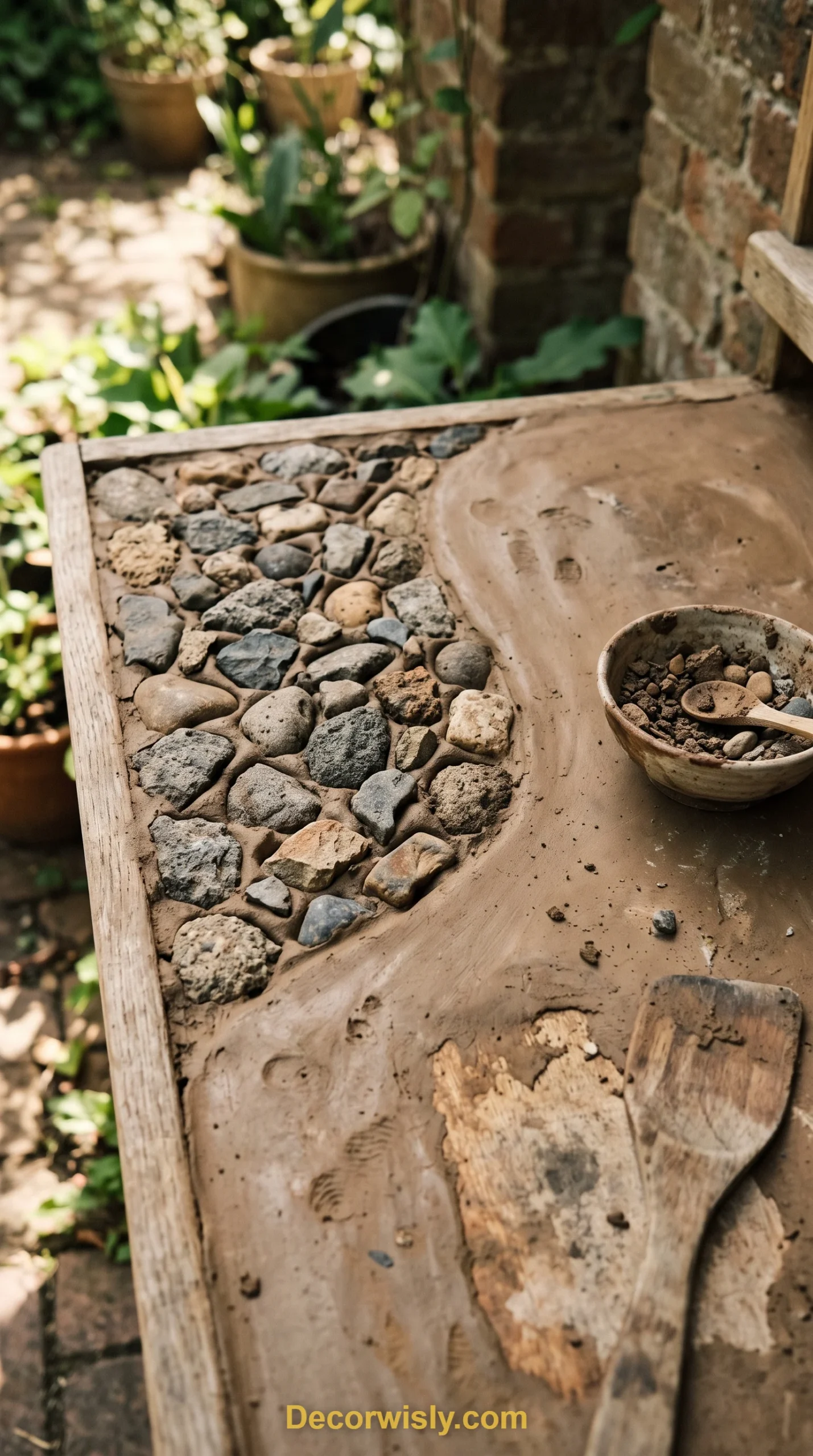
Alternate smooth mud panels with rough natural stone inlays across the counter and walls. The contrast in textures gives kids more to explore with their hands and makes the whole build look more intentional than a single uniform surface.
14. A Tiny Market Stall
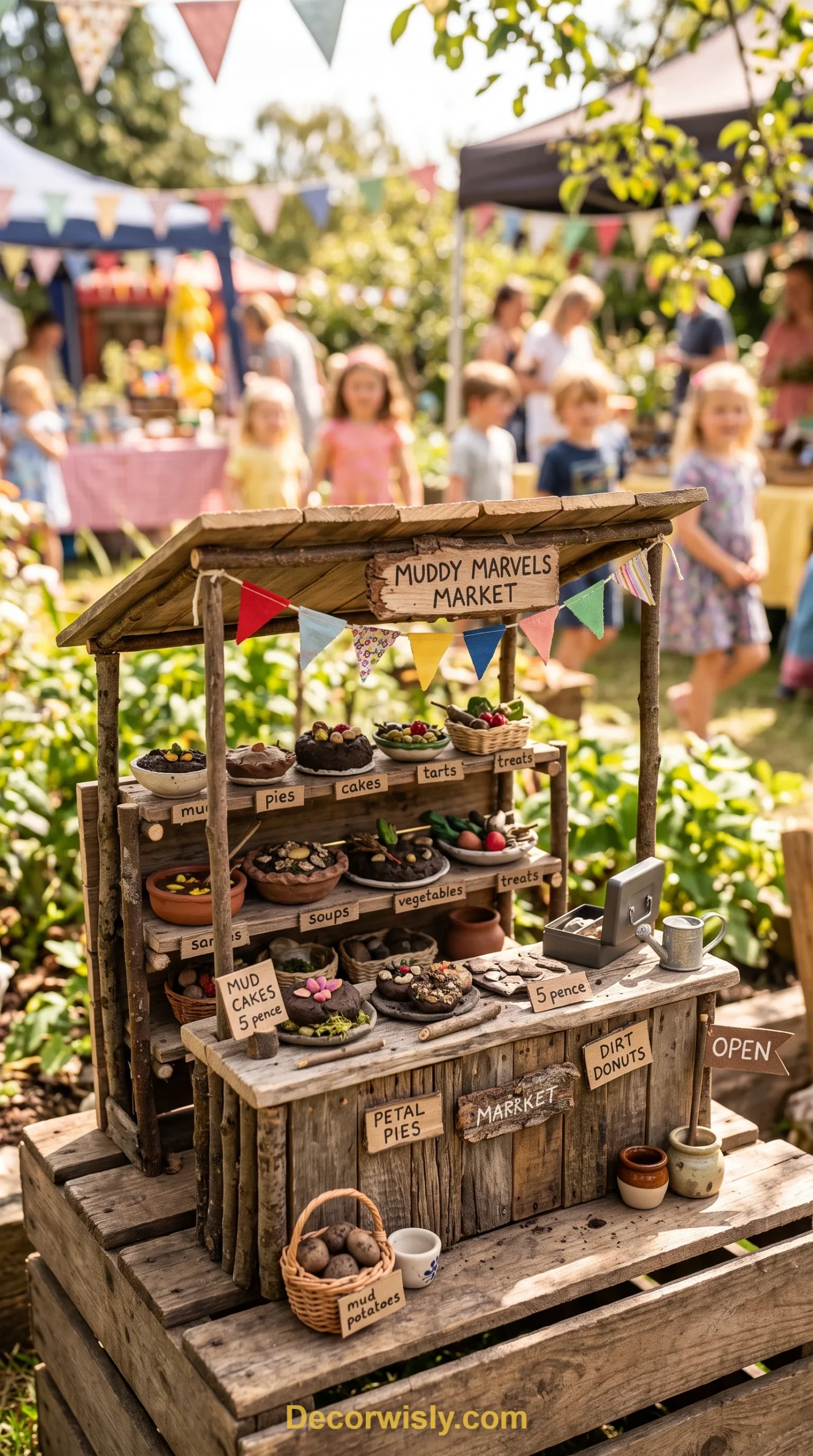
Turn one end of the kitchen into a pretend market stall with a small awning, a “cash” tin, and shelves for displaying mud “produce.” Kids naturally start assigning roles — shopkeeper, customer — which adds a social layer on top of the usual mixing and stirring.
15. Built Beside a Water Feature
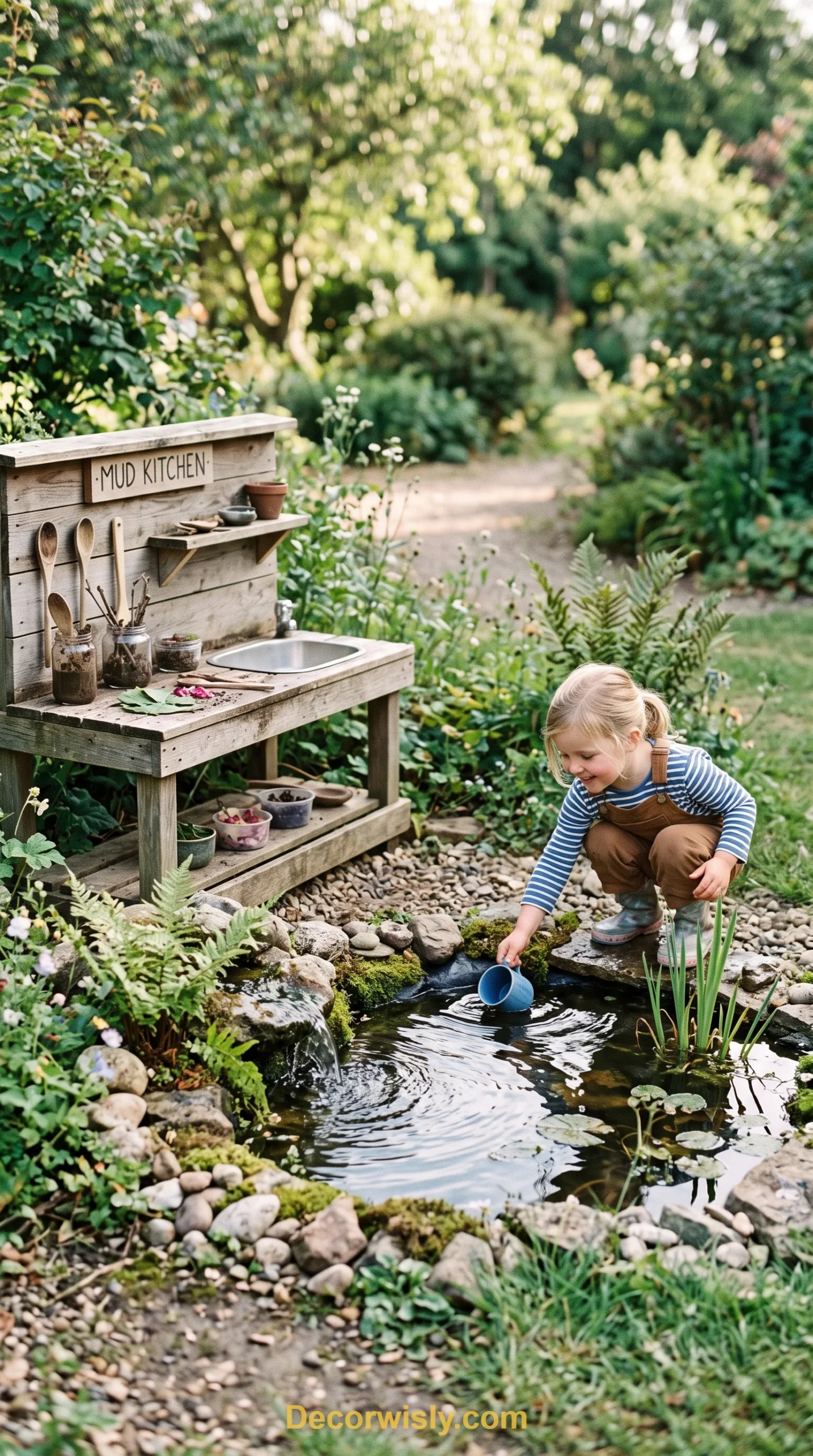
Position the kitchen near a small pond, rain barrel, or a gently trickling channel so water play and mud play happen in the same spot without constant trips back and forth for refills. The sound of moving water also makes the whole space more calming to play in.
16. A Full Backyard Bistro
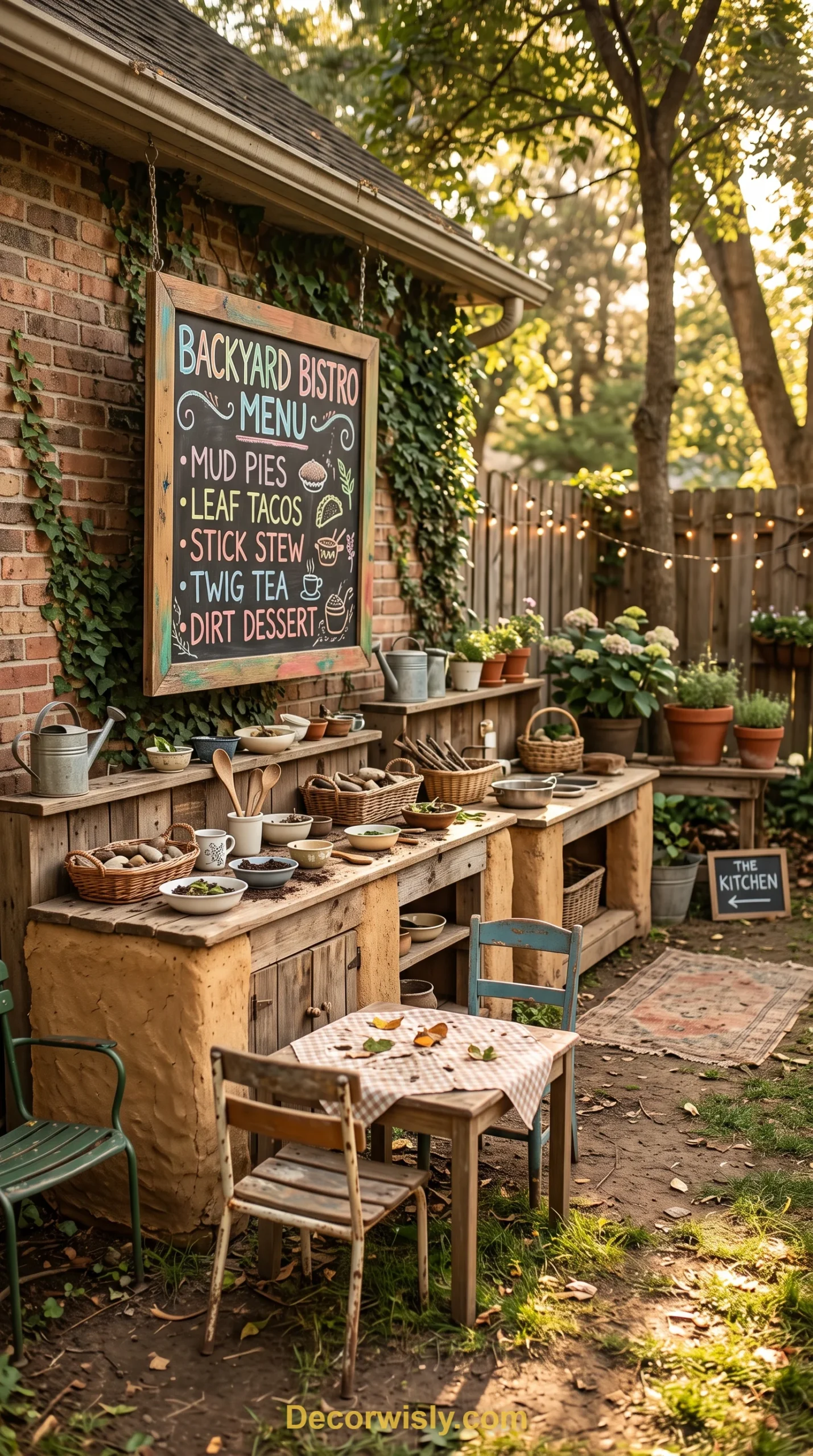
Go bigger with a proper “bistro” setup: two or three counters, a chalkboard menu on a stick, and mismatched chairs pulled from around the house. This works especially well for playdates, since it gives multiple kids clear roles — chef, waiter, customer — right away.
17. A Craft-and-Cook Combo Station
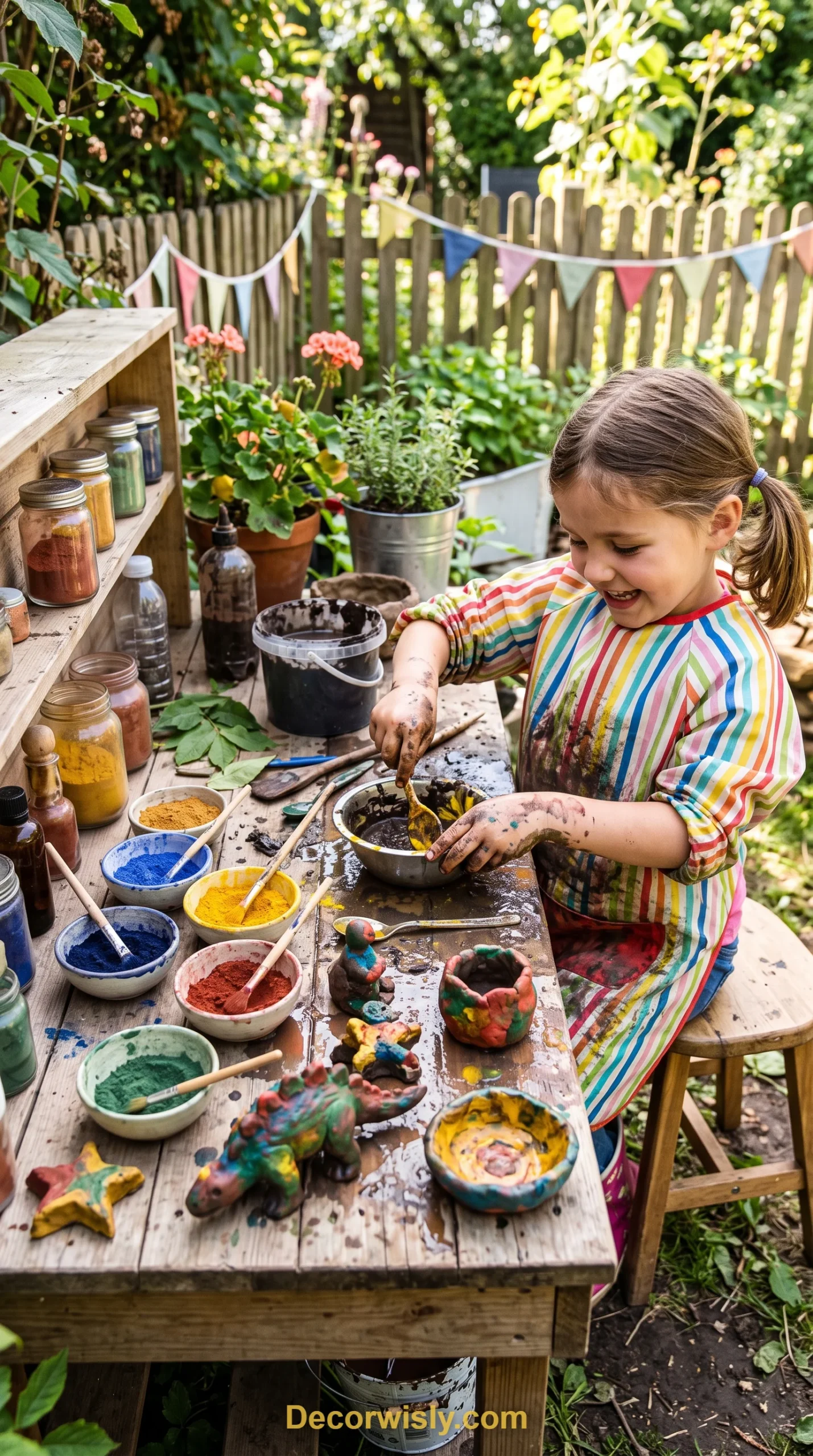
Add a small tray of natural paints and pigments right next to the mixing area so cooking and crafting blend together. Kids end up painting their mud creations as often as they “cook” them, which stretches the kitchen’s use well beyond pretend meals.
18. Framed by Fresh Herbs

Line the shelf above the counter with small pots of basil, mint, and rosemary that kids can actually pinch and add to their mud “recipes.” The smell alone changes the whole feel of the play session, and it’s a gentle, low-pressure way to introduce kids to real plants.
19. A Full Sensory Mixing Station

Combine textured earth, smooth river stones, dried leaves, and pinecones in a dedicated sensory bin next to the main counter. This is the station to build if your child is younger or especially tactile — it slows the whole play session down into something closer to exploration than “cooking.”
20. A Storybook-Themed Setup
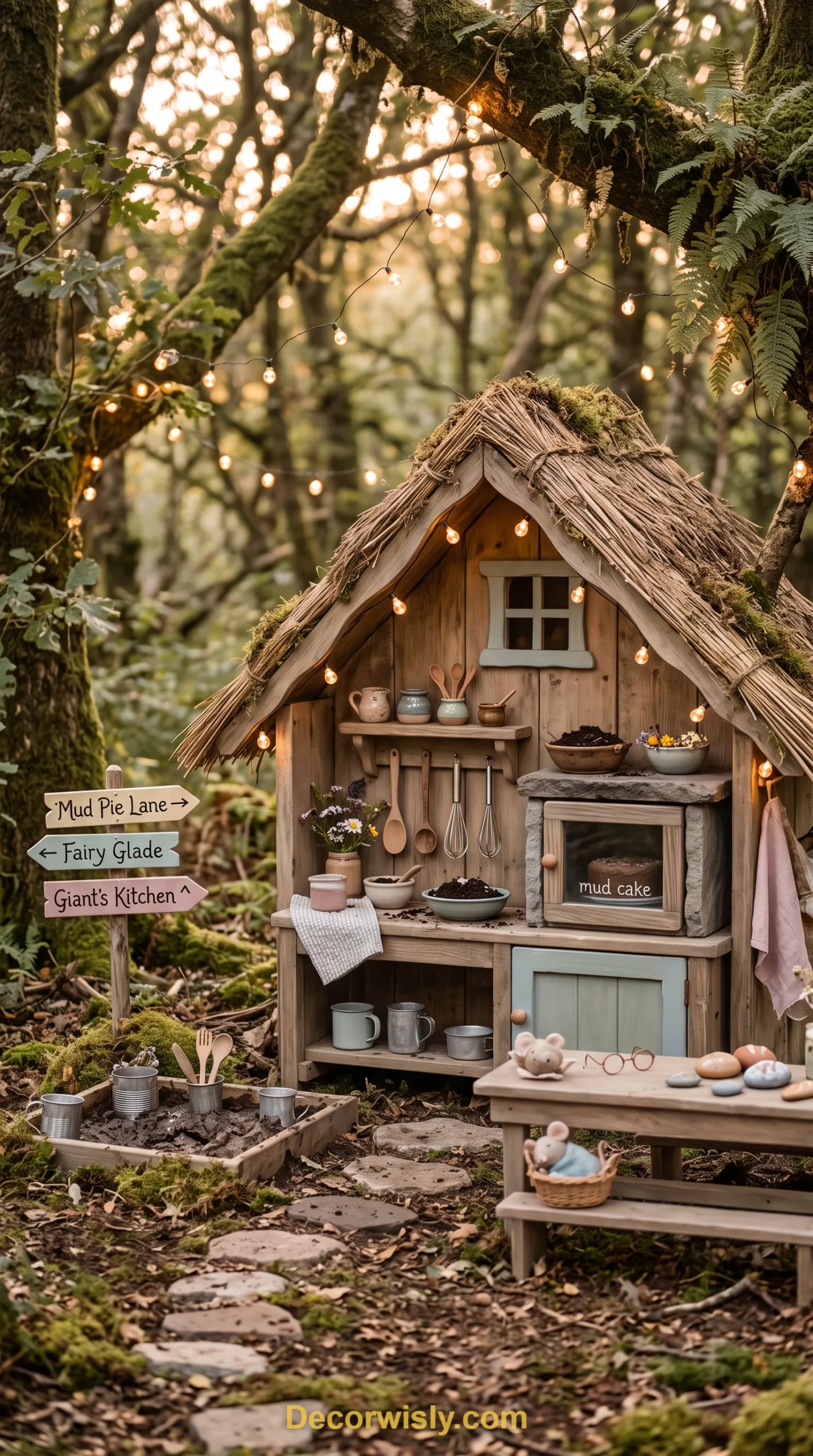
Build the kitchen around a favorite story — a cottage from a fairy tale, a pirate’s galley, a witch’s cauldron corner — using simple props like a wooden sign or a painted backdrop. Kids who are already into a particular book or show will dive into this version fastest.
21. A Simple Farmhouse Build
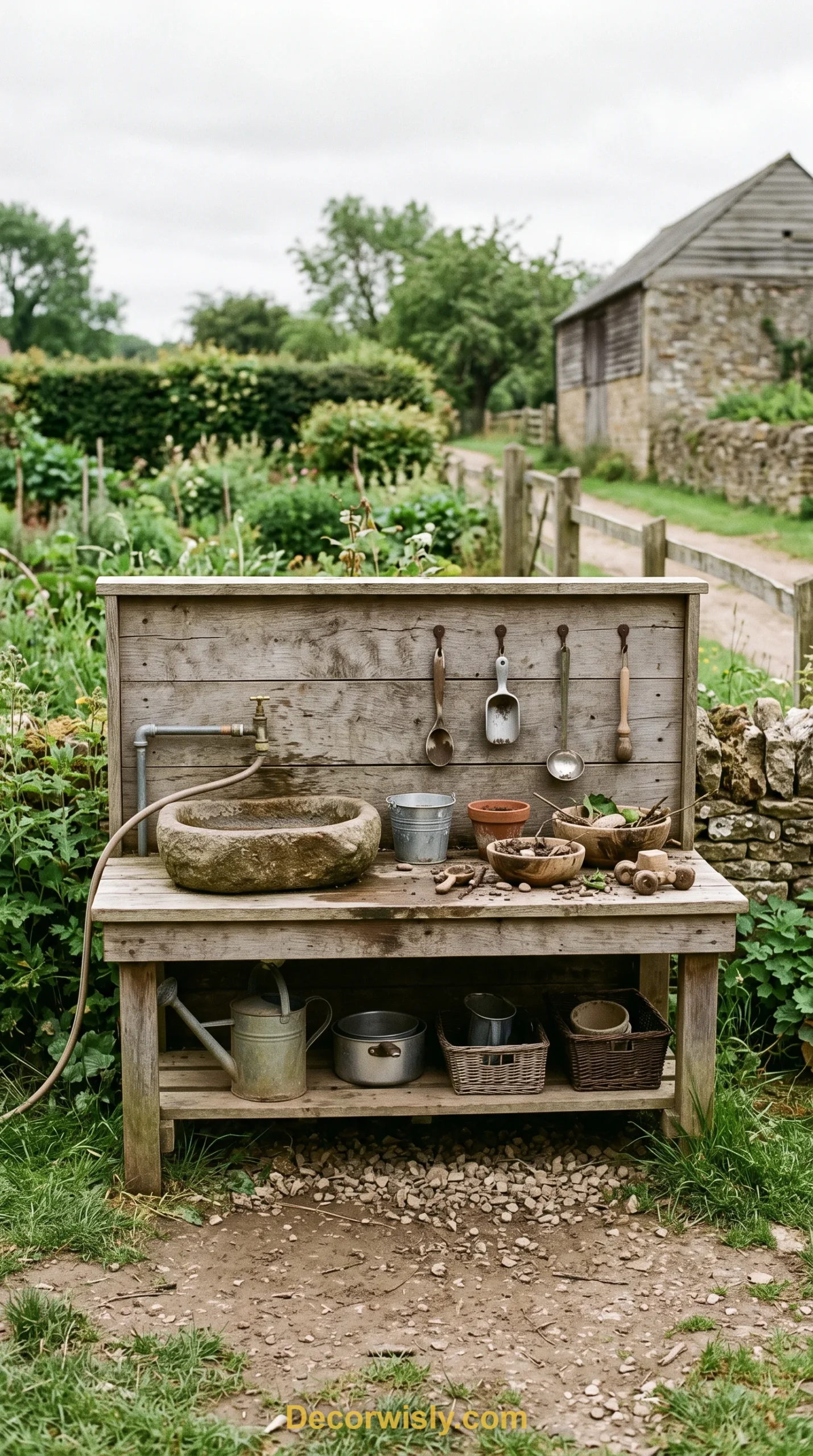
Keep everything plain and functional: reclaimed wood, a single stone basin, no extra decoration. There’s something appealing about the no-frills version, and it tends to blend into a backyard’s existing look better than a more elaborate build.
22. A Shared Neighborhood Kitchen

If you’ve got a shared yard, community garden, or a friendly cul-de-sac, consider building one larger kitchen that several families use together. Bigger counters, shared tools, and a rotating schedule turn mud play into a small neighborhood tradition.
23. A Chalkboard Recipe Wall
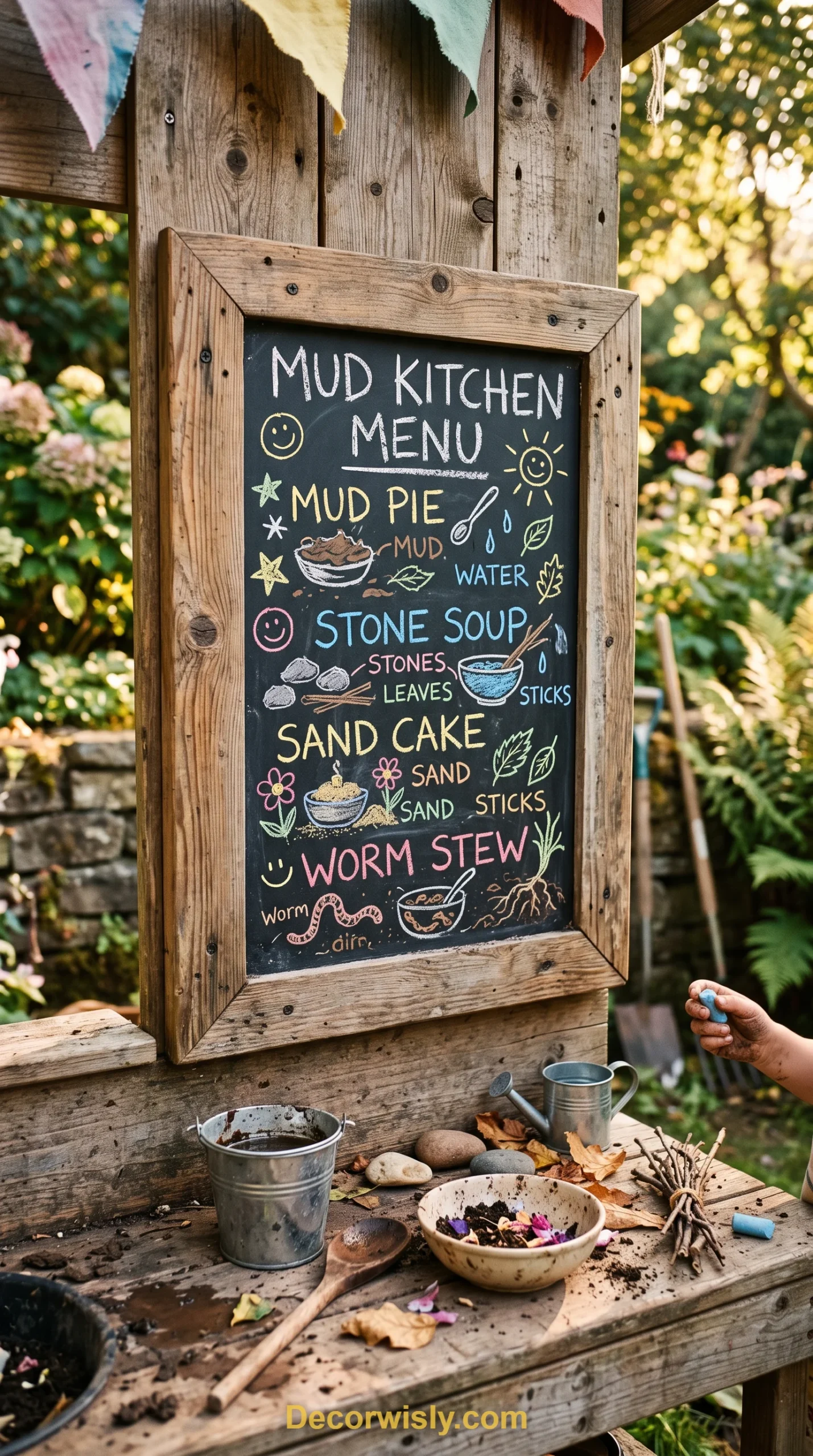
Mount a small chalkboard panel above the counter where kids can “write” (or scribble) their mud recipes and daily specials. It adds a literacy angle to the play and gives kids a reason to keep coming back to update their menu.
24. A Repurposed Pallet Kitchen Island
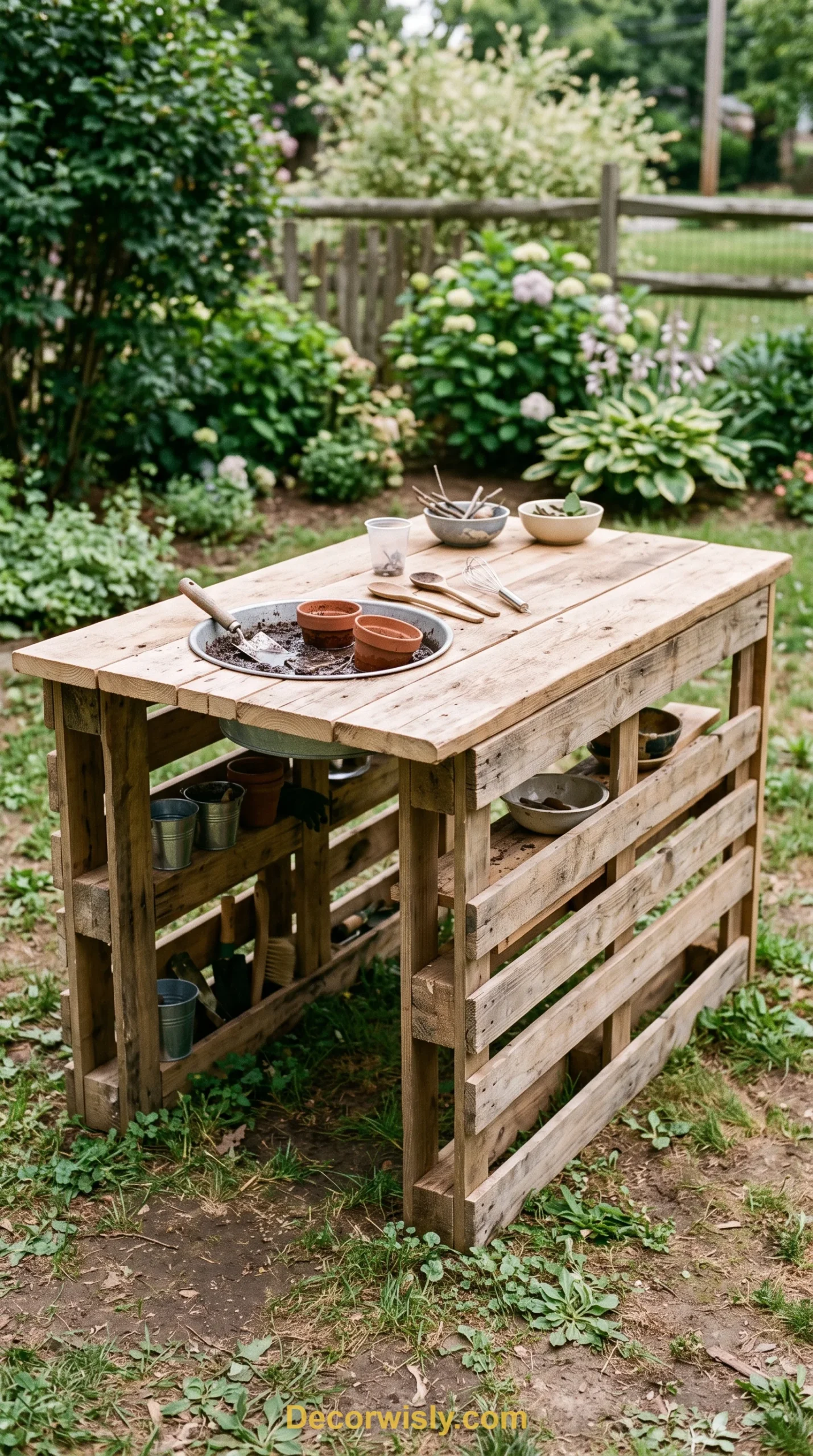
Stand two wooden pallets on end and bolt a plank across the top for an instant kitchen island that takes an afternoon, not a weekend, to build. It’s the fastest option on this list if you want to test whether your kids will actually use a mud kitchen before investing more time.
25. A Seasonal Pop-Up Kitchen
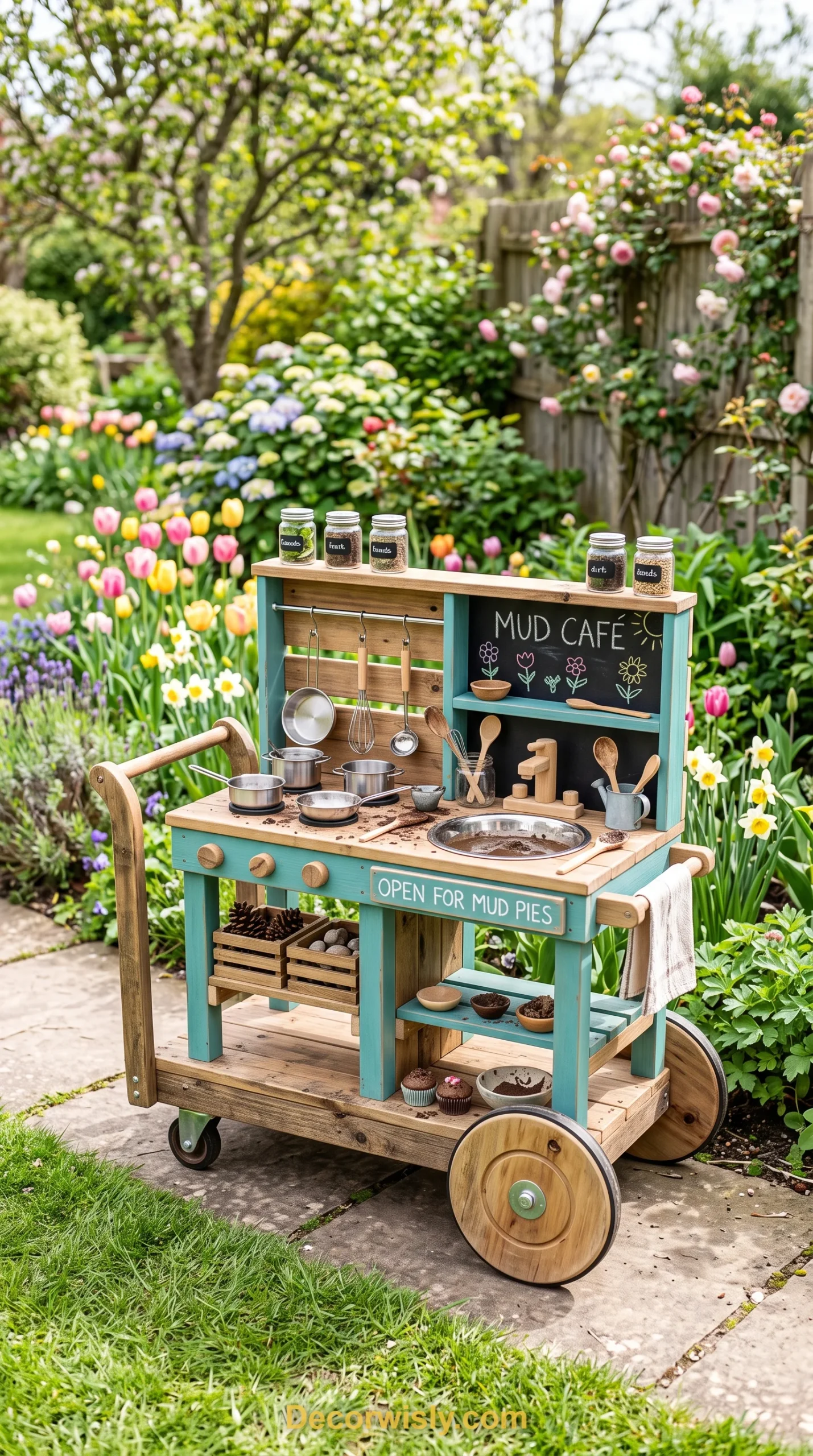
Build a lightweight, portable version using a wheeled cart or an old wagon so it can be tucked away in winter and rolled back out each spring. This suits smaller yards or families who want the fun without a permanent fixture taking up space year-round.
Final Thoughts
Whichever version you land on, the real magic of a mud kitchen isn’t the build itself — it’s what kids do with it once you step back. A pile of dirt, a bit of water, and a few borrowed pots turn into pretend restaurants, science experiments, and quiet hours of focus that are hard to get anywhere else. Start small, let the kids weigh in on what they want added next, and don’t worry too much about it looking perfect. The messiest kitchens tend to be the ones that get used the most.